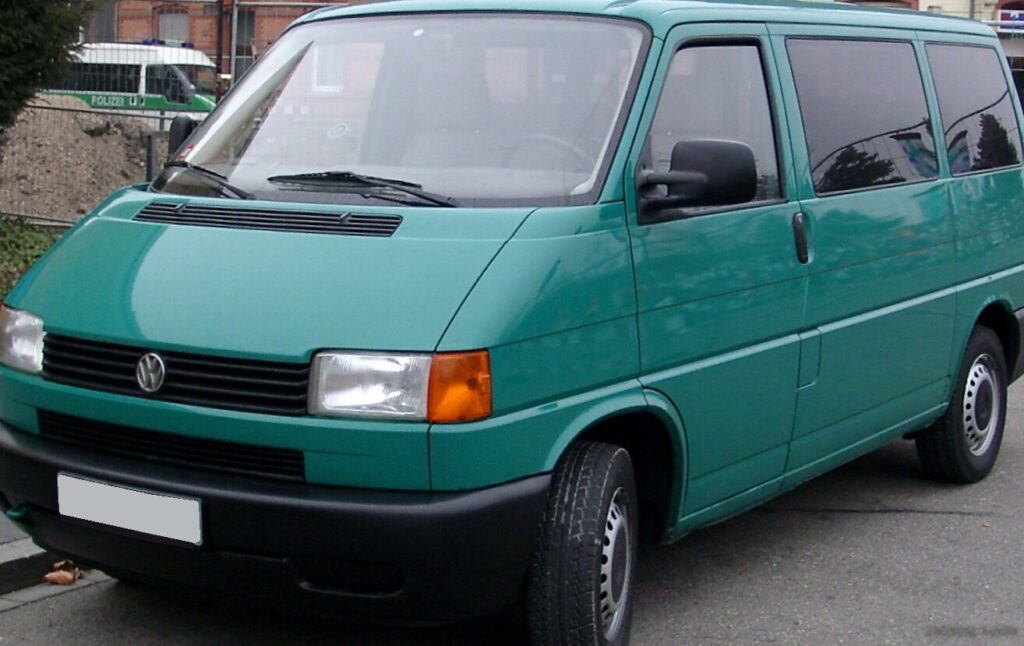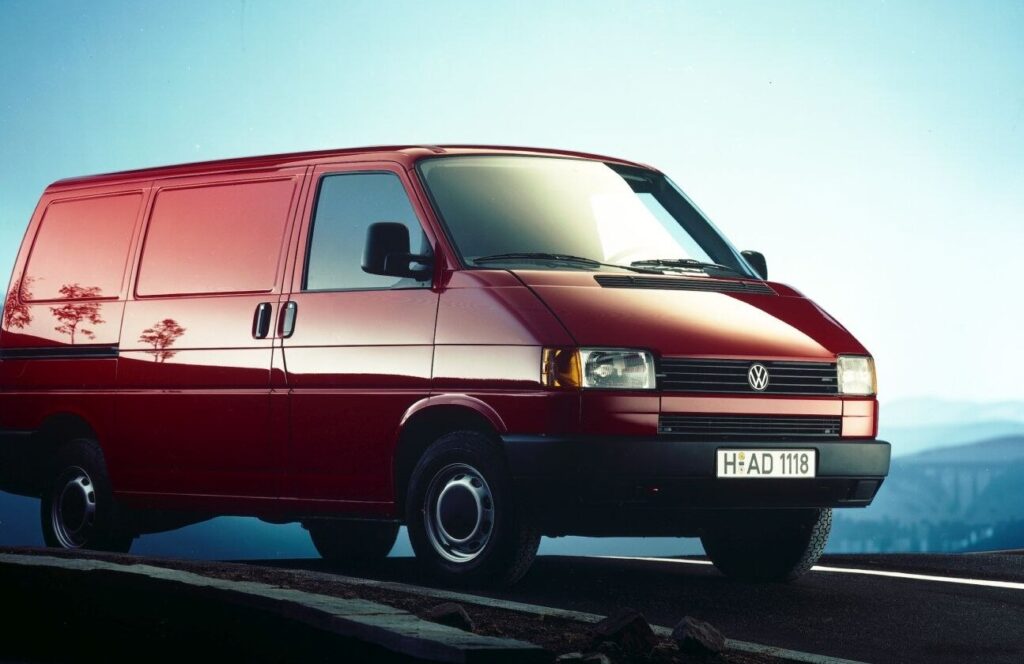
The Volkswagen Transporter (T4), produced from 1990 to 2003, represented a significant leap forward for the iconic van, moving away from the rear-engine, rear-wheel-drive layout of its predecessors to a front-engine, front-wheel-drive configuration. The 2.4 D (78 hp) Automatic L2H1 variant, manufactured between 1990 and 1995, occupied a specific niche within the T4 range. This version was aimed at commercial users prioritizing fuel economy and ease of driving over outright performance. The “L2H1” designation refers to the vehicle’s body length (L2 – long wheelbase) and roof height (H1 – standard roof). It served as a workhorse for businesses and tradespeople needing a reliable, if unhurried, cargo carrier.
Technical Specifications
| Brand | Volkswagen |
| Model | Transporter |
| Generation | Transporter (T4) Panel Van |
| Type (Engine) | 2.4 D (78 Hp) Automatic L2H1 |
| Start of production | 1990 year |
| End of production | 1995 year |
| Powertrain Architecture | Internal Combustion engine |
| Body type | Van |
| Seats | 2 |
| Doors | 4-5 |
| Fuel consumption (combined) | 10.8 l/100 km (21.8 US mpg, 26.2 UK mpg, 9.3 km/l) |
| Fuel Type | Diesel |
| Maximum speed | 133 km/h (82.64 mph) |
| Weight-to-power ratio | 21.5 kg/Hp, 46.6 Hp/tonne |
| Weight-to-torque ratio | 10.2 kg/Nm, 97.9 Nm/tonne |
| Power | 78 Hp @ 3700 rpm |
| Power per litre | 32.9 Hp/l |
| Torque | 164 Nm @ 1800-2200 rpm (120.96 lb.-ft. @ 1800-2200 rpm) |
| Engine layout | Front, Transverse |
| Engine Model/Code | AAB |
| Engine displacement | 2370 cm3 (144.63 cu. in.) |
| Number of cylinders | 5 |
| Engine configuration | Inline |
| Cylinder Bore | 79.5 mm (3.13 in.) |
| Piston Stroke | 95.5 mm (3.76 in.) |
| Compression ratio | 22.5:1 |
| Number of valves per cylinder | 2 |
| Fuel injection system | Precombustion chamber injection |
| Engine aspiration | Naturally aspirated engine |
| Valvetrain | SOHC |
| Engine oil capacity | 5.5 l (5.81 US qt | 4.84 UK qt) |
| Coolant | 9 l (9.51 US qt | 7.92 UK qt) |
| Kerb Weight | 1675 kg (3692.74 lbs.) |
| Max. weight | 2640-2800 kg (5820.2 – 6172.94 lbs.) |
| Max load | 965-1125 kg (2127.46 – 2480.2 lbs.) |
| Trunk (boot) space – maximum | 6300 l (222.48 cu. ft.) |
| Fuel tank capacity | 80 l (21.13 US gal | 17.6 UK gal) |
| Max. roof load | 100 kg (220.46 lbs.) |
| Permitted trailer load with brakes (12%) | 2000 kg (4409.25 lbs.) |
| Permitted trailer load without brakes | 700 kg (1543.24 lbs.) |
| Permitted towbar download | 100 kg (220.46 lbs.) |
| Length | 5055 mm (199.02 in.) |
| Width | 1840 mm (72.44 in.) |
| Height | 1940 mm (76.38 in.) |
| Wheelbase | 3320 mm (130.71 in.) |
| Front track | 1575 mm (62.01 in.) |
| Rear (Back) track | 1540 mm (60.63 in.) |
| Front overhang | 860 mm (33.86 in.) |
| Rear overhang | 875 mm (34.45 in.) |
| Ride height (ground clearance) | 180 mm (7.09 in.) |
| Drag coefficient (Cd) | 0.36 |
| Minimum turning circle (turning diameter) | 12.9 m (42.32 ft.) |
| Drivetrain Architecture | The Internal combustion engine (ICE) drives the front wheels of the vehicle. |
| Drive wheel | Front wheel drive |
| Number of gears and type of gearbox | 4 gears, automatic transmission |
| Front suspension | Independent torsion bar, double wishbone, Transverse stabilizer |
| Rear suspension | Independent coil spring, Trailing arm |
| Front brakes | Disc |
| Rear brakes | Drum |
| Assisting systems | ABS (Anti-lock braking system) |
| Steering type | Steering rack and pinion |
| Power steering | Hydraulic Steering |
| Tires size | 195/70 R15; 205/65 R15; 215/65 R15 |
| Wheel rims size | 6J x 15; 7J x 15 |
INTRODUCTION
The Volkswagen Transporter T4 2.4 D Automatic L2H1, produced between 1990 and 1995, was a commercially focused variant of the fourth-generation Transporter. It represented a move towards more practical and efficient vans for businesses. The T4 platform, designated 1HX0, was a significant departure from previous generations, offering improved space utilization, a more comfortable driving experience, and a wider range of engine options. This particular model, with its 2.4-liter diesel engine and automatic transmission, was designed for drivers who prioritized ease of use and fuel economy over outright performance. It was positioned as an entry-level or mid-range option within the T4 diesel lineup, appealing to businesses needing a reliable and economical work van.
Powertrain & Engine Architecture
The heart of the T4 2.4 D Automatic is the AAB engine, a 2.4-liter inline five-cylinder diesel. This engine utilized a precombustion chamber injection system, a common technology for diesel engines of the era. This system involved injecting fuel into a precombustion chamber, where it partially ignited before entering the main combustion chamber, promoting more complete combustion and reducing emissions. The engine produced 78 horsepower at 3700 rpm and 164 Nm (120.96 lb-ft) of torque between 1800 and 2200 rpm. The engine featured a single overhead camshaft (SOHC) valvetrain. Paired with this engine was a four-speed automatic transmission, designed for smooth and effortless operation. This transmission, while not known for its speed, provided a comfortable driving experience, particularly in urban environments. The engine’s transverse mounting further contributed to maximizing interior space.
Driving Characteristics
The driving experience in the T4 2.4 D Automatic was characterized by its relaxed pace. The 78 hp output and four-speed automatic transmission didn’t offer brisk acceleration. The focus was on providing sufficient power for everyday tasks and maintaining comfortable cruising speeds on highways. The automatic transmission, while convenient, did result in some power loss compared to the manual transmission versions. Gear ratios were optimized for fuel efficiency rather than performance. Uphill climbs, especially when fully loaded, required careful planning and often resulted in the transmission downshifting to maintain speed. Compared to the more powerful 1.9 TDI or 2.5 TDI variants, the 2.4 D Automatic felt significantly slower, but it offered a smoother and less demanding driving experience for those not prioritizing performance.
Equipment & Trim Levels
The T4 2.4 D Automatic L2H1 was typically equipped with basic, functional features geared towards commercial use. Standard equipment included a driver and passenger seat, basic instrumentation, and a functional dashboard layout. Interior upholstery was typically durable vinyl or cloth. Optional extras included power windows, central locking, and upgraded audio systems. The L2H1 body configuration provided a generous cargo space of 6300 liters (222.48 cu. ft.), making it suitable for a wide range of commercial applications. The van’s interior was designed for practicality and durability, rather than luxury.
Chassis & Braking
The T4 featured an independent suspension system on both the front and rear axles. The front suspension utilized a torsion bar and double wishbone setup, while the rear employed a trailing arm configuration with coil springs. This setup provided a reasonable level of ride comfort, even when the van was loaded. Braking duties were handled by disc brakes on the front axle and drum brakes on the rear. An Anti-lock Braking System (ABS) was often included as standard equipment, enhancing safety. The steering system was a rack and pinion type with hydraulic power assistance, making maneuvering relatively easy, despite the van’s size.
Market Reception & Comparison
The T4 2.4 D Automatic was generally well-received by commercial vehicle operators who valued its reliability and fuel economy. Critics noted its lack of outright performance but acknowledged its suitability for everyday tasks. Compared to the more powerful diesel variants, the 2.4 D Automatic offered lower running costs but at the expense of speed and towing capacity. The 1.9 TDI, for example, provided significantly better fuel economy and performance, but came at a higher purchase price. The automatic transmission was a selling point for drivers who preferred the convenience of not having to manually shift gears, particularly in congested urban environments.
Legacy
The Volkswagen Transporter T4 2.4 D Automatic L2H1 has proven to be a relatively durable and reliable workhorse. Many examples are still in use today, testament to the robust engineering of the T4 platform. While the engine and transmission may require periodic maintenance, they are generally considered to be relatively straightforward to repair. In the used car market, these vans are often sought after by businesses and tradespeople looking for an affordable and dependable cargo carrier. The simplicity of the 2.4 D engine, compared to the more complex TDI units, can make it a more appealing option for those seeking a vehicle that is easier to maintain and repair.