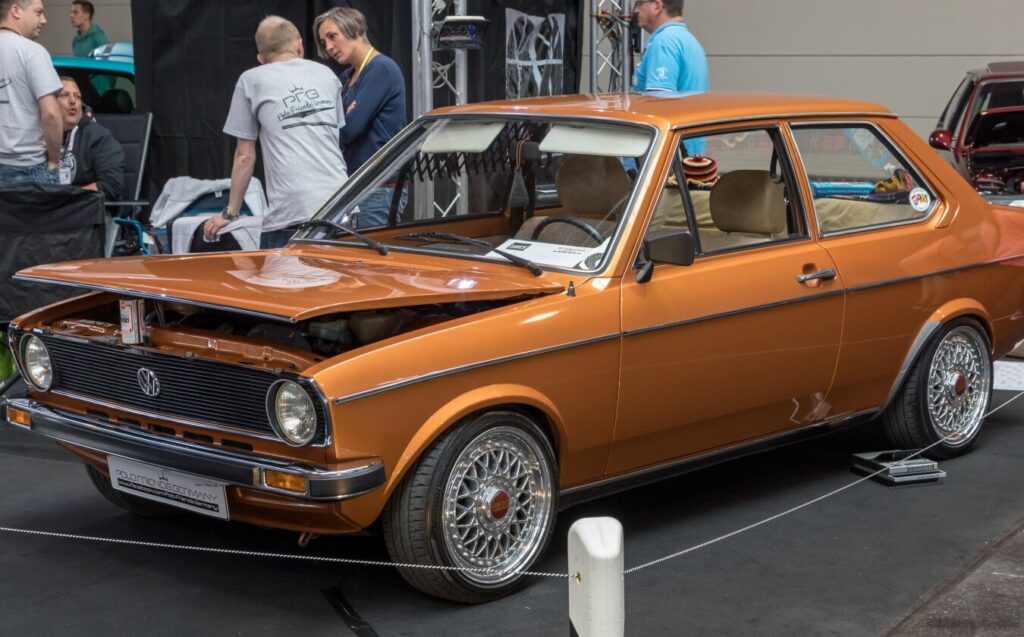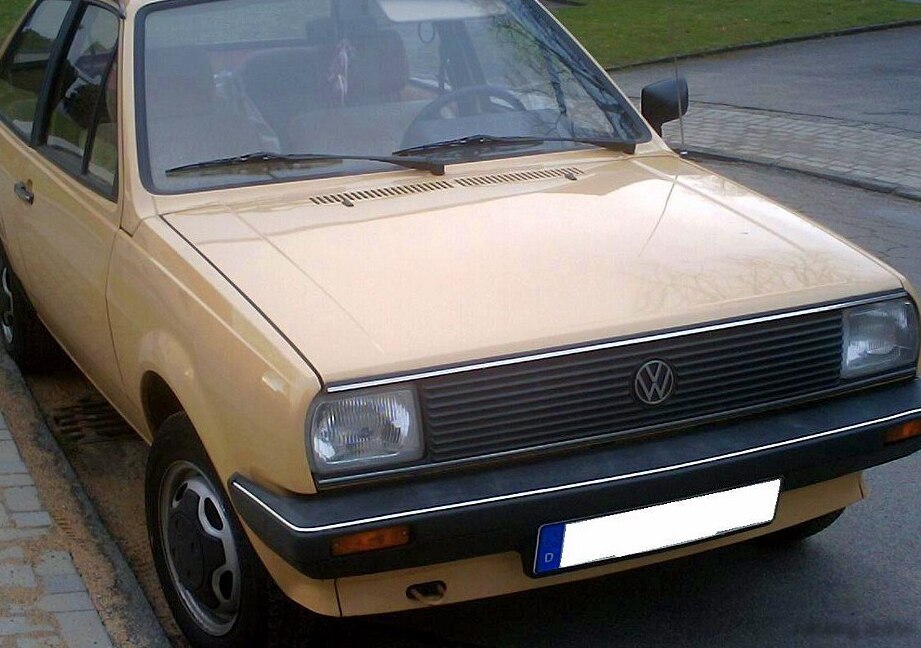
The Volkswagen Derby (86C) 1.3, produced between 1981 and 1984, represented Volkswagen’s entry-level offering in the compact sedan segment. Positioned as a more affordable alternative to the Golf, the Derby was primarily aimed at budget-conscious buyers seeking a practical and economical vehicle. It was based on the Volkswagen Polo (Mk2) platform, sharing many mechanical components, but offered a traditional three-box sedan body style. The 1.3-liter, 60 horsepower variant occupied the base trim level, focusing on fuel efficiency and low running costs rather than outright performance. It was a significant model for Volkswagen, particularly in markets where sedan body styles were preferred over hatchbacks.
Technical Specifications
| Brand | Volkswagen |
| Model | Derby |
| Generation | Derby (86C) |
| Type (Engine) | 1.3 (60 Hp) |
| Start of production | 1981 |
| End of production | 1984 |
| Powertrain Architecture | Internal Combustion engine |
| Body type | Sedan |
| Seats | 5 |
| Doors | 2 |
| Fuel consumption (urban) | 9.6 l/100 km (24.5 US mpg) |
| Fuel consumption (extra urban) | 6.1 l/100 km (38.6 US mpg) |
| Fuel Type | Petrol (Gasoline) |
| Acceleration 0 – 100 km/h | 13 sec |
| Acceleration 0 – 62 mph | 13 sec |
| Acceleration 0 – 60 mph | 12.4 sec |
| Maximum speed | 155 km/h (96.31 mph) |
| Weight-to-power ratio | 12.3 kg/Hp |
| Weight-to-torque ratio | 7.7 kg/Nm |
| Power | 60 Hp @ 5600 rpm |
| Torque | 95 Nm @ 3500 rpm (70.07 lb.-ft. @ 3500 rpm) |
| Engine layout | Front, Transverse |
| Engine Model/Code | HH |
| Engine displacement | 1272 cm3 (77.62 cu. in.) |
| Number of cylinders | 4 |
| Engine configuration | Inline |
| Compression ratio | 8.2:1 |
| Number of valves per cylinder | 2 |
| Fuel injection system | Carburettor |
| Engine aspiration | Naturally aspirated |
| Valvetrain | SOHC |
| Kerb Weight | 735 kg (1620.4 lbs.) |
| Max. weight | 1150 kg (2535.32 lbs.) |
| Max load | 415 kg (914.92 lbs.) |
| Trunk (boot) space – minimum | 445 l (15.72 cu. ft.) |
| Max. roof load | 50 kg (110.23 lbs.) |
| Permitted trailer load with brakes (12%) | 650 kg (1433 lbs.) |
| Permitted trailer load without brakes | 390 kg (859.8 lbs.) |
| Length | 3975 mm (156.5 in.) |
| Width | 1580 mm (62.2 in.) |
| Height | 1355 mm (53.35 in.) |
| Wheelbase | 2335 mm (91.93 in.) |
| Front track | 1306 mm (51.42 in.) |
| Rear (Back) track | 1332 mm (52.44 in.) |
| Ride height (ground clearance) | 118 mm (4.65 in.) |
| Minimum turning circle (turning diameter) | 10 m (32.81 ft.) |
| Drivetrain Architecture | The Internal combustion engine (ICE) drives the front wheels of the vehicle. |
| Drive wheel | Front wheel drive |
| Number of gears and type of gearbox | 4 gears, manual transmission |
| Front suspension | Independent type McPherson |
| Rear suspension | Torsion |
| Front brakes | Disc |
| Rear brakes | Drum |
| Steering type | Steering rack and pinion |
| Wheel rims size | Front wheel rims: 4.5J x 13Rear wheel rims: 4.5J x 13 |
Powertrain & Engine Architecture
The Derby 1.3 was powered by the Volkswagen HH engine, a 1.3-liter inline-four cylinder engine. This engine was a relatively simple design, featuring a single overhead camshaft (SOHC) and two valves per cylinder. Fuel delivery was handled by a carburetor, a common feature for vehicles of this era, prioritizing simplicity and cost-effectiveness over the more advanced fuel injection systems. The engine produced 60 horsepower at 5600 rpm and 95 Nm (70 lb-ft) of torque at 3500 rpm. The engine’s transverse mounting and front-wheel drive configuration were typical for Volkswagen’s compact models. The four-speed manual transmission was the standard offering, providing a straightforward driving experience. The HH engine was known for its durability, but its performance was modest, focusing on fuel economy rather than acceleration.
Driving Characteristics
The 1.3-liter Derby offered a utilitarian driving experience. Acceleration was leisurely, taking approximately 13 seconds to reach 60 mph. The four-speed manual transmission had relatively widely spaced gear ratios, requiring frequent shifting to maintain optimal engine speed. Compared to the more powerful Golf GTI or even the Golf with larger engine options, the Derby 1.3 felt significantly underpowered. However, its light weight (approximately 1620 lbs) helped to mitigate the lack of horsepower. The suspension, featuring McPherson struts at the front and a torsion beam at the rear, provided a comfortable ride, but handling was not particularly sporty. The steering was light and easy to use, making it well-suited for city driving.
Equipment & Trim Levels
The Derby 1.3 was offered with a fairly basic level of equipment. Standard features typically included cloth upholstery, vinyl floor covering, and a simple dashboard layout. Power steering, air conditioning, and upgraded audio systems were generally not available on this base trim level. Optional extras were limited, often consisting of upgraded wheel covers or a basic radio. The interior was functional and durable, prioritizing practicality over luxury. The focus was on providing a no-frills transportation solution at an affordable price point.
Chassis & Braking
The Derby 1.3 utilized a front-wheel drive chassis with independent McPherson strut suspension at the front and a torsion beam suspension at the rear. Braking was accomplished via disc brakes at the front and drum brakes at the rear. The braking system was adequate for the vehicle’s weight and performance, but lacked the stopping power of more modern systems. The relatively narrow tires and simple suspension setup contributed to a comfortable ride but limited handling capabilities. The steering system employed a rack and pinion setup, providing reasonably precise steering feel.
Market Reception & Comparison
The Derby 1.3 was generally well-received as an affordable and economical sedan. Critics praised its fuel efficiency and practicality, but noted its lack of performance. Compared to other vehicles in its class, such as the Ford Escort or Opel Kadett, the Derby 1.3 offered a more basic driving experience but was often more affordable. Within the Volkswagen lineup, the Derby 1.3 served as the entry point, with higher trim levels offering larger engines and more features. The 1.5 and 1.6-liter versions of the Derby provided significantly improved performance, but at a higher cost. Fuel economy was a strong point for the 1.3, making it an attractive option for budget-conscious buyers.
Legacy
The Volkswagen Derby 1.3, while not a performance icon, remains a popular choice among classic Volkswagen enthusiasts. The HH engine is known for its reliability and relative simplicity, making it relatively easy to maintain. Parts availability is generally good, although some components may be becoming increasingly scarce. Today, well-maintained examples of the Derby 1.3 are sought after by collectors and those looking for a classic, affordable Volkswagen. The Derby’s legacy lies in its role as a practical and economical sedan that provided affordable transportation for a wide range of buyers during the early 1980s. Its simple design and durable powertrain have ensured its continued presence on roads and in the hearts of Volkswagen fans.