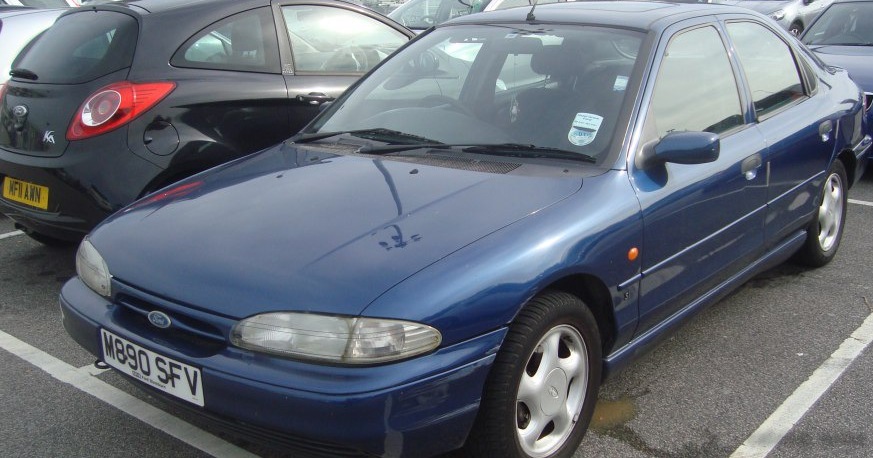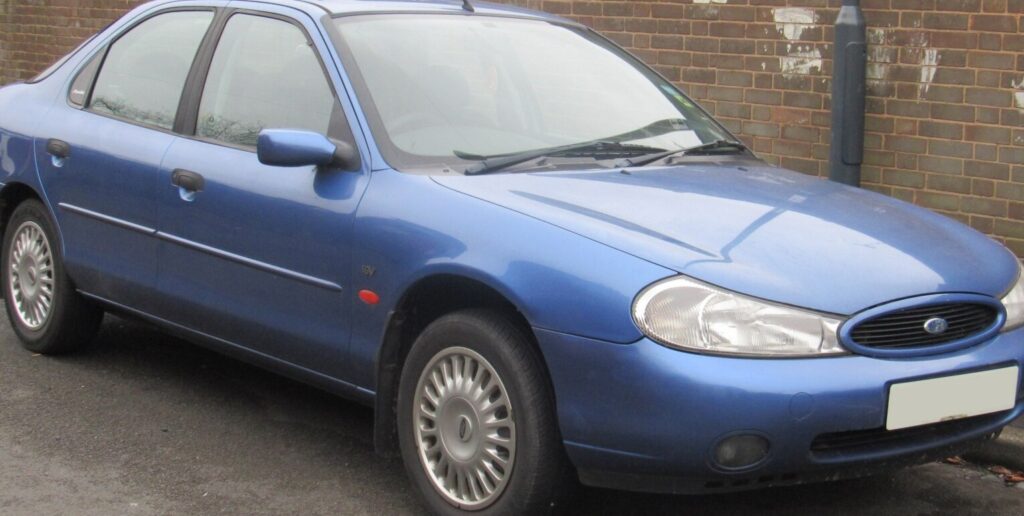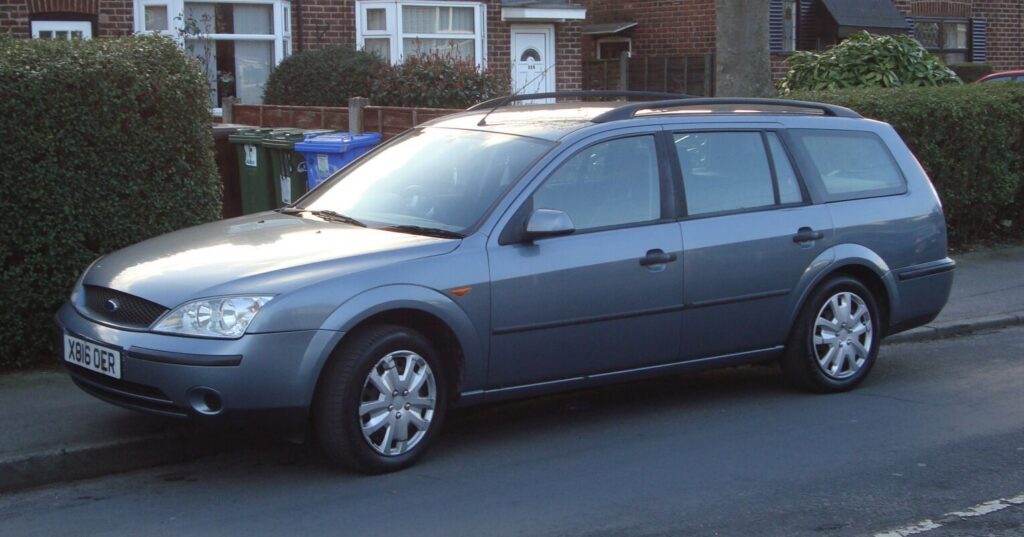
The Ford Mondeo II Wagon 2.0 TDCi, produced between 2002 and 2007, represented a significant offering in the European D-segment for Ford. This variant, equipped with the 130 horsepower version of the 2.0-liter turbodiesel engine, occupied a middle ground within the Mondeo Wagon lineup, balancing fuel efficiency with respectable performance. It was positioned as a practical and economical choice for families and business users alike, offering a spacious interior and generous cargo capacity. The Mondeo II, built on the Ford CDW270 platform (internally known as the 1HX0 for the wagon), aimed to improve upon its predecessor with enhanced refinement, safety features, and a more modern design.
Technical Specifications
| Brand | Ford |
| Model | Mondeo |
| Generation | Mondeo II Wagon |
| Type (Engine) | 2.0 TDCi (130 Hp) |
| Start of production | 2002 |
| End of production | 2007 |
| Powertrain Architecture | Internal Combustion engine |
| Body type | Station wagon (estate) |
| Seats | 5 |
| Doors | 5 |
| Fuel consumption (urban) | 8.2 l/100 km (28.7 US mpg, 34.4 UK mpg, 12.2 km/l) |
| Fuel consumption (extra urban) | 4.8 l/100 km (49 US mpg, 58.9 UK mpg, 20.8 km/l) |
| Fuel consumption (combined) | 6.2 l/100 km (37.9 US mpg, 45.6 UK mpg, 16.1 km/l) |
| Fuel Type | Diesel |
| Acceleration 0 – 100 km/h | 10.2 sec |
| Acceleration 0 – 62 mph | 10.2 sec |
| Acceleration 0 – 60 mph | 9.7 sec |
| Maximum speed | 200 km/h (124.27 mph) |
| Weight-to-power ratio | 11.5 kg/Hp, 87 Hp/tonne |
| Weight-to-torque ratio | 4.5 kg/Nm, 220.7 Nm/tonne |
| Power | 130 Hp @ 3800 rpm |
| Power per litre | 65.1 Hp/l |
| Torque | 330 Nm @ 1800 rpm (243.4 lb.-ft. @ 1800 rpm) |
| Engine layout | Front, Transverse |
| Engine Model/Code | FMBA, FMBB |
| Engine displacement | 1998 cm3 (121.93 cu. in.) |
| Number of cylinders | 4 |
| Engine configuration | Inline |
| Cylinder Bore | 86 mm (3.39 in.) |
| Piston Stroke | 86 mm (3.39 in.) |
| Compression ratio | 18.2:1 |
| Number of valves per cylinder | 4 |
| Fuel injection system | Diesel Commonrail |
| Engine aspiration | Turbocharger, Intercooler |
| Engine oil capacity | 6 l (6.34 US qt | 5.28 UK qt) |
| Coolant | 10.4 l (10.99 US qt | 9.15 UK qt) |
| Kerb Weight | 1495 kg (3295.91 lbs.) |
| Max. weight | 2165 kg (4773.01 lbs.) |
| Max load | 670 kg (1477.1 lbs.) |
| Trunk (boot) space – minimum | 540 l (19.07 cu. ft.) |
| Trunk (boot) space – maximum | 1700 l (60.03 cu. ft.) |
| Fuel tank capacity | 56 l (14.79 US gal | 12.32 UK gal) |
| Length | 4804 mm (189.13 in.) |
| Width | 1812 mm (71.34 in.) |
| Height | 1441 mm (56.73 in.) |
| Wheelbase | 2754 mm (108.43 in.) |
| Front track | 1522 mm (59.92 in.) |
| Rear (Back) track | 1537 mm (60.51 in.) |
| Drivetrain Architecture | The Internal combustion engine (ICE) drives the front wheels of the vehicle. |
| Drive wheel | Front wheel drive |
| Number of gears and type of gearbox | 6 gears, manual transmission |
| Front suspension | Wishbone |
| Rear suspension | Coil spring |
| Front brakes | Ventilated discs |
| Rear brakes | Disc |
| Assisting systems | ABS (Anti-lock braking system) |
| Steering type | Steering rack and pinion |
| Power steering | Hydraulic Steering |
| Tires size | 205/55 R16 |
Powertrain & Engine Architecture
The heart of the Mondeo II Wagon 2.0 TDCi was the Ford-developed, but often sourced from PSA Peugeot Citroën, 2.0-liter inline-four cylinder diesel engine. Engine codes FMBA and FMBB were common for this generation. This engine utilized a common rail direct injection system, delivering fuel at extremely high pressure for improved combustion efficiency and reduced emissions. A turbocharger with an intercooler was employed to boost power output, providing 130 horsepower at 3800 rpm and a healthy 330 Nm (243 lb-ft) of torque at just 1800 rpm. The engine featured four valves per cylinder and a robust bottom end designed for durability. The six-speed manual transmission was the standard offering, providing a good balance between fuel economy and performance. The gear ratios were tuned to maximize the engine’s torque, offering strong acceleration in everyday driving situations.
Driving Characteristics
The 2.0 TDCi engine in the Mondeo Wagon provided a comfortable and refined driving experience. While not a performance-oriented variant, the 130 horsepower and ample torque allowed for confident overtaking and cruising on highways. The six-speed manual transmission allowed drivers to keep the engine in its optimal power band, resulting in responsive acceleration. Compared to the higher-output 145 hp version of the same engine, the 130 hp variant offered slightly better fuel economy, but with a noticeable difference in outright performance. The manual gearbox provided a more engaging driving experience than the optional automatic transmission, which could sometimes feel sluggish and hunt for gears. The suspension, tuned for comfort, absorbed bumps and imperfections in the road well, providing a stable and predictable ride.
Equipment & Trim Levels
The Mondeo II Wagon 2.0 TDCi was typically offered in several trim levels, including LX, Zetec, and Ghia. The LX trim served as the entry-level option, featuring basic amenities such as air conditioning, power windows, and a CD player. The Zetec trim added alloy wheels, front fog lights, and upgraded interior trim. The Ghia trim represented the top-of-the-line offering, boasting leather upholstery, climate control, and a premium sound system. Standard safety features included ABS brakes, front airbags, and seatbelt pretensioners. Optional extras included a sunroof, parking sensors, and a navigation system.
Chassis & Braking
The Mondeo II Wagon featured a front-wheel-drive layout with independent wishbone suspension at the front and a coil spring rear suspension. This setup provided a good balance between ride comfort and handling. The braking system consisted of ventilated discs at the front and solid discs at the rear, providing adequate stopping power for the vehicle’s weight. ABS (Anti-lock Braking System) was standard, enhancing safety during emergency braking situations. The steering was a hydraulic power-assisted rack and pinion system, offering precise and responsive steering feel.
Market Reception & Comparison
The Ford Mondeo II Wagon 2.0 TDCi was generally well-received by automotive critics. It was praised for its spacious interior, comfortable ride, and fuel-efficient engine. However, some critics noted that the interior design was somewhat bland and that the handling wasn’t as sporty as some of its rivals. Compared to other engines in the Mondeo lineup, the 2.0 TDCi offered a compelling blend of economy and usability. The petrol engines provided more power but at the expense of fuel consumption, while the higher-output diesel offered more performance but was more expensive to purchase. The 2.0 TDCi proved to be a popular choice for fleet buyers and private customers seeking a practical and economical family vehicle.
Legacy
The Ford Mondeo II Wagon 2.0 TDCi has proven to be a relatively reliable vehicle, with many examples still on the road today. The 2.0 TDCi engine, while not without its potential issues (such as injector problems and turbocharger wear), is generally considered to be a durable and long-lasting unit when properly maintained. In the used car market, these Mondeos represent a good value proposition, offering a lot of space and practicality for a reasonable price. However, potential buyers should be aware of the common issues associated with this engine and ensure that the vehicle has been well-maintained. The Mondeo II Wagon 2.0 TDCi remains a popular choice for those seeking a dependable and economical estate car.