Technical Specifications
| Brand | Land Rover |
| Model Series | Series II |
| Generation | Series IIA |
| Type (Engine) | 2.3 (LR 88 OP, LR 109 OP) (69 Hp) |
| Start of Production | 1963 |
| End of Production | 1986 |
| Powertrain Architecture | Internal Combustion Engine |
| Body Type | Off-Road Vehicle |
| Fuel Type | Petrol (Gasoline) |
| Power | 69 Hp |
| Engine Aspiration | Naturally Aspirated |
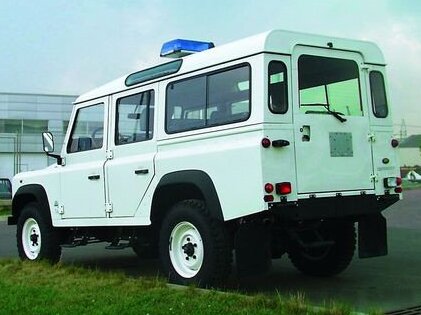
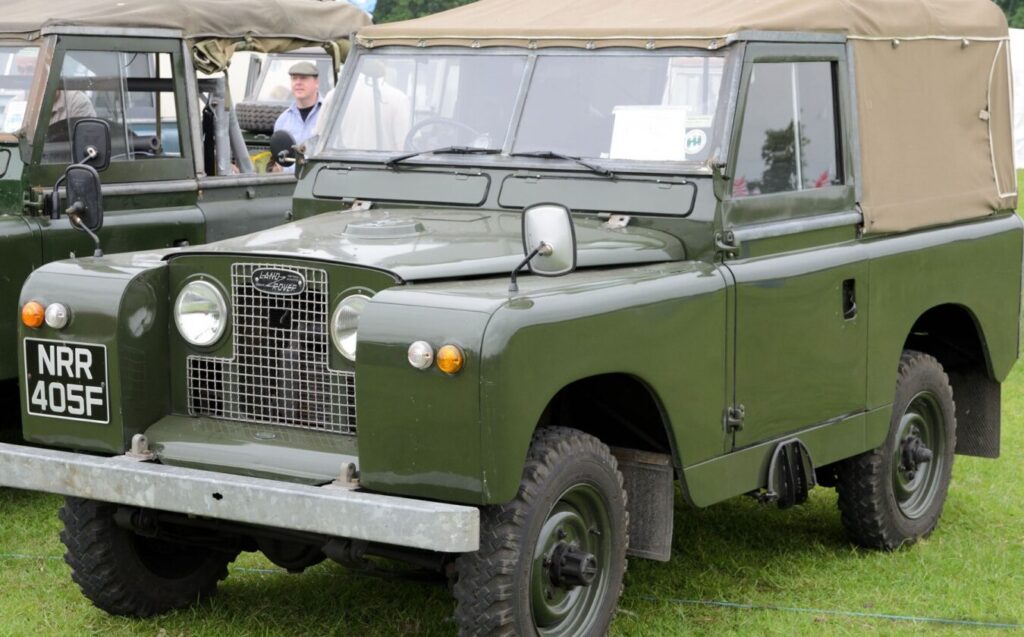
The Land Rover Series IIA 2.3, frequently called the LR 88 OP or LR 109 OP depending on the wheelbase, is a notable development in the celebrated Land Rover family. Manufactured from 1963 to 1986, this version held a vital position within the Series IIA range, providing a balance of affordability, capability, and relative mechanical simplicity. It functioned as a dependable workhorse for farmers, adventurers, and military personnel, especially in markets outside of North America where the Series Land Rover maintained consistent popularity. The “2.3” designation refers to the engine displacement, and this model was a mainstay of the Series IIA production, bridging the gap between earlier, less powerful engines and the later, more sophisticated options.
Powertrain & Engine Architecture
The core of the Series IIA 2.3 is its 2.286-liter (139.4 cubic inch) inline-four cylinder petrol engine. Often simply called the ‘2.3’, this engine was a substantial improvement over the earlier 2.0-liter units. It featured a robust cast iron block and cylinder head, engineered for durability and ease of maintenance rather than peak performance. The engine utilized a single Zenith 36VI carburetor for fuel delivery, a relatively uncomplicated system that contributed to its reliability, but also limited its efficiency and power output. The valvetrain employed a single overhead camshaft, operating pushrods to actuate the valves. While not a high-revving engine, it produced a respectable 69 horsepower at approximately 3,500 rpm and around 118 lb-ft of torque. The engine was typically paired with a four-speed manual gearbox, although a three-speed automatic transmission (sourced from Borg-Warner) was available, though less common. The automatic transmission, while offering convenience, did noticeably reduce the vehicle’s off-road capability due to torque converter losses and less precise control.
Driving Characteristics
The Series IIA 2.3, particularly in the shorter wheelbase 88-inch version, offered a surprisingly capable off-road experience. However, the 69 horsepower output meant that on-road performance was decidedly modest. Acceleration was slow, and maintaining highway speeds required considerable engine effort. The four-speed manual gearbox allowed for a reasonable degree of control, but the gear ratios were widely spaced, necessitating frequent shifting. The optional automatic transmission smoothed out the driving experience but at the cost of responsiveness and fuel economy. The engine’s torque characteristics meant that it was happiest operating in the mid-range, making it well-suited to slow, technical off-road driving. The 88-inch wheelbase provided excellent maneuverability, while the longer 109-inch version offered increased cargo capacity but was less nimble. Compared to later Series Land Rovers equipped with V8 engines or diesel powerplants, the 2.3 felt significantly underpowered, but it was also lighter and simpler to maintain.
Equipment & Trim Levels
The Series IIA 2.3 wasn’t known for luxurious appointments. It was fundamentally a utilitarian vehicle. Standard equipment typically included basic instrumentation (speedometer, fuel gauge, temperature gauge), a simple heater, and vinyl upholstery. Trim levels were minimal; the primary differentiation was between the 88 and 109 wheelbase models and whether it was configured as a soft-top, hard-top, or pickup. Optional extras included a winch, free-wheeling hubs, a radio, and upgraded seating. Interior finishes were spartan, with painted metal dashboards and rubber floor mats. The emphasis was on practicality and durability rather than comfort or aesthetics. The LR 88 OP (often a pickup) was generally more basic than the LR 109 OP, which could be configured as a station wagon or a more refined utility vehicle.
Chassis & Braking
The Series IIA 2.3 utilized a traditional ladder frame chassis, providing exceptional strength and durability. The suspension consisted of leaf springs front and rear, offering a comfortable, if somewhat bouncy, ride. Steering was by a conventional steering box, providing ample feedback but requiring considerable effort, particularly at low speeds. Braking systems varied depending on the year and model. Early models typically featured drum brakes on all four wheels, while later versions often incorporated front disc brakes for improved stopping power. Rear drum brakes remained standard throughout the production run. Stabilizer bars were not typically fitted to the 2.3 models, contributing to the vehicle’s body roll on paved roads. The robust chassis and suspension were designed to withstand the rigors of off-road use, and the vehicle’s high ground clearance made it capable of traversing challenging terrain.
Market Reception & Comparison
The Series IIA 2.3 was generally well-received as a dependable and affordable workhorse. Critics praised its simplicity, durability, and off-road capability. However, its lack of power and relatively crude on-road manners were often noted. Compared to the more powerful V8-equipped Land Rovers, the 2.3 was seen as a more economical option, but it lacked the performance and refinement of its larger-engined siblings. Against diesel-powered Land Rovers, the 2.3 offered a smoother, quieter driving experience, but it was less fuel-efficient and lacked the low-end torque of the diesel engines. Fuel economy typically ranged from 18-22 mpg, depending on driving conditions and load. Reliability was generally good, but regular maintenance was essential to prevent issues with the carburetor and cooling system.
Legacy
The Series IIA 2.3 remains a popular choice among Land Rover enthusiasts today. Its simplicity and durability make it relatively easy to maintain and repair, and parts availability is generally good. While not as sought-after as the V8 models, the 2.3 offers a unique driving experience and represents a significant piece of Land Rover history. The engine, while not particularly powerful by modern standards, is known for its longevity and can be reliably maintained with proper care. In the used car market, well-maintained examples of the Series IIA 2.3 command reasonable prices, making them an accessible entry point into the world of classic Land Rovers. The vehicle’s enduring appeal lies in its timeless design, its rugged construction, and its ability to tackle challenging terrain. It stands as a testament to the original Land Rover’s philosophy of building a simple, capable, and reliable vehicle for all conditions.