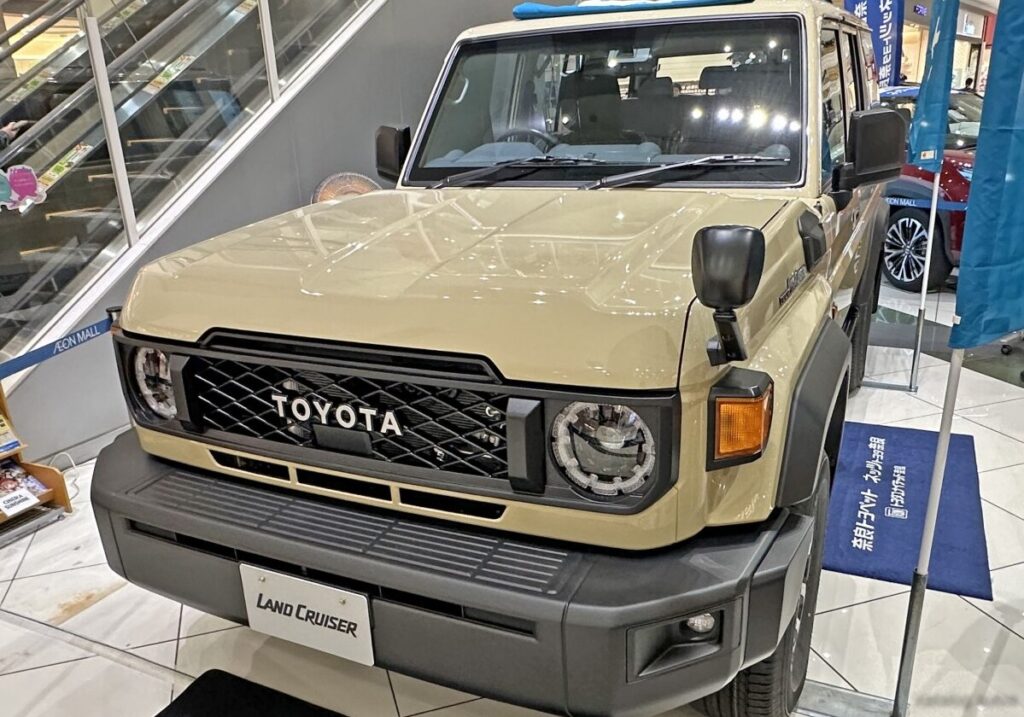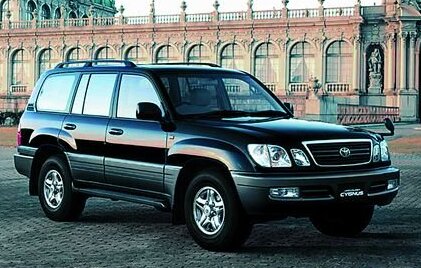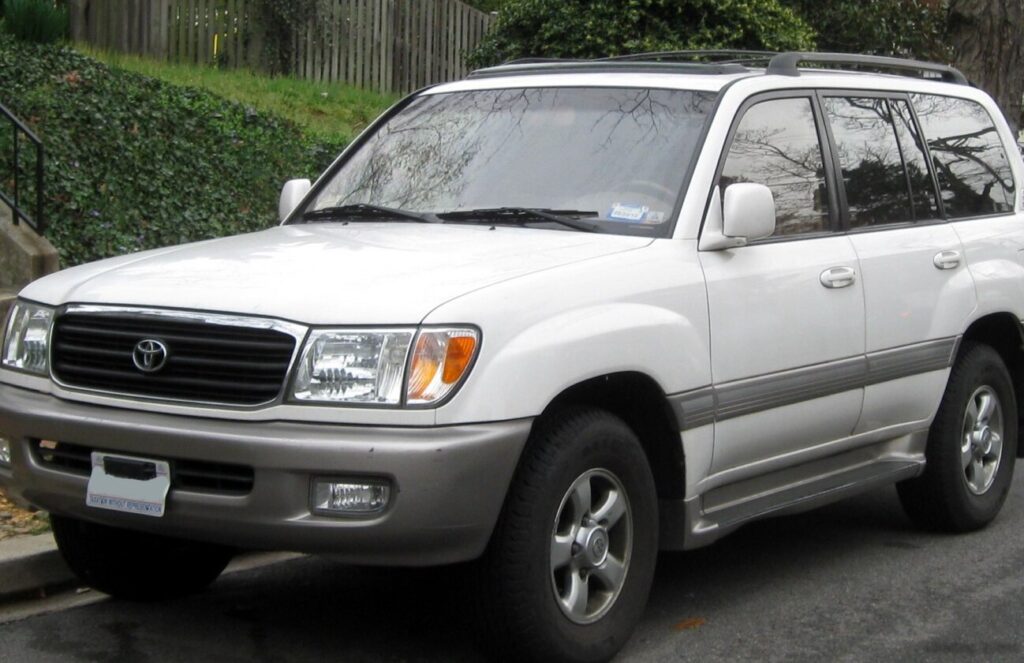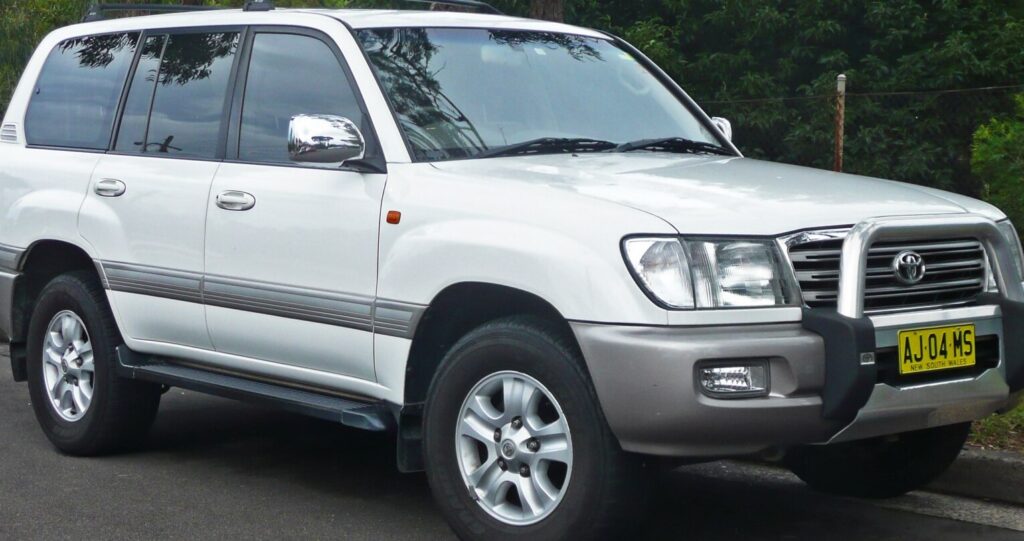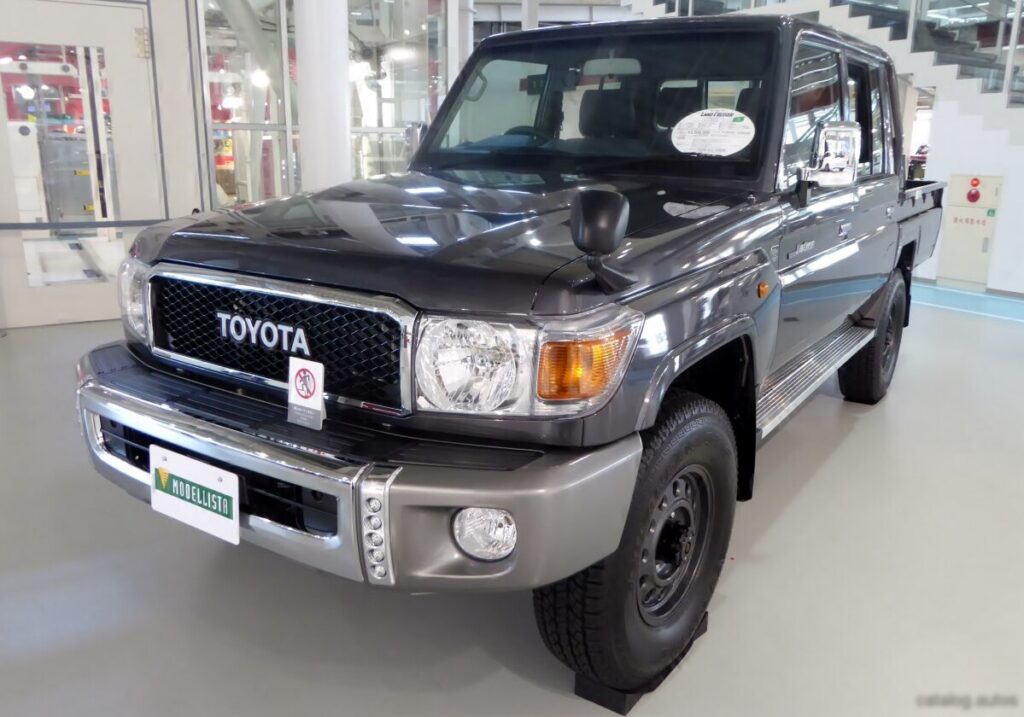
The Toyota Land Cruiser J79, specifically the 4.5 D-4D V8 variant produced from 2012 to 2021, represents a continuation of Toyota’s legendary off-road capability and durability. This iteration of the Land Cruiser, primarily sold in markets outside of North America, maintains the body-on-frame construction and robust engineering that have defined the model for decades. Positioned as a workhorse and expedition vehicle, the J79 4.5 D-4D V8 offered a blend of diesel efficiency, substantial towing capacity, and renowned Toyota reliability. It served as a crucial model in regions where demanding terrain and heavy-duty tasks are commonplace, offering a more utilitarian alternative to the increasingly luxurious Land Cruiser 200 series.
Technical Specifications
| Brand | Toyota |
| Model | Land Cruiser |
| Generation | Land Cruiser (J79) |
| Type (Engine) | 4.5 D-4D V8 (205 Hp) 4WD |
| Start of production | 2012 |
| End of production | 2021 |
| Powertrain Architecture | Internal Combustion engine |
| Body type | Pick-up |
| Seats | 5 |
| Doors | 4 |
| Fuel consumption (combined) | 11.9 l/100 km (19.8 US mpg, 23.7 UK mpg, 8.4 km/l) |
| CO2 emissions | 313 g/km |
| Fuel Type | Diesel |
| Maximum speed | 160 km/h (99.42 mph) |
| Weight-to-power ratio | 11.6 kg/Hp, 86.5 Hp/tonne |
| Weight-to-torque ratio | 5.5 kg/Nm, 181.4 Nm/tonne |
| Power | 205 Hp @ 3400 rpm |
| Power per litre | 46 Hp/l |
| Torque | 430 Nm @ 1200-3200 rpm (317.15 lb.-ft. @ 1200-3200 rpm) |
| Engine layout | Front, Longitudinal |
| Engine Model/Code | 1VD-FTV |
| Engine displacement | 4461 cm3 (272.23 cu. in.) |
| Number of cylinders | 8 |
| Engine configuration | Inline |
| Cylinder Bore | 86 mm (3.39 in.) |
| Piston Stroke | 96 mm (3.78 in.) |
| Compression ratio | 16.8:1 |
| Number of valves per cylinder | 4 |
| Fuel injection system | Diesel Commonrail |
| Engine aspiration | Turbocharger, Intercooler |
| Valvetrain | DOHC |
| Engine oil capacity | 9 l (9.51 US qt | 7.92 UK qt) |
| Coolant | 14.8 l (15.64 US qt | 13.02 UK qt) |
| Kerb Weight | 2370 kg (5224.96 lbs.) |
| Max. weight | 3300 kg (7275.25 lbs.) |
| Max load | 930 kg (2050.3 lbs.) |
| Fuel tank capacity | 130 l (34.34 US gal | 28.6 UK gal) |
| Permitted trailer load with brakes (12%) | 3500 kg (7716.18 lbs.) |
| Permitted trailer load without brakes | 750 kg (1653.47 lbs.) |
| Length | 5235 mm (206.1 in.) |
| Width | 1870 mm (73.62 in.) |
| Height | 1945 mm (76.57 in.) |
| Wheelbase | 3180 mm (125.2 in.) |
| Front track | 1555 mm (61.22 in.) |
| Rear track | 1460 mm (57.48 in.) |
| Front overhang | 850 mm (33.46 in.) |
| Rear overhang | 1205 mm (47.44 in.) |
| Ride height (ground clearance) | 235 mm (9.25 in.) |
| Minimum turning circle | 14.4 m (47.24 ft.) |
| Approach angle | 33° |
| Departure angle | 27° |
| Drivetrain Architecture | All wheel drive (4×4). ICE drives rear wheels permanently, front wheels engaged via clutch. |
| Number of gears and type of gearbox | 5 gears, manual transmission |
| Front suspension | Dependent spring suspension with anti-roll bar |
| Rear suspension | Rigid axle suspension, Leaf spring |
| Front brakes | Ventilated discs |
| Rear brakes | Drum |
| Assisting systems | ABS (Anti-lock braking system), Hydraulic Power Steering |
| Tires size | 265/70 R16 |
Powertrain & Engine Architecture
The heart of the J79 4.5 D-4D V8 is the 1VD-FTV engine, a 4.5-liter turbocharged diesel V8. This engine is notable for its robust construction and ability to produce significant torque at low engine speeds. The 1VD-FTV utilizes a common rail direct injection system, delivering fuel directly into the cylinders at extremely high pressure for improved combustion efficiency and reduced emissions. The engine features a double overhead camshaft (DOHC) valvetrain, optimizing airflow for enhanced performance. The turbocharger, coupled with an intercooler, further boosts power output. The five-speed manual transmission was the standard offering, chosen for its durability and suitability for off-road conditions. While an automatic transmission was available in some markets, the manual was favored for its greater control and reliability in demanding environments.
Driving Characteristics
The 205 horsepower and 430 Nm (317 lb-ft) of torque delivered by the 4.5 D-4D V8, combined with the five-speed manual transmission, provided a capable, if not particularly sporty, driving experience. The engine’s peak torque was available from a low 1200 rpm, making it well-suited for towing and navigating challenging terrain. The gear ratios were optimized for low-speed crawling and maintaining momentum off-road, rather than rapid acceleration. Compared to higher-output Land Cruiser variants, such as those with larger displacement engines, the 4.5 D-4D V8 offered a more economical and fuel-efficient option, albeit with a noticeable trade-off in outright performance. The manual transmission provided precise control, essential for technical off-roading, while the relatively simple mechanicals contributed to the vehicle’s overall reliability.
Equipment & Trim Levels
The J79 4.5 D-4D V8 was typically equipped with a functional, rather than luxurious, interior. Standard features included air conditioning, power windows, and a basic audio system. Upholstery was typically durable cloth or vinyl, designed to withstand harsh conditions. Optional extras included a limited-slip differential, a winch, and upgraded suspension components. Trim levels varied by market, but generally focused on adding convenience features rather than significant performance enhancements. The emphasis was on providing a practical and reliable vehicle for work and exploration.
Chassis & Braking
The Land Cruiser J79 utilizes a traditional body-on-frame construction, providing exceptional strength and durability. The suspension system consists of a dependent spring suspension with an anti-roll bar at the front and a rigid axle suspension with leaf springs at the rear. This setup is designed to handle heavy loads and absorb impacts from rough terrain. Braking duties are handled by ventilated discs at the front and drum brakes at the rear. While not offering the stopping power of more modern braking systems, the setup was adequate for the vehicle’s intended use. The robust chassis and suspension contribute to the Land Cruiser’s impressive off-road capability and load-carrying capacity.
Market Reception & Comparison
The J79 4.5 D-4D V8 was well-received in markets where a rugged and reliable off-road vehicle was highly valued. Critics praised its durability, towing capacity, and fuel efficiency compared to larger, more powerful Land Cruiser models. However, some noted its relatively basic interior and lack of advanced technology. Compared to the 3.0 D-4D variants, the V8 offered significantly more power and torque, making it a better choice for heavy-duty applications. Against competitors like the Nissan Patrol, the Land Cruiser J79 was often favored for its reputation for reliability and resale value.
Legacy
The Toyota Land Cruiser J79 4.5 D-4D V8 has earned a reputation as a remarkably durable and reliable vehicle. The 1VD-FTV engine, when properly maintained, is known to withstand high mileage and demanding conditions. In the used car market, these Land Cruisers command a premium due to their reputation for longevity and off-road capability. They remain popular choices for overlanding, expedition travel, and use in remote areas where reliability is paramount. The J79 continues to be a testament to Toyota’s commitment to building vehicles that can withstand the test of time and terrain.