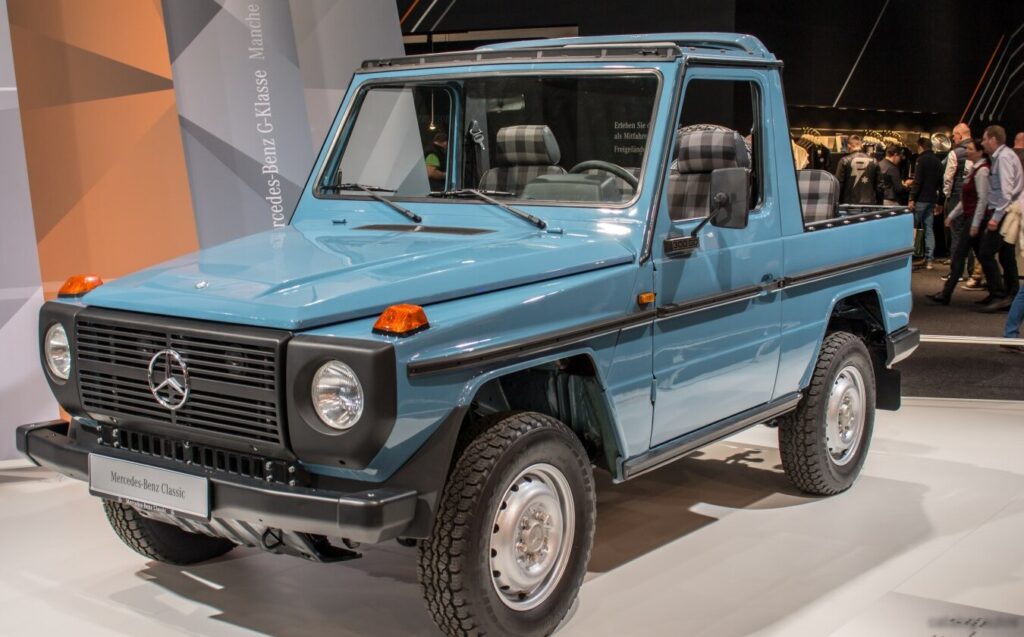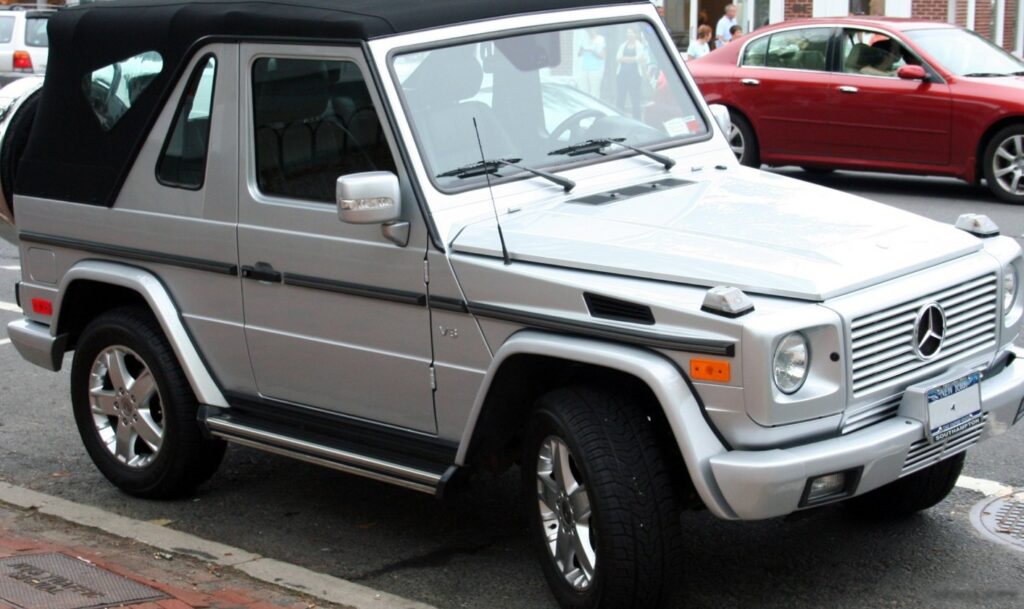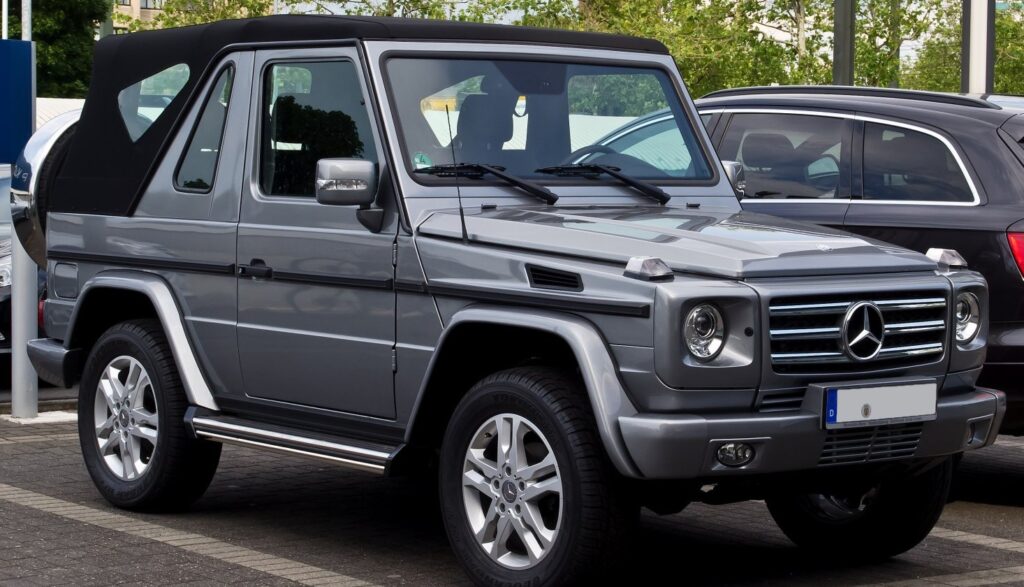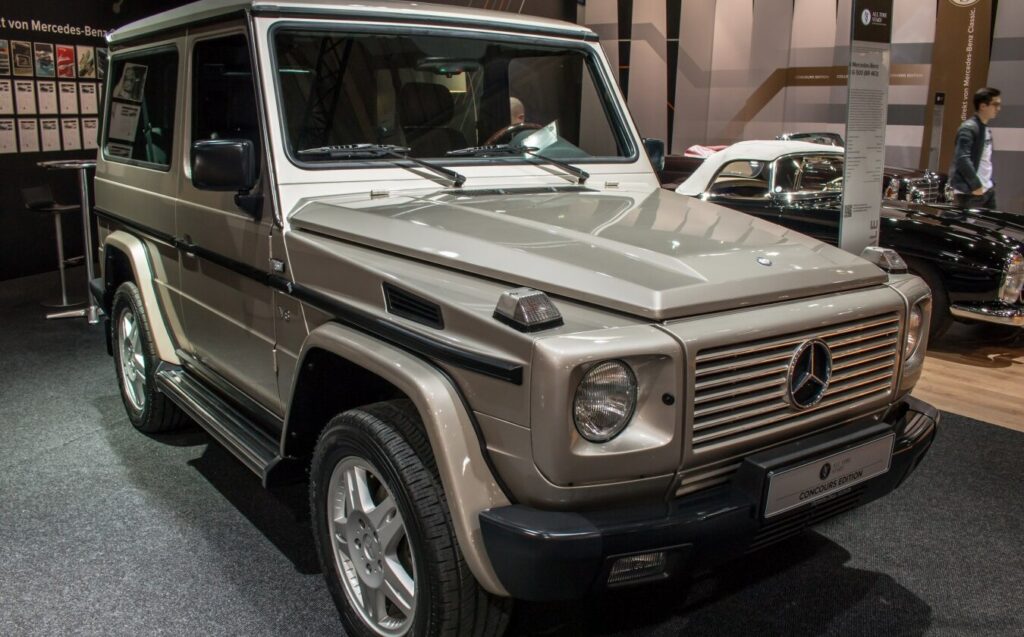
The Mercedes-Benz G 200 (W463), produced briefly between September 1993 and March 1994, represented the entry point into the iconic G-Class range during that period. Positioned as a more accessible alternative to the higher-specification G 300 and G 360 models, the G 200 aimed to broaden the appeal of the G-Wagen, particularly in markets where smaller displacement engines were favored due to taxation or fuel economy considerations. It utilized the robust W463 chassis, known for its off-road capability, but with a less powerful engine and a more basic level of equipment. This variant was primarily sold in Europe, where it offered a unique blend of G-Class prestige and relative affordability.
Technical Specifications
| Brand | Mercedes-Benz |
| Model | G-class |
| Generation | G-class (W463) |
| Type | G 200 (118 Hp) 4MATIC |
| Start of production | September, 1993 |
| End of production | March, 1994 |
| Powertrain Architecture | Internal Combustion engine |
| Body type | Off-road vehicle |
| Seats | 5 |
| Doors | 3 |
| Fuel Type | Petrol (Gasoline) |
| Weight-to-power ratio | 17.5 kg/Hp, 57.3 Hp/tonne |
| Weight-to-torque ratio | 12 kg/Nm, 83.5 Nm/tonne |
| Power | 118 Hp @ 5200 rpm |
| Power per litre | 59.1 Hp/l |
| Torque | 172 Nm @ 3500 rpm (126.86 lb.-ft. @ 3500 rpm) |
| Engine layout | Front, Longitudinal |
| Engine Model/Code | M 102.965 |
| Engine displacement | 1996 cm3 (121.8 cu. in.) |
| Number of cylinders | 4 |
| Engine configuration | Inline |
| Cylinder Bore | 89 mm (3.5 in.) |
| Piston Stroke | 80.2 mm (3.16 in.) |
| Compression ratio | 9.1:1 |
| Number of valves per cylinder | 2 |
| Fuel injection system | Multi-port manifold injection |
| Engine aspiration | Naturally aspirated engine |
| Valvetrain | SOHC |
| Engine oil capacity | 6 l (6.34 US qt | 5.28 UK qt) |
| Coolant | 5 l (5.28 US qt | 4.4 UK qt) |
| Kerb Weight | 2060 kg (4541.52 lbs.) |
| Max. weight | 2620 kg (5776.11 lbs.) |
| Max load | 560 kg (1234.59 lbs.) |
| Fuel tank capacity | 96 l (25.36 US gal | 21.12 UK gal) |
| Length | 4185 mm (164.76 in.) |
| Width | 1690 mm (66.54 in.) |
| Height | 1908 mm (75.12 in.) |
| Wheelbase | 2400 mm (94.49 in.) |
| Front track | 1425 mm (56.1 in.) |
| Rear track | 1425 mm (56.1 in.) |
| Drivetrain Architecture | All wheel drive (4×4). Internal Combustion engine. The ICE drives permanently the four wheels. |
| Number of gears and type of gearbox | 5 gears, manual transmission |
| Front suspension | Coil spring, Rigid axle suspension, Trailing arm |
| Rear suspension | Rigid axle suspension, Trailing arm, Coil spring |
| Front brakes | Disc |
| Rear brakes | Drum |
| Assisting systems | ABS (Anti-lock braking system) |
| Steering type | Cone worm with recirculation balls |
| Power steering | Hydraulic Steering |
| Tires size | 205/80 R16 |
| Wheel rims size | 6J x 16 |
Powertrain & Engine Architecture
The G 200 was powered by the Mercedes-Benz M 102.965 engine, a 2.0-liter inline-four cylinder gasoline engine. This engine, a descendant of the well-regarded M102 family, featured a single overhead camshaft (SOHC) valvetrain and multi-port fuel injection. While not a high-performance unit, the M102 was known for its durability and relatively smooth operation. The engine produced 118 horsepower at 5200 rpm and 172 Nm (126.86 lb-ft) of torque at 3500 rpm. The engine was mounted longitudinally in the chassis. The G 200 exclusively came with a 5-speed manual transmission, designed to maximize the available power and provide reasonable fuel economy. The transmission was chosen to complement the engine’s torque characteristics and the vehicle’s intended use.
Driving Characteristics
The G 200’s driving experience was defined by its robust build and off-road capability, rather than outright speed. With 118 hp propelling over 2000 kg, acceleration was modest. The 5-speed manual transmission required frequent shifting to maintain momentum, especially when loaded or tackling inclines. Compared to the G 300, which offered significantly more power, the G 200 felt noticeably slower. However, the lower engine displacement and conservative tuning resulted in better fuel economy. The permanent four-wheel drive system, a hallmark of the G-Class, provided excellent traction on various surfaces, making it a capable off-road vehicle despite its relatively modest power output. The gear ratios were optimized for low-speed torque, aiding in off-road maneuvering.
Equipment & Trim Levels
The G 200 was positioned as the entry-level G-Class, and its equipment level reflected this. Standard features typically included basic cloth upholstery, steel wheels, and a relatively simple dashboard layout. Air conditioning and power windows were often optional extras. The interior was functional and durable, prioritizing practicality over luxury. The focus was on providing a rugged and reliable vehicle capable of handling demanding conditions. Optional extras could include a sunroof, upgraded sound system, and more comfortable seating.
Chassis & Braking
The G 200 utilized the same robust ladder-frame chassis as other W463 models, providing exceptional strength and durability. The suspension consisted of coil springs and rigid axles with trailing arms, offering a comfortable ride on and off-road. Braking was provided by disc brakes on the front wheels and drum brakes on the rear. An Anti-lock Braking System (ABS) was standard, enhancing safety and control. The steering system was a cone worm type with hydraulic power assistance, providing precise control and reducing driver effort.
Market Reception & Comparison
The G 200 received mixed reviews. Critics acknowledged its off-road capability and the appeal of the G-Class brand, but many found the engine underpowered for the vehicle’s weight. Compared to the G 300, the G 200 offered a more affordable entry point into G-Class ownership, but at the expense of performance. Fuel economy was a key advantage, making it a more practical choice for everyday use in some markets. Reliability was generally good, benefiting from the robust design of the M102 engine and the durable chassis.
Legacy
The G 200 was a short-lived variant, and relatively few examples were produced. As a result, it is now a rare and sought-after vehicle among G-Class enthusiasts. The M102 engine, while not known for its high performance, is considered a reliable and durable unit. The G 200’s simplicity and ruggedness have contributed to its enduring appeal. In the used car market, well-maintained examples command a premium due to their rarity and the iconic status of the G-Class. The G 200 represents a unique chapter in the history of the G-Wagen, offering a glimpse into a time when even the most luxurious off-road vehicles could be had with a more modest engine.