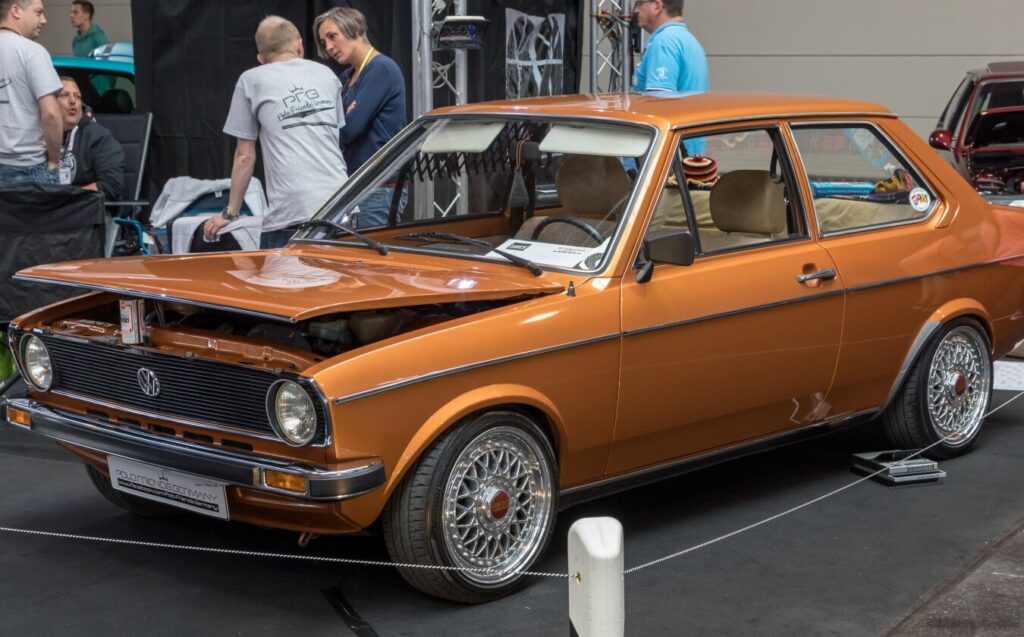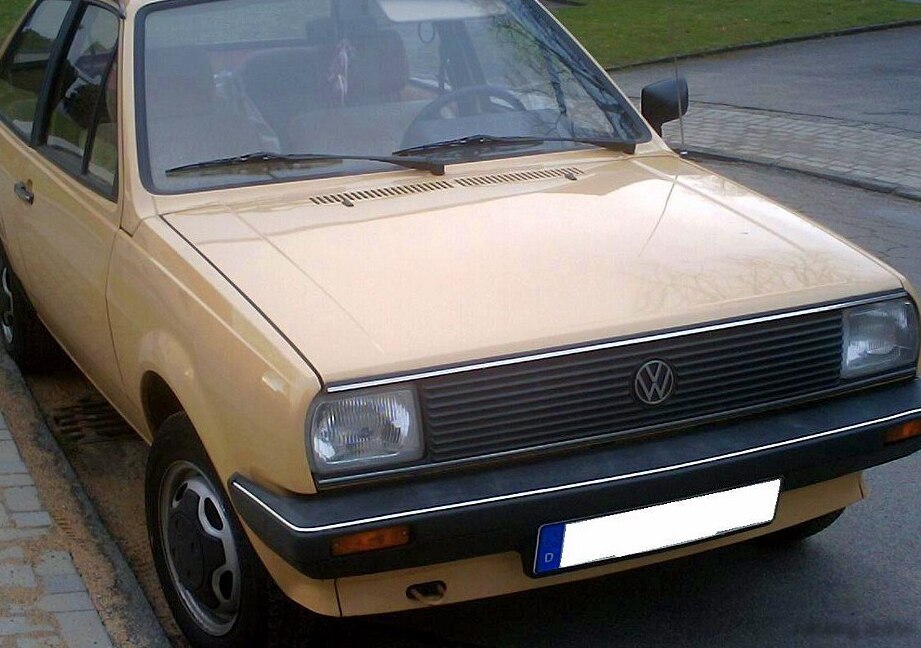
The Volkswagen Derby (86C) 1.3, produced between 1983 and 1984, represented a budget-oriented entry point into the Volkswagen lineup during a period of significant change for the brand. Positioned as a more affordable alternative to the Golf, the Derby was essentially a three-box sedan version of the second-generation Polo (86C). It aimed to capture a segment of the market seeking practicality and Volkswagen reliability at a lower price point than the hatchback Golf. This particular 1.3-liter, 75 horsepower variant served as the base model, offering a simple and economical transportation solution. The Derby itself was a relatively short-lived model, discontinued after 1984, as Volkswagen shifted its focus towards other offerings.
Technical Specifications
| Brand | Volkswagen |
| Model | Derby |
| Generation | Derby (86C) |
| Type (Engine) | 1.3 (75 Hp) |
| Start of production | 1983 |
| End of production | 1984 |
| Powertrain Architecture | Internal Combustion engine |
| Body type | Sedan |
| Fuel Type | Petrol (Gasoline) |
| Power | 75 Hp |
| Engine Model/Code | GK |
| Engine aspiration | Naturally aspirated engine |
| Engine oil capacity | 3.5 l / 3.7 US qt / 3.08 UK qt |
Powertrain & Engine Architecture
The heart of the 1983-1984 Volkswagen Derby 1.3 was the GK engine, a 1272cc inline-four cylinder gasoline engine. This engine was a relatively simple design, featuring a single overhead camshaft (SOHC) operating two valves per cylinder. Fuel delivery was managed by a single-barrel carburetor, a common feature for vehicles of this era and price point. The GK engine was known for its durability and ease of maintenance, though it wasn’t particularly powerful. The engine’s block was constructed from cast iron, contributing to its robustness. The Derby 1.3 was exclusively offered with a four-speed manual transmission, reflecting its focus on affordability and simplicity. There was no automatic transmission option for this base model. The engine’s relatively low compression ratio (around 8.5:1) and modest tuning contributed to its fuel efficiency, but also limited its overall performance.
Driving Characteristics
The Derby 1.3, with its 75 horsepower and four-speed manual transmission, offered modest performance. Acceleration was leisurely, and highway passing required careful planning. The engine produced approximately 84 lb-ft of torque, which was sufficient for everyday driving but didn’t provide a particularly exciting experience. The four-speed gearbox was well-matched to the engine’s characteristics, providing reasonable gear spacing for city and highway driving. The clutch was light and easy to operate, making it a suitable vehicle for new drivers. Compared to the later, more powerful Golf models, the Derby 1.3 felt significantly slower. However, its lighter weight (around 1,700 lbs) helped to mitigate some of the power deficit. The suspension, while basic, provided a comfortable ride, absorbing bumps and imperfections in the road reasonably well. The steering was light and responsive, making it easy to maneuver in tight spaces.
Equipment & Trim Levels
The Derby 1.3 was intentionally kept basic in terms of equipment to maintain its affordability. Standard features typically included cloth upholstery, vinyl floor covering, and a simple two-spoke steering wheel. The dashboard was functional but lacked many of the frills found in more expensive vehicles. A basic AM radio was often included, but power windows, central locking, and air conditioning were not typically offered on this base model. Optional extras were limited, and generally consisted of upgraded radios or a sunroof. The interior trim was primarily black or grey, reflecting the car’s utilitarian nature. The seats were relatively flat and offered limited bolstering, prioritizing comfort over sporty support.
Chassis & Braking
The Derby 1.3 utilized a relatively simple chassis design, based on the Polo 86C platform. The front suspension consisted of MacPherson struts, while the rear suspension employed a twist-beam axle. This setup provided a good balance of ride comfort and handling. Braking was accomplished via drum brakes on all four wheels, which was typical for vehicles in this price range during the early 1980s. The brakes were adequate for normal driving conditions, but lacked the stopping power of disc brakes. The steering system was a recirculating ball type, providing a relatively direct feel. The Derby 1.3 did not feature a stabilizer bar, which contributed to its slightly increased body roll during cornering.
Market Reception & Comparison
The Volkswagen Derby 1.3 was generally well-received as an affordable and reliable transportation option. Critics praised its fuel efficiency and ease of maintenance, but noted its lack of performance and basic equipment levels. Compared to other vehicles in its class, such as the Ford Escort or Opel Kadett, the Derby 1.3 offered a slightly more refined driving experience and a reputation for German engineering quality. However, it was often more expensive than its competitors. The Derby 1.3’s fuel economy was respectable for the time, averaging around 35-40 mpg. Reliability was generally good, with the GK engine proving to be durable and long-lasting. However, the drum brakes and basic suspension components required more frequent maintenance than more modern systems.
Legacy
The Volkswagen Derby 1.3, while a relatively short-lived model, holds a place in automotive history as a practical and affordable entry-level vehicle. The GK engine, while not particularly powerful, proved to be remarkably durable and is still found in many classic Volkswagen enthusiasts’ garages today. The Derby’s simple design and ease of maintenance make it a popular choice for restoration projects. In the used car market, well-maintained examples of the Derby 1.3 are becoming increasingly collectible, particularly among Volkswagen enthusiasts. The car represents a simpler era of automotive design, before the advent of complex electronics and advanced features. Its legacy is one of affordability, reliability, and understated German engineering.