
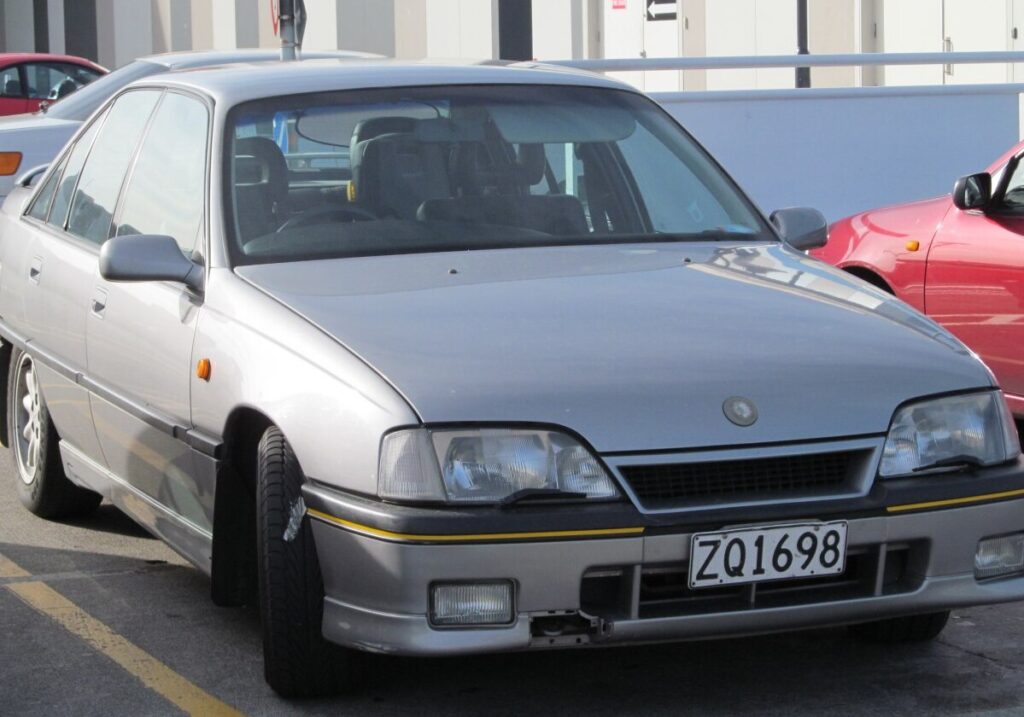
The Opel Omega A 1.8i Automatic, produced between 1986 and 1987, represented the entry point into the first generation (Omega A) of Opel’s flagship sedan. Positioned within the 1HX0 chassis series, this variant offered a more accessible price point compared to the higher-specification models, such as those equipped with the larger six-cylinder engines. It aimed to provide comfortable, reliable transportation for families and business users, prioritizing fuel economy and ease of driving over outright performance. The Omega A was Opel’s replacement for the long-running Opel Rekord, intended to compete with vehicles like the Ford Granada and BMW 5 Series in the European market.
Technical Specifications
| Brand | Opel |
| Model | Omega |
| Generation | Omega A |
| Type (Engine) | 1.8i (115 Hp) Automatic |
| Start of production | 1986 |
| End of production | 1987 |
| Powertrain Architecture | Internal Combustion engine |
| Body type | Sedan |
| Seats | 5 |
| Doors | 4 |
| Fuel consumption (urban) | 11 l/100 km (21.4 US mpg, 25.7 UK mpg, 9.1 km/l) |
| Fuel consumption (extra urban) | 6.1 l/100 km (38.6 US mpg, 46.3 UK mpg, 16.4 km/l) |
| Fuel consumption (combined) | 7.8 l/100 km (30.2 US mpg, 36.2 UK mpg, 12.8 km/l) |
| Fuel Type | Petrol (Gasoline) |
| Acceleration 0 – 100 km/h | 14.5 sec |
| Acceleration 0 – 62 mph | 14.5 sec |
| Acceleration 0 – 60 mph | 13.8 sec |
| Maximum speed | 180 km/h (111.85 mph) |
| Weight-to-power ratio | 10.7 kg/Hp, 93.1 Hp/tonne |
| Weight-to-torque ratio | 7.7 kg/Nm, 129.6 Nm/tonne |
| Power | 115 Hp @ 5600 rpm |
| Power per litre | 64 Hp/l |
| Torque | 160 Nm @ 4600 rpm (118.01 lb.-ft. @ 4600 rpm) |
| Engine layout | Front, Longitudinal |
| Engine Model/Code | 18SEH |
| Engine displacement | 1796 cm3 (109.6 cu. in.) |
| Number of cylinders | 4 |
| Engine configuration | Inline |
| Cylinder Bore | 84.8 mm (3.34 in.) |
| Piston Stroke | 79.5 mm (3.13 in.) |
| Compression ratio | 10:1 |
| Number of valves per cylinder | 2 |
| Fuel injection system | Multi-port manifold injection |
| Engine aspiration | Naturally aspirated engine |
| Valvetrain | SOHC |
| Engine oil capacity | 4.5 l (4.76 US qt | 3.96 UK qt) |
| Coolant capacity | 6.4 l (6.76 US qt | 5.63 UK qt) |
| Kerb Weight | 1235 kg (2722.71 lbs.) |
| Max. weight | 1795 kg (3957.3 lbs.) |
| Max load | 560 kg (1234.59 lbs.) |
| Trunk (boot) space – minimum | 520 l (18.36 cu. ft.) |
| Trunk (boot) space – maximum | 870 l (30.72 cu. ft.) |
| Fuel tank capacity | 75 l (19.81 US gal | 16.5 UK gal) |
| Length | 4740 mm (186.61 in.) |
| Width | 1760 mm (69.29 in.) |
| Height | 1445 mm (56.89 in.) |
| Wheelbase | 2730 mm (107.48 in.) |
| Front track | 1445 mm (56.89 in.) |
| Rear (Back) track | 1460 mm (57.48 in.) |
| Drivetrain Architecture | Rear wheel drive |
| Drive wheel | Rear wheel drive |
| Number of gears and type of gearbox | 4 gears, automatic transmission |
| Front suspension | Spring Strut |
| Rear suspension | Wishbone |
| Front brakes | Ventilated discs |
| Rear brakes | Disc |
| Assisting systems | ABS (Anti-lock braking system) |
| Tires size | 185/65 R14 |
| Wheel rims size | 14 |
Powertrain & Engine Architecture
The 1.8i variant of the Omega A utilized the 18SEH engine, a four-cylinder, inline gasoline engine. This engine was a relatively simple design, featuring a single overhead camshaft (SOHC) operating two valves per cylinder. Fuel delivery was handled by a multi-port fuel injection system, a significant upgrade over the carbureted engines of earlier Opel models. The 18SEH produced 115 horsepower at 5600 rpm and 160 Nm (118 lb-ft) of torque at 4600 rpm. The engine’s longitudinal mounting and rear-wheel drive configuration were typical for European sedans of this era, offering a balanced driving experience. Paired with a four-speed automatic transmission, the powertrain prioritized smooth operation and ease of use over sporty performance. This automatic transmission, while providing convenience, was not known for its efficiency or responsiveness compared to manual options.
Driving Characteristics
The Omega A 1.8i Automatic offered a comfortable, if somewhat uninspired, driving experience. Acceleration was modest, taking around 14.5 seconds to reach 62 mph (100 km/h). The automatic transmission, while smooth, contributed to a noticeable lack of urgency. Gear ratios were geared towards fuel economy and relaxed cruising rather than spirited driving. Compared to the more powerful Omega variants, such as those with the 2.0-liter or 2.3-liter engines, the 1.8i felt noticeably slower. However, it provided a more refined and less stressed driving experience, particularly in urban environments. The rear-wheel drive layout offered predictable handling, but lacked the agility of front-wheel drive cars.
Equipment & Trim Levels
The 1.8i Automatic typically came with a fairly basic level of equipment, reflecting its position as the entry-level model. Standard features generally included power steering, central locking, and cloth upholstery. Optional extras included electric windows, a sunroof, and upgraded audio systems. Interior trim was functional and durable, prioritizing practicality over luxury. The dashboard layout was typical of the mid-1980s, with a clear instrument cluster and logically arranged controls. Air conditioning was often an optional extra, and not always fitted as standard.
Chassis & Braking
The Omega A featured a conventional chassis design with a MacPherson strut front suspension and a multi-link rear suspension. The 1.8i variant typically used ventilated disc brakes at the front and solid disc brakes at the rear. Anti-lock braking system (ABS) was available as an option, enhancing safety. The suspension was tuned for comfort, providing a smooth ride over most road surfaces. Stabilizer bars were fitted to both the front and rear axles to reduce body roll during cornering. The relatively lightweight nature of the 1.8i model, compared to its larger-engined siblings, contributed to a more manageable handling balance.
Market Reception & Comparison
The Opel Omega A 1.8i Automatic was generally well-received as a practical and affordable family sedan. Critics praised its comfortable ride, spacious interior, and reasonable fuel economy. However, it was often criticized for its lack of performance and somewhat dated styling. Compared to the higher-specification Omega models, the 1.8i offered a more economical option, but at the expense of driving excitement. Against competitors like the Ford Granada and BMW 5 Series, the Omega A 1.8i offered a competitive price point, but lacked the prestige of the BMW and the sporting credentials of some Granada variants.
Legacy
The 18SEH engine, while not a particularly high-performance unit, proved to be relatively reliable and durable. The four-speed automatic transmission, however, was sometimes prone to issues with age and high mileage. Today, the Omega A 1.8i Automatic is a relatively rare sight on the roads, but it remains a popular choice among classic car enthusiasts seeking a comfortable and affordable 1980s sedan. Parts availability can be a challenge, but many components are still available through specialist suppliers. The Omega A 1.8i represents a significant step forward for Opel, marking its transition to a more modern and sophisticated range of vehicles.
