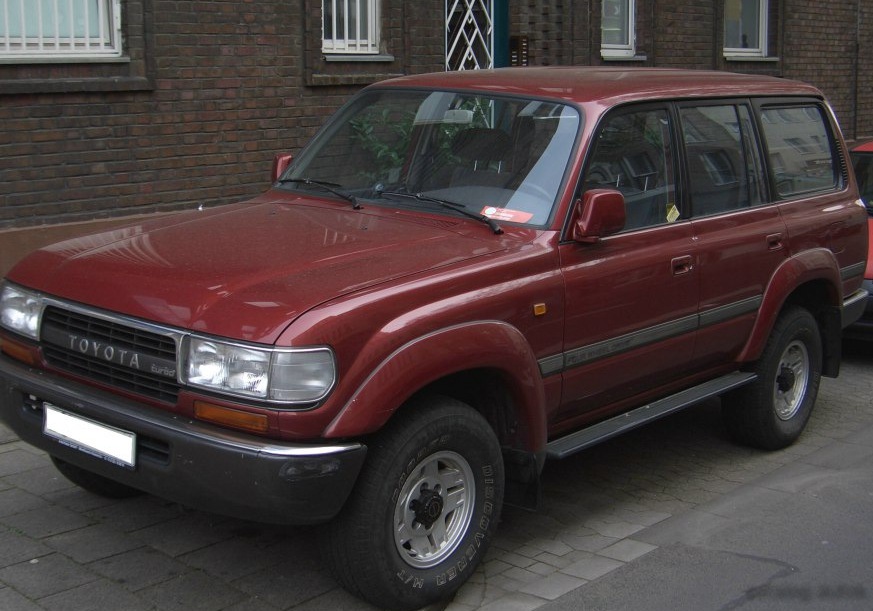
Technical Specifications
| Brand | Toyota |
| Model | Land Cruiser |
| Generation | Land Cruiser (J80) |
| Type (Engine) | 4.2 D (135 Hp) |
| Start of production | 1990 year |
| End of production | 1996 year |
| Powertrain Architecture | Internal Combustion engine |
| Body type | SUV |
| Seats | 5 |
| Doors | 5 |
| Fuel Type | Diesel |
| Maximum speed | 165 km/h (102.53 mph) |
| Weight-to-power ratio | 16.7 kg/Hp, 59.7 Hp/tonne |
| Weight-to-torque ratio | 8.1 kg/Nm, 123.9 Nm/tonne |
| Power | 135 Hp @ 4000 rpm |
| Power per litre | 32.4 Hp/l |
| Torque | 280 Nm @ 2200 rpm (206.52 lb.-ft. @ 2200 rpm) |
| Engine layout | Front, Longitudinal |
| Engine Model/Code | 1HZ |
| Engine displacement | 4163 cm3 (254.04 cu. in.) |
| Number of cylinders | 6 |
| Engine configuration | Inline |
| Cylinder Bore | 94 mm (3.7 in.) |
| Piston Stroke | 100 mm (3.94 in.) |
| Compression ratio | 22.7:1 |
| Number of valves per cylinder | 2 |
| Fuel injection system | Precombustion chamber injection |
| Engine aspiration | Naturally aspirated engine |
| Valvetrain | OHC |
| Engine oil capacity | 9.3 l (9.83 US qt | 8.18 UK qt) |
| Coolant | 11 l (11.62 US qt | 9.68 UK qt) |
| Kerb Weight | 2260 kg (4982.45 lbs.) |
| Max. weight | 2960 kg (6525.68 lbs.) |
| Max load | 700 kg (1543.24 lbs.) |
| Trunk (boot) space – minimum | 830 l (29.31 cu. ft.) |
| Trunk (boot) space – maximum | 1370 l (48.38 cu. ft.) |
| Fuel tank capacity | 95 l (25.1 US gal | 20.9 UK gal) |
| Length | 4820 mm (189.76 in.) |
| Width | 1830 mm (72.05 in.) |
| Height | 1850 mm (72.83 in.) |
| Wheelbase | 2850 mm (112.2 in.) |
| Front track | 1595 mm (62.8 in.) |
| Rear (Back) track | 1600 mm (62.99 in.) |
| Drivetrain Architecture | The Internal combustion engine (ICE) drives permanently the four wheels of the vehicle. |
| Drive wheel | All wheel drive (4×4) |
| Number of gears and type of gearbox | 5 gears, manual transmission |
| Front suspension | Dependent spring suspension with anti-roll bar |
| Rear suspension | dependent spring suspension, Transverse stabilizer |
| Front brakes | Ventilated discs |
| Rear brakes | Disc |
| Assisting systems | ABS (Anti-lock braking system) |
| Steering type | Cone worm with recirculation balls |
| Power steering | Hydraulic Steering |
| Tires size | 275/70 R15 |
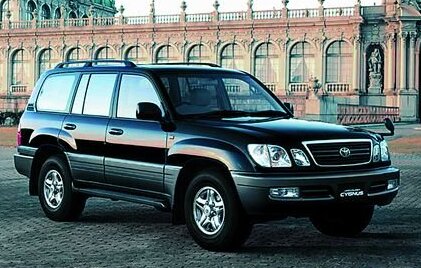
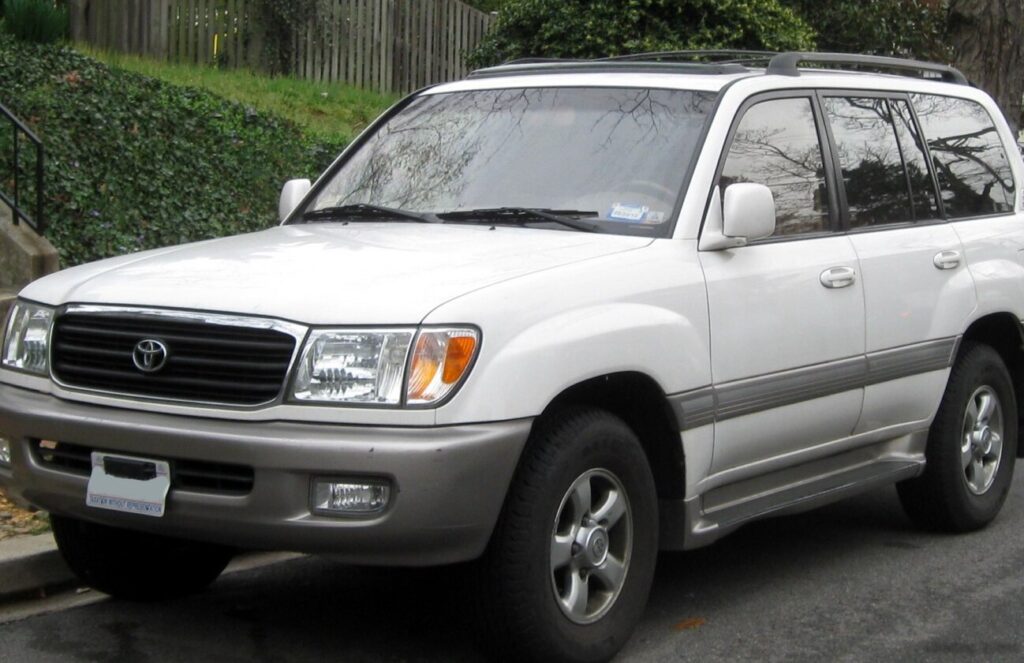
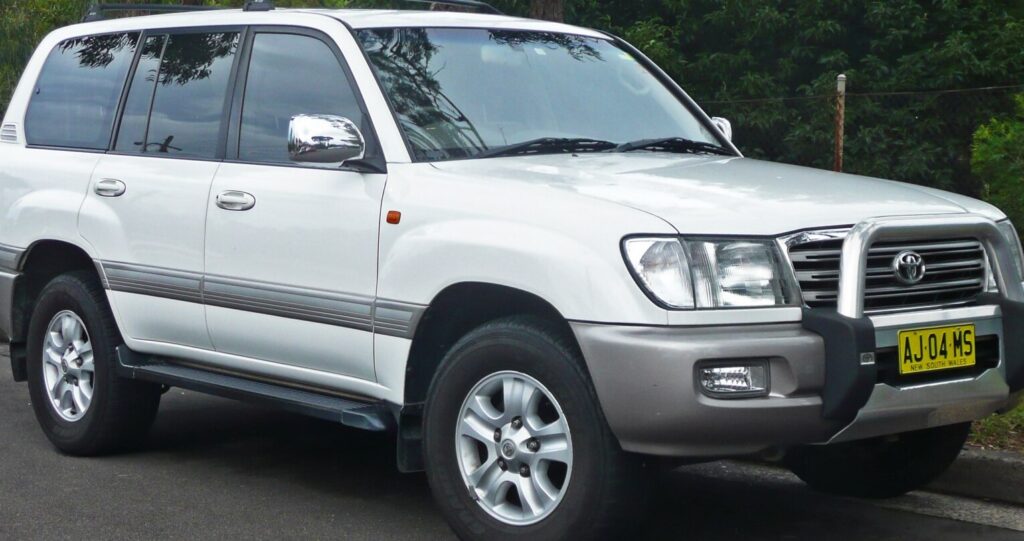
The J80 Land Cruiser, produced from 1989 to 1997, represented a significant evolution for Toyota’s iconic off-road vehicle. It moved towards a more refined experience while maintaining the legendary durability and capability that had become synonymous with the Land Cruiser name. The 4.2 D variant, powered by the 1HZ diesel engine and producing 135 horsepower, was a popular choice, especially in European and Australian markets. Offered between 1990 and 1996, this model served as a dependable and robust workhorse, valued for its longevity and off-road performance. It occupied a middle ground in the J80 lineup, balancing affordability with capability, positioned below the more powerful gasoline engines and above the more basic, less-equipped models.
Powertrain & Engine Architecture
The 4.2 D Land Cruiser’s core is the 1HZ inline-six diesel engine. This engine is celebrated for its inherent simplicity and exceptional longevity. It employs a precombustion chamber injection system, a common feature in older diesel designs, which enhances combustion efficiency and reduces engine noise. The 1HZ is naturally aspirated, lacking a turbocharger or supercharger, contributing to its reliability but limiting peak power output. The engine’s overhead camshaft (OHC) valvetrain simplifies the design, further bolstering its durability. The five-speed manual transmission provides a practical balance between fuel economy and usability, with gear ratios optimized for both on-road cruising and low-speed off-road maneuvering. While robust, the transmission can feel somewhat stiff compared to more contemporary gearboxes.
Driving Characteristics
The 4.2 D Land Cruiser, generating 135 horsepower and 280 Nm (206.52 lb-ft) of torque, wasn’t engineered for rapid acceleration. Acceleration is moderate, and overtaking on highways requires careful consideration. However, the engine’s torque curve is strong and consistent, making it well-suited for towing and navigating challenging terrain. The manual transmission provides precise control, and the gear ratios are thoughtfully chosen for both on- and off-road conditions. Compared to the gasoline-powered Land Cruisers of the same generation, the 4.2 D delivers significantly better fuel economy, albeit at the cost of performance. It also exhibits a less refined driving experience, with more noticeable engine noise and vibration. In contrast to later diesel variants equipped with turbocharging, the 1HZ feels less powerful, but its simplicity and reliability are significant advantages.
Equipment & Trim Levels
The 4.2 D Land Cruiser generally came equipped with a relatively basic set of features, reflecting its role as a practical work vehicle. Standard amenities typically included power steering, air conditioning, and a basic audio system. Interior upholstery was usually cloth, and the dashboard featured a functional, utilitarian layout. Optional extras, depending on the market, included power windows, central locking, and upgraded audio systems. Trim levels varied geographically, but generally, the 4.2 D was positioned as the entry-level or mid-range option, with higher trims offering more luxury features and the more potent gasoline engines.
Chassis & Braking
The J80 Land Cruiser utilizes a robust body-on-frame construction, providing exceptional durability and off-road capability. The front suspension employs a dependent spring setup with an anti-roll bar, while the rear suspension is a dependent spring design with a transverse stabilizer. This suspension configuration delivers a comfortable ride, even on uneven surfaces. Braking is handled by ventilated discs at the front and discs at the rear, with ABS (Anti-lock Braking System) as a standard safety feature. The braking system is adequate for the vehicle’s weight and performance, though it lacks the sophistication of more modern braking technologies.
Market Reception & Comparison
The 4.2 D Land Cruiser was well-received in markets where diesel engines were favored, particularly in Europe, Australia, and parts of Asia. Reviewers praised its reliability, durability, and off-road prowess. However, some critics noted its lack of power and refinement compared to gasoline-powered competitors. Compared to the 4.0-liter gasoline engine offered in the J80, the 4.2 D provided superior fuel economy but significantly less power. Compared to subsequent Land Cruiser models featuring more advanced diesel engines, the 1HZ felt somewhat dated, but its simplicity and proven reliability continued to appeal to a broad range of buyers.
Legacy
The Toyota Land Cruiser J80 4.2 D has established a reputation as one of the most dependable and long-lasting SUVs ever produced. The 1HZ engine, in particular, is highly regarded for its longevity, with numerous examples exceeding 300,000 miles with consistent maintenance. Today, these vehicles are highly sought after by enthusiasts and overlanders who value their ruggedness and simplicity. While sourcing parts can occasionally be challenging, the 1HZ engine is relatively straightforward to maintain, and its robust construction ensures it can withstand years of demanding use. The J80 4.2 D remains a testament to Toyota’s dedication to building vehicles designed to endure.