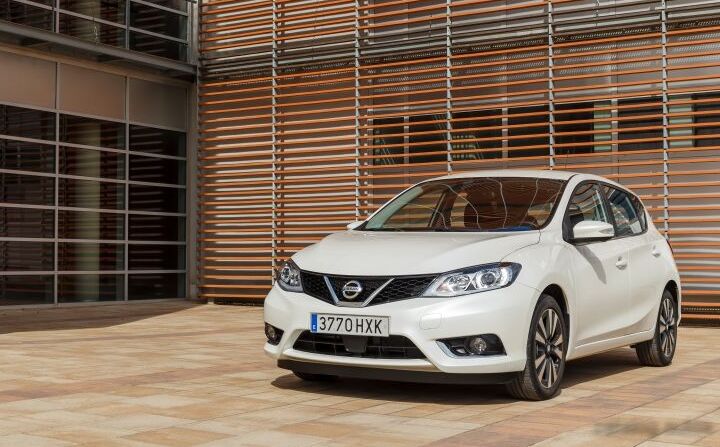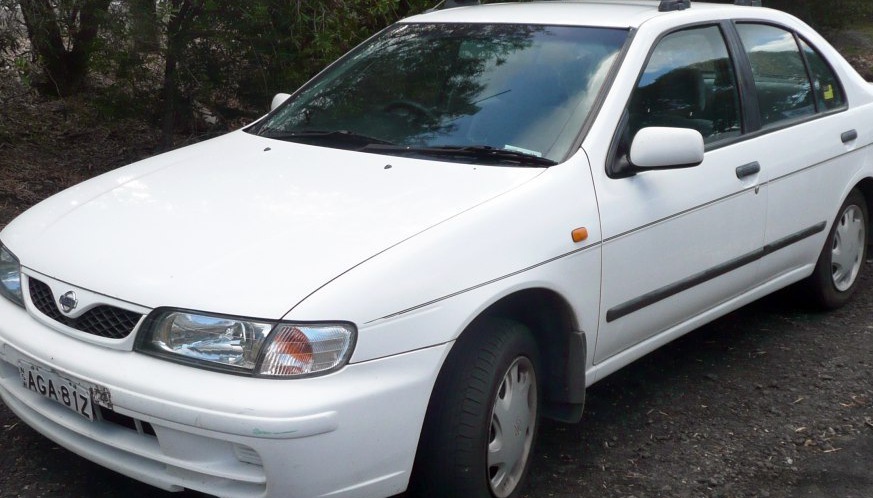
The Nissan Pulsar N15, produced between 1996 and 2000, represented a significant evolution for Nissan’s compact offering. This generation, sold globally under various names including the Sunny, Almera, and Sentra, aimed to provide a practical and affordable vehicle for a broad customer base. The 1.5i variant, powered by the GA15DE engine and typically paired with a five-speed manual transmission (though automatics were available), served as the entry point into the N15 Pulsar lineup in many markets. It was positioned as a fuel-efficient and reliable option for commuters and small families, prioritizing practicality over outright performance. This article will focus specifically on the 1.5i configuration, detailing its technical specifications, driving characteristics, and market position.
Technical Specifications
| Brand | Nissan |
| Model | Pulsar |
| Generation | Pulsar (N15) |
| Type (Engine) | 1.5 i (105 Hp) |
| Start of production | 1996 |
| End of production | 2000 |
| Powertrain Architecture | Internal Combustion engine |
| Body type | Sedan |
| Seats | 5 |
| Doors | 4 |
| Fuel Type | Petrol (Gasoline) |
| Power | 105 Hp @ 6000 rpm |
| Power per litre | 70.1 Hp/l |
| Torque | 135 Nm @ 4000 rpm |
| Torque (lb.-ft.) | 99.57 lb.-ft. @ 4000 rpm |
| Engine layout | Front, Transverse |
| Engine Model/Code | GA15DE |
| Engine displacement | 1498 cm3 |
| Engine displacement (cu. in.) | 91.41 cu. in. |
| Number of cylinders | 4 |
| Engine configuration | Inline |
| Cylinder Bore | 73.6 mm |
| Cylinder Bore (in.) | 2.9 in. |
| Piston Stroke | 88 mm |
| Piston Stroke (in.) | 3.46 in. |
| Compression ratio | 9.9:1 |
| Number of valves per cylinder | 4 |
| Fuel injection system | Multi-port manifold injection |
| Engine aspiration | Naturally aspirated engine |
| Valvetrain | DOHC |
| Drivetrain | Front wheel drive |
| Number of gears | 5 |
| Gearbox type | Manual transmission |
Powertrain & Engine Architecture
The heart of the Pulsar 1.5i is the GA15DE engine, a 1.5-liter inline-four cylinder powerplant. This engine is a member of Nissan’s ‘E’ series, known for its relative simplicity and durability. The GA15DE features a double overhead camshaft (DOHC) valvetrain operating four valves per cylinder, contributing to improved breathing and efficiency. Fuel delivery is managed by a multi-port fuel injection system, providing precise fuel metering for optimal combustion. The engine’s 9.9:1 compression ratio strikes a balance between performance and fuel economy. While not a particularly high-revving engine, the GA15DE delivers its peak power of 105 horsepower at 6000 rpm and 135 Nm (99.57 lb-ft) of torque at 4000 rpm. The five-speed manual transmission, standard on many models, provides a reasonably direct connection to the front wheels. A four-speed automatic transmission was also offered, though it typically resulted in a slight decrease in fuel economy and acceleration.
Driving Characteristics
The Pulsar 1.5i, with its 105 hp engine and manual transmission, offered adequate, though not exhilarating, performance. Acceleration from 0 to 60 mph was typically in the 11-12 second range. The engine felt most comfortable in the mid-range, providing sufficient power for everyday driving situations like merging onto highways and overtaking slower vehicles. The five-speed manual transmission allowed drivers to keep the engine in its optimal power band, maximizing efficiency and responsiveness. Compared to the higher-output 1.6L or 1.8L variants, the 1.5i felt noticeably less powerful, particularly when fully loaded with passengers and cargo. The automatic transmission further diminished performance, resulting in slower acceleration and a less engaging driving experience. However, the 1.5i’s lighter weight and simpler mechanicals contributed to a more nimble feel in city driving.
Equipment & Trim Levels
The 1.5i Pulsar typically represented the base trim level. Standard features generally included power steering, central locking, and basic instrumentation. Interior upholstery was typically cloth, with a functional, if somewhat spartan, dashboard layout. Air conditioning was often an optional extra, as were power windows and a radio/cassette player. Higher trim levels, such as the S or SE, added features like alloy wheels, upgraded interior trim, and additional convenience items. The focus of the 1.5i trim was affordability and practicality, providing essential features without the added cost of luxury items.
Chassis & Braking
The N15 Pulsar utilized a front-wheel-drive platform with independent MacPherson strut suspension in the front and a torsion beam rear suspension. This setup provided a comfortable ride quality, suitable for everyday commuting. Braking was typically accomplished with disc brakes in the front and drum brakes in the rear. Anti-lock braking system (ABS) was often an optional extra, depending on the market and trim level. The suspension was tuned for comfort rather than sporty handling, prioritizing ride quality over cornering precision. Stabilizer bars were often included, helping to reduce body roll during cornering.
Market Reception & Comparison
The Pulsar 1.5i was generally well-received as a practical and affordable compact car. Critics praised its fuel efficiency, reliability, and spacious interior. However, it was often criticized for its lack of power and somewhat bland styling. Compared to other compact cars in its class, such as the Honda Civic and Toyota Corolla, the Pulsar 1.5i offered a competitive price point but lacked the same level of refinement and performance. The 1.6L and 1.8L variants of the Pulsar offered more power and a more engaging driving experience, but at a higher cost. The 1.5i appealed to buyers who prioritized fuel economy and affordability over outright performance.
Legacy
The GA15DE engine, found in the Pulsar 1.5i, has proven to be a remarkably durable and reliable powerplant. With proper maintenance, these engines can easily exceed 200,000 miles. The N15 Pulsar, as a whole, has developed a reputation for being a dependable and affordable used car. While not a particularly collectible model, the 1.5i variant remains a popular choice for budget-conscious buyers seeking a practical and reliable mode of transportation. Parts availability is generally good, and maintenance costs are relatively low, making it an attractive option in the used car market today. The simplicity of the GA15DE engine also makes it relatively easy to repair, further contributing to its long-term appeal.