
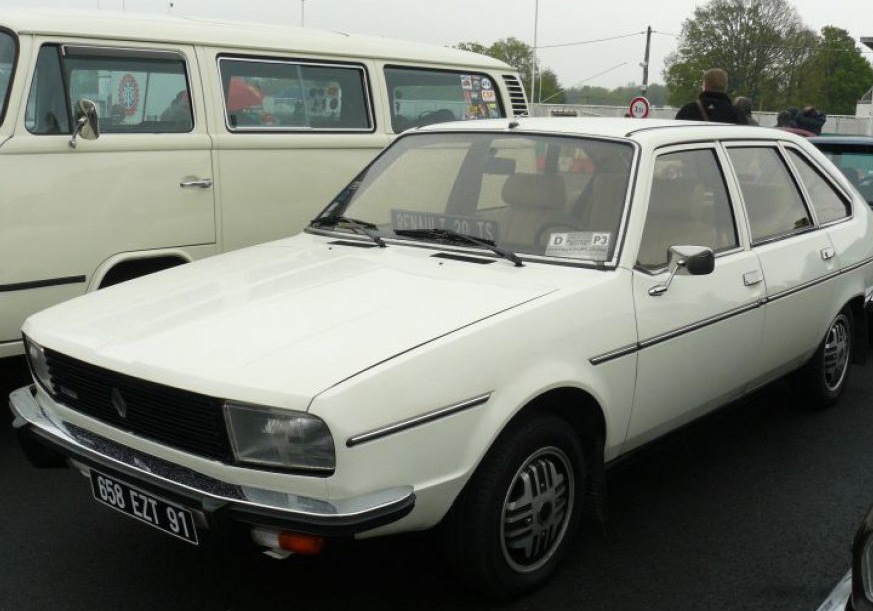
The Renault 20 (127), specifically the 2.0-liter (1277) variant producing 103 horsepower, was a significant offering from Renault during its 1980-1983 production run. Positioned as a larger, more comfortable alternative to the Renault 14, the 20 aimed to compete in the increasingly popular mid-size family car segment in Europe. This particular engine and trim level represented a step up in performance and refinement from the base models, offering a blend of practicality and driving enjoyment. It was a key part of Renault’s strategy to modernize its lineup and appeal to a broader customer base.
Technical Specifications
| Brand | Renault |
| Model | 20 |
| Generation | 20 (127) |
| Type (Engine) | 2.0 (1277) (103 Hp) |
| Start of production | 1980 |
| End of production | 1983 |
| Powertrain Architecture | Internal Combustion engine |
| Body type | Hatchback |
| Seats | 5 |
| Doors | 5 |
| Fuel Type | Petrol (Gasoline) |
| Acceleration 0 – 100 km/h | 12.8 sec |
| Acceleration 0 – 62 mph | 12.8 sec |
| Acceleration 0 – 60 mph | 12.2 sec |
| Maximum speed | 168 km/h (104.39 mph) |
| Power | 103 Hp |
| Engine Model/Code | J6R-829 |
| Engine aspiration | Naturally aspirated engine |
| Engine oil capacity | 5.3 l (5.6 US qt | 4.66 UK qt) |
| Coolant capacity | 7.7 l (8.14 US qt | 6.78 UK qt) |
| Fuel tank capacity | 67 l (17.7 US gal | 14.74 UK gal) |
Powertrain & Engine Architecture
The heart of the Renault 20 (127) 2.0 was the J6R-829 engine, a 1995cc, inline-four cylinder gasoline engine. This engine featured a cast iron block and an aluminum cylinder head. It utilized a single overhead camshaft (SOHC) valvetrain, operating two valves per cylinder. Fuel delivery was managed by a Bosch mechanical fuel injection system, a relatively sophisticated setup for the time, offering improved efficiency and driveability compared to carbureted engines. The engine’s design prioritized smooth operation and reasonable power output over outright performance. The 103 horsepower peak was achieved at approximately 5800 rpm, with a torque output of around 132 lb-ft. While not a high-revving engine, it provided adequate power for comfortable cruising and overtaking. The engine was typically paired with a four-speed manual transmission, but a three-speed automatic transmission was also available, and is the focus of this article.
Driving Characteristics
The Renault 20 2.0 with the three-speed automatic transmission offered a distinctly different driving experience compared to its manual counterpart. The automatic gearbox, while providing convenience, did impact acceleration. The 0-60 mph time of around 12.2 seconds reflects this. Gear ratios were optimized for comfortable cruising rather than rapid acceleration. The automatic transmission’s shift points were relatively conservative, prioritizing fuel economy and smooth transitions. Compared to the manual version, the automatic felt less engaging, but it was significantly easier to drive in urban traffic. The suspension, tuned for comfort, provided a relatively soft ride, absorbing bumps and imperfections in the road well. However, this also resulted in some body roll during cornering. Steering was light and precise, making the car easy to maneuver.
Equipment & Trim Levels
The 2.0-liter Renault 20 (127) typically came with a reasonable level of standard equipment. Interior features included cloth upholstery, a basic instrument cluster, and a four-spoke steering wheel. The dashboard layout was functional and straightforward, prioritizing usability over aesthetics. Optional extras included a sunroof, upgraded audio systems, and power windows. The trim level with the automatic transmission often included additional comfort features as standard, such as a more refined interior trim and upgraded seat fabrics. The overall interior ambiance was designed to be practical and family-friendly.
Chassis & Braking
The Renault 20 (127) utilized a MacPherson strut front suspension and a torsion beam rear suspension. This setup provided a good balance between ride comfort and handling. The front suspension incorporated anti-roll bar to reduce body roll. Braking was initially equipped with disc brakes on the front wheels and drum brakes on the rear wheels. Later models saw the introduction of rear disc brakes on some trim levels. The braking system was hydraulically assisted, providing adequate stopping power for everyday driving. The car’s weight, around 2600 lbs, contributed to its relatively modest braking performance.
Market Reception & Comparison
The Renault 20 2.0 Automatic was generally well-received by automotive critics as a comfortable and practical family car. However, the automatic transmission was often criticized for its lack of responsiveness and its impact on fuel economy. Compared to other cars in its class, such as the Ford Taunus or Opel Ascona, the Renault 20 offered a more modern design and a more refined interior. The 2.0-liter engine provided adequate performance, but it wasn’t as powerful as some of its competitors. Fuel economy was reasonable for the time, averaging around 25-30 mpg. The Renault 20’s main strengths were its comfortable ride, spacious interior, and relatively affordable price.
Legacy
The Renault 20, and specifically the 2.0-liter automatic variant, has become a relatively sought-after classic car among enthusiasts. The J6R engine, while not known for being particularly high-performance, is generally considered to be reliable and relatively easy to maintain. The automatic transmission, however, can be prone to wear and tear, and finding replacement parts can be challenging. Well-maintained examples of the Renault 20 2.0 Automatic are becoming increasingly rare, and their value is steadily increasing. The car represents a significant chapter in Renault’s history, showcasing the company’s commitment to innovation and its ability to produce stylish and practical family cars. Today, it’s remembered as a comfortable and dependable vehicle from a bygone era.
