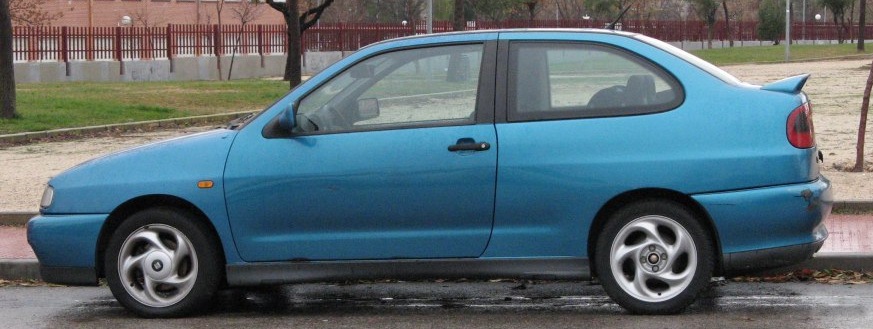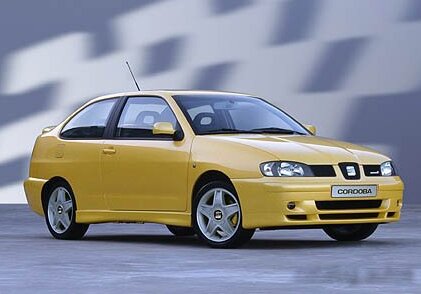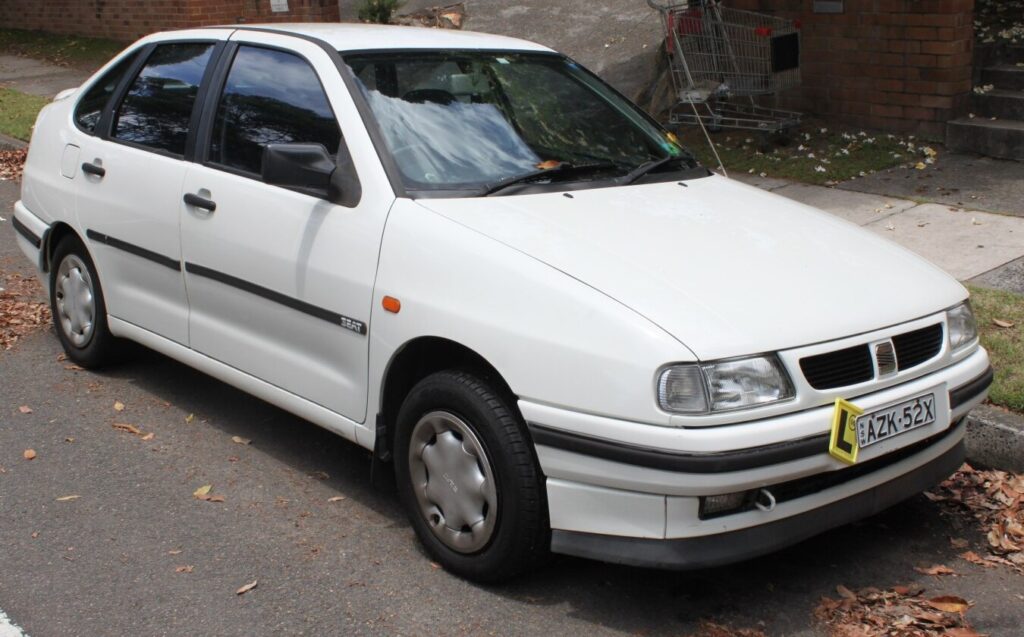
The SEAT Córdoba I 1.9 TDI (90 hp) was a popular compact sedan produced between 1996 and 1999, representing a significant offering in the European small car market. Positioned as a practical and fuel-efficient option, this variant utilized the Volkswagen Group’s well-regarded 1Z/AHU series of diesel engines. It was a key part of the first generation Córdoba (1HX0/A3 platform), designed to offer a more affordable and accessible alternative to the larger and more premium SEAT Ibiza. The 1.9 TDI model aimed to balance performance with economy, appealing to drivers seeking a reliable and economical daily driver.
Technical Specifications
| Brand | Seat |
| Model | Cordoba |
| Generation | Cordoba I |
| Type (Engine) | 1.9 TDI (90 Hp) |
| Start of production | July, 1996 |
| End of production | June, 1999 |
| Powertrain Architecture | Internal Combustion engine |
| Body type | Sedan |
| Seats | 5 |
| Doors | 4 |
| Fuel consumption (urban) | 6.4 l/100 km (36.8 US mpg, 44.1 UK mpg, 15.6 km/l) |
| Fuel consumption (extra urban) | 4.1 l/100 km (57.4 US mpg, 68.9 UK mpg, 24.4 km/l) |
| Fuel consumption (combined) | 4.9 l/100 km (48 US mpg, 57.6 UK mpg, 20.4 km/l) |
| Fuel Type | Diesel |
| Acceleration 0 – 100 km/h | 12.5 sec |
| Acceleration 0 – 62 mph | 12.5 sec |
| Acceleration 0 – 60 mph | 11.9 sec |
| Maximum speed | 180 km/h (111.85 mph) |
| Weight-to-power ratio | 11.7 kg/Hp, 85.3 Hp/tonne |
| Weight-to-torque ratio | 5.2 kg/Nm, 191.5 Nm/tonne |
| Power | 90 Hp @ 4000 rpm |
| Power per litre | 47.5 Hp/l |
| Torque | 202 Nm @ 1900 rpm (148.99 lb.-ft. @ 1900 rpm) |
| Engine layout | Front, Transverse |
| Engine Model/Code | 1Z, AHU |
| Engine displacement | 1896 cm3 (115.7 cu. in.) |
| Number of cylinders | 4 |
| Engine configuration | Inline |
| Cylinder Bore | 79.5 mm (3.13 in.) |
| Piston Stroke | 95.5 mm (3.76 in.) |
| Compression ratio | 19.5:1 |
| Number of valves per cylinder | 2 |
| Fuel injection system | Direct injection |
| Engine aspiration | Turbocharger, Intercooler |
| Valvetrain | OHC |
| Engine oil capacity | 4.5 l (4.76 US qt | 3.96 UK qt) |
| Coolant | 6.5 l (6.87 US qt | 5.72 UK qt) |
| Kerb Weight | 1055 kg (2325.88 lbs.) |
| Max. weight | 1530 kg (3373.07 lbs.) |
| Max load | 475 kg (1047.2 lbs.) |
| Trunk (boot) space – minimum | 455 l (16.07 cu. ft.) |
| Trunk (boot) space – maximum | 802 l (28.32 cu. ft.) |
| Fuel tank capacity | 47 l (12.42 US gal | 10.34 UK gal) |
| Length | 4109 mm (161.77 in.) |
| Width | 1640 mm (64.57 in.) |
| Height | 1408 mm (55.43 in.) |
| Wheelbase | 2440 mm (96.06 in.) |
| Front track | 1429 mm (56.26 in.) |
| Rear (Back) track | 1394 mm (54.88 in.) |
| Drivetrain Architecture | The Internal combustion engine (ICE) drives the front wheels of the vehicle. |
| Drive wheel | Front wheel drive |
| Number of gears and type of gearbox | 5 gears, manual transmission |
| Front suspension | Wishbone |
| Rear suspension | Suspension with traction connecting levers |
| Front brakes | Disc |
| Rear brakes | Drum |
| Assisting systems | ABS (Anti-lock braking system) |
| Steering type | Steering rack and pinion |
| Power steering | Hydraulic Steering |
| Tires size | 185/60 R14 |
Powertrain & Engine Architecture
The heart of the Córdoba 1.9 TDI was the 1Z or AHU engine, a 1.9-liter inline-four cylinder diesel engine. These engines were part of the Volkswagen Group’s modular engine family and were known for their durability and efficiency. The 1Z and AHU codes represent minor variations within the same engine family, primarily relating to emissions control and specific component revisions. The engine featured direct injection, a technology that improved fuel economy and reduced emissions compared to indirect injection systems. A turbocharger with an intercooler was employed to boost power output to 90 horsepower. The engine utilized a single overhead camshaft (OHC) valvetrain with two valves per cylinder. The engine was transversely mounted in the front of the vehicle, driving the front wheels. The five-speed manual transmission was the standard offering, providing a balance between fuel efficiency and drivability.
Driving Characteristics
The 1.9 TDI 90 hp variant of the Córdoba offered a practical and economical driving experience. While not particularly sporty, the engine delivered adequate power for everyday driving situations. The 202 Nm (149 lb-ft) of torque, available from a relatively low 1900 rpm, provided good responsiveness in city traffic and allowed for comfortable cruising on the highway. Acceleration to 60 mph took around 12.5 seconds, which was typical for a diesel-powered compact sedan of that era. The five-speed manual transmission was well-matched to the engine’s characteristics, offering smooth gear changes. Compared to higher-output TDI variants (like the later 110 hp versions), the 90 hp model felt less strained at higher speeds and offered slightly better fuel economy. However, it lacked the outright acceleration and overtaking ability of its more powerful siblings.
Equipment & Trim Levels
The Córdoba 1.9 TDI typically came with a reasonable level of standard equipment. This included power steering, central locking, and an anti-lock braking system (ABS). Interior upholstery was typically cloth, with a functional and durable design. Dashboard configuration was straightforward, prioritizing practicality over luxury. Optional extras included air conditioning, electric windows, and a radio/cassette player. Trim levels varied depending on the market, but generally, the 1.9 TDI sat in the mid-range of the Córdoba lineup, offering a good balance of features and affordability.
Chassis & Braking
The Córdoba I utilized a relatively simple chassis design. Front suspension consisted of wishbones, while the rear suspension employed a torsion beam setup with traction connecting levers. This configuration provided a comfortable ride quality, although it wasn’t particularly sporty. Brakes were disc brakes at the front and drum brakes at the rear, which was common for vehicles in this class at the time. The hydraulic power steering provided light and easy steering, making it maneuverable in urban environments.
Market Reception & Comparison
The SEAT Córdoba 1.9 TDI was well-received in the European market as a practical and economical family car. Critics praised its fuel efficiency, reliability, and comfortable ride. Compared to other compact sedans of the time, such as the Ford Escort or Opel Astra, the Córdoba offered a competitive package, particularly in terms of diesel engine technology. The 1.9 TDI variant was often seen as a sweet spot in the range, offering a good balance between performance and economy. The higher-output TDI models were more expensive, while the gasoline-powered versions were less fuel-efficient.
Legacy
The 1Z and AHU engines used in the Córdoba 1.9 TDI are known for their robustness and longevity. With proper maintenance, these engines can reliably exceed 200,000 miles. Today, the Córdoba 1.9 TDI is a relatively affordable and practical classic car. While not highly sought after by collectors, it remains a popular choice for drivers seeking a reliable and economical daily driver. Parts availability is generally good, thanks to the widespread use of these engines across the Volkswagen Group model range. The Córdoba 1.9 TDI represents a significant chapter in SEAT’s history, demonstrating the brand’s commitment to producing practical and affordable vehicles.