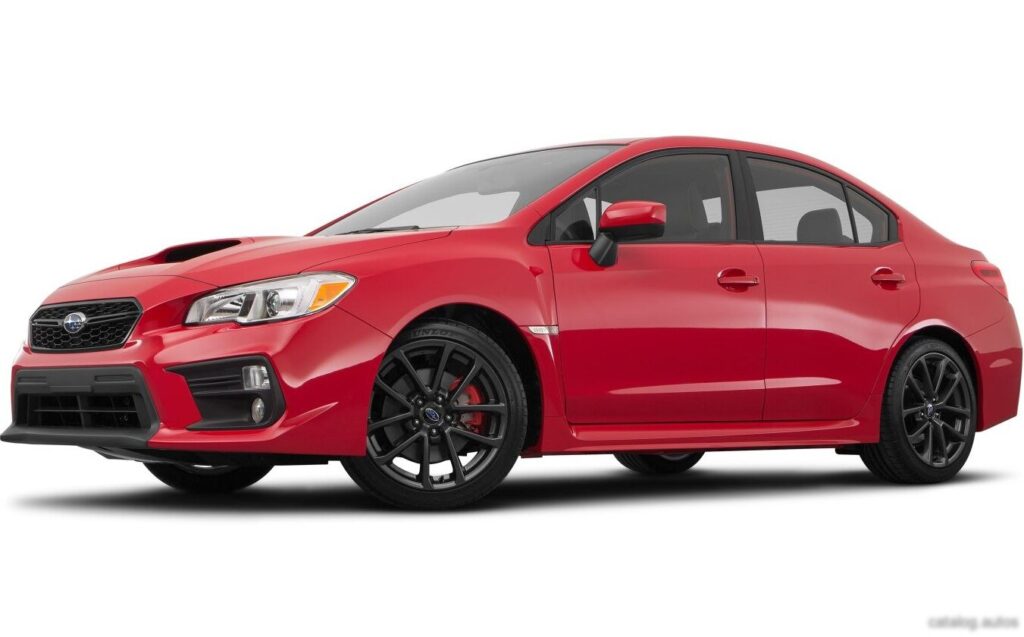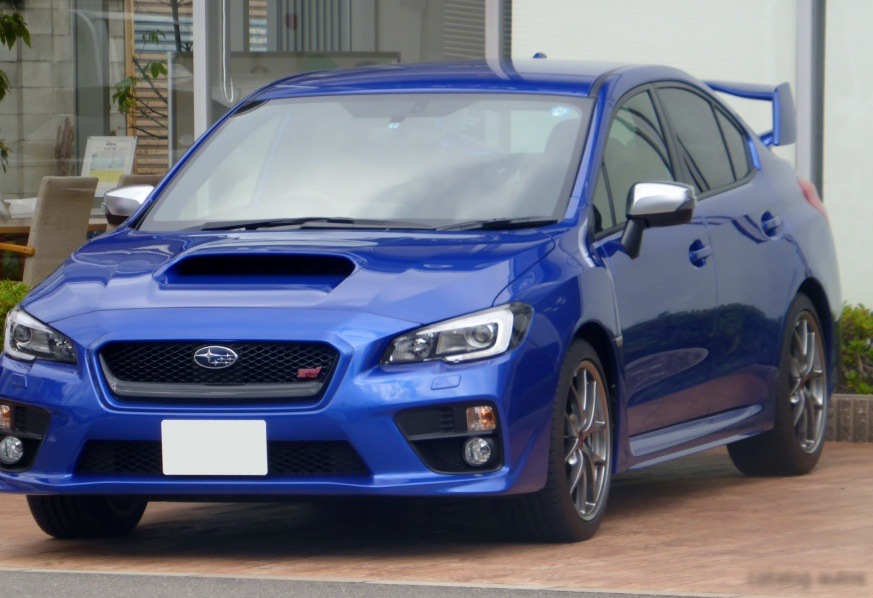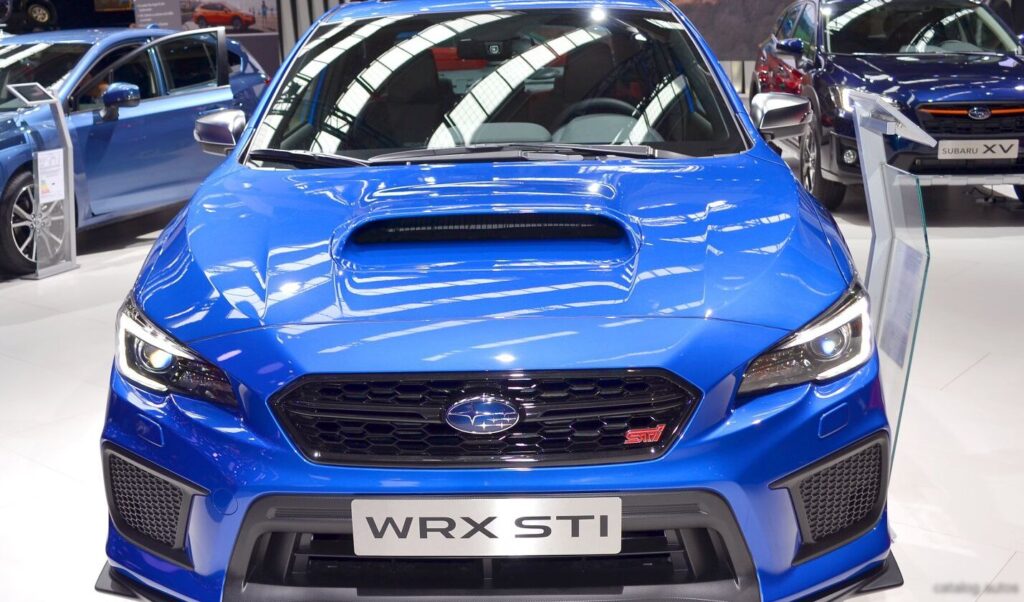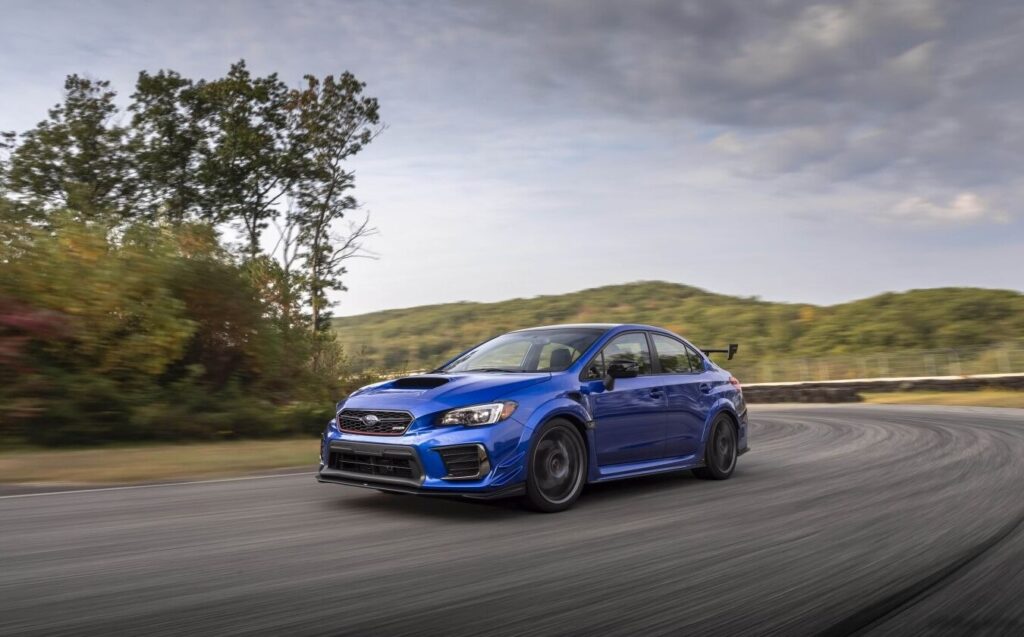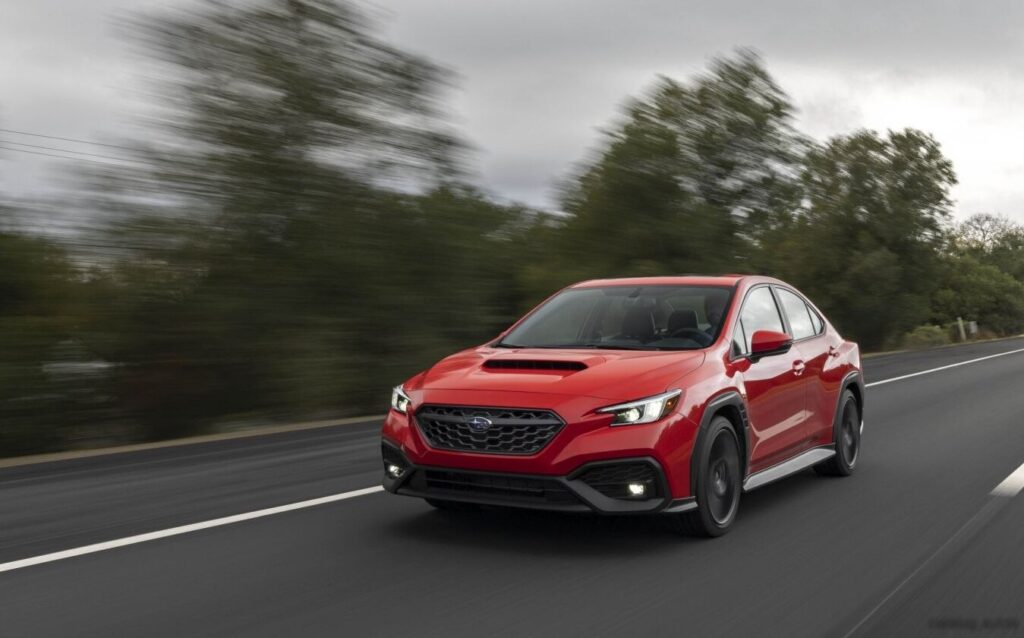
The Subaru WRX (VB) II 2.4, launched in September 2021, represents the second generation of the VB series WRX, continuing Subaru’s legacy of performance-oriented all-wheel-drive sedans. This iteration marked a significant shift with the introduction of a new 2.4-liter turbocharged boxer engine, replacing the previously used 2.0-liter unit. Positioned as the standard engine offering within the VB generation, the 2.4-liter model aimed to deliver increased power and torque while maintaining the WRX’s reputation for rally-inspired handling and practicality. It serves as the primary offering in the North American market, where the WRX has cultivated a dedicated following.
Technical Specifications
| Brand | Subaru |
| Model | WRX |
| Generation | WRX (VB) II |
| Type (Engine) | 2.4 (271 Hp) AWD |
| Start of production | September, 2021 |
| Powertrain Architecture | Internal Combustion engine |
| Body type | Sedan |
| Seats | 5 |
| Doors | 4 |
| Fuel consumption (urban) | 12.4 l/100 km (19 US mpg, 22.8 UK mpg, 8.1 km/l) |
| Fuel consumption (extra urban) | 9 l/100 km (26.1 US mpg, 31.4 UK mpg, 11.1 km/l) |
| Fuel consumption (combined) | 10.7 l/100 km (22 US mpg, 26.4 UK mpg, 9.3 km/l) |
| Fuel Type | Petrol (Gasoline) |
| Weight-to-power ratio | 5.5 kg/Hp, 181.3 Hp/tonne |
| Weight-to-torque ratio | 4.3 kg/Nm, 234.1 Nm/tonne |
| Power | 271 Hp @ 5600 rpm |
| Power per litre | 113.5 Hp/l |
| Torque | 350 Nm @ 2000-5200 rpm (258.15 lb.-ft. @ 2000-5200 rpm) |
| Engine layout | Front, Longitudinal |
| Engine Model/Code | FA24F |
| Engine displacement | 2387 cm3 (145.66 cu. in.) |
| Number of cylinders | 4 |
| Engine configuration | Boxer |
| Cylinder Bore | 94 mm (3.7 in.) |
| Piston Stroke | 86 mm (3.39 in.) |
| Compression ratio | 10.6:1 |
| Number of valves per cylinder | 4 |
| Fuel injection system | Direct injection |
| Engine aspiration | Turbocharger, Intercooler |
| Valvetrain | DOHC |
| Engine oil capacity | 4.5 l (4.76 US qt | 3.96 UK qt) |
| Coolant capacity | 8.5 l (8.98 US qt | 7.48 UK qt) |
| Kerb Weight | 1495-1538 kg (3295.91 – 3390.71 lbs.) |
| Trunk (boot) space | 354 l (12.5 cu. ft.) |
| Fuel tank capacity | 63 l (16.64 US gal | 13.86 UK gal) |
| Length | 4669 mm (183.82 in.) |
| Width | 1826 mm (71.89 in.) |
| Width including mirrors | 2014-2022 mm (79.29 – 79.61 in.) |
| Height | 1468 mm (57.8 in.) |
| Wheelbase | 2672 mm (105.2 in.) |
| Front track | 1560 mm (61.42 in.) |
| Rear track | 1570 mm (61.81 in.) |
| Ride height (ground clearance) | 137 mm (5.39 in.) |
| Minimum turning circle | 11.2 m (36.75 ft.) |
| Drivetrain | All wheel drive (4×4) |
| Number of gears | 6 |
| Gearbox type | Manual transmission |
| Front suspension | Independent, McPherson with coil spring and anti-roll bar |
| Rear suspension | Double wishbone |
| Front brakes | Ventilated discs, 314.96 mm |
| Rear brakes | Ventilated discs, 289.56 mm |
| Tire size | 235/45 R17 97W; 245/40 R18 97W |
| Wheel rims size | 8J x 17; 8.5J x 18 |
Powertrain & Engine Architecture
The heart of the VB WRX II 2.4 is the FA24F 2.4-liter turbocharged horizontally-opposed (boxer) four-cylinder engine. This engine represents a departure from the previous EJ257 2.0-liter engine, offering a larger displacement and a revised design for improved performance and efficiency. The FA24F utilizes direct fuel injection, a single-scroll turbocharger, and a dual-overhead camshaft (DOHC) valvetrain with four valves per cylinder. The turbocharger is integrated into the exhaust manifold, contributing to quicker spool-up and reduced turbo lag. The engine’s boxer configuration provides a low center of gravity, enhancing handling characteristics. The standard transmission is a 6-speed manual, designed for precise shifts and driver engagement. While an automatic transmission was offered in some markets, the 6-speed manual is the most common configuration in the US.
Driving Characteristics
The 2.4-liter engine delivers a noticeable increase in torque compared to the older 2.0-liter engine, particularly in the low to mid-range. This translates to stronger acceleration and improved responsiveness in everyday driving situations. The 6-speed manual transmission features closely spaced gear ratios, allowing the driver to keep the engine within its optimal power band. While the 2.4L isn’t as peaky as some high-strung performance engines, it provides a broad and usable power curve. Compared to potential higher-performance trims (if offered), the base 2.4L prioritizes usability and everyday drivability over outright track performance. The all-wheel-drive system provides excellent traction in various conditions, making it a capable performer in both dry and inclement weather.
Equipment & Trim Levels
The 2021+ Subaru WRX 2.4 typically came standard with features such as automatic climate control, a 7-inch touchscreen infotainment system with Apple CarPlay and Android Auto compatibility, and Subaru’s EyeSight driver-assist technology suite, including adaptive cruise control, lane departure warning, and automatic emergency braking. Interior upholstery generally consisted of cloth seats, with optional leather available on higher trims. Available options included a larger 11.6-inch touchscreen, a premium Harman Kardon audio system, and Recaro sport seats. The base model WRX 2.4 aimed to provide a well-equipped and capable vehicle at a relatively accessible price point.
Chassis & Braking
The VB WRX utilizes a modified version of the Subaru Global Platform, providing increased rigidity and improved crash safety. The suspension features independent McPherson struts at the front and a double-wishbone setup at the rear. Stabilizer bars are fitted to both axles to reduce body roll during cornering. Braking duties are handled by ventilated disc brakes on all four wheels. The braking system is assisted by ABS (Anti-lock Braking System) and electronic brake-force distribution. The suspension tuning is geared towards providing a balance between comfortable ride quality and responsive handling.
Market Reception & Comparison
The 2022+ Subaru WRX 2.4 received generally positive reviews, with critics praising the increased power and torque of the new engine. However, some reviewers noted that the new styling was a departure from the previous generation and that the interior quality could be improved. Compared to the previous WRX with the 2.0-liter engine, the 2.4-liter model offered a more refined driving experience and improved fuel economy. The 2.4L WRX competes with other performance sedans such as the Honda Civic Si, Volkswagen GTI, and Hyundai Elantra N. The WRX’s standard all-wheel drive gives it a distinct advantage in regions with challenging weather conditions.
Legacy
The FA24F engine has proven to be a reliable and durable powerplant. Early reports suggest good long-term reliability, although long-term data is still accumulating. The VB WRX 2.4 has maintained strong resale values in the used car market, reflecting its popularity and reputation for performance and reliability. As a modern interpretation of the iconic WRX formula, the VB generation, particularly the 2.4-liter variant, continues to appeal to enthusiasts seeking a capable and engaging driving experience.