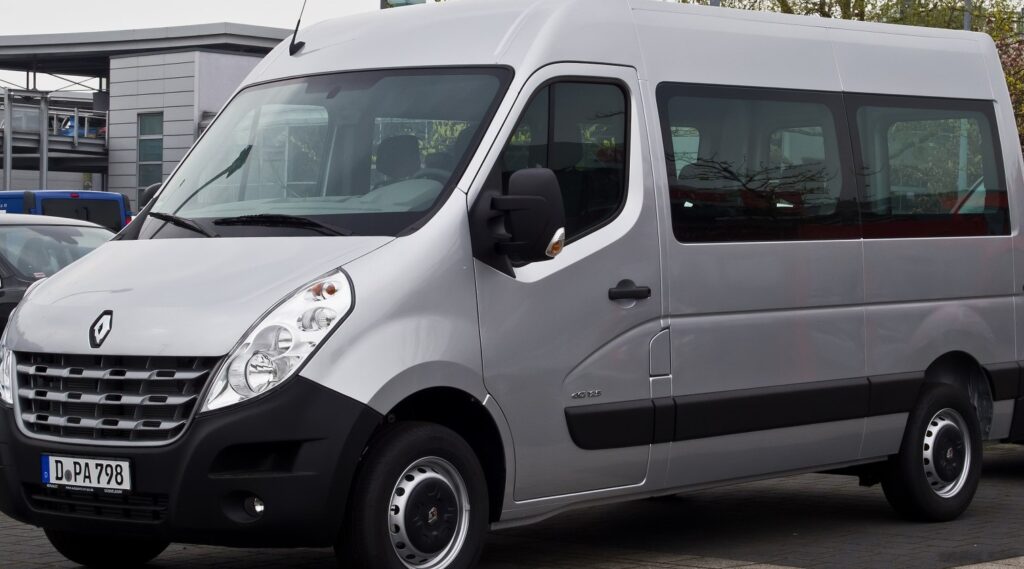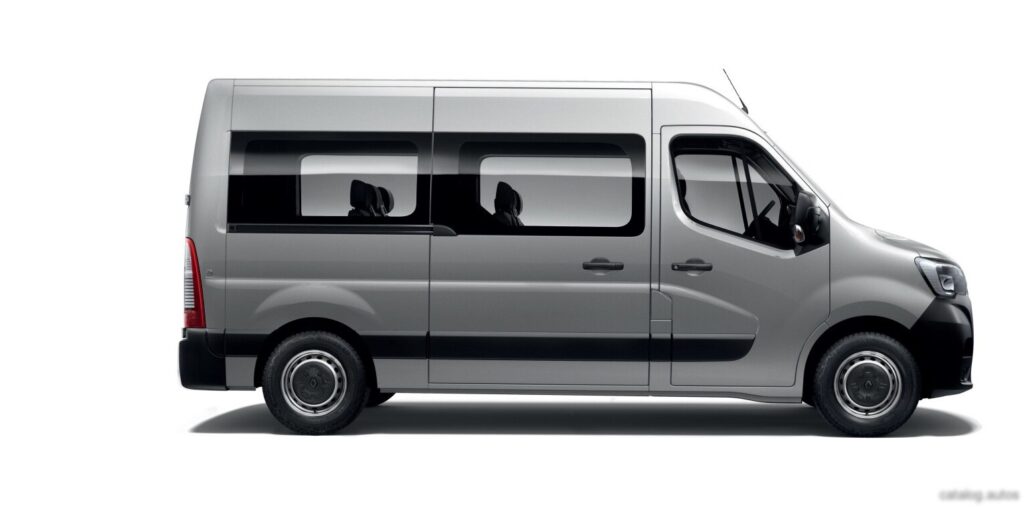
The Renault Master III Phase III (2019) Combi 2.3 Energy dCi 180 hp L2H2 Automatic represents a significant iteration of Renault’s large van offering, positioned as a versatile people-carrier and commercial vehicle. Introduced as part of the Phase III refresh of the third-generation Master, this variant caters to businesses and families requiring substantial space and practicality. Production began in 2019, building upon the established foundation of the X62 platform, and aimed to improve upon fuel efficiency, emissions, and overall refinement. The “Combi” designation signifies its configuration as a passenger vehicle, differentiating it from the panel van versions. This specific L2H2 configuration denotes a medium wheelbase and medium roof height, offering a balance between cargo capacity and maneuverability.
Technical Specifications
| Brand | Renault |
| Model | Master |
| Generation | Master III (Phase III, 2019) Combi |
| Type (Engine) | 2.3 Energy dCi (180 Hp) L2H2 Automatic |
| Start of production | 2019 |
| Powertrain Architecture | Internal Combustion engine |
| Body type | Minivan, MPV |
| Seats | 6 |
| Doors | 4 |
| Combined fuel consumption (WLTP) | 6.7 l/100 km (35.1 US mpg, 42.2 UK mpg, 14.9 km/l) |
| CO2 emissions (WLTP) | 178 g/km |
| Fuel Type | Diesel |
| Acceleration 0 – 100 km/h | 11.4 sec |
| Acceleration 0 – 62 mph | 11.4 sec |
| Acceleration 0 – 60 mph | 10.8 sec |
| Maximum speed | 165 km/h (102.53 mph) |
| Emission standard | Euro 6d-Temp |
| Power | 180 Hp @ 3500 rpm |
| Power per litre | 78.3 Hp/l |
| Torque | 400 Nm @ 1500 rpm (295.02 lb.-ft. @ 1500 rpm) |
| Engine Model/Code | M9T |
| Engine displacement | 2298 cm3 (140.23 cu. in.) |
| Number of cylinders | 4 |
| Engine configuration | Inline |
| Number of valves per cylinder | 4 |
| Fuel injection system | Diesel Commonrail |
| Engine aspiration | Twin-Turbo, Intercooler |
| Coolant | 11 l (11.62 US qt | 9.68 UK qt) |
| Engine systems | Start & Stop System, Particulate filter |
| Max. weight | 3500 kg (7716.18 lbs.) |
| Trunk (boot) space – maximum | 6000 l (211.89 cu. ft.) |
| Fuel tank capacity | 105 l (27.74 US gal | 23.1 UK gal) |
| AdBlue tank | 28 l (7.4 US gal | 6.16 UK gal) |
| Length | 5575 mm (219.49 in.) |
| Width | 2070 mm (81.5 in.) |
| Width including mirrors | 2470 mm (97.24 in.) |
| Height | 2499 mm (98.39 in.) |
| Wheelbase | 3682 mm (144.96 in.) |
| Front track | 1750 mm (68.9 in.) |
| Rear (Back) track | 1730 mm (68.11 in.) |
| Front overhang | 869 mm (34.21 in.) |
| Rear overhang | 1024 mm (40.31 in.) |
| Ride height (ground clearance) | 182 mm (7.17 in.) |
| Minimum turning circle (turning diameter) | 13.6 m (44.62 ft.) |
| Drivetrain Architecture | Front wheel drive, Internal Combustion engine |
| Number of gears and type of gearbox | 6 gears, automatic transmission |
| Front suspension | Independent, type McPherson with coil spring and anti-roll bar |
| Rear suspension | Leaf spring |
| Front brakes | Ventilated discs, 302 mm |
| Rear brakes | Disc, 305 mm |
| Tires size | 225/65 R16 |
| Wheel rims size | 16 |
Powertrain & Engine Architecture
The 2019 Master Combi 2.3 Energy dCi utilizes the M9T engine, a 2.3-liter inline four-cylinder diesel engine. This engine benefits from a twin-turbocharger setup and an intercooler, designed to enhance both power and efficiency. The common-rail direct fuel injection system delivers fuel at high pressure for optimized combustion. The engine produces 180 horsepower at 3500 rpm and 400 Nm (295 lb-ft) of torque at a low 1500 rpm, providing ample pulling power for a vehicle of this size. Paired with this engine is a six-speed automatic transmission, offering smooth gear changes and ease of driving, particularly in urban environments. The transmission is tuned for practicality rather than outright performance, prioritizing fuel economy and drivability.
Driving Characteristics
The 180 hp automatic configuration of the Master Combi delivers a competent, if not exhilarating, driving experience. Acceleration from 0-60 mph takes approximately 10.8 seconds, and top speed is limited to 102.53 mph. The automatic transmission provides smooth shifts, but can sometimes feel hesitant during quick overtaking maneuvers. The emphasis is on usability and comfort, making it well-suited for long journeys and carrying heavy loads. Compared to the lower-powered versions, the 180 hp engine offers a noticeable improvement in performance, especially when fully loaded. However, it doesn’t match the responsiveness of a manual transmission equipped model. The gear ratios are optimized for fuel efficiency, which can sometimes result in the engine feeling strained when climbing steep hills.
Equipment & Trim Levels
The Master Combi in this configuration typically includes a generous level of standard equipment. This often includes air conditioning, a basic audio system with USB connectivity, electric windows and mirrors, and a driver’s airbag. Higher trim levels, available as options, could add features such as a touchscreen infotainment system with navigation, rear parking sensors, cruise control, and upgraded upholstery. Interior trim generally consists of durable, hard-wearing materials designed for commercial use, though the Combi variant often features more comfortable seating and improved interior finishes compared to the base panel van models. Optional extras frequently included features like a second sliding door, upgraded seating configurations, and various storage solutions.
Chassis & Braking
The Master Combi utilizes a front-wheel-drive layout with an independent McPherson strut suspension at the front and a leaf spring suspension at the rear. This setup provides a reasonable balance between ride comfort and load-carrying capacity. The front brakes are ventilated discs measuring 302mm, while the rear brakes are solid discs measuring 305mm. The braking system is adequate for the vehicle’s weight, but not particularly sporty. Stabilizer bars are fitted to both the front and rear axles to reduce body roll during cornering. The relatively simple rear suspension is a cost-saving measure, but can result in a slightly harsher ride when the vehicle is unladen.
Market Reception & Comparison
The Renault Master III Phase III Combi 2.3 Energy dCi 180 hp Automatic was generally well-received by critics as a practical and versatile vehicle. Fuel economy of around 35.1 US mpg (combined WLTP) was considered respectable for a vehicle of its size. However, some reviewers noted that the automatic transmission could be slow to respond at times. Compared to other vans in its class, such as the Fiat Ducato and the Mercedes-Benz Sprinter, the Master offered a competitive price point and a good level of standard equipment. The 180 hp engine provided a noticeable performance advantage over the lower-powered options, making it a popular choice for those who frequently carry heavy loads or travel long distances. Reliability reports suggest that the M9T engine is generally durable, but regular maintenance is essential to prevent issues.
Legacy
The Renault Master III, and specifically this 2.3 Energy dCi 180 hp Automatic variant, has established itself as a reliable workhorse in the commercial vehicle market. On the used car market, these models continue to be sought after for their practicality and affordability. The M9T engine, while not without its quirks, has proven to be relatively robust when properly maintained. Common issues include diesel particulate filter (DPF) problems, particularly on vehicles used primarily for short journeys, and occasional issues with the turbocharger. However, with regular servicing and preventative maintenance, these vehicles can provide many years of reliable service. The Master Combi remains a popular choice for businesses and families alike, offering a compelling combination of space, practicality, and value.