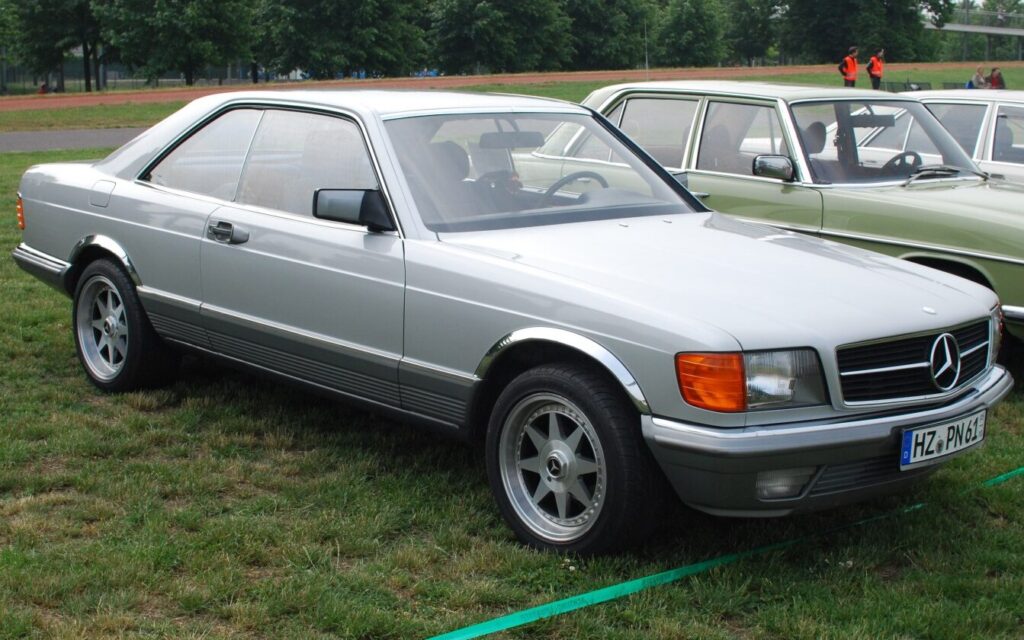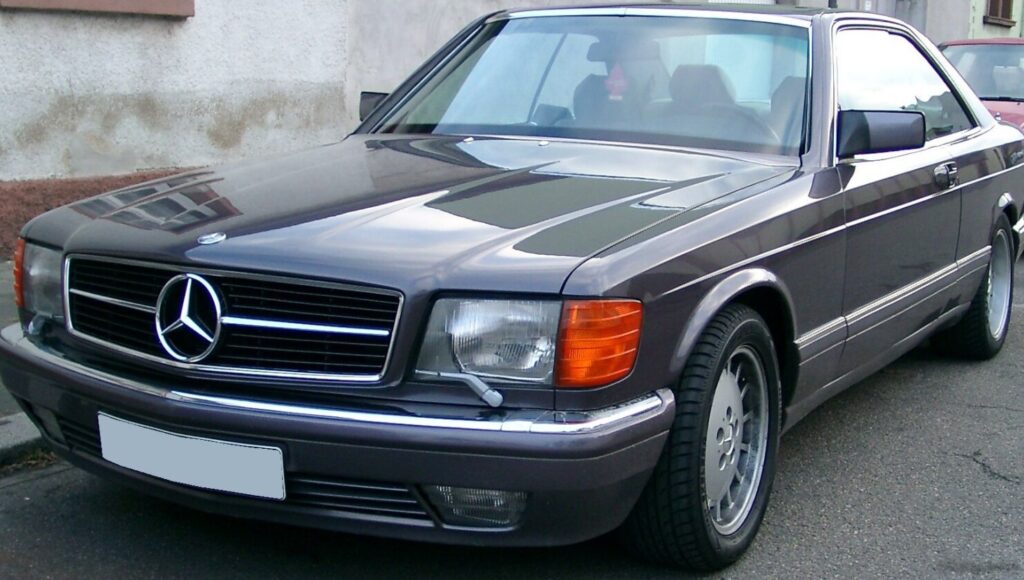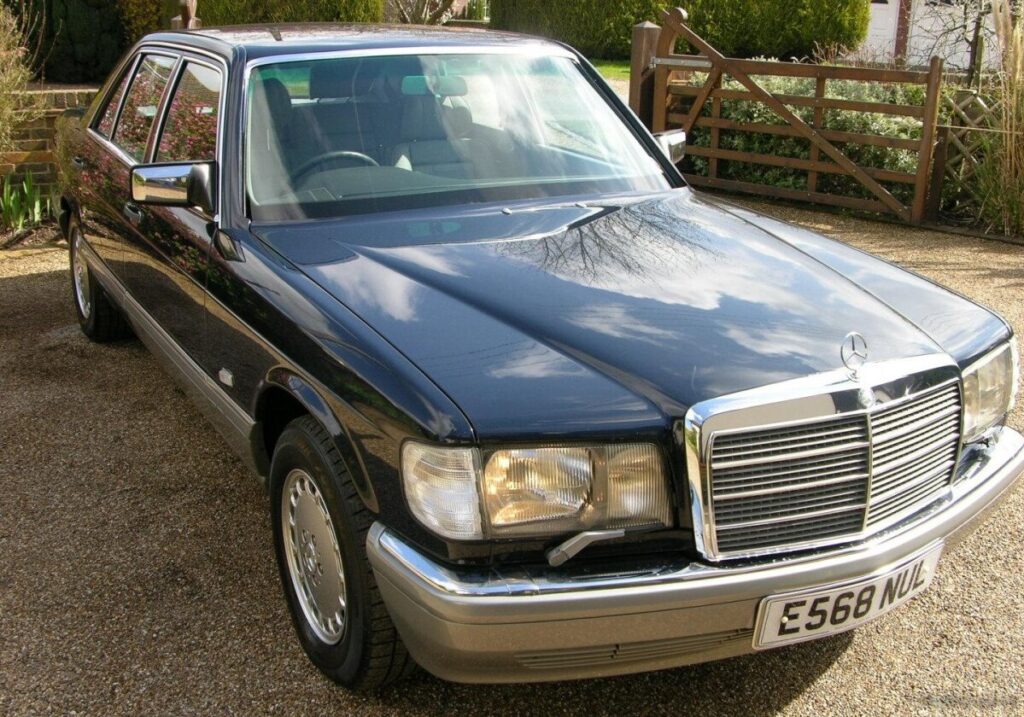
The Mercedes-Benz S-Class SEL (W126 facelift, produced 1985-1987) 420 SEL represents a pinnacle of 1980s luxury and engineering from the German automaker. Positioned as a high-end variant within the W126 series – the successor to the long-running W116 – the 420 SEL offered a sophisticated blend of performance, comfort, and advanced features for its time. This model, distinguished by its extended wheelbase (“SEL” denoting *Special Length*), catered to buyers seeking a more spacious and prestigious experience than the standard S-Class sedans. It served as a flagship model, embodying Mercedes-Benz’s commitment to quality and innovation in the North American and European markets.
Technical Specifications
| Brand | Mercedes-Benz |
| Model | S-class |
| Generation | S-class SEL (V126, facelift 1985) |
| Type (Engine) | 420 SEL V8 (218 Hp) Automatic |
| Start of production | June, 1985 |
| End of production | September, 1987 |
| Powertrain Architecture | Internal Combustion engine |
| Body type | Sedan |
| Seats | 5 |
| Doors | 4 |
| Fuel consumption (urban) | 14.9 l/100 km (15.8 US mpg / 19 UK mpg) |
| Fuel consumption (extra urban) | 8.9 l/100 km (26.4 US mpg / 31.7 UK mpg) |
| Fuel Type | Petrol (Gasoline) |
| Acceleration 0 – 100 km/h | 8.3 sec |
| Acceleration 0 – 62 mph | 8.3 sec |
| Acceleration 0 – 60 mph | 7.9 sec |
| Maximum speed | 218 km/h (135.46 mph) |
| Weight-to-power ratio | 7.5 kg/Hp |
| Weight-to-torque ratio | 4.9 kg/Nm |
| Power | 218 Hp @ 5200 rpm |
| Power per litre | 52 Hp/l |
| Torque | 330 Nm @ 3750 rpm (243.4 lb.-ft. @ 3750 rpm) |
| Engine layout | Front, Longitudinal |
| Engine Model/Code | M 116 E 42 / 116.965 |
| Engine displacement | 4196 cm3 (256.06 cu. in.) |
| Number of cylinders | 8 |
| Engine configuration | V-engine |
| Cylinder Bore | 92 mm (3.62 in.) |
| Piston Stroke | 78.9 mm (3.11 in.) |
| Compression ratio | 9:1 |
| Number of valves per cylinder | 2 |
| Fuel injection system | Multi-port manifold injection |
| Engine aspiration | Naturally aspirated engine |
| Valvetrain | SOHC |
| Engine oil capacity | 8 l (8.45 US qt | 7.04 UK qt) |
| Coolant | 12.5 l (13.21 US qt | 11 UK qt) |
| Kerb Weight | 1630 kg (3593.53 lbs.) |
| Max. weight | 2150 kg (4739.94 lbs.) |
| Max load | 520 kg (1146.4 lbs.) |
| Fuel tank capacity | 90 l (23.78 US gal | 19.8 UK gal) |
| Length | 5160 mm (203.15 in.) |
| Width | 1820 mm (71.65 in.) |
| Height | 1441 mm (56.73 in.) |
| Wheelbase | 3070 mm (120.87 in.) |
| Front track | 1555 mm (61.22 in.) |
| Rear track | 1527 mm (60.12 in.) |
| Drivetrain Architecture | Rear wheel drive |
| Number of gears | 4 |
| Gearbox type | Automatic transmission |
| Front suspension | Double wishbone |
| Rear suspension | Trailing arm |
| Front brakes | Ventilated discs |
| Rear brakes | Disc |
| Assisting systems | ABS (Anti-lock braking system) |
| Steering type | Cone worm with recirculation balls |
| Power steering | Hydraulic |
| Tires size | 205/65 R15 |
| Wheel rims size | 7J x 15 |
Powertrain & Engine Architecture
The 420 SEL was powered by the M116 E 42 engine, a 4.2-liter naturally aspirated V8. This engine, a cornerstone of Mercedes-Benz’s engineering prowess, featured a single overhead camshaft (SOHC) design and utilized Bosch K-Jetronic fuel injection. The K-Jetronic system, while complex, was known for its reliability and ability to deliver precise fuel metering, contributing to smooth operation and reasonable fuel efficiency for the era. The engine produced 218 horsepower at 5200 rpm and 330 Nm (243 lb-ft) of torque at 3750 rpm. The engine’s robust construction and relatively conservative tuning prioritized longevity and refinement over outright performance. The engine was mated to a four-speed automatic transmission, a common pairing for luxury vehicles of the time. This transmission was designed for smooth, almost imperceptible shifts, enhancing the overall driving experience.
Driving Characteristics
The 420 SEL Automatic offered a distinctly grand touring experience. While not a sports car, the V8 engine provided ample power for effortless cruising and confident acceleration. The automatic transmission, while lacking the responsiveness of modern gearboxes, contributed to a relaxed and comfortable driving style. The extended wheelbase of the SEL model resulted in a noticeably smoother ride compared to shorter-wheelbase S-Class variants. Compared to the 380 SEL, the 420 SEL offered a significant performance boost, while the 560 SEL provided even more power but at the cost of increased fuel consumption. The 420 SEL struck a balance between performance and efficiency, making it a popular choice for those seeking a luxurious and capable sedan.
Equipment & Trim Levels
The 420 SEL came standard with a comprehensive array of features befitting its flagship status. These included power windows, power locks, a sunroof, leather upholstery, and climate control. Wood trim adorned the interior, adding to the sense of luxury. Optional extras included a premium sound system, heated seats, and a self-leveling suspension system. The interior layout was characterized by its understated elegance and focus on driver and passenger comfort. The SEL models typically featured more extensive leather trim and higher-quality materials compared to base S-Class trims.
Chassis & Braking
The W126 S-Class featured a robust chassis with independent suspension all around. The front suspension utilized a double wishbone design, while the rear employed a trailing arm setup. This configuration provided a comfortable ride and predictable handling. The 420 SEL was equipped with ventilated disc brakes at the front and solid disc brakes at the rear. An Anti-lock Braking System (ABS) was standard, enhancing safety and control during emergency braking situations. The steering was a recirculating ball system with hydraulic power assistance, providing a comfortable and manageable driving experience.
Market Reception & Comparison
The 420 SEL was generally well-received by automotive critics. It was praised for its luxurious interior, smooth ride, and refined engine. However, some critics noted that the automatic transmission could feel somewhat sluggish compared to manual transmissions available in other S-Class models. Fuel economy, while reasonable for a V8-powered luxury car of the era, was not a strong point. Compared to the 380 SEL, the 420 SEL offered a noticeable performance improvement, justifying its higher price tag. The 560 SEL, while more powerful, was significantly more expensive and less fuel-efficient.
Legacy
The W126 S-Class, including the 420 SEL, is widely regarded as one of the best-built and most reliable Mercedes-Benz models ever produced. The M116 engine is known for its durability and longevity, and many examples are still on the road today. The 420 SEL, in particular, has become a sought-after classic car, appreciated for its combination of luxury, performance, and build quality. While maintenance can be expensive due to the age and complexity of the vehicle, the 420 SEL remains a rewarding ownership experience for enthusiasts who appreciate a piece of automotive history. The car’s robust engineering and timeless design ensure its continued appeal in the classic car market.