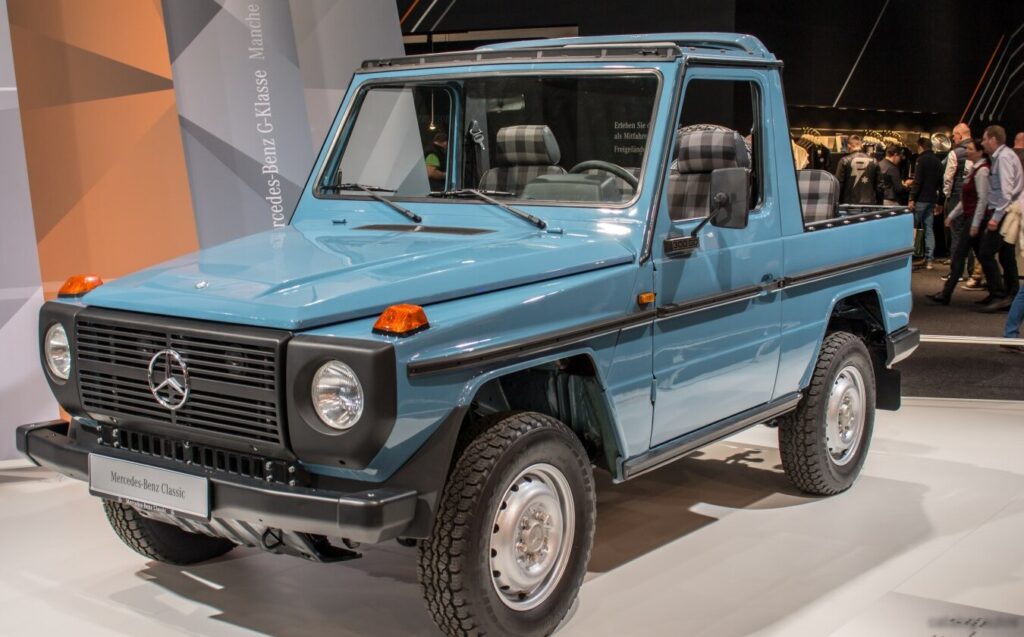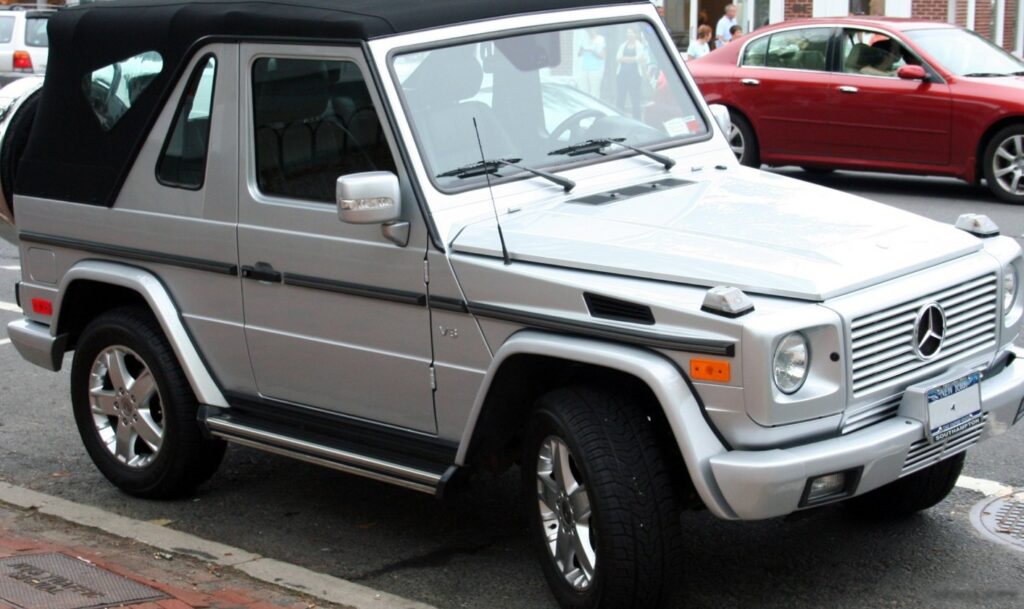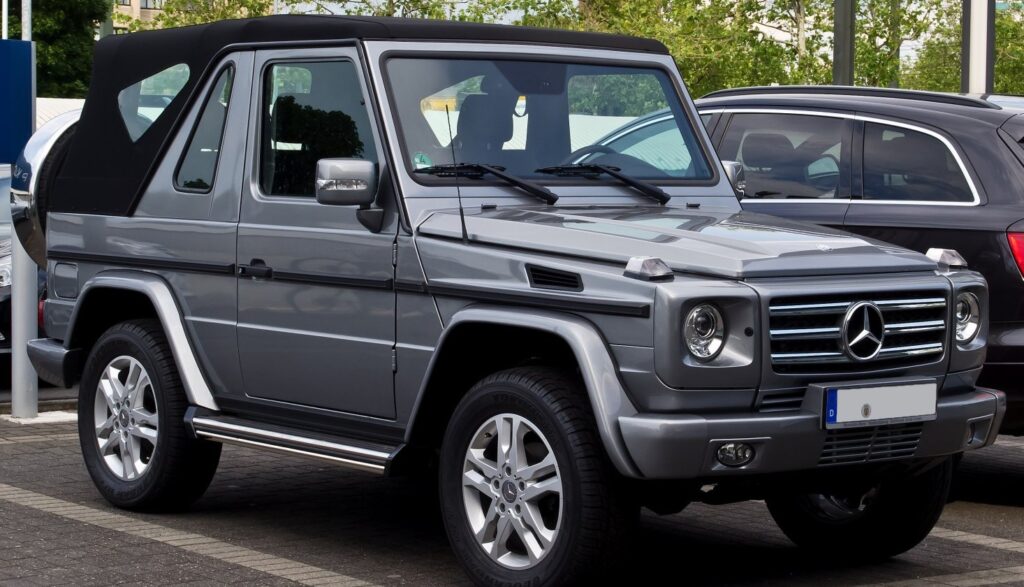
The Mercedes-Benz G 300 TD 4MATIC Automatic, produced between July 1996 and November 2000, represents a compelling blend of rugged capability and diesel efficiency within the iconic W463 G-Class lineage. Positioned as a mid-range offering, it catered to buyers seeking the G-Class’s legendary off-road prowess with the added convenience of an automatic transmission and the fuel economy benefits of a diesel engine. This variant played a significant role in maintaining the G-Class’s appeal in European markets, where diesel engines were – and continue to be – highly favored for their torque and economy.
Technical Specifications
| Brand | Mercedes-Benz |
| Model | G-class |
| Generation | G-class (W463) |
| Type (Engine) | G 300 TD (177 Hp) 4MATIC Automatic |
| Start of production | July, 1996 |
| End of production | November, 2000 |
| Powertrain Architecture | Internal Combustion engine |
| Body type | Off-road vehicle |
| Seats | 5 |
| Doors | 3 |
| Fuel consumption (urban) | 13.1 l/100 km (18 US mpg, 21.6 UK mpg, 7.6 km/l) |
| Fuel consumption (extra urban) | 10.5 l/100 km (22.4 US mpg, 26.9 UK mpg, 9.5 km/l) |
| Fuel Type | Diesel |
| Acceleration 0 – 100 km/h | 14.2 sec |
| Acceleration 0 – 62 mph | 14.2 sec |
| Acceleration 0 – 60 mph | 13.5 sec |
| Maximum speed | 164 km/h (101.9 mph) |
| Emission standard | Euro 2 |
| Weight-to-power ratio | 12.7 kg/Hp, 78.8 Hp/tonne |
| Weight-to-torque ratio | 10.7 kg/Nm, 93.5 Nm/tonne |
| Power | 177 Hp @ 4600 rpm |
| Power per litre | 59.1 Hp/l |
| Torque | 210 Nm @ 1600-3600 rpm (154.89 lb.-ft. @ 1600-3600 rpm) |
| Engine layout | Front, Longitudinal |
| Engine Model/Code | OM 606.964 |
| Engine displacement | 2996 cm3 (182.83 cu. in.) |
| Number of cylinders | 6 |
| Engine configuration | Inline |
| Cylinder Bore | 87 mm (3.43 in.) |
| Piston Stroke | 84 mm (3.31 in.) |
| Compression ratio | 22:1 |
| Number of valves per cylinder | 4 |
| Fuel injection system | Precombustion chamber injection |
| Engine aspiration | Turbocharger, Intercooler |
| Valvetrain | DOHC |
| Engine oil capacity | 7.5 l (7.93 US qt | 6.6 UK qt) |
| Coolant | 7.5 l (7.93 US qt | 6.6 UK qt) |
| Kerb Weight | 2245 kg (4949.38 lbs.) |
| Max. weight | 2750-2810 kg (6062.71 – 6194.99 lbs.) |
| Max load | 505-565 kg (1113.33 – 1245.61 lbs.) |
| Trunk (boot) space – minimum | 250 l (8.83 cu. ft.) |
| Trunk (boot) space – maximum | 1580 l (55.8 cu. ft.) |
| Fuel tank capacity | 96 l (25.36 US gal | 21.12 UK gal) |
| Max. roof load | 150 kg (330.69 lbs.) |
| Permitted trailer load with brakes (12%) | 2925 kg (6448.52 lbs.) |
| Permitted trailer load without brakes | 750 kg (1653.47 lbs.) |
| Length | 4230 mm (166.54 in.) |
| Width | 1760 mm (69.29 in.) |
| Height | 1931 mm (76.02 in.) |
| Wheelbase | 2400 mm (94.49 in.) |
| Front track | 1475 mm (58.07 in.) |
| Rear (Back) track | 1475 mm (58.07 in.) |
| Ride height (ground clearance) | 210 mm (8.27 in.) |
| Minimum turning circle (turning diameter) | 11.3 m (37.07 ft.) |
| Approach angle | 36° |
| Departure angle | 27° |
| Climb angle | 38.7° |
| Drivetrain Architecture | The Internal combustion engine (ICE) drives permanently the four wheels of the vehicle. |
| Drive wheel | All wheel drive (4×4) |
| Number of gears and type of gearbox | 5 gears, automatic transmission |
| Front suspension | Coil spring, Rigid axle suspension, Trailing arm |
| Rear suspension | Rigid axle suspension, Trailing arm, Coil spring |
| Front brakes | Ventilated discs |
| Rear brakes | Disc |
| Assisting systems | ABS (Anti-lock braking system) |
| Steering type | Cone worm with recirculation balls |
| Power steering | Hydraulic Steering |
| Tires size | 255/65 R 16 |
| Wheel rims size | 7.5 J x 16 |
INTRODUCTION
The G 300 TD 4MATIC Automatic, introduced in 1996, was a key component of the W463 G-Class’s second generation. The W463, launched in 1990, represented a significant modernization of the original G-Wagen, adding features like anti-lock brakes, coil springs, and a more refined interior while retaining the vehicle’s core off-road DNA. The G 300 TD slotted into the lineup as a diesel-powered alternative to the gasoline-fueled G 320, offering a balance of performance, fuel efficiency, and the G-Class’s legendary durability. It remained in production until 2000, bridging the gap to the next generation of G-Class models.
Powertrain & Engine Architecture
At the heart of the G 300 TD lies the OM 606.964, a 3.0-liter inline-six cylinder diesel engine. This engine utilizes precombustion chamber injection, a system common in Mercedes-Benz diesels of the era, known for its relatively quiet operation and good combustion efficiency. A turbocharger with an intercooler was employed to boost power output to 177 horsepower at 4600 rpm and 210 Nm (154.89 lb.-ft.) of torque between 1600 and 3600 rpm. The engine’s robust construction and relatively low-stress design contributed to its longevity. The engine is longitudinally mounted in the chassis.
The “Automatic” portion of the name refers to the 5-speed automatic transmission, a crucial element in broadening the G-Class’s appeal. This transmission, while not known for blistering shifts, provided a level of convenience that the standard manual transmission lacked, making the G-Class more accessible to a wider range of drivers. The transmission was selected for its durability and ability to handle the engine’s torque output in demanding off-road conditions.
Driving Characteristics
The G 300 TD Automatic offered a distinctly different driving experience compared to its gasoline-powered siblings and even the manual diesel versions. The automatic transmission smoothed out power delivery, making it easier to navigate urban environments and cruise on highways. However, the 177 hp output and the weight of the vehicle (2245 kg / 4949.38 lbs) meant that acceleration was not its strong suit – 0-60 mph took around 13.5 seconds. The focus was on providing ample low-end torque for off-road crawling and towing, rather than outright speed. The automatic transmission’s gear ratios were optimized for torque multiplication, prioritizing usability over performance. Compared to the G 320, the G 300 TD offered significantly better fuel economy, but at the expense of some outright power.
Equipment & Trim Levels
The G 300 TD Automatic, while not a luxury vehicle in the traditional sense, offered a reasonable level of equipment for its time. Standard features typically included power windows, central locking, and a basic audio system. The interior was characterized by its utilitarian design, with durable materials and a focus on functionality. Upholstery was typically cloth, although leather was available as an option. Optional extras included air conditioning, a sunroof, and upgraded audio systems. The G-Class’s interior, even in its more basic trims, was known for its solid build quality and resistance to wear and tear.
Chassis & Braking
The G 300 TD 4MATIC utilized a robust ladder-frame chassis, a hallmark of the G-Class design. This provided exceptional torsional rigidity and durability, essential for off-road performance. Suspension consisted of coil springs and rigid axles with trailing arms, offering a comfortable ride on paved roads while maintaining excellent articulation off-road. Braking was handled by ventilated discs at the front and discs at the rear, supplemented by an anti-lock braking system (ABS) for improved stopping power and control. The 4MATIC all-wheel-drive system provided permanent four-wheel drive, with a low-range gearbox for tackling particularly challenging terrain.
Market Reception & Comparison
The G 300 TD Automatic was generally well-received by critics and buyers alike, particularly in Europe. It was praised for its combination of off-road capability, fuel efficiency, and the convenience of an automatic transmission. Compared to the G 320, the G 300 TD offered a more economical option without sacrificing too much of the G-Class’s character. However, some critics noted the relatively slow acceleration and the somewhat dated interior. The G 300 TD’s fuel economy was a significant advantage over the G 320, making it a more practical choice for everyday use.
Legacy
Today, the Mercedes-Benz G 300 TD 4MATIC Automatic is a sought-after vehicle among collectors and enthusiasts. Its robust powertrain, legendary durability, and iconic design have ensured its continued appeal. The OM 606 engine is known for its longevity and relatively simple maintenance requirements. While finding well-maintained examples can be challenging, the G 300 TD remains a capable and rewarding vehicle, offering a unique blend of luxury, performance, and off-road capability. Its value in the used car market has been steadily increasing in recent years, reflecting its growing status as a modern classic.