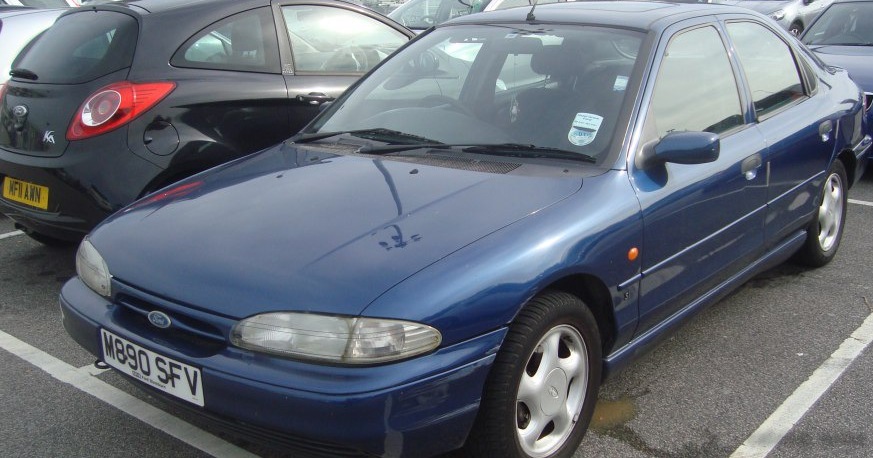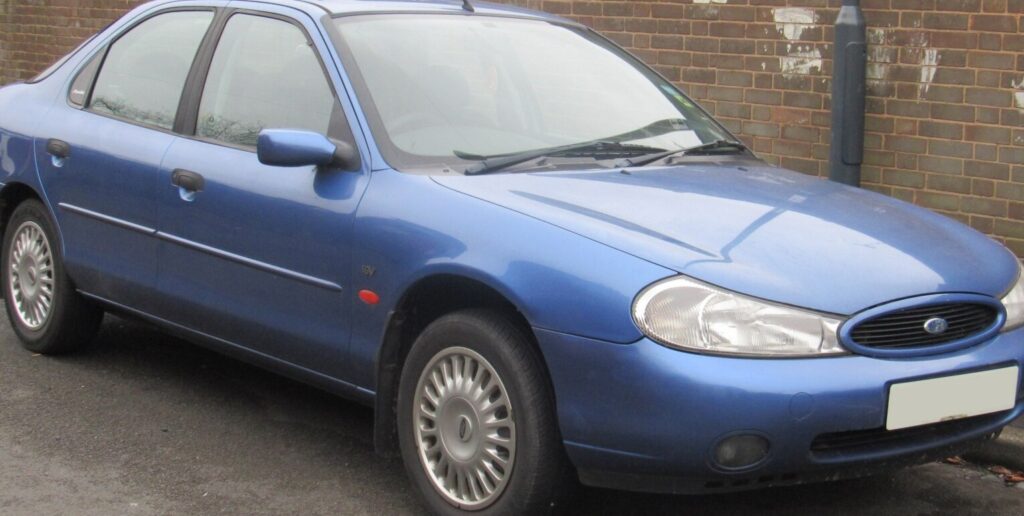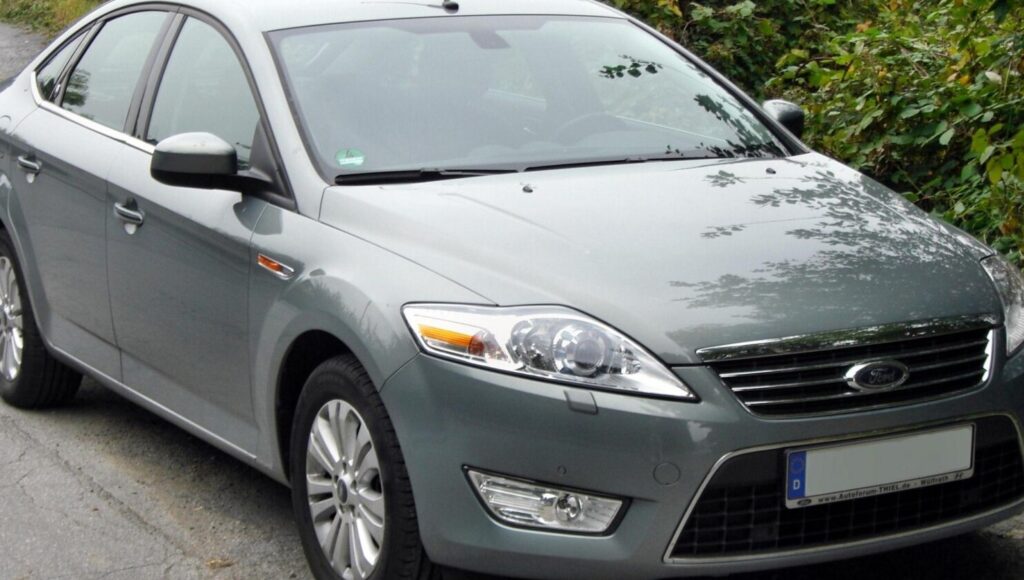
The Ford Mondeo III Hatchback 1.8 Duratorq TDCi, producing 100 horsepower, was a significant offering in the European Ford lineup from 2007 to 2010. Positioned as an entry-level diesel option within the third-generation Mondeo (internally designated as the B5Y platform), it aimed to provide fuel efficiency and practicality for everyday drivers. This variant catered to buyers seeking a comfortable and economical family car, particularly in markets where diesel fuel was prevalent and incentivized. While not the performance leader of the Mondeo range, the 1.8 TDCi offered a compelling balance of cost and usability.
Technical Specifications
| Brand | Ford |
| Model | Mondeo |
| Generation | Mondeo III Hatchback |
| Type (Engine) | 1.8 Duratorq TDCi (100 Hp) |
| Start of production | 2007 |
| End of production | 2010 |
| Powertrain Architecture | Internal Combustion engine |
| Body type | Hatchback |
| Seats | 5 |
| Doors | 5 |
| Fuel consumption (urban) | 7.4 l/100 km (31.8 US mpg) |
| Fuel consumption (extra urban) | 4.7 l/100 km (50 US mpg) |
| Fuel consumption (combined) | 5.7 l/100 km (41.3 US mpg) |
| CO2 emissions | 151 g/km |
| Fuel Type | Diesel |
| Acceleration 0 – 100 km/h | 12.3 sec |
| Acceleration 0 – 62 mph | 12.3 sec |
| Acceleration 0 – 60 mph | 11.9 sec |
| Maximum speed | 185 km/h (114.95 mph) |
| Emission standard | Euro 4 |
| Weight-to-power ratio | 14.3 kg/Hp |
| Weight-to-torque ratio | 5.1 kg/Nm |
| Power | 100 Hp @ 3850 rpm |
| Torque | 280 Nm @ 1800 rpm (206.52 lb.-ft. @ 1800 rpm) |
| Engine layout | Front, Transverse |
| Engine Model/Code | FFBA |
| Engine displacement | 1753 cm3 (106.97 cu. in.) |
| Number of cylinders | 4 |
| Engine configuration | Inline |
| Cylinder Bore | 82.5 mm (3.25 in.) |
| Piston Stroke | 82 mm (3.23 in.) |
| Compression ratio | 18.5:1 |
| Number of valves per cylinder | 2 |
| Fuel injection system | Diesel Commonrail |
| Engine aspiration | Turbocharger, Intercooler |
| Valvetrain | SOHC |
| Engine oil capacity | 5.6 l (5.92 US qt | 4.93 UK qt) |
| Coolant capacity | 7.9 l (8.35 US qt | 6.95 UK qt) |
| Kerb Weight | 1430 kg (3152.61 lbs.) |
| Max. weight | 2150 kg (4739.94 lbs.) |
| Max load | 720 kg (1587.33 lbs.) |
| Trunk (boot) space – minimum | 528 l (18.65 cu. ft.) |
| Trunk (boot) space – maximum | 1448 l (51.14 cu. ft.) |
| Fuel tank capacity | 70 l (18.49 US gal | 15.4 UK gal) |
| Length | 4778 mm (188.11 in.) |
| Width | 1886 mm (74.25 in.) |
| Width with mirrors folded | 1937 mm (76.26 in.) |
| Width including mirrors | 2078 mm (81.81 in.) |
| Height | 1500 mm (59.06 in.) |
| Wheelbase | 2850 mm (112.2 in.) |
| Ride height (ground clearance) | 110 mm (4.33 in.) |
| Minimum turning circle | 11.8 m (38.71 ft.) |
| Drivetrain Architecture | Front wheel drive |
| Number of gears | 5 |
| Gearbox type | Manual transmission |
| Front suspension | Independent type McPherson, Transverse stabilizer |
| Rear suspension | Independent multi-link suspension, Transverse stabilizer |
| Front brakes | Ventilated discs |
| Rear brakes | Disc |
| Assisting systems | ABS (Anti-lock braking system) |
| Steering type | Steering rack and pinion |
| Power steering | Hydraulic Steering |
| Tires size | 205/55 R16 |
| Wheel rims size | 6.5J x 16 |
INTRODUCTION
The Ford Mondeo III, launched in 2007, represented a significant evolution of Ford’s mid-size family car. The 1.8 Duratorq TDCi variant was a key component of the Mondeo’s appeal, particularly in Europe where diesel engines dominated the market. This model offered a practical and economical option for families and commuters, providing a balance between fuel efficiency, reasonable performance, and a comfortable driving experience. It sat below the more powerful 2.0L TDCi and petrol variants in the Mondeo lineup, targeting buyers prioritizing economy over outright speed.
Powertrain & Engine Architecture
The heart of the Mondeo 1.8 Duratorq TDCi is the FFBA engine code, a 1.8-liter inline-four cylinder diesel engine. This engine utilizes a common rail direct injection system, delivering fuel directly into the combustion chamber at extremely high pressure. This technology, coupled with a turbocharger and intercooler, optimizes combustion for improved power and efficiency. The engine features a single overhead camshaft (SOHC) valvetrain operating two valves per cylinder. The 5-speed manual transmission was standard, chosen for its efficiency and affordability. The engine’s design prioritized low-end torque, making it suitable for everyday driving conditions. The Duratorq engine family was known for its robust construction and relatively simple design, contributing to its longevity.
Driving Characteristics
The 100 horsepower and 280 Nm (206 lb-ft) of torque produced by the 1.8 Duratorq TDCi provided adequate, though not exhilarating, performance. Acceleration from 0-60 mph took around 11.9 seconds, and top speed was approximately 115 mph. The engine’s strength lay in its mid-range torque, making it easy to maintain speed on highways and navigate city traffic. Compared to the more powerful 2.0L TDCi variants, the 1.8 felt noticeably slower, especially during overtaking maneuvers. The 5-speed manual transmission was well-matched to the engine’s characteristics, offering smooth gear changes and a reasonable spread of ratios. While not a sporty driving experience, the Mondeo 1.8 TDCi provided a comfortable and predictable ride.
Equipment & Trim Levels
The 1.8 Duratorq TDCi typically came equipped with a reasonable level of standard features. These generally included air conditioning, power steering, electric front windows, and a basic audio system. Higher trim levels, such as Zetec and Titanium, added features like alloy wheels, upgraded audio systems, climate control, and parking sensors. Interior upholstery was typically cloth, with options for leather upgrades on higher trims. Safety features included ABS brakes, front airbags, and seatbelt pretensioners. Optional extras included a sunroof, satellite navigation, and rear parking sensors.
Chassis & Braking
The Mondeo III utilized an independent front suspension with McPherson struts and a transverse stabilizer bar, providing a comfortable ride and decent handling. The rear suspension employed an independent multi-link setup, also with a stabilizer bar, further enhancing ride quality and stability. Front brakes were ventilated discs, while rear brakes were solid discs. The braking system was assisted by ABS, providing enhanced stopping power and control. The chassis was designed to balance comfort and handling, offering a stable and predictable driving experience.
Market Reception & Comparison
The Mondeo 1.8 Duratorq TDCi was generally well-received by automotive critics as a practical and economical family car. It was praised for its fuel efficiency, comfortable ride, and spacious interior. However, it was often criticized for its relatively modest performance compared to higher-powered variants. Compared to the 2.0L TDCi models, the 1.8 offered better fuel economy but lacked the same level of performance. Against petrol-powered Mondeos, the 1.8 TDCi provided significantly better fuel economy, making it a popular choice for high-mileage drivers. Reliability was generally good, with the Duratorq engine proving to be a durable and dependable unit.
Legacy
The Ford Mondeo III 1.8 Duratorq TDCi remains a relatively common sight on used car markets today. The Duratorq engine has proven to be remarkably durable, with many examples exceeding high mileage with proper maintenance. While not a collector’s item, it represents a solid and practical choice for buyers seeking an affordable and economical family car. Common issues include wear and tear on suspension components and potential problems with the turbocharger, but these are generally manageable with regular servicing. The Mondeo 1.8 TDCi’s legacy lies in its ability to provide reliable and economical transportation for a wide range of drivers.