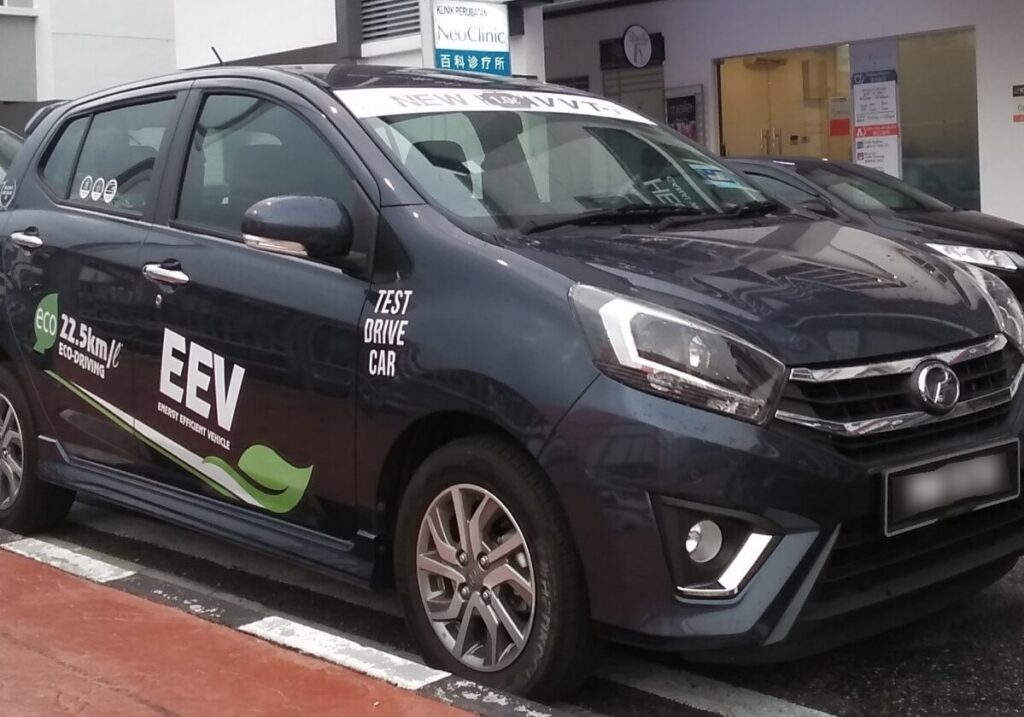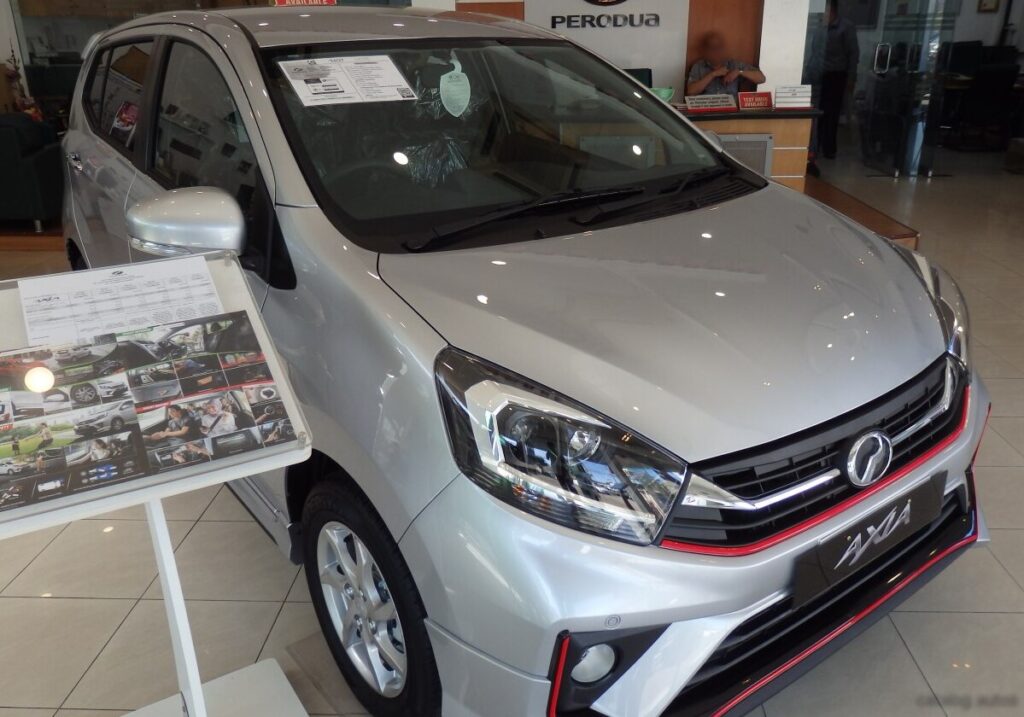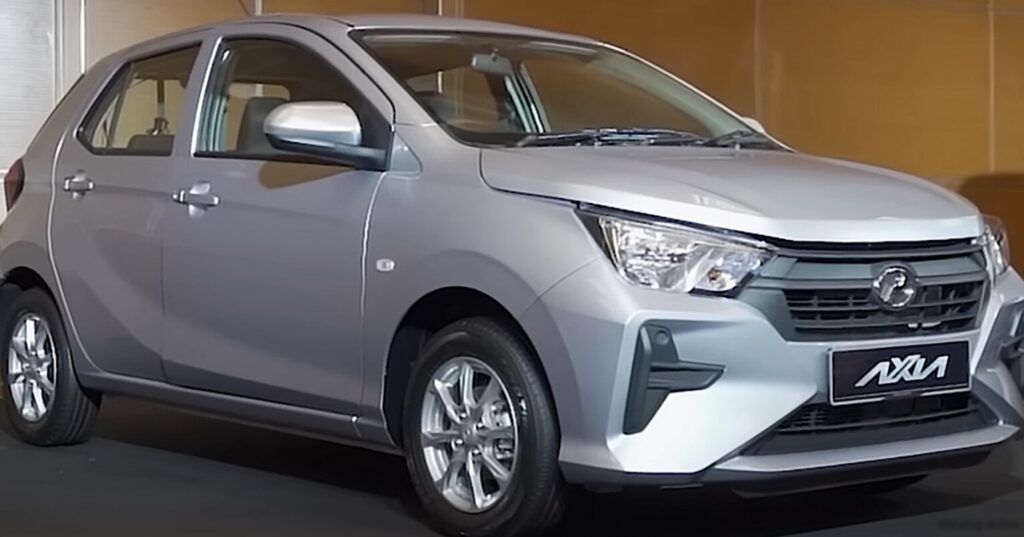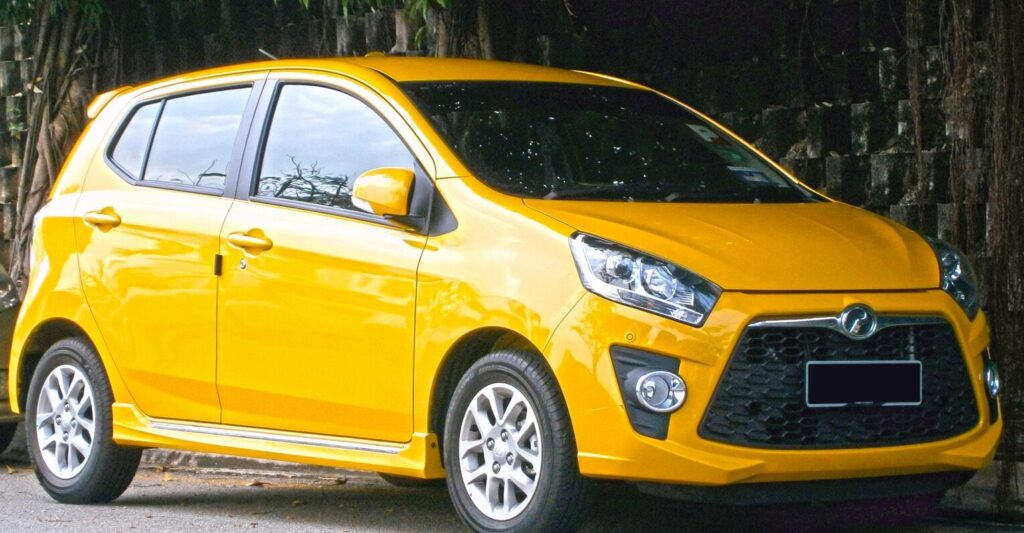
The Perodua Axia I (B200) 1.0L, producing 67 horsepower, represents an important entry point into the Malaysian automotive market. Introduced in September 2014 and continuing through January 2017, this variant was a key component of the first generation Axia (B200) lineup, designed to offer affordable and fuel-efficient transportation. The Axia, as a whole, was Perodua’s response to the growing demand for compact, economical hatchbacks in Southeast Asia, and the 1.0L model specifically targeted budget-conscious buyers. It was built on Perodua’s proprietary platform, emphasizing practicality and value.
Technical Specifications
| Brand | Perodua |
| Model | Axia |
| Generation | Axia I (B200) |
| Type (Engine) | 1.0L (67 Hp) |
| Start of production | September, 2014 |
| End of production | January, 2017 |
| Powertrain Architecture | Internal Combustion engine |
| Body type | Hatchback |
| Seats | 5 |
| Doors | 5 |
| Fuel consumption (combined) | 4.6 l/100 km (51.1 US mpg, 61.4 UK mpg, 21.7 km/l) |
| Fuel Type | Petrol (Gasoline) |
| Weight-to-power ratio | 12.2 kg/Hp, 81.7 Hp/tonne |
| Weight-to-torque ratio | 9.1 kg/Nm, 109.8 Nm/tonne |
| Power | 67 Hp @ 6000 rpm |
| Power per litre | 67.1 Hp/l |
| Torque | 90 Nm @ 3600 rpm (66.38 lb.-ft. @ 3600 rpm) |
| Engine layout | Front, Transverse |
| Engine Model/Code | 1KR-DE2 |
| Engine displacement | 998 cm3 (60.9 cu. in.) |
| Number of cylinders | 3 |
| Engine configuration | Inline |
| Number of valves per cylinder | 4 |
| Fuel injection system | Multi-port manifold injection |
| Engine aspiration | Naturally aspirated engine |
| Valvetrain | DOHC |
| Engine oil capacity | 3 l (3.17 US qt | 2.64 UK qt) |
| Kerb Weight | 820-830 kg (1807.79 – 1829.84 lbs.) |
| Fuel tank capacity | 33 l (8.72 US gal | 7.26 UK gal) |
| Length | 3640 mm (143.31 in.) |
| Width | 1620 mm (63.78 in.) |
| Height | 1510 mm (59.45 in.) |
| Wheelbase | 2455 mm (96.65 in.) |
| Front track | 1410 mm (55.51 in.) |
| Rear track | 1405 mm (55.31 in.) |
| Minimum turning circle | 9 m (29.53 ft.) |
| Drivetrain Architecture | Front wheel drive, Internal Combustion engine (ICE) |
| Number of gears and type of gearbox | 5 gears, manual transmission |
| Assisting systems | ABS (Anti-lock braking system) |
| Steering type | Steering rack and pinion |
| Power steering | Electric Steering |
| Tires size | 175/65 R14 |
| Wheel rims size | 14 |
Powertrain & Engine Architecture
The heart of the Axia 1.0L is the 1KR-DE2 engine, a 998cc inline-3 cylinder petrol engine. This engine is a product of Daihatsu, Perodua’s technical partner, and is known for its simplicity and fuel efficiency. It utilizes a multi-port fuel injection system and a double overhead camshaft (DOHC) valvetrain with four valves per cylinder. The engine’s relatively small displacement and three-cylinder configuration contribute to its low fuel consumption, but also limit its overall power output. The 1KR-DE2 is a naturally aspirated engine, meaning it doesn’t employ a turbocharger or supercharger. The engine is paired with a 5-speed manual transmission, which was the standard offering for this variant. The transmission is designed for durability and ease of use, prioritizing smooth shifts over sporty performance.
Driving Characteristics
The Axia 1.0L with a manual transmission delivers modest performance. With 67 horsepower and 90 Nm (66.38 lb-ft) of torque, acceleration is best described as adequate for city driving. The 5-speed manual gearbox allows drivers to maximize the engine’s limited power, but requires frequent shifting, especially when overtaking or climbing hills. The gear ratios are tuned for fuel economy, meaning the engine operates at relatively low RPMs at highway speeds. Compared to potential future variants with larger engines or automatic transmissions, the 1.0L manual offers a more engaging driving experience, but at the cost of convenience and outright speed. The lightweight nature of the vehicle (820-830 kg) helps to mitigate the effects of the low power output.
Equipment & Trim Levels
The Perodua Axia 1.0L was positioned as the entry-level model in the Axia range. As such, it came with a relatively basic set of standard features. These typically included manual windows, manual air conditioning, and a basic audio system. Safety features included dual airbags and ABS (Anti-lock Braking System). Interior upholstery was typically cloth, and the dashboard featured a simple, functional design. Optional extras, such as power windows and a more advanced audio system, were available at an additional cost, allowing buyers to customize their vehicle to some extent. The focus was on providing essential features at the lowest possible price point.
Chassis & Braking
The Axia 1.0L utilizes a relatively simple chassis design. It features a MacPherson strut suspension in the front and a torsion beam suspension in the rear. The rear brakes are drum brakes, while the front brakes are disc brakes. This configuration is typical for vehicles in this price segment, prioritizing cost-effectiveness over high-performance handling. The electric power steering provides light and easy steering, making it well-suited for urban driving. Stabilizer bars were not typically included as standard equipment on the base 1.0L model, further emphasizing its focus on affordability.
Market Reception & Comparison
The Perodua Axia 1.0L was generally well-received in the Malaysian market. Critics praised its fuel efficiency, affordability, and practicality. However, some reviewers noted its lack of power and basic interior. Compared to other trims in the Axia lineup, such as the 1.3L variants, the 1.0L offered significantly lower performance but also a lower price tag. It competed directly with other entry-level hatchbacks in the region, such as the Proton i-Active. The Axia 1.0L’s fuel economy was a key selling point, consistently achieving around 4.6 l/100 km in real-world driving conditions.
Legacy
The Perodua Axia 1.0L (B200) has proven to be a reliable and durable vehicle. The 1KR-DE2 engine is known for its longevity, and the simple mechanical design makes it relatively easy and inexpensive to maintain. In the used car market, the Axia 1.0L remains a popular choice for budget-conscious buyers seeking a fuel-efficient and dependable vehicle. While it may not offer the performance or features of more modern cars, its affordability and practicality continue to make it a relevant option for many Malaysian drivers. The Axia, in general, helped solidify Perodua’s position as a leading automotive manufacturer in Malaysia, and the 1.0L variant played a crucial role in achieving that success.