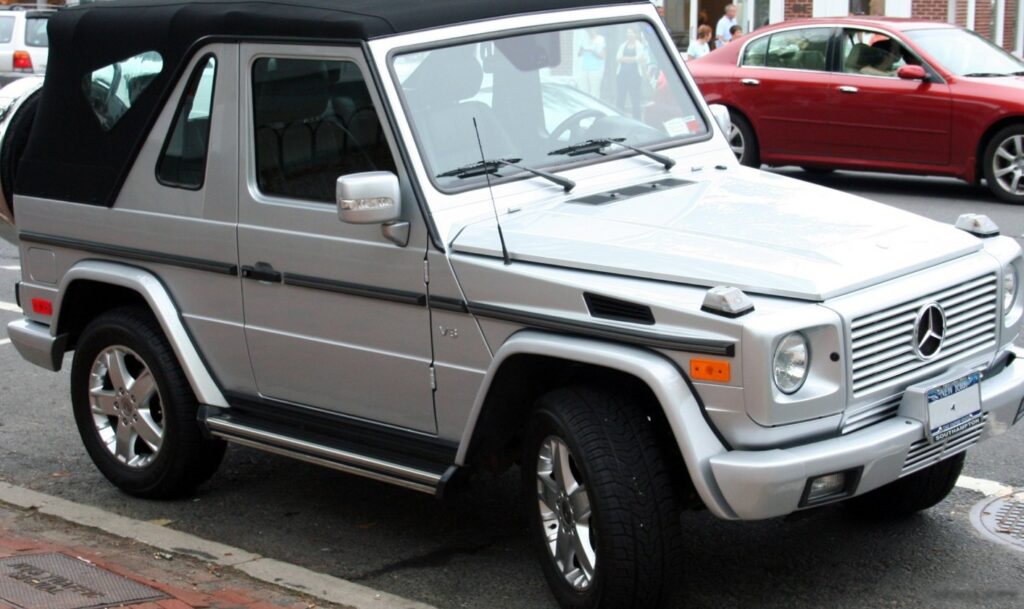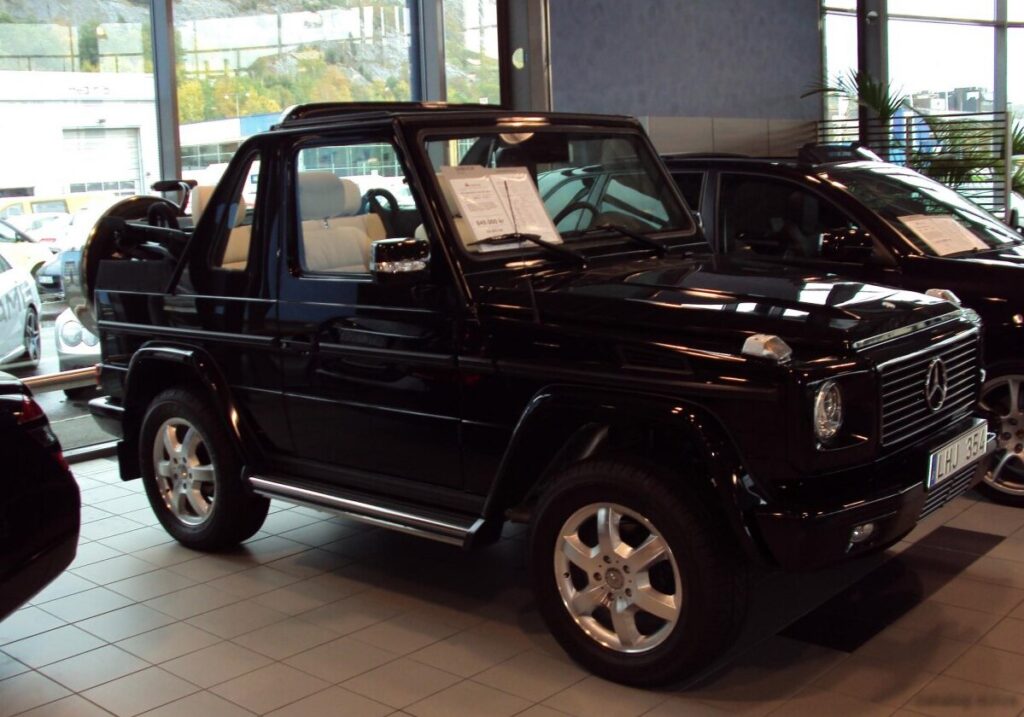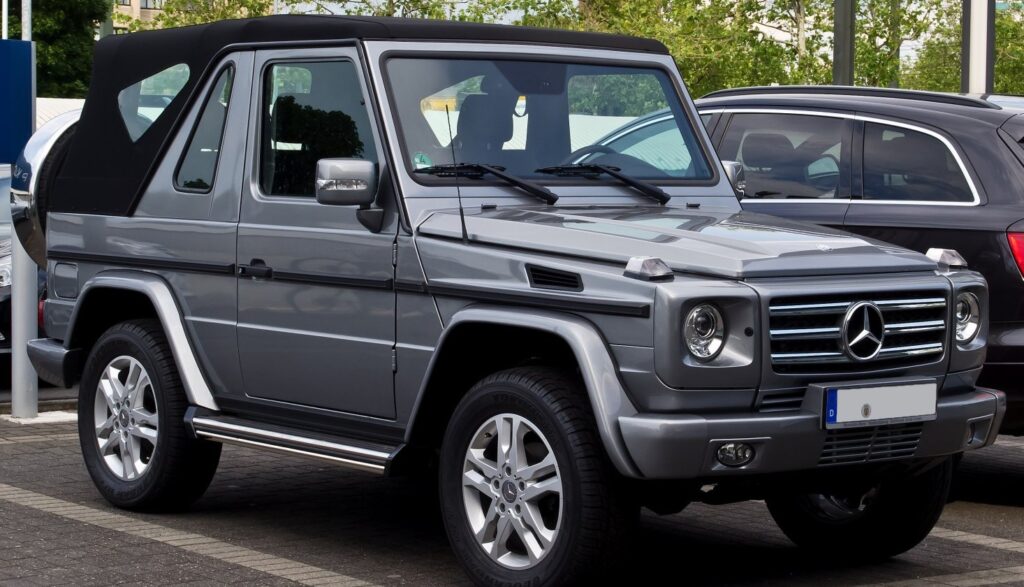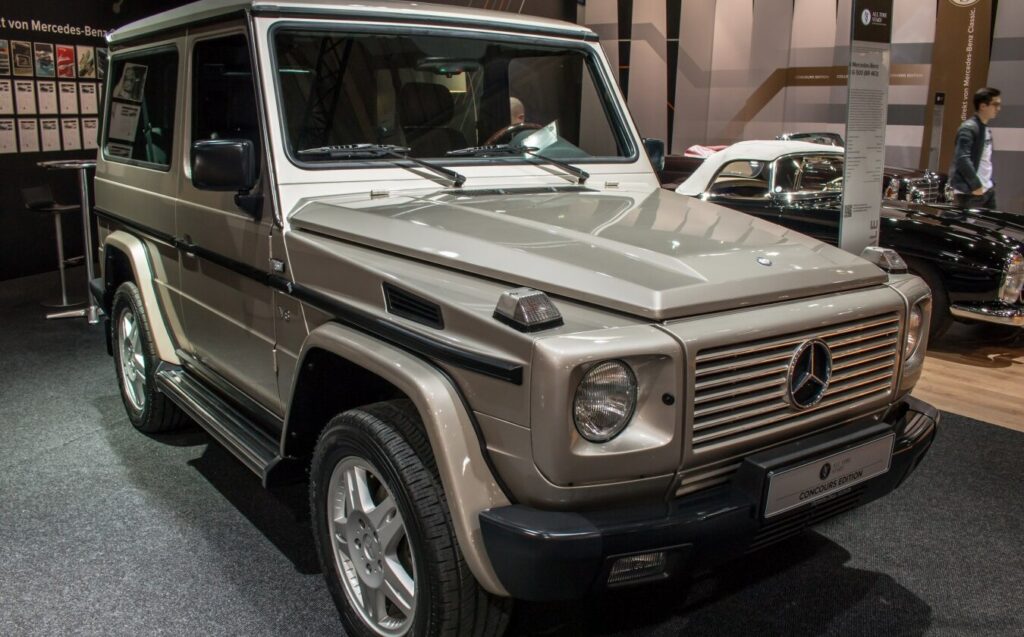
The Mercedes-Benz G 320 V6 (W463), produced from November 1997 to November 2000, represents a significant iteration of the iconic G-Class, blending off-road capability with a more refined driving experience. Positioned as a mid-range offering within the W463 generation, it served as a bridge between the base G 280 and the higher-performance G 500 models. This variant aimed to provide a balance of power, comfort, and practicality for discerning customers seeking a capable and luxurious all-terrain vehicle. The G 320 V6 was primarily marketed in Europe and other international markets, offering a compelling alternative to other luxury SUVs of the era.
Technical Specifications
| Brand | Mercedes-Benz |
| Model | G-class |
| Generation | G-class (W463) |
| Type (Engine) | G 320 V6 (215 Hp) 4MATIC Automatic |
| Start of production | November, 1997 |
| End of production | November, 2000 |
| Powertrain Architecture | Internal Combustion engine |
| Body type | Off-road vehicle |
| Seats | 5 |
| Doors | 3 |
| Fuel consumption (economy) – urban (NEDC) | 19.1 l/100 km (12.3 US mpg, 14.8 UK mpg, 5.2 km/l) |
| Fuel consumption (economy) – extra urban (NEDC) | 13.1 l/100 km (18 US mpg, 21.6 UK mpg, 7.6 km/l) |
| Fuel consumption (economy) – combined (NEDC) | 15.3 l/100 km (15.4 US mpg, 18.5 UK mpg, 6.5 km/l) |
| CO2 emissions (NEDC) | 370 g/km |
| Fuel Type | Petrol (Gasoline) |
| Acceleration 0 – 100 km/h | 10.9 sec |
| Acceleration 0 – 62 mph | 10.9 sec |
| Acceleration 0 – 60 mph | 10.4 sec |
| Maximum speed | 173 km/h (107.5 mph) |
| Emission standard | Euro 2 |
| Weight-to-power ratio | 10.3 kg/Hp, 97.1 Hp/tonne |
| Weight-to-torque ratio | 7.4 kg/Nm, 135.4 Nm/tonne |
| Power | 215 Hp @ 5500 rpm |
| Power per litre | 67.2 Hp/l |
| Torque | 300 Nm @ 2800-4800 rpm (221.27 lb.-ft. @ 2800-4800 rpm) |
| Engine layout | Front, Longitudinal |
| Engine Model/Code | M 112.945 |
| Engine displacement | 3199 cm3 (195.21 cu. in.) |
| Number of cylinders | 6 |
| Engine configuration | V-engine |
| Cylinder Bore | 89.9 mm (3.54 in.) |
| Piston Stroke | 84 mm (3.31 in.) |
| Compression ratio | 10:1 |
| Number of valves per cylinder | 3 |
| Fuel injection system | Multi-port manifold injection |
| Engine aspiration | Naturally aspirated engine |
| Valvetrain | SOHC |
| Engine oil capacity | 8 l (8.45 US qt | 7.04 UK qt) |
| Coolant | 11.5 l (12.15 US qt | 10.12 UK qt) |
| Kerb Weight | 2215 kg (4883.24 lbs.) |
| Max. weight | 2750-2810 kg (6062.71 – 6194.99 lbs.) |
| Max load | 535-595 kg (1179.47 – 1311.75 lbs.) |
| Trunk (boot) space – minimum | 250 l (8.83 cu. ft.) |
| Trunk (boot) space – maximum | 1580 l (55.8 cu. ft.) |
| Fuel tank capacity | 96 l (25.36 US gal | 21.12 UK gal) |
| Max. roof load | 150 kg (330.69 lbs.) |
| Permitted trailer load with brakes (12%) | 2925 kg (6448.52 lbs.) |
| Permitted trailer load without brakes | 750 kg (1653.47 lbs.) |
| Length | 4230 mm (166.54 in.) |
| Width | 1760 mm (69.29 in.) |
| Height | 1931 mm (76.02 in.) |
| Wheelbase | 2400 mm (94.49 in.) |
| Front track | 1475 mm (58.07 in.) |
| Rear (Back) track | 1475 mm (58.07 in.) |
| Ride height (ground clearance) | 210 mm (8.27 in.) |
| Minimum turning circle (turning diameter) | 11.3 m (37.07 ft.) |
| Approach angle | 36° |
| Departure angle | 27° |
| Climb angle | 38.7° |
| Drivetrain Architecture | The Internal combustion engine (ICE) drives permanently the four wheels of the vehicle. |
| Drive wheel | All wheel drive (4×4) |
| Number of gears and type of gearbox | 5 gears, automatic transmission |
| Front suspension | Coil spring, Rigid axle suspension, Trailing arm |
| Rear suspension | Rigid axle suspension, Trailing arm, Coil spring |
| Front brakes | Disc |
| Rear brakes | Disc |
| Assisting systems | ABS (Anti-lock braking system) |
| Steering type | Cone worm with recirculation balls |
| Power steering | Hydraulic Steering |
| Tires size | 255/65 R 16 |
| Wheel rims size | 7.5 J x 16 |
Powertrain & Engine Architecture
The G 320 V6 was powered by the M112.945 3.2-liter V6 engine. This engine, a naturally aspirated powerplant, featured a 60-degree V-angle and utilized a multi-port fuel injection system. The engine produced 215 horsepower at 5500 rpm and 300 Nm (221 lb-ft) of torque between 2800 and 4800 rpm. The engine’s architecture was relatively straightforward, prioritizing reliability and smooth power delivery over outright performance. It featured a single overhead camshaft (SOHC) design per cylinder bank. The engine was longitudinally mounted in the chassis. Paired with the engine was a 5-speed automatic transmission, providing convenient shifting and enhancing the vehicle’s usability in various driving conditions. This transmission was chosen for its durability and suitability for both on- and off-road driving.
Driving Characteristics
The G 320 V6 Automatic offered a comfortable and capable driving experience, though it wasn’t designed for rapid acceleration. The automatic transmission, while smooth, did slightly diminish the engine’s responsiveness compared to the available manual transmission. Acceleration from 0 to 60 mph took approximately 10.4 seconds, and the top speed was limited to 107.5 mph. The torque curve was relatively flat, providing adequate pulling power for off-road excursions and towing. The 4MATIC all-wheel-drive system ensured excellent traction in challenging terrain. The vehicle’s substantial weight (2215 kg / 4883 lbs) was noticeable, particularly during spirited driving, but contributed to its stability and robust feel.
Equipment & Trim Levels
The G 320 V6 typically came equipped with a respectable level of standard features, including air conditioning, power windows, central locking, and an AM/FM radio. Interior upholstery was generally cloth, though leather options were available. Optional extras included a sunroof, upgraded audio system, and various off-road packages with features like a locking differential and auxiliary lighting. The dashboard layout was functional and utilitarian, reflecting the G-Class’s original military roots. The interior, while not lavish, was well-built and durable.
Chassis & Braking
The G 320 V6 retained the traditional body-on-frame construction that characterized the W463 series. The suspension consisted of coil springs and rigid axles with trailing arms, providing a comfortable ride and excellent articulation for off-road use. Brakes were discs on all four wheels, assisted by an Anti-lock Braking System (ABS). The steering was a recirculating ball system with hydraulic power assistance, offering a direct and precise feel. The vehicle’s high ground clearance (210 mm / 8.27 in) and robust chassis allowed it to tackle demanding terrain with ease.
Market Reception & Comparison
The G 320 V6 was generally well-received by automotive critics as a capable and refined all-terrain vehicle. It offered a compelling alternative to other luxury SUVs, such as the Range Rover and Jeep Grand Cherokee. However, its relatively high fuel consumption (15.3 l/100 km combined) was a common criticism. Compared to the G 280, the G 320 V6 offered significantly more power and performance. Compared to the G 500, it provided a more affordable entry point into the G-Class range, albeit with less horsepower. The G 320 V6’s reliability was generally good, though maintenance costs could be high due to the vehicle’s complex engineering and specialized parts.
Legacy
The G 320 V6 has become a sought-after model among G-Class enthusiasts. Its combination of capability, reliability, and relative affordability has made it a popular choice in the used car market. The M112 V6 engine is known for its durability, and well-maintained examples can provide many years of reliable service. Today, the G 320 V6 represents a classic example of a luxury off-road vehicle, embodying the spirit of adventure and rugged individualism that has defined the Mercedes-Benz G-Class for decades.