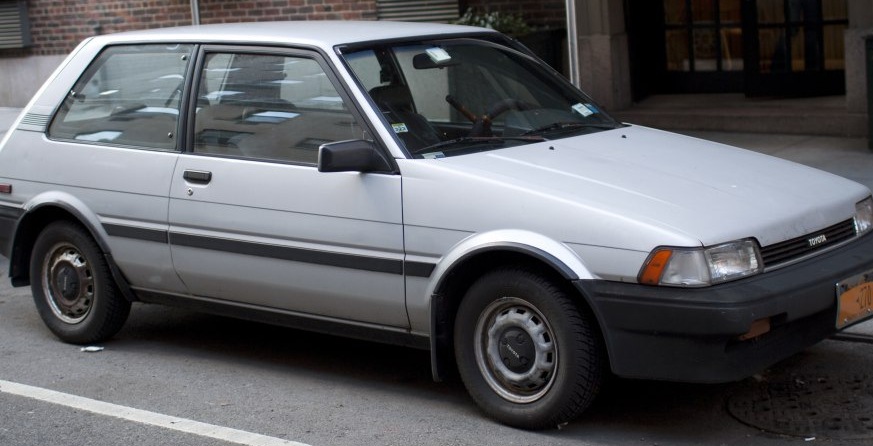
The Toyota Corolla FX Compact V (E80) 1.6 GT 16V, produced between 1985 and 1987, represented a sporty iteration of Toyota’s popular Corolla line. Falling within the E80 chassis generation, the FX Compact V was specifically designed as a lightweight, front-wheel-drive hatchback aimed at a younger, more enthusiastic driver. It distinguished itself from the standard Corolla sedans and coupes with its more aggressive styling and focus on handling. This variant, with its 4A-GEC engine, occupied a mid-range performance position within the FX lineup, offering a step up from the base models while remaining more accessible than potential future high-performance trims.
Technical Specifications
| Brand | Toyota |
| Model | Corolla |
| Generation | Corolla FX Compact V (E80) |
| Type (Engine) | 1.6 GT 16V (121 Hp) |
| Start of production | 1985 |
| End of production | 1987 |
| Powertrain Architecture | Internal Combustion engine |
| Body type | Hatchback |
| Seats | 5 |
| Doors | 3 |
| Fuel Type | Petrol (Gasoline) |
| Power | 121 Hp |
| Engine Model/Code | 4A-GEC |
| Engine aspiration | Naturally aspirated engine |
| Engine oil capacity | 3.7 l (3.91 US qt | 3.26 UK qt) |
| Coolant capacity | 6 l (6.34 US qt | 5.28 UK qt) |
Powertrain & Engine Architecture
The heart of the Corolla FX Compact V 1.6 GT 16V is the 4A-GEC engine, a 1.6-liter (1587 cc) inline-four cylinder gasoline engine. This engine is a member of Toyota’s renowned ‘A’ series, known for its reliability and tunability. The “16V” designation indicates a dual overhead camshaft (DOHC) valvetrain with four valves per cylinder, contributing to improved breathing and higher-end power. Fuel delivery is managed by Toyota’s electronically controlled fuel injection system, providing precise fuel metering for optimal performance and efficiency. The 4A-GEC engine produces 121 horsepower and a respectable amount of torque for its displacement, though specific torque figures varied slightly depending on the market. The engine’s block is cast iron, while the cylinder head is aluminum, a common construction for the era balancing durability with weight savings. While a five-speed manual transmission was often paired with this engine, the automatic transmission option, a three-speed unit, was also available and targeted buyers prioritizing convenience over outright performance.
Driving Characteristics
The Corolla FX Compact V 1.6 GT 16V with the automatic transmission offered a comfortable and accessible driving experience. Compared to the five-speed manual version, acceleration was noticeably slower, as the automatic’s gear ratios were optimized for fuel economy and smooth cruising rather than rapid acceleration. The three-speed automatic, while reliable, lacked the responsiveness and control of a manual gearbox. However, the automatic transmission made the FX Compact V more user-friendly in city traffic. The car’s relatively light weight – around 1,800-2,000 lbs depending on equipment – helped mitigate the power deficit somewhat, providing adequate performance for everyday driving. Steering was light and precise, contributing to the car’s nimble handling. The suspension, while not particularly sophisticated, provided a reasonable balance between ride comfort and handling capability.
Equipment & Trim Levels
The FX Compact V 1.6 GT 16V typically came equipped with a range of features considered fairly generous for the mid-1980s. Standard equipment included cloth upholstery, a basic AM/FM radio, and a steering wheel. Power steering was often included, enhancing ease of maneuverability. Optional extras included upgraded sound systems, sunroofs, and alloy wheels. The interior design was functional and straightforward, prioritizing practicality over luxury. The dashboard layout was clean and easy to read, with clearly marked gauges. The GT 16V trim level generally featured sportier interior accents, such as a sport steering wheel and unique seat patterns, differentiating it from the more basic Corolla models.
Chassis & Braking
The Corolla FX Compact V utilized a front-wheel-drive layout with an independent MacPherson strut suspension in the front and a torsion beam rear suspension. This setup provided a good compromise between ride comfort and handling. Braking duties were handled by disc brakes in the front and drum brakes in the rear. While the front discs offered adequate stopping power, the rear drums were less effective, particularly under hard braking. The car’s relatively light weight helped to compensate for the limitations of the rear drum brakes. Stabilizer bars were typically fitted to both the front and rear axles, further enhancing handling stability.
Market Reception & Comparison
The Corolla FX Compact V 1.6 GT 16V was generally well-received by automotive critics. It was praised for its nimble handling, responsive engine (particularly the manual transmission versions), and overall reliability. The automatic transmission version, while less sporty, was appreciated for its convenience and ease of use. Compared to other hatchbacks of the era, such as the Honda Civic Si or the Volkswagen GTI, the FX Compact V offered a more affordable and practical alternative. However, it lacked the outright performance and prestige of some of its European rivals. Fuel economy was respectable for the time, averaging around 28-32 mpg in combined driving. Reliability was a strong point, consistent with Toyota’s reputation for building durable vehicles.
Legacy
The Toyota Corolla FX Compact V 1.6 GT 16V has developed a modest following among enthusiasts. The 4A-GEC engine is known for its durability and potential for modification, making it a popular choice for engine swaps and performance upgrades. The car’s lightweight construction and nimble handling also contribute to its appeal. In the used car market, well-maintained examples of the FX Compact V 1.6 GT 16V are becoming increasingly collectible. The automatic transmission versions, while less desirable to performance enthusiasts, remain affordable and reliable transportation options. The E80 generation Corolla, and particularly the FX Compact V, represents a significant chapter in Toyota’s history, showcasing the company’s commitment to building fun-to-drive, reliable, and affordable vehicles.