
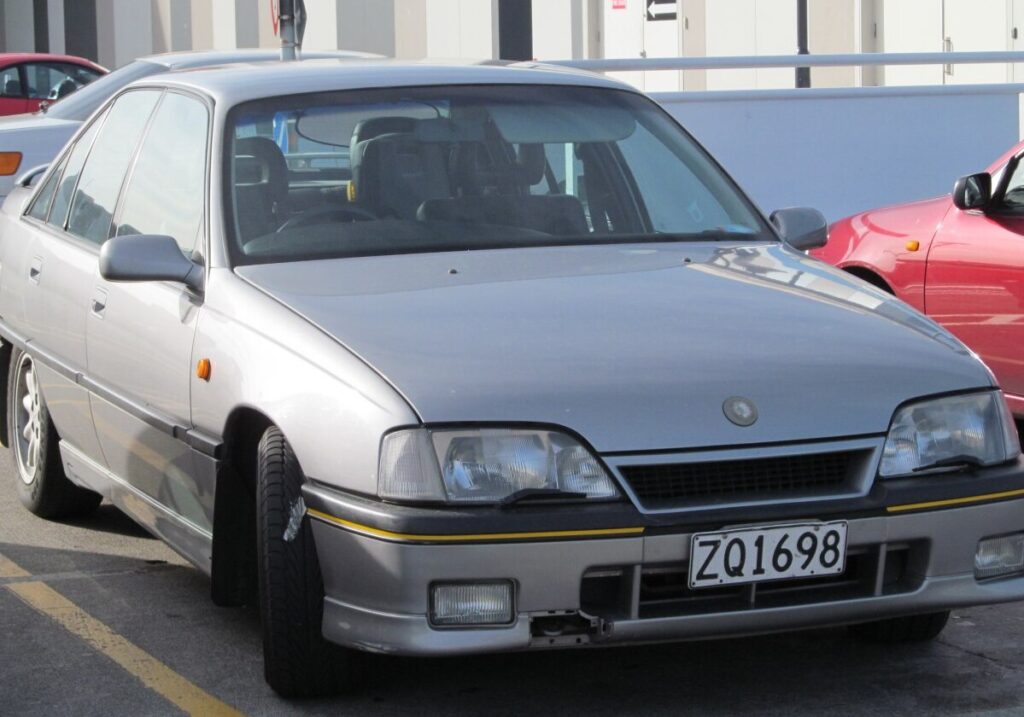
The Opel Omega A 2.3 TD Intercooler Automatic, produced between 1988 and 1993, represented a compelling blend of comfort, efficiency, and understated performance within the large family car segment in Europe. Positioned as a mid-range offering within the Omega A lineup, it catered to buyers seeking a diesel-powered vehicle capable of long-distance cruising with the convenience of an automatic transmission. This variant occupied a space between the more basic, lower-powered diesel models and the flagship gasoline-powered versions, offering a balance of features and running costs. It was a popular choice for fleet operators and private buyers alike, particularly in countries where diesel fuel was more affordable and readily available.
Technical Specifications
| Brand | Opel |
| Model | Omega |
| Generation | Omega A |
| Type (Engine) | 2.3 TD Interc. (100 Hp) Automatic |
| Start of production | 1988 |
| End of production | 1993 |
| Powertrain Architecture | Internal Combustion engine |
| Body type | Sedan |
| Seats | 5 |
| Doors | 4 |
| Fuel consumption (urban) | 9 l/100 km (26.1 US mpg, 31.4 UK mpg, 11.1 km/l) |
| Fuel consumption (extra urban) | 5.4 l/100 km (43.6 US mpg, 52.3 UK mpg, 18.5 km/l) |
| Fuel consumption (combined) | 7.6 l/100 km (30.9 US mpg, 37.2 UK mpg, 13.2 km/l) |
| Fuel Type | Diesel |
| Acceleration 0 – 100 km/h | 15.5 sec |
| Acceleration 0 – 62 mph | 15.5 sec |
| Acceleration 0 – 60 mph | 14.7 sec |
| Maximum speed | 180 km/h (111.85 mph) |
| Weight-to-power ratio | 13.8 kg/Hp, 72.7 Hp/tonne |
| Weight-to-torque ratio | 6.4 kg/Nm, 156.4 Nm/tonne |
| Power | 100 Hp @ 4200 rpm |
| Power per litre | 44.2 Hp/l |
| Torque | 215 Nm @ 2200 rpm (158.58 lb.-ft. @ 2200 rpm) |
| Engine layout | Front, Longitudinal |
| Engine Model/Code | 23DTR |
| Engine displacement | 2260 cm3 (137.91 cu. in.) |
| Number of cylinders | 4 |
| Engine configuration | Inline |
| Cylinder Bore | 92 mm (3.62 in.) |
| Piston Stroke | 85 mm (3.35 in.) |
| Compression ratio | 23:1 |
| Number of valves per cylinder | 2 |
| Fuel injection system | Precombustion chamber injection |
| Engine aspiration | Turbocharger, Intercooler |
| Valvetrain | SOHC |
| Engine oil capacity | 5.5 l (5.81 US qt | 4.84 UK qt) |
| Coolant capacity | 10.9 l (11.52 US qt | 9.59 UK qt) |
| Kerb Weight | 1375 kg (3031.36 lbs.) |
| Max. weight | 1895 kg (4177.76 lbs.) |
| Max load | 520 kg (1146.4 lbs.) |
| Trunk (boot) space – minimum | 520 l (18.36 cu. ft.) |
| Trunk (boot) space – maximum | 870 l (30.72 cu. ft.) |
| Fuel tank capacity | 75 l (19.81 US gal | 16.5 UK gal) |
| Length | 4740 mm (186.61 in.) |
| Width | 1760 mm (69.29 in.) |
| Height | 1445 mm (56.89 in.) |
| Wheelbase | 2730 mm (107.48 in.) |
| Front track | 1445 mm (56.89 in.) |
| Rear track | 1460 mm (57.48 in.) |
| Drivetrain Architecture | Rear wheel drive |
| Number of gears | 4 |
| Gearbox type | Automatic transmission |
| Front suspension | Spring Strut |
| Rear suspension | Wishbone |
| Front brakes | Ventilated discs |
| Rear brakes | Disc |
| Assisting systems | ABS (Anti-lock braking system), Hydraulic Power Steering |
| Tires size | 185/70 R15 |
| Wheel rims size | 15 |
Introduction
The Opel Omega A, launched in 1986, was a significant model for the German manufacturer, representing a move upmarket in the executive car class. The 2.3 TD Intercooler Automatic variant, introduced a few years into the Omega A’s production run, combined a turbocharged diesel engine with a four-speed automatic transmission. This combination aimed to provide a comfortable and efficient driving experience, appealing to drivers who covered long distances regularly. Built on the GM V platform (also known as the 1HX0/A3 platform), the Omega A shared components with other GM vehicles like the Saab 9000 and the Vauxhall Carlton, benefiting from economies of scale and a robust engineering base.
Powertrain & Engine Architecture
The heart of the Omega A 2.3 TD Automatic is the 23DTR engine, a 2.3-liter inline-four cylinder diesel. This engine utilizes a precombustion chamber injection system, a common technology for diesel engines of the era. This system involves injecting fuel into a small precombustion chamber within the cylinder head, where it ignites and then ignites the main charge in the cylinder. This design promotes more complete combustion and reduces engine noise. The engine is turbocharged and equipped with an intercooler, which cools the intake air, increasing its density and improving power output. The turbocharger boosts power to 100 horsepower at 4200 rpm and 215 Nm (158.58 lb-ft) of torque at 2200 rpm. The four-speed automatic transmission, while providing convenience, was a relatively conventional unit for the time, prioritizing smooth shifts over outright performance. It was designed to handle the engine’s torque output and provide comfortable cruising.
Driving Characteristics
The 2.3 TD Automatic Omega A offered a distinctly different driving experience compared to its gasoline-powered siblings or even the manual diesel versions. The automatic transmission, while smooth, resulted in a noticeable reduction in acceleration. The 0-60 mph time of around 14.7 seconds and a top speed of 111.85 mph reflected this. The focus was on relaxed cruising and fuel efficiency rather than sporty performance. The torque-rich diesel engine provided adequate pulling power for overtaking maneuvers, but the automatic transmission’s shift points could sometimes feel sluggish. Compared to the more responsive manual transmission, the automatic version felt less engaging for drivers who enjoyed a more involved driving experience. The gear ratios were optimized for highway driving, making it a comfortable long-distance companion.
Equipment & Trim Levels
The 2.3 TD Automatic typically came with a reasonable level of standard equipment. This included central locking, electric front windows, and a basic stereo system. Interior upholstery was typically cloth, with options for upgraded velour or leather available. The dashboard layout was functional and straightforward, with clear instrumentation. Optional extras included air conditioning, a sunroof, and upgraded sound systems. The trim level generally fell into the mid-range of the Omega A lineup, offering a step up from the base models but lacking the luxury features found in the higher-spec versions.
Chassis & Braking
The Omega A featured a robust chassis with independent suspension at the front using spring struts and a wishbone setup at the rear. This suspension configuration provided a comfortable ride, absorbing bumps and imperfections in the road surface effectively. Braking was handled by ventilated discs at the front and solid discs at the rear. An Anti-lock Braking System (ABS) was standard, enhancing safety by preventing wheel lockup during hard braking. Hydraulic power steering was also standard, making maneuvering at low speeds easier. The suspension was tuned for comfort, prioritizing ride quality over sharp handling.
Market Reception & Comparison
The Opel Omega A 2.3 TD Automatic received generally positive reviews for its comfort, fuel economy, and practicality. Critics praised the engine’s torque and the convenience of the automatic transmission, but noted the lack of outright performance. Compared to the gasoline-powered Omega A models, the diesel version offered significantly better fuel economy, making it a more economical choice for high-mileage drivers. Compared to other diesel-powered cars in its class, the Omega A offered a good balance of space, comfort, and refinement. However, some competitors offered more advanced technology or a more engaging driving experience.
Legacy
The Opel Omega A 2.3 TD Automatic, while not a performance icon, has proven to be a relatively durable and reliable vehicle. The 23DTR engine, when properly maintained, is known for its longevity. Today, these cars are increasingly sought after by classic car enthusiasts and collectors. Parts availability can be a challenge, but a dedicated community of owners and specialists exists to support these vehicles. The Omega A 2.3 TD Automatic represents a significant chapter in Opel’s history, showcasing the brand’s commitment to building comfortable, practical, and efficient family cars.
