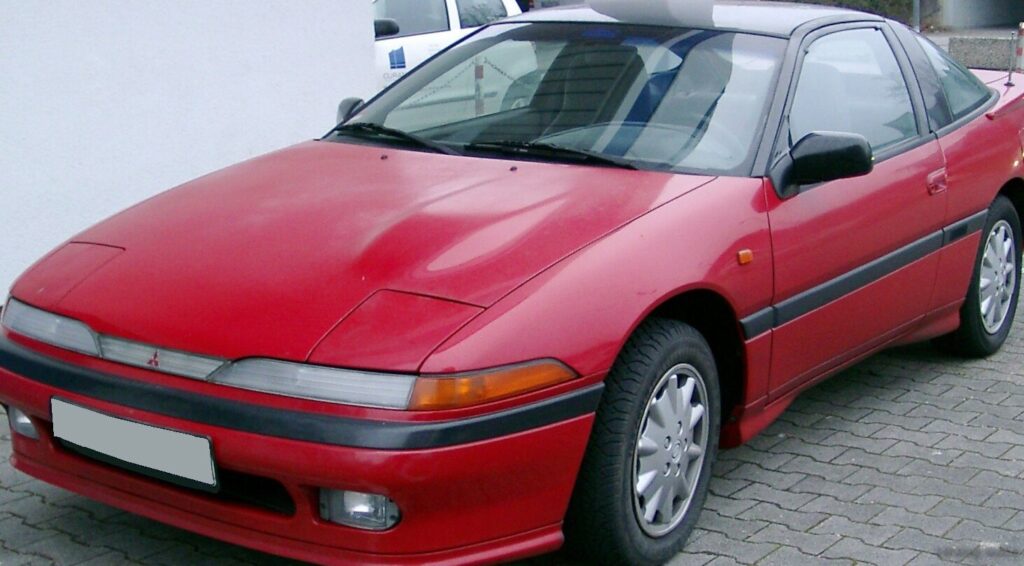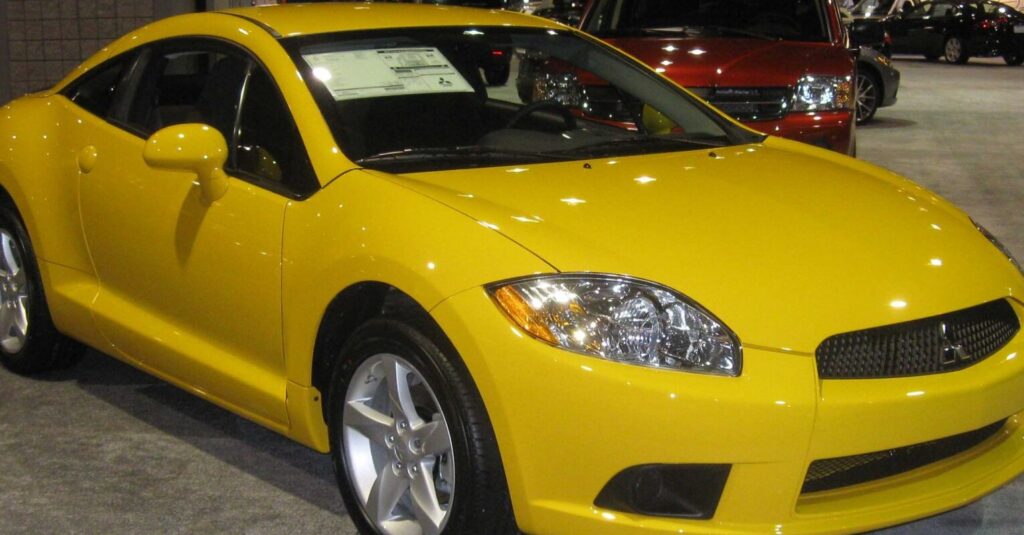
The Mitsubishi Eclipse IV (4G), specifically the facelifted version produced from 2009 to 2011, represented a significant departure from the earlier, more performance-focused Eclipse models. Positioned as a stylish and relatively affordable coupe/liftback, the GT 3.8L V6 MIVEC Automatic variant aimed to offer a blend of power and convenience. This generation, built on the shared platform with the Galant and Endeavor, sought to broaden the Eclipse’s appeal beyond its traditional sports car fanbase. The 2009 facelift brought revised styling cues and refinements to the interior, attempting to modernize the vehicle and address some criticisms of the previous iteration.
Technical Specifications
| Brand | Mitsubishi |
| Model | Eclipse |
| Generation | Eclipse IV (4G, facelift 2009) |
| Type | GT 3.8L V6 MIVEC (265 Hp) Automatic |
| Start of production | 2009 |
| End of production | 2011 |
| Powertrain Architecture | Internal Combustion engine |
| Body type | Coupe, Liftback |
| Seats | 4 |
| Doors | 2 |
| Fuel consumption (urban) | 14.7 l/100 km (16 US mpg, 19.2 UK mpg) |
| Fuel consumption (extra urban) | 9.8 l/100 km (24 US mpg, 28.8 UK mpg) |
| Fuel Type | Petrol (Gasoline) |
| Weight-to-power ratio | 6.1 kg/Hp, 164.8 Hp/tonne |
| Weight-to-torque ratio | 4.5 kg/Nm, 220.8 Nm/tonne |
| Power | 265 Hp @ 5750 rpm |
| Power per litre | 69.2 Hp/l |
| Torque | 355 Nm @ 4500 rpm (261.83 lb.-ft. @ 4500 rpm) |
| Engine layout | Front, Longitudinal |
| Engine Model/Code | 6G75 |
| Engine displacement | 3828 cm3 (233.6 cu. in.) |
| Number of cylinders | 6 |
| Engine configuration | V-engine |
| Cylinder Bore | 95 mm (3.74 in.) |
| Piston Stroke | 90 mm (3.54 in.) |
| Compression ratio | 10.5:1 |
| Number of valves per cylinder | 4 |
| Fuel injection system | Multi-port manifold injection |
| Engine aspiration | Naturally aspirated engine |
| Valvetrain | SOHC |
| Engine oil capacity | 4.3 l (4.54 US qt | 3.78 UK qt) |
| Coolant capacity | 8 l (8.45 US qt | 7.04 UK qt) |
| Kerb Weight | 1608 kg (3545.03 lbs.) |
| Max. weight | 1945 kg (4287.99 lbs.) |
| Max load | 337 kg (742.96 lbs.) |
| Trunk (boot) space – maximum | 445 l (15.72 cu. ft.) |
| Fuel tank capacity | 67 l (17.7 US gal | 14.74 UK gal) |
| Length | 4582 mm (180.39 in.) |
| Width | 1835 mm (72.24 in.) |
| Height | 1359 mm (53.5 in.) |
| Wheelbase | 2576 mm (101.42 in.) |
| Front track | 1570 mm (61.81 in.) |
| Rear track | 1570 mm (61.81 in.) |
| Ride height (ground clearance) | 148 mm (5.83 in.) |
| Minimum turning circle | 12.2 m (40.03 ft.) |
| Drivetrain Architecture | Front wheel drive |
| Number of gears and type of gearbox | 5 gears, automatic transmission Sportronic |
| Front suspension | Independent type McPherson |
| Rear suspension | Independent multi-link suspension |
| Front brakes | Ventilated discs, 295 mm |
| Rear brakes | Disc, 285 mm |
| Assisting systems | ABS (Anti-lock braking system) |
| Steering type | Steering rack and pinion |
| Power steering | Hydraulic Steering |
| Tires size | 235/45 R18 |
| Wheel rims size | 18 |
Powertrain & Engine Architecture
The heart of the GT variant was the 6G75 3.8-liter V6 engine. This naturally aspirated engine utilized a single overhead camshaft (SOHC) design and Mitsubishi’s MIVEC (Mitsubishi Innovative Valve timing and lift Electronic Control) variable valve timing system. MIVEC adjusted both the timing and lift of the intake valves, optimizing performance and fuel efficiency across the engine’s operating range. The engine employed multi-port fuel injection, delivering fuel directly to each cylinder. The 6G75 was known for its relatively smooth power delivery and robust construction. The engine was mounted longitudinally in the front of the vehicle. Paired with the V6 was a five-speed automatic transmission featuring Mitsubishi’s “Sportronic” manual shift mode, allowing drivers some control over gear selection. This transmission was chosen for its balance of convenience and responsiveness, though it wasn’t as sporty as a traditional manual gearbox.
Driving Characteristics
The 265 horsepower and 261.83 lb-ft of torque provided by the 3.8L V6 and automatic transmission combination resulted in respectable, though not blistering, acceleration. The automatic transmission, while offering smooth shifts, did detract somewhat from the overall driving experience compared to the available manual transmission. The Sportronic mode helped mitigate this, but didn’t fully replicate the engagement of a manual. The gear ratios were tuned for a balance of acceleration and highway cruising, with the fifth gear providing a comfortable overdrive for long distances. The front-wheel-drive configuration meant that torque steer was present under hard acceleration, a characteristic common to many powerful front-wheel-drive vehicles. Overall, the driving experience was geared towards comfortable and confident daily driving rather than outright performance.
Equipment & Trim Levels
The GT trim level, as tested with the 3.8L V6 and automatic transmission, typically included features such as alloy wheels, a premium sound system, automatic climate control, power windows and locks, and keyless entry. Interior upholstery was generally cloth, though leather options were available. Standard safety features included ABS brakes, front airbags, and side airbags. Optional extras could include a sunroof, upgraded audio systems, and various cosmetic enhancements. The GT trim sat in the middle of the Eclipse IV lineup, offering a step up in performance and features compared to the base models, but falling short of the range-topping RS trim which focused on sportier handling and a manual transmission.
Chassis & Braking
The Eclipse IV utilized an independent McPherson strut suspension in the front and an independent multi-link suspension in the rear. This setup aimed to provide a comfortable ride while maintaining reasonable handling characteristics. The GT variant typically featured a slightly stiffer suspension tuning compared to the base models, to better manage the increased power of the V6 engine. Braking duties were handled by ventilated discs in the front and solid discs in the rear. ABS (Anti-lock Braking System) was standard, enhancing braking performance and stability. The chassis was designed to balance rigidity and weight, contributing to the vehicle’s overall handling dynamics.
Market Reception & Comparison
The 2009-2011 Mitsubishi Eclipse GT 3.8L V6 Automatic received mixed reviews. Critics generally praised the engine’s power and smoothness, but some found the automatic transmission to be less engaging than a manual. Fuel economy was also a point of concern, with the V6 engine consuming a significant amount of fuel, especially in urban driving conditions. Compared to other trims, the 3.8L V6 offered a substantial performance upgrade over the base 2.4L four-cylinder engine, but at the cost of increased fuel consumption and a slightly higher price point. The RS trim, with its manual transmission and sport-tuned suspension, was favored by enthusiasts seeking a more engaging driving experience.
Legacy
The Mitsubishi Eclipse IV, including the GT 3.8L V6 Automatic variant, has become a relatively affordable used car option. The 6G75 engine is generally considered to be reliable, though regular maintenance is crucial to prevent issues. Common concerns include oil leaks and potential problems with the timing belt. The automatic transmission, while generally durable, can experience issues with age and high mileage. Today, the Eclipse IV is appreciated by those seeking a stylish and relatively powerful coupe at a reasonable price, though it doesn’t hold the same enthusiast appeal as some of its predecessors. The model represents a shift in the Eclipse’s identity, moving away from its performance-focused roots towards a more mainstream and accessible vehicle.