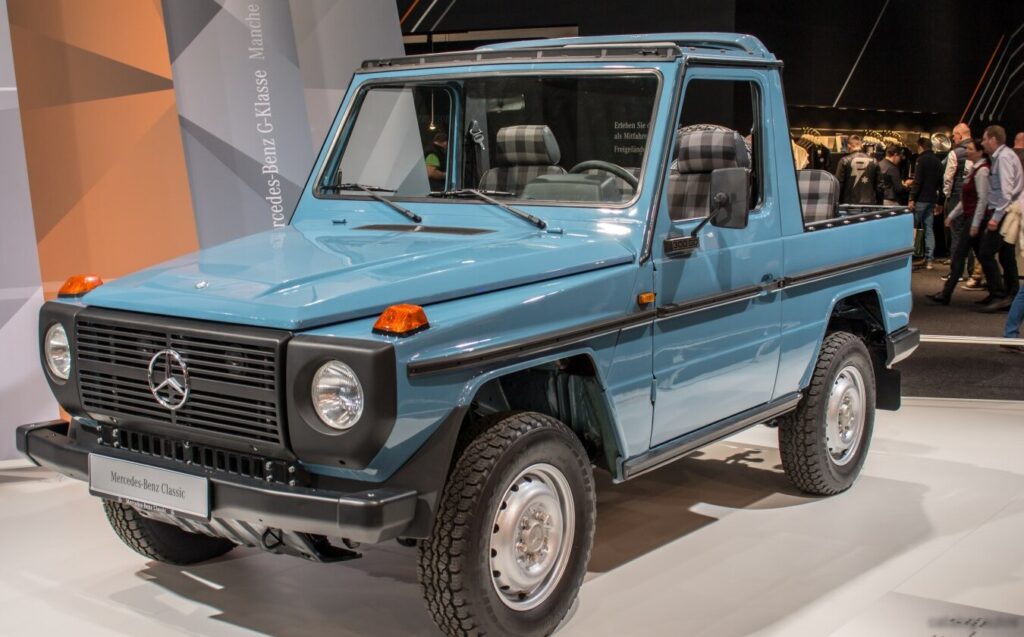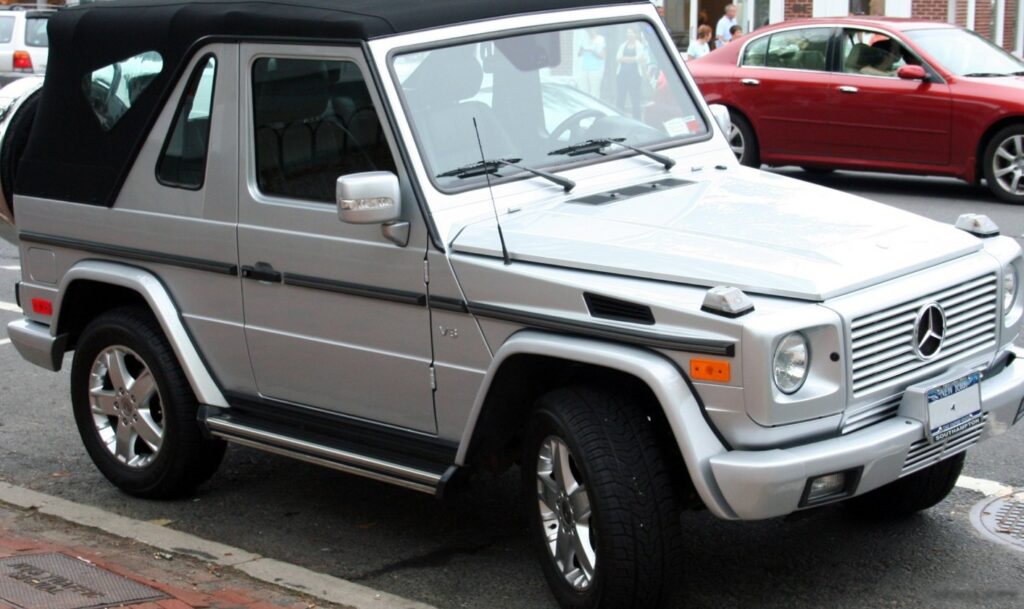
The Mercedes-Benz G 350 Turbo 4MATIC, produced from September 1993 to July 1994, represents a relatively short-lived but significant iteration of the iconic G-Class (W463) series. Positioned as a mid-range offering within the W463 lineup, it aimed to provide a balance between capability and affordability, slotting below the more powerful G 500 and above the base G 230. This variant was primarily marketed in Europe and other regions where diesel engines were favored, offering a robust and durable off-road vehicle with a focus on torque and practicality. The G 350 Turbo was a key part of the initial W463 generation, establishing the G-Class’s reputation for uncompromising off-road performance and rugged luxury.
Technical Specifications
| Brand | Mercedes-Benz |
| Model | G-class |
| Generation | G-class (W463) |
| Type | G 350 Turbo (136 Hp) 4MATIC Automatic |
| Start of production | September, 1993 |
| End of production | July, 1994 |
| Powertrain Architecture | Internal Combustion engine |
| Body type | Off-road vehicle |
| Seats | 5 |
| Doors | 3 |
| Fuel consumption (urban) | 13.5 l/100 km (17.4 US mpg, 20.9 UK mpg) |
| Fuel consumption (extra urban) | 11.8 l/100 km (19.9 US mpg, 23.9 UK mpg) |
| Fuel Type | Diesel |
| Acceleration 0 – 100 km/h | 16 sec |
| Acceleration 0 – 62 mph | 16 sec |
| Acceleration 0 – 60 mph | 15.2 sec |
| Maximum speed | 145 km/h (90.1 mph) |
| Weight-to-power ratio | 15.8 kg/Hp |
| Weight-to-torque ratio | 7 kg/Nm |
| Power | 136 Hp @ 4600 rpm |
| Torque | 305 Nm @ 1800 rpm (224.96 lb.-ft. @ 1800 rpm) |
| Engine layout | Front, Longitudinal |
| Engine Model/Code | OM 603.972 |
| Engine displacement | 3449 cm3 (210.47 cu. in.) |
| Number of cylinders | 6 |
| Engine configuration | Inline |
| Cylinder Bore | 89 mm (3.5 in.) |
| Piston Stroke | 92.4 mm (3.64 in.) |
| Compression ratio | 22:1 |
| Number of valves per cylinder | 2 |
| Fuel injection system | Precombustion chamber injection |
| Engine aspiration | Turbocharger |
| Valvetrain | SOHC |
| Engine oil capacity | 8.5 l (8.98 US qt | 7.48 UK qt) |
| Coolant capacity | 9.5 l (10.04 US qt | 8.36 UK qt) |
| Kerb Weight | 2145 kg (4728.92 lbs.) |
| Max. weight | 2710 kg (5974.53 lbs.) |
| Max load | 565 kg (1245.61 lbs.) |
| Fuel tank capacity | 96 l (25.36 US gal | 21.12 UK gal) |
| Length | 4185 mm (164.76 in.) |
| Width | 1690 mm (66.54 in.) |
| Height | 1908 mm (75.12 in.) |
| Wheelbase | 2400 mm (94.49 in.) |
| Front track | 1425 mm (56.1 in.) |
| Rear track | 1425 mm (56.1 in.) |
| Drivetrain Architecture | All wheel drive (4×4) |
| Number of gears | 4 |
| Gearbox type | Automatic transmission |
| Front suspension | Coil spring, Rigid axle suspension, Trailing arm |
| Rear suspension | Rigid axle suspension, Trailing arm, Coil spring |
| Front brakes | Disc |
| Rear brakes | Drum |
| Assisting systems | ABS (Anti-lock braking system) |
| Steering type | Cone worm with recirculation balls |
| Power steering | Hydraulic Steering |
| Tires size | 205/80 R 16 |
| Wheel rims size | 6 J x 16 |
Powertrain & Engine Architecture
The G 350 Turbo was powered by the OM 603.972, a 3.5-liter inline-six cylinder diesel engine. This engine was a mainstay of Mercedes-Benz’s diesel offerings during the 1990s, known for its durability and relatively smooth operation for a diesel of the era. The “Turbo” designation indicates the presence of a turbocharger, which significantly boosted power output compared to naturally aspirated versions. The engine utilized a precombustion chamber injection system, a common design for diesel engines at the time, which improved combustion efficiency and reduced engine noise. The four-speed automatic transmission, a robust unit designed to handle the engine’s torque, was standard. This transmission, while not particularly sophisticated by modern standards, provided smooth shifts and contributed to the G 350 Turbo’s ease of driving.
Driving Characteristics
The G 350 Turbo’s driving experience was defined by its substantial torque and ruggedness. With 305 Nm (224.96 lb-ft) available from 1800 rpm, the vehicle offered strong pulling power, making it well-suited for off-road adventures and towing. However, the 136 horsepower output meant acceleration was leisurely, taking around 16 seconds to reach 100 km/h (62 mph). Compared to the G 500, which boasted significantly more power, the G 350 Turbo felt noticeably slower. The automatic transmission, while convenient, did rob some responsiveness from the engine. The G-Class’s legendary off-road capability remained intact, thanks to its permanent four-wheel drive system, low-range gearing, and robust suspension. The vehicle’s high center of gravity and relatively soft suspension meant on-road handling was not its strong suit, but it provided a comfortable ride on rough surfaces.
Equipment & Trim Levels
The G 350 Turbo typically came with a fairly basic level of equipment, reflecting its positioning as a more affordable G-Class variant. Standard features included power windows, central locking, and a basic audio system. Interior upholstery was typically cloth, although leather was available as an option. Optional extras included air conditioning, a sunroof, and upgraded audio systems. The dashboard layout was functional and utilitarian, prioritizing durability and ease of use over luxury. The G-Class’s interior, even in its more basic trims, was characterized by its robust construction and practical design.
Chassis & Braking
The G 350 Turbo utilized a ladder-frame chassis, a hallmark of the G-Class’s design, providing exceptional strength and rigidity. The suspension consisted of coil springs and rigid axles front and rear, offering substantial wheel articulation for off-road use. Front brakes were discs, while rear brakes were drums, a cost-saving measure for this trim level. ABS (Anti-lock braking system) was standard, enhancing safety on paved roads. The steering system was a recirculating ball type, providing a direct but somewhat heavy feel. The tires, typically 205/80 R 16, were chosen for their durability and off-road traction.
Market Reception & Comparison
The G 350 Turbo was generally well-received by critics as a capable and practical off-road vehicle. It offered a compelling alternative to the more expensive G 500, appealing to buyers who prioritized durability and fuel economy over outright performance. Fuel economy, while not exceptional by modern standards, was better than that of the G 500. Reliability was generally good, thanks to the robust construction of the engine and chassis. Compared to the G 230, the G 350 Turbo offered a significant power boost, making it a more versatile vehicle for towing and tackling challenging terrain. However, the G 350 Turbo’s relatively short production run limited its overall impact on the market.
Legacy
The G 350 Turbo, despite its brief production run, remains a sought-after vehicle among G-Class enthusiasts. The OM 603 engine is known for its longevity and relatively simple maintenance requirements. Well-maintained examples are still in regular use today, testament to the G-Class’s inherent durability. In the used car market, the G 350 Turbo typically commands a premium over other W463 variants due to its combination of capability, affordability, and relative rarity. It represents a sweet spot in the G-Class lineup, offering a genuine off-road experience without the exorbitant price tag of the higher-end models.