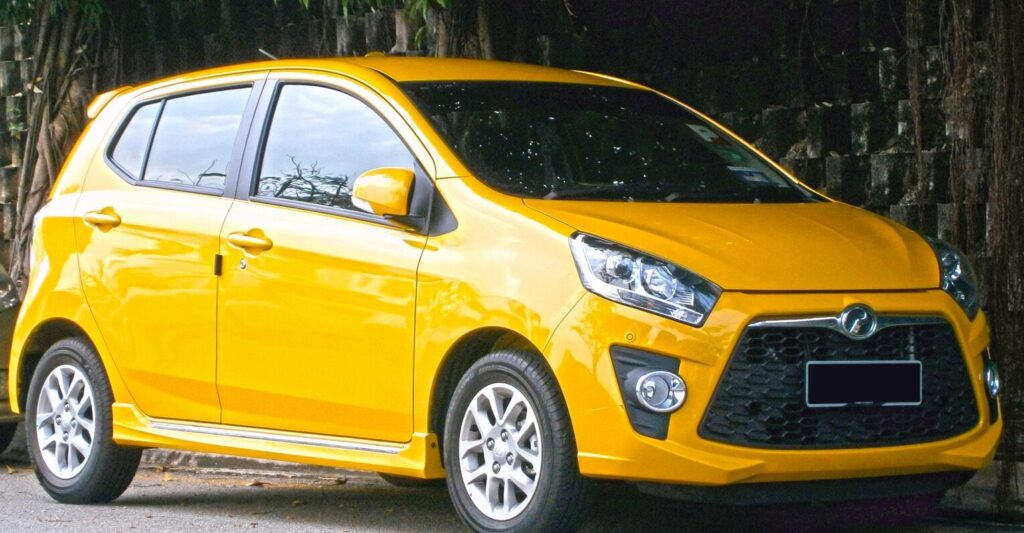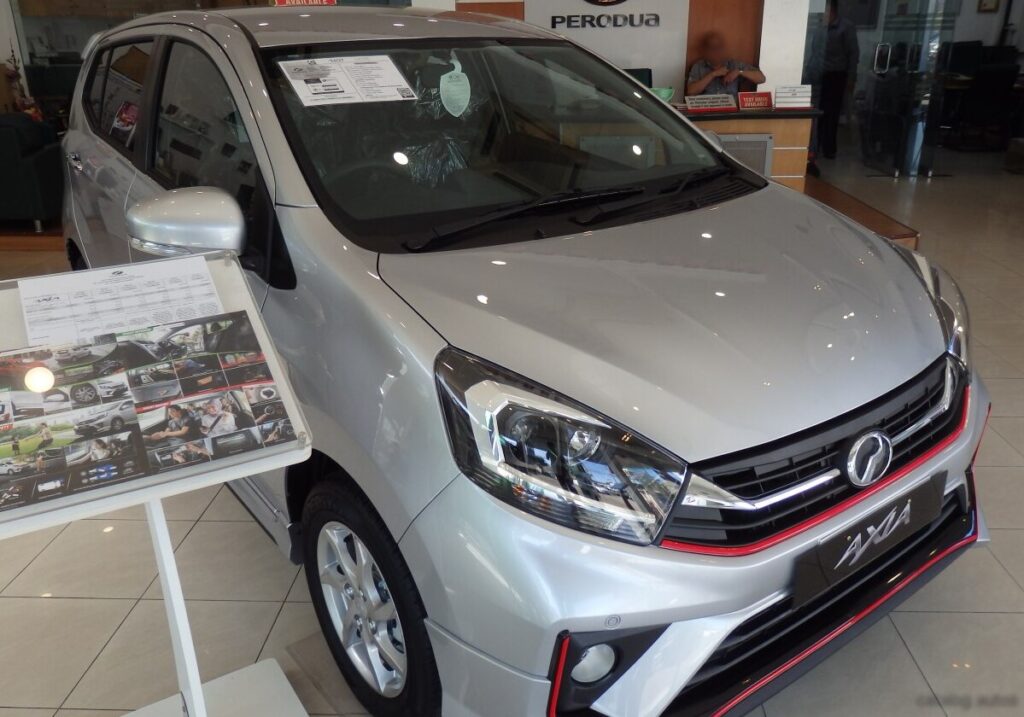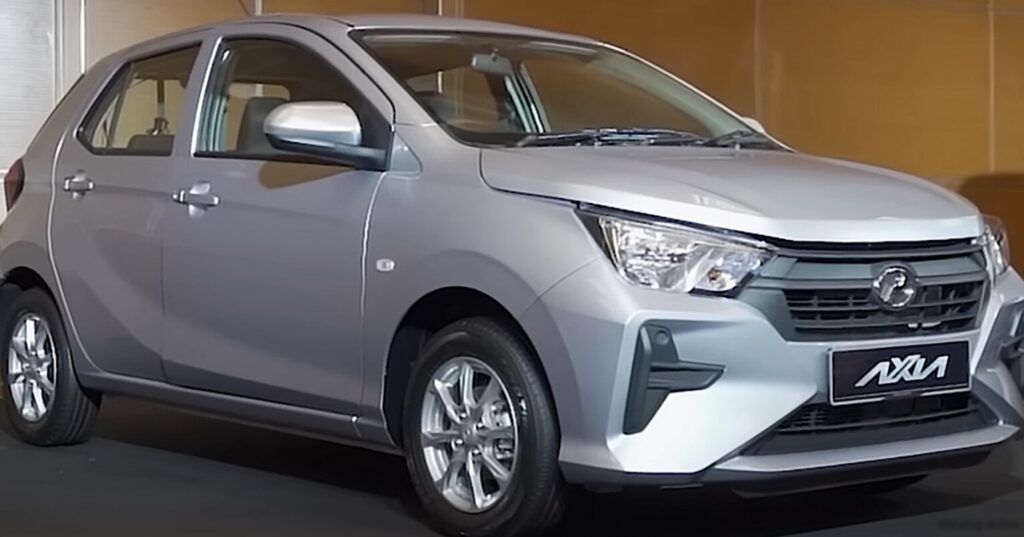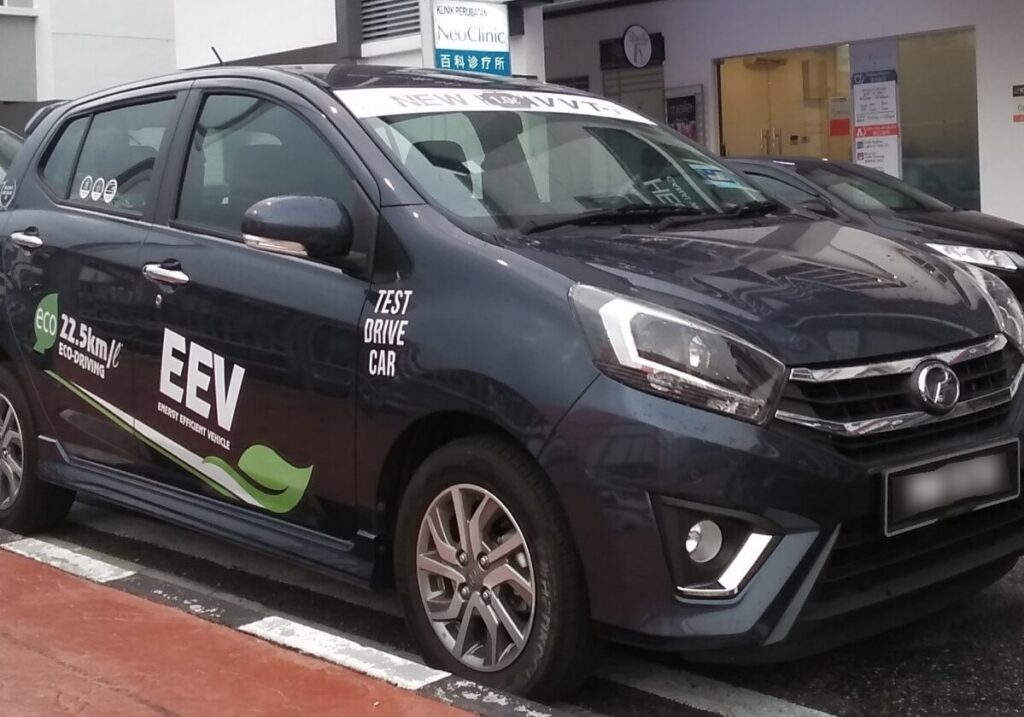
The Perodua Axia I (B200, facelifted in 2017) 1.0 VVT-i with an automatic transmission represents a significant entry point into the Malaysian automotive market. Introduced in January 2017 and continuing through September 2019, this variant occupied the base trim level within the Axia I range, designed for affordability and fuel efficiency. The Axia itself is a supermini, positioned as Perodua’s most affordable offering, competing directly with other budget-focused hatchbacks in Southeast Asia. This facelifted version built upon the original Axia launched in 2014, incorporating styling updates and minor mechanical refinements. It’s built on the 1HX0/A3 platform, shared with the Daihatsu Ayla and Toyota Agya, reflecting Perodua’s long-standing partnership with Daihatsu.
Technical Specifications
| Brand | Perodua |
| Model | Axia |
| Generation | Axia I (B200, facelift 2017) |
| Type (Engine) | 1.0 VVT-i (68 Hp) Automatic |
| Start of production | January, 2017 |
| End of production | September, 2019 |
| Powertrain Architecture | Internal Combustion engine |
| Body type | Hatchback |
| Seats | 5 |
| Doors | 5 |
| Fuel consumption (combined) | 4.6 l/100 km (51.1 US mpg, 61.4 UK mpg, 21.7 km/l) |
| Fuel Type | Petrol (Gasoline) |
| Weight-to-power ratio | 12.4 kg/Hp, 81 Hp/tonne |
| Weight-to-torque ratio | 9.2 kg/Nm, 108.3 Nm/tonne |
| Power | 68 Hp @ 6000 rpm |
| Power per litre | 68.1 Hp/l |
| Torque | 91 Nm @ 4400 rpm (67.12 lb.-ft. @ 4400 rpm) |
| Engine layout | Front, Transverse |
| Engine Model/Code | 1KR-VE |
| Engine displacement | 998 cm3 (60.9 cu. in.) |
| Number of cylinders | 3 |
| Engine configuration | Inline |
| Number of valves per cylinder | 4 |
| Engine aspiration | Naturally aspirated engine |
| Valvetrain | DOHC |
| Engine oil capacity | 2.7 l (2.85 US qt | 2.38 UK qt) |
| Coolant capacity | 2.9 l (3.06 US qt | 2.55 UK qt) |
| Kerb Weight | 840-850 kg (1851.88 – 1873.93 lbs.) |
| Fuel tank capacity | 33 l (8.72 US gal | 7.26 UK gal) |
| Length | 3640 mm (143.31 in.) |
| Width | 1620 mm (63.78 in.) |
| Height | 1510 mm (59.45 in.) |
| Wheelbase | 2455 mm (96.65 in.) |
| Front track | 1410 mm (55.51 in.) |
| Rear track | 1405 mm (55.31 in.) |
| Minimum turning circle | 9.0 m (29.53 ft.) |
| Drivetrain Architecture | Front wheel drive, Internal Combustion engine (ICE) |
| Number of gears | 4 |
| Gearbox type | Automatic transmission |
| Assisting systems | ABS (Anti-lock braking system) |
| Steering type | Steering rack and pinion |
| Power steering | Electric Steering |
| Tires size | 175/65 R14 |
| Wheel rims size | 14 |
Powertrain & Engine Architecture
The heart of the Axia 1.0 VVT-i Automatic is the 1KR-VE engine, a 998cc inline-3 cylinder petrol engine. This engine is a staple in many of Perodua and Daihatsu’s smaller vehicles, known for its simplicity and fuel efficiency. The ‘VVT-i’ designation signifies Toyota’s Variable Valve Timing-intelligent system, which optimizes valve timing for improved performance and economy across the rev range. The 1KR-VE utilizes a multi-point fuel injection system and a double overhead camshaft (DOHC) valvetrain, contributing to its relatively smooth operation for a three-cylinder engine. The engine is transversely mounted, driving the front wheels. The four-speed automatic transmission is a conventional hydraulic automatic, chosen for its cost-effectiveness and ease of maintenance. It’s not known for particularly quick shifts, but it provides smooth and predictable gear changes suitable for urban driving.
Driving Characteristics
The 68 horsepower and 91 Nm (67 lb-ft) of torque produced by this powertrain configuration results in modest, but adequate, performance. Acceleration is best described as leisurely, with a 0-60 mph time likely exceeding 14 seconds. The automatic transmission is geared for fuel economy, meaning the engine often operates at higher RPMs during acceleration. This can make the engine sound somewhat strained, particularly when climbing hills or overtaking. Compared to the available manual transmission, the automatic version sacrifices some responsiveness. However, it provides a more relaxed driving experience, especially in congested city traffic. The gear ratios are optimized for low-speed drivability, making it easy to maneuver in tight spaces.
Equipment & Trim Levels
The 1.0 VVT-i Automatic trim was the entry-level offering in the Axia range. Standard features typically included air conditioning, power windows, and central locking. Safety features were basic, usually comprising dual airbags and ABS. Interior upholstery was typically a simple cloth material. Optional extras, depending on the year and specific package, could include a basic audio system with radio and USB connectivity, and upgraded interior trim. The dashboard layout was functional and straightforward, prioritizing usability over aesthetics. This trim level was aimed at first-time car buyers and those seeking the most affordable transportation option.
Chassis & Braking
The Axia I utilizes a relatively simple chassis design. The front suspension consists of MacPherson struts, while the rear suspension employs a torsion beam setup. This configuration is cost-effective and provides a reasonable balance between ride comfort and handling. Braking is handled by disc brakes on the front wheels and drum brakes on the rear. The braking system is adequate for the vehicle’s weight and performance, but lacks the stopping power of more sophisticated setups. Electric power steering provides light and easy steering, making it easy to maneuver in urban environments. Stabilizer bars were typically omitted on the base trim to further reduce costs.
Market Reception & Comparison
The Perodua Axia 1.0 VVT-i Automatic was well-received in the Malaysian market due to its affordability and fuel efficiency. Critics generally praised its practicality and low running costs, but noted its lack of performance and basic interior. Compared to higher-spec Axia variants, such as those with the 1.0L engine paired with a manual transmission or featuring additional equipment, the automatic version offered less performance and a slightly higher fuel consumption. However, it appealed to a different segment of buyers who prioritized convenience and ease of use over outright driving enjoyment. Its fuel economy was competitive with other superminis in its class, making it an attractive option for budget-conscious consumers.
Legacy
The 1KR-VE engine and the four-speed automatic transmission have proven to be relatively reliable powertrains. While not known for their longevity in demanding applications, they generally provide years of service with regular maintenance. In the used car market, the Axia 1.0 VVT-i Automatic remains a popular choice for those seeking an affordable and economical vehicle. Parts availability is good, and maintenance costs are relatively low. However, potential buyers should be aware of the engine’s limited power output and the transmission’s somewhat dated technology. Overall, this variant represents a practical and dependable option for basic transportation needs.