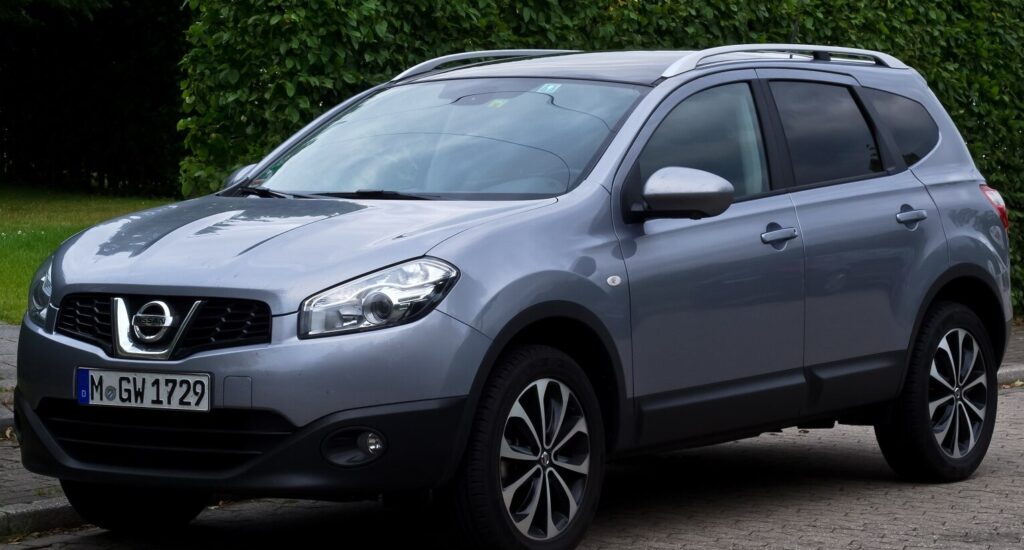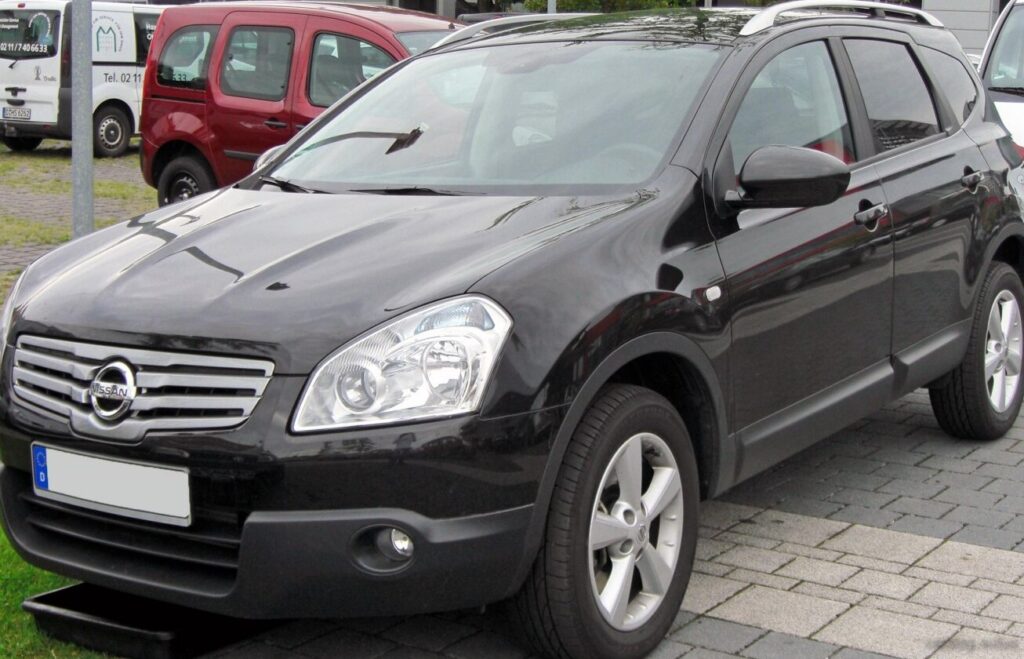
The Nissan Qashqai+2 (NJ10) 2.0i 4×4, produced from 2008 to 2010, represented a significant expansion of the popular Qashqai range. This variant distinguished itself by offering seven-passenger seating and all-wheel drive capability, catering to families needing extra space and enhanced traction. Positioned as a mid-range offering within the Qashqai+2 lineup, it bridged the gap between the more economical front-wheel-drive models and the higher-specification trims. The Qashqai+2 was Nissan’s entry into the compact crossover segment with three-row seating, primarily aimed at the European market, offering a practical alternative to larger, more expensive SUVs.
Technical Specifications
| Brand | Nissan |
| Model | Qashqai |
| Generation | Qashqai+2 I (NJ10) |
| Type (Engine) | 2.0i (141 Hp) 4×4 |
| Start of production | 2008 |
| End of production | 2010 |
| Powertrain Architecture | Internal Combustion engine |
| Body type | SUV, Crossover |
| Seats | 7 |
| Doors | 5 |
| Fuel consumption (urban) | 11.4 l/100 km (20.6 US mpg, 24.8 UK mpg, 8.8 km/l) |
| Fuel consumption (extra urban) | 7 l/100 km (33.6 US mpg, 40.4 UK mpg, 14.3 km/l) |
| Fuel consumption (combined) | 8.6 l/100 km (27.4 US mpg, 32.8 UK mpg, 11.6 km/l) |
| CO2 emissions | 205 g/km |
| Fuel Type | Petrol (Gasoline) |
| Acceleration 0 – 100 km/h | 10.9 sec |
| Acceleration 0 – 62 mph | 10.9 sec |
| Acceleration 0 – 60 mph | 10.4 sec |
| Maximum speed | 188 km/h (116.82 mph) |
| Emission standard | Euro 4 |
| Weight-to-power ratio | 10.8 kg/Hp, 92.2 Hp/tonne |
| Weight-to-torque ratio | 7.8 kg/Nm, 128.2 Nm/tonne |
| Power | 141 Hp @ 6000 rpm |
| Power per litre | 70.6 Hp/l |
| Torque | 196 Nm @ 4800 rpm (144.56 lb.-ft. @ 4800 rpm) |
| Engine layout | Front, Transverse |
| Engine Model/Code | MR20DE |
| Engine displacement | 1997 cm3 (121.86 cu. in.) |
| Number of cylinders | 4 |
| Engine configuration | Inline |
| Cylinder Bore | 84 mm (3.31 in.) |
| Piston Stroke | 90.1 mm (3.55 in.) |
| Compression ratio | 10.2:1 |
| Number of valves per cylinder | 4 |
| Fuel injection system | Multi-port manifold injection |
| Engine aspiration | Naturally aspirated engine |
| Valvetrain | DOHC |
| Engine oil capacity | 4.4 l (4.65 US qt | 3.87 UK qt) |
| Coolant | 7 l (7.4 US qt | 6.16 UK qt) |
| Kerb Weight | 1529 kg (3370.87 lbs.) |
| Max. weight | 2189 kg (4825.92 lbs.) |
| Max load | 660 kg (1455.05 lbs.) |
| Trunk (boot) space – minimum | 130 l (4.59 cu. ft.) |
| Trunk (boot) space – maximum | 1520 l (53.68 cu. ft.) |
| Fuel tank capacity | 65 l (17.17 US gal | 14.3 UK gal) |
| Max. roof load | 75 kg (165.35 lbs.) |
| Permitted trailer load with brakes (12%) | 1400 kg (3086.47 lbs.) |
| Permitted trailer load without brakes | 750 kg (1653.47 lbs.) |
| Permitted towbar download | 75 kg (165.35 lbs.) |
| Length | 4530 mm (178.35 in.) |
| Width | 1780 mm (70.08 in.) |
| Height | 1645 mm (64.76 in.) |
| Wheelbase | 2765 mm (108.86 in.) |
| Front track | 1540 mm (60.63 in.) |
| Rear (Back) track | 1550 mm (61.02 in.) |
| Minimum turning circle | 11 m (36.09 ft.) |
| Drive wheel | All wheel drive (4×4) |
| Number of gears and type of gearbox | 6 gears, manual transmission |
| Front suspension | Independent, type McPherson with coil spring and anti-roll bar |
| Rear suspension | Independent multi-link spring suspension with stabilizer |
| Front brakes | Ventilated discs |
| Rear brakes | Disc |
| Assisting systems | ABS (Anti-lock braking system) |
| Steering type | Steering rack and pinion |
| Power steering | Electric Steering |
| Tires size | 215/60 R17 |
| Wheel rims size | 6.5J x 17 |
Powertrain & Engine Architecture
The heart of the Qashqai+2 2.0i 4×4 is the MR20DE engine, a 1997cc inline-four cylinder petrol engine. This engine utilizes multi-point fuel injection and a double overhead camshaft (DOHC) valvetrain, contributing to its relatively smooth operation and decent power output. The MR20DE is known for its generally robust design, though it isn’t without its potential issues, such as timing chain wear over high mileage. The engine produces 141 horsepower at 6000 rpm and 196 Nm (144.56 lb-ft) of torque at 4800 rpm. The power is delivered to all four wheels through a six-speed manual transmission, which was the only transmission option available for this specific configuration. The all-wheel-drive system is an electronically controlled system, typically operating in front-wheel drive under normal conditions and engaging the rear wheels when slip is detected.
Driving Characteristics
The 2.0i 4×4 Qashqai+2 offered a reasonable balance between performance and fuel economy. While not a particularly sporty vehicle, the 141 hp engine provided adequate power for everyday driving and highway cruising, even with a full load of passengers. The six-speed manual transmission allowed drivers to keep the engine in its optimal power band. Acceleration from 0-60 mph took around 10.4 seconds, and the top speed was 116.82 mph. Compared to the lower-powered 1.6L engine options, the 2.0i offered noticeably more responsive acceleration. However, it lacked the punch of the diesel variants, particularly the 1.9 dCi. The all-wheel-drive system provided enhanced grip and stability, especially on slippery surfaces, making it a more confident option in inclement weather.
Equipment & Trim Levels
The Qashqai+2 2.0i 4×4 typically came equipped with a respectable level of standard features. These included air conditioning, electric front and rear windows, remote central locking, and a basic audio system with CD player. Higher trim levels added features such as alloy wheels, climate control, parking sensors, and a more advanced audio system with Bluetooth connectivity. Interior upholstery was typically cloth, with options for leather upgrades. The seven-seat configuration featured folding second and third-row seats, allowing for flexible cargo space. The dashboard layout was functional and straightforward, prioritizing usability over luxury.
Chassis & Braking
The Qashqai+2 utilized an independent suspension setup, with McPherson struts at the front and a multi-link system at the rear. This configuration provided a comfortable ride quality, absorbing bumps and imperfections in the road surface effectively. Stabilizer bars were fitted to both axles to reduce body roll during cornering. The braking system consisted of ventilated discs at the front and solid discs at the rear, coupled with an Anti-lock Braking System (ABS) for enhanced safety. The steering was rack and pinion with electric power assistance, providing a light and responsive feel.
Market Reception & Comparison
The Qashqai+2 2.0i 4×4 was generally well-received by automotive critics as a practical and versatile family vehicle. The addition of seven seats and all-wheel drive broadened the Qashqai’s appeal, attracting customers who needed more space and capability. However, some reviewers noted that the 2.0i engine could feel strained when fully loaded, and the fuel economy wasn’t as competitive as the diesel options. Compared to the 1.6L petrol variants, the 2.0i offered a significant performance improvement, but at the cost of slightly higher fuel consumption. The diesel models, particularly the 1.9 dCi, provided superior fuel economy and torque, making them a popular choice for long-distance drivers.
Legacy
The Nissan Qashqai+2 2.0i 4×4 has proven to be a relatively reliable vehicle, with the MR20DE engine generally holding up well over time. However, as with any used car, potential buyers should be aware of potential issues such as timing chain wear and oil leaks. The all-wheel-drive system is generally robust, but regular maintenance is essential to ensure its continued functionality. Today, the Qashqai+2 2.0i 4×4 represents an affordable and practical option for families seeking a spacious and capable crossover. Its seven-seat configuration and all-wheel-drive capability continue to make it a desirable choice in the used car market, particularly for those living in areas with challenging weather conditions.