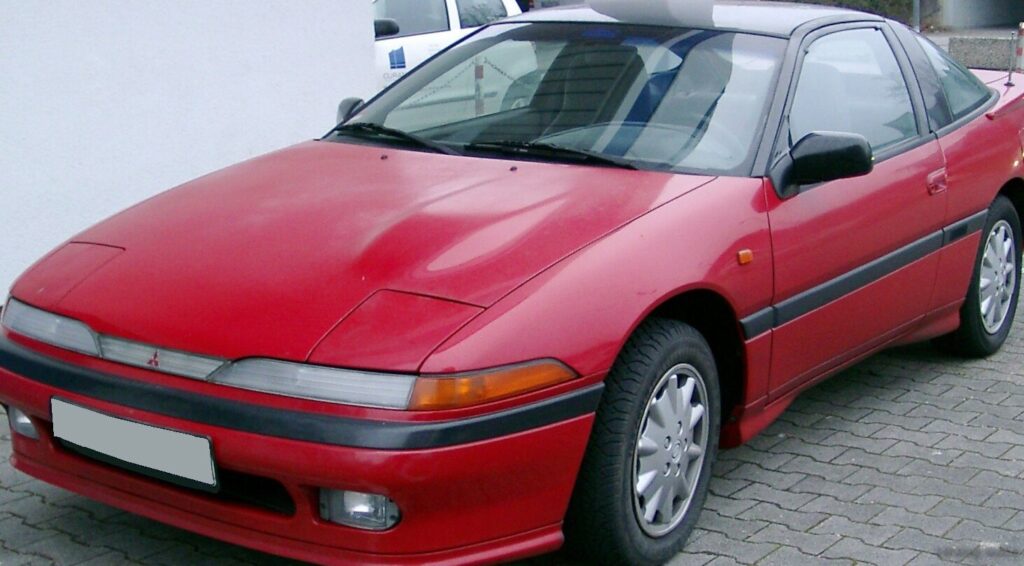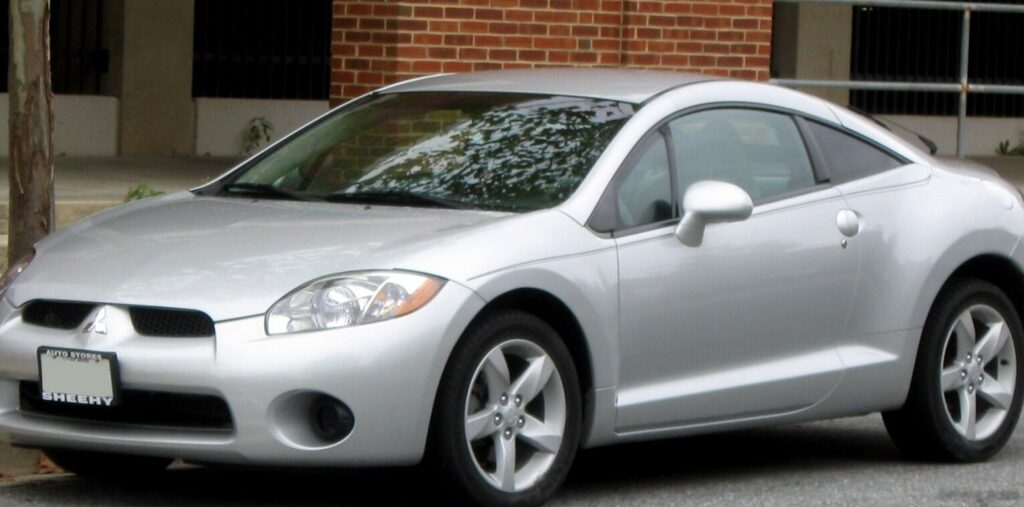
The Mitsubishi Eclipse IV (4G) GT 3.8L V6 MIVEC, produced from 2005 to 2009, represented the pinnacle of performance for the fourth generation Eclipse. Positioned as the top-tier trim, it offered a significant power upgrade over the base models, targeting enthusiasts seeking a sporty and capable coupe or liftback. This variant was a key player in Mitsubishi’s attempt to recapture the spirit of the original Eclipse, offering a blend of style, performance, and technology. The 4G Eclipse shared its platform (the PS12) with the Galant, and was primarily sold in North America, where the sporty coupe market remained relatively strong.
Technical Specifications
| Brand | Mitsubishi |
| Model | Eclipse |
| Generation | Eclipse IV (4G) |
| Type (Engine) | GT 3.8L V6 MIVEC (263 Hp) |
| Start of production | 2005 |
| End of production | 2009 |
| Powertrain Architecture | Internal Combustion engine |
| Body type | Coupe, Liftback |
| Seats | 4 |
| Doors | 2 |
| Fuel Type | Petrol (Gasoline) |
| Weight-to-power ratio | 6 kg/Hp, 167 Hp/tonne |
| Weight-to-torque ratio | 4.5 kg/Nm, 224.1 Nm/tonne |
| Power | 263 Hp @ 5750 rpm |
| Power per litre | 68.7 Hp/l |
| Torque | 353 Nm @ 2750 rpm (260.36 lb.-ft. @ 2750 rpm) |
| Engine layout | Front, Longitudinal |
| Engine Model/Code | 6G75 |
| Engine displacement | 3828 cm3 (233.6 cu. in.) |
| Number of cylinders | 6 |
| Engine configuration | V-engine |
| Cylinder Bore | 95 mm (3.74 in.) |
| Piston Stroke | 90 mm (3.54 in.) |
| Compression ratio | 10.5:1 |
| Number of valves per cylinder | 4 |
| Fuel injection system | Multi-port manifold injection |
| Engine aspiration | Naturally aspirated engine |
| Valvetrain | SOHC |
| Engine oil capacity | 4.3 l (4.54 US qt | 3.78 UK qt) |
| Coolant | 8.1 l (8.56 US qt | 7.13 UK qt) |
| Kerb Weight | 1575 kg (3472.28 lbs) |
| Max. weight | 1945 kg (4287.99 lbs) |
| Max load | 370 kg (815.71 lbs) |
| Trunk (boot) space – minimum | 444 l (15.68 cu. ft.) |
| Length | 4565 mm (179.72 in.) |
| Width | 1835 mm (72.24 in.) |
| Height | 1358-1366 mm (53.46 – 53.78 in.) |
| Wheelbase | 2575 mm (101.38 in.) |
| Front track | 1570 mm (61.81 in.) |
| Rear (Back) track | 1570 mm (61.81 in.) |
| Front overhang | 1007 mm (39.65 in.) |
| Rear overhang | 983 mm (38.7 in.) |
| Ride height (ground clearance) | 148-156 mm (5.83 – 6.14 in.) |
| Drivetrain Architecture | The Internal combustion engine (ICE) drives the front wheels of the vehicle. |
| Drive wheel | Front wheel drive |
| Number of gears and type of gearbox | 6 gears, manual transmission |
| Front suspension | Independent type McPherson |
| Rear suspension | Independent multi-link suspension |
| Front brakes | Ventilated discs, 295 mm |
| Rear brakes | Disc, 285 mm |
| Assisting systems | ABS (Anti-lock braking system) |
| Steering type | Steering rack and pinion |
| Power steering | Hydraulic Steering |
| Tires size | 225/50 R17 93V |
| Wheel rims size | 7.5J x 17 |
Powertrain & Engine Architecture
The heart of the Eclipse GT 3.8L was the 6G75 engine, a 3.8-liter V6. This engine featured Mitsubishi’s MIVEC (Mitsubishi Innovative Valve timing and lift Electronic Control) technology, which allowed for variable valve timing and lift on both the intake and exhaust valves. This system optimized engine performance across the rev range, improving both power and fuel efficiency. The 6G75 utilized a single overhead camshaft (SOHC) design, and a multi-port fuel injection system. The engine produced 263 horsepower at 5750 rpm and 260 lb-ft of torque at 2750 rpm. The standard transmission for this trim was a smooth-shifting 6-speed manual, although a 5-speed automatic was also available. The engine was mounted longitudinally, contributing to a more balanced weight distribution.
Driving Characteristics
The 6-speed manual transmission in the GT 3.8L provided a direct and engaging driving experience. Gear ratios were well-chosen to maximize acceleration, with first gear being relatively short for quick launches. The power delivery was linear and predictable, making it easy to modulate throttle inputs. Compared to the base 2.4-liter four-cylinder models, the 3.8L offered a substantial performance increase, resulting in quicker acceleration and more confident passing maneuvers. While the automatic transmission offered convenience, it did slightly diminish the overall driving experience, with some loss of responsiveness compared to the manual. The front-wheel-drive layout, while common for this class of vehicle, could exhibit some torque steer under hard acceleration.
Equipment & Trim Levels
The GT trim level came standard with a number of features designed to enhance both comfort and performance. These included sport seats with leather upholstery, a premium sound system, automatic climate control, and power windows and locks. Optional extras included a sunroof, upgraded alloy wheels, and a navigation system. The interior design was modern for its time, with a driver-focused layout and a relatively clean dashboard design. The liftback configuration offered increased cargo versatility compared to the coupe body style.
Chassis & Braking
The Eclipse GT 3.8L featured an independent McPherson strut suspension in the front and an independent multi-link suspension in the rear. This setup provided a good balance of ride comfort and handling precision. The front brakes were ventilated discs measuring 295mm, while the rear brakes were solid discs measuring 285mm. Anti-lock brakes (ABS) were standard. The chassis was reinforced compared to the lower trim levels to handle the increased power output of the V6 engine. Stabilizer bars were fitted to both the front and rear axles to reduce body roll during cornering.
Market Reception & Comparison
The Eclipse GT 3.8L was generally well-received by automotive critics, who praised its powerful engine, sporty handling, and attractive styling. However, some reviewers noted that the interior quality was not quite up to par with some of its competitors, such as the Honda Accord Coupe or the Nissan 350Z. Fuel economy was also a concern for some, as the V6 engine consumed more fuel than the four-cylinder options. Compared to the 2.4-liter models, the GT 3.8L offered a significant performance upgrade, but at a higher price point. The automatic transmission version was often criticized for feeling less engaging than the manual.
Legacy
The Mitsubishi Eclipse IV (4G) GT 3.8L V6 MIVEC remains a popular choice among enthusiasts today. The 6G75 engine is known for its reliability and durability, provided it is properly maintained. While not immune to age-related issues, the engine is generally considered to be robust. Parts availability is generally good, although some specific trim-related components may be more difficult to find. The Eclipse GT 3.8L represents a high point in Mitsubishi’s history, offering a compelling combination of performance, style, and value. The car’s relatively affordable price on the used market makes it an attractive option for those seeking a sporty and capable coupe or liftback.