
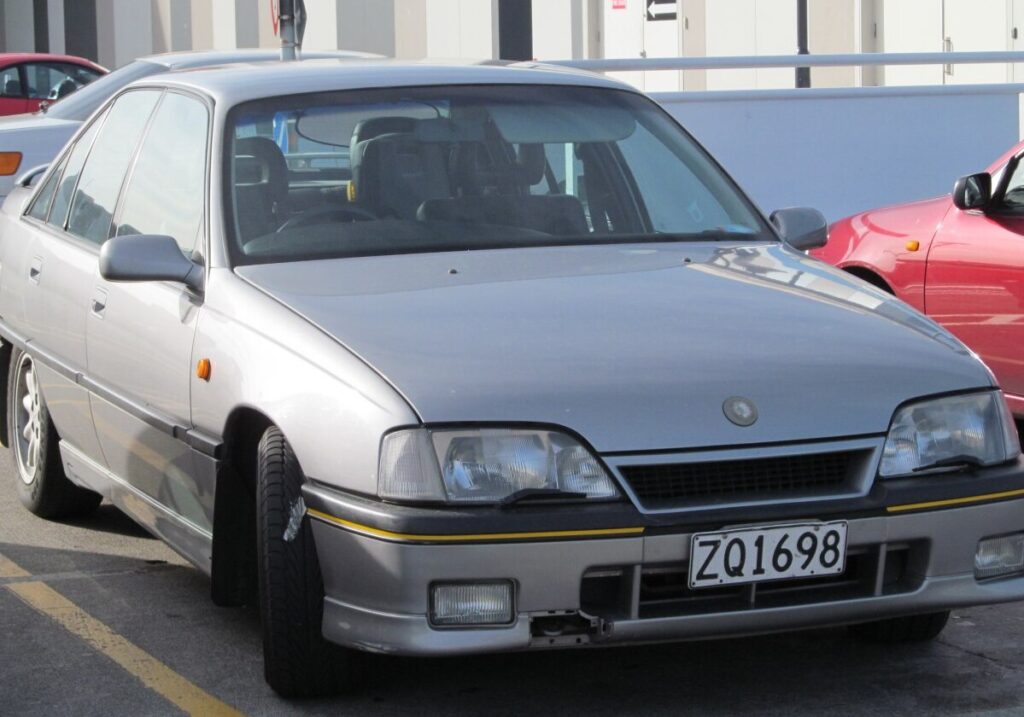
The Opel Omega A 2.4i CAT Automatic, produced between 1988 and 1993, represented a significant offering in Opel’s lineup as a comfortable and relatively affordable executive sedan. Positioned as a mid-range variant within the Omega A series – which spanned from more economical four-cylinder models to the high-performance 3.0-liter inline-six – the 2.4i aimed to balance performance with fuel efficiency and a more accessible price point. It was a key model for Opel in the European market, competing with vehicles like the Ford Granada, BMW 5 Series, and Audi 100. The Omega A, internally designated as the 1HX0, was a substantial redesign from the previous Opel Rekord, offering a more modern design and improved technology.
Technical Specifications
| Brand | Opel |
| Model | Omega |
| Generation | Omega A |
| Type (Engine) | 2.4i CAT (125 Hp) Automatic |
| Start of production | 1988 |
| End of production | 1993 |
| Powertrain Architecture | Internal Combustion engine |
| Body type | Sedan |
| Seats | 5 |
| Doors | 4 |
| Fuel consumption (urban) | 12.8 l/100 km (18.4 US mpg, 22.1 UK mpg, 7.8 km/l) |
| Fuel consumption (extra urban) | 6.9 l/100 km (34.1 US mpg, 40.9 UK mpg, 14.5 km/l) |
| Fuel consumption (combined) | 8.3 l/100 km (28.3 US mpg, 34 UK mpg, 12 km/l) |
| Fuel Type | Petrol (Gasoline) |
| Acceleration 0 – 100 km/h | 11.5 sec |
| Acceleration 0 – 62 mph | 11.5 sec |
| Acceleration 0 – 60 mph | 10.9 sec |
| Maximum speed | 198 km/h (123.03 mph) |
| Weight-to-power ratio | 10.6 kg/Hp, 94 Hp/tonne |
| Weight-to-torque ratio | 6.8 kg/Nm, 146.6 Nm/tonne |
| Power | 125 Hp @ 4800 rpm |
| Power per litre | 51.9 Hp/l |
| Torque | 195 Nm @ 2400 rpm (143.82 lb.-ft. @ 2400 rpm) |
| Engine layout | Front, Longitudinal |
| Engine Model/Code | C24NE |
| Engine displacement | 2410 cm3 (147.07 cu. in.) |
| Number of cylinders | 4 |
| Engine configuration | Inline |
| Cylinder Bore | 95 mm (3.74 in.) |
| Piston Stroke | 85 mm (3.35 in.) |
| Compression ratio | 9.2:1 |
| Number of valves per cylinder | 2 |
| Fuel injection system | Multi-port manifold injection |
| Engine aspiration | Naturally aspirated engine |
| Valvetrain | SOHC |
| Engine oil capacity | 4.5 l (4.76 US qt | 3.96 UK qt) |
| Coolant capacity | 7.8 l (8.24 US qt | 6.86 UK qt) |
| Kerb Weight | 1330 kg (2932.15 lbs.) |
| Max. weight | 1870 kg (4122.64 lbs.) |
| Max load | 540 kg (1190.5 lbs.) |
| Trunk (boot) space – minimum | 520 l (18.36 cu. ft.) |
| Trunk (boot) space – maximum | 870 l (30.72 cu. ft.) |
| Fuel tank capacity | 75 l (19.81 US gal | 16.5 UK gal) |
| Length | 4740 mm (186.61 in.) |
| Width | 1760 mm (69.29 in.) |
| Height | 1445 mm (56.89 in.) |
| Wheelbase | 2730 mm (107.48 in.) |
| Front track | 1445 mm (56.89 in.) |
| Rear (Back) track | 1460 mm (57.48 in.) |
| Drivetrain Architecture | Rear wheel drive |
| Drive wheel | Rear wheel drive |
| Number of gears and type of gearbox | 4 gears, automatic transmission |
| Front suspension | Spring Strut |
| Rear suspension | Wishbone |
| Front brakes | Ventilated discs |
| Rear brakes | Disc |
| Assisting systems | ABS (Anti-lock braking system), Hydraulic Steering |
| Tires size | 195/65 R15 |
| Wheel rims size | 7J x 15 |
Powertrain & Engine Architecture
The heart of the Omega A 2.4i CAT Automatic is the C24NE engine, a 2.4-liter inline-four cylinder gasoline engine. This engine featured a single overhead camshaft (SOHC) valvetrain operating two valves per cylinder. The “CAT” designation indicates the presence of a catalytic converter, a relatively new technology at the time aimed at reducing harmful emissions. Fuel delivery was handled by a multi-port fuel injection system, providing improved efficiency and responsiveness compared to earlier carbureted Opel engines. The engine produced 125 horsepower at 4800 rpm and 195 Nm (143.82 lb-ft) of torque at 2400 rpm. The automatic transmission was a four-speed unit, designed to provide smooth and comfortable shifting. While not particularly sporty, it was well-suited to the Omega’s intended role as a grand tourer.
Driving Characteristics
The 2.4i Automatic offered a comfortable, if not exhilarating, driving experience. Acceleration from 0 to 60 mph took around 10.9 seconds, and top speed was approximately 123 mph. The automatic transmission, while smooth, did detract somewhat from the engine’s performance, resulting in a noticeable delay in response compared to the available five-speed manual gearbox. The gear ratios were optimized for cruising, making the Omega A 2.4i a capable long-distance vehicle. However, overtaking maneuvers required careful planning. Compared to the more powerful 3.0-liter inline-six Omega models, the 2.4i felt noticeably less potent, but it offered a significant improvement in fuel economy.
Equipment & Trim Levels
The 2.4i Automatic typically came equipped with features considered standard for an executive car of its era. This included central locking, electric windows, power steering, and an adjustable steering column. Interior upholstery was typically cloth, although leather was available as an option. Dashboard design was functional and straightforward, with a clear instrument cluster. Optional extras included a sunroof, upgraded audio system, and air conditioning. The trim level could vary depending on the market, but generally, the 2.4i Automatic sat in the middle of the Omega A range, offering a good balance of features and affordability.
Chassis & Braking
The Omega A featured a robust chassis with independent suspension at the front using spring struts and a wishbone setup at the rear. The 2.4i model typically used ventilated disc brakes at the front and solid discs at the rear, providing adequate stopping power for its weight and performance. Anti-lock braking system (ABS) was available, and became increasingly common as standard equipment towards the end of the Omega A’s production run. Stabilizer bars were fitted to both the front and rear axles to reduce body roll during cornering.
Market Reception & Comparison
The Opel Omega A 2.4i Automatic was generally well-received by automotive critics as a comfortable and practical family sedan. It was praised for its spacious interior, smooth ride, and relatively fuel-efficient engine. However, some reviewers noted that the automatic transmission dulled the engine’s performance and that the handling wasn’t as sharp as some of its competitors. Compared to the 2.0-liter four-cylinder Omega models, the 2.4i offered a noticeable performance boost, while the 3.0-liter inline-six provided significantly more power but at the cost of increased fuel consumption. The Omega A 2.4i Automatic offered a compelling alternative to more expensive premium brands.
Legacy
The Opel Omega A 2.4i Automatic, while not a particularly rare or collectible car today, remains a reasonably reliable and affordable classic. The C24NE engine is known for its durability, and with proper maintenance, can provide many years of service. Parts availability is generally good, although some specific trim pieces may be difficult to find. In the used car market, these Omegas are often sought after by enthusiasts looking for a comfortable and spacious classic sedan. The Omega A, and the 2.4i variant in particular, represents a significant chapter in Opel’s history, showcasing the brand’s commitment to building well-engineered and practical vehicles.
