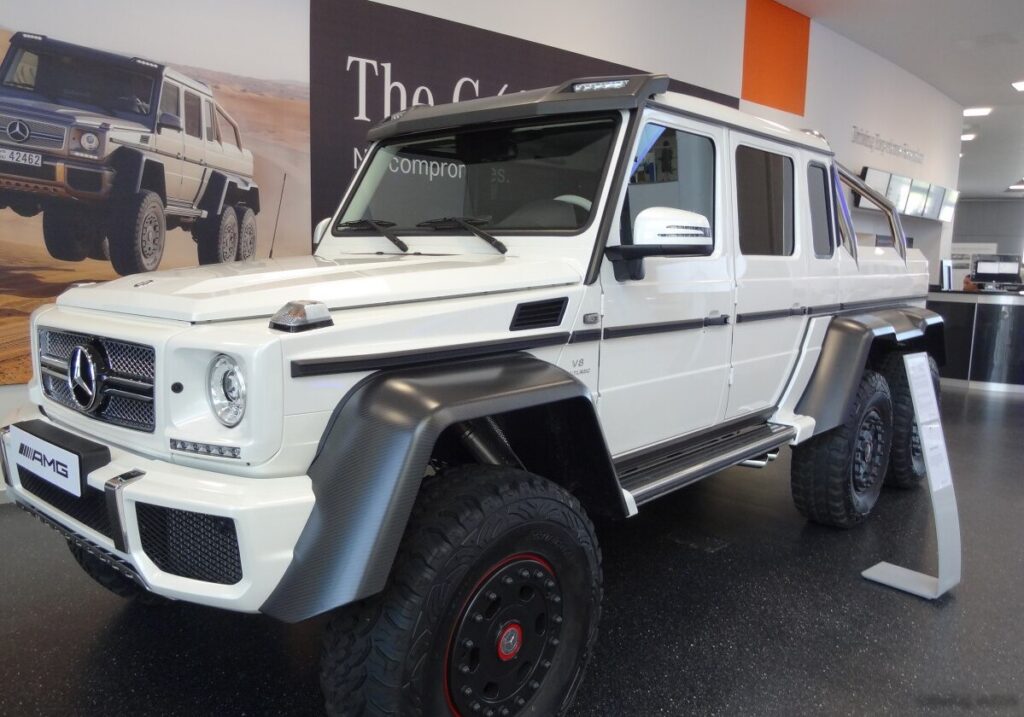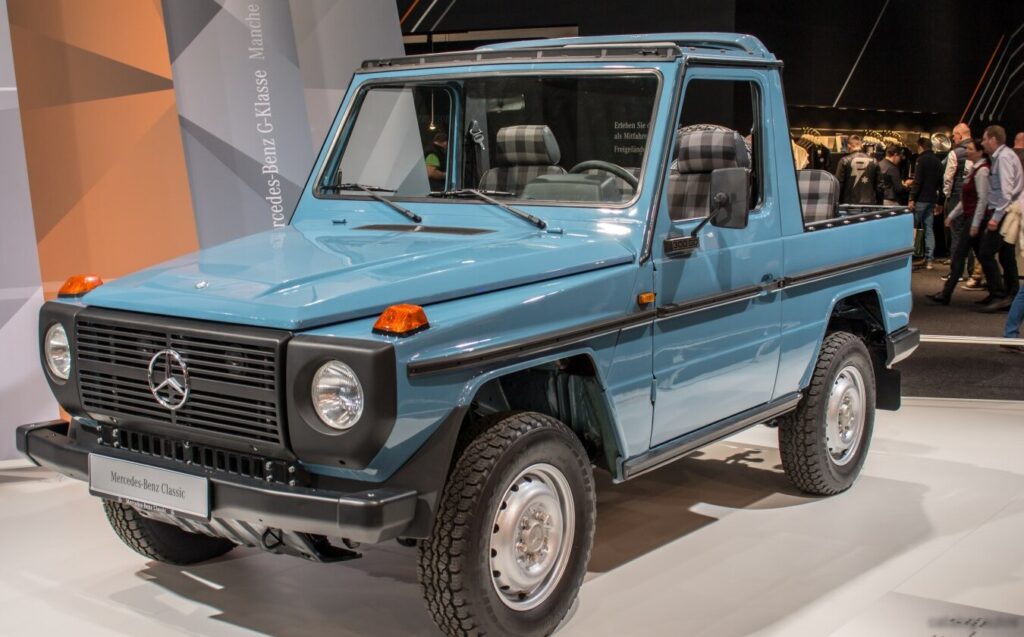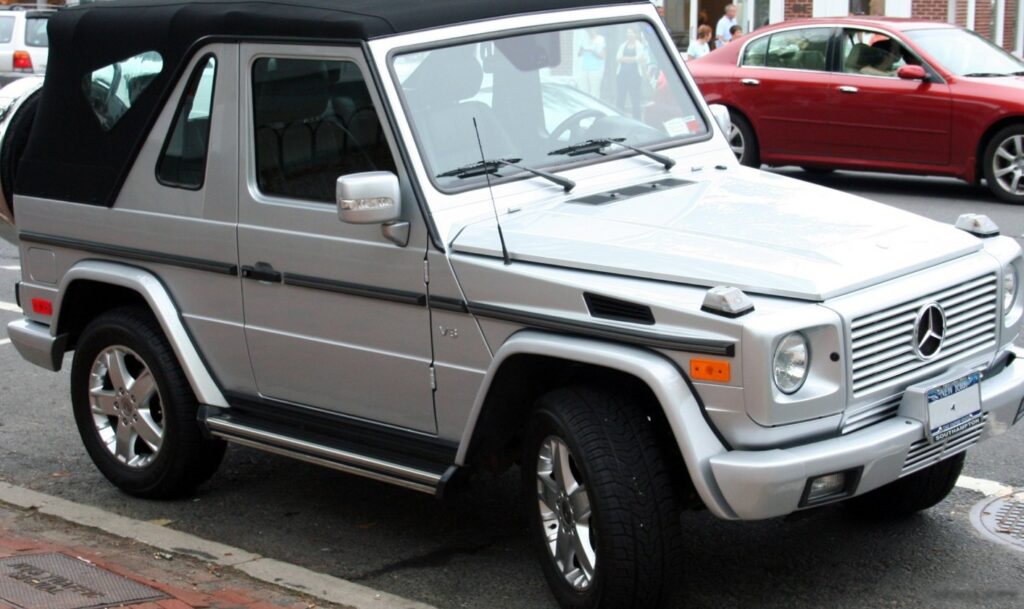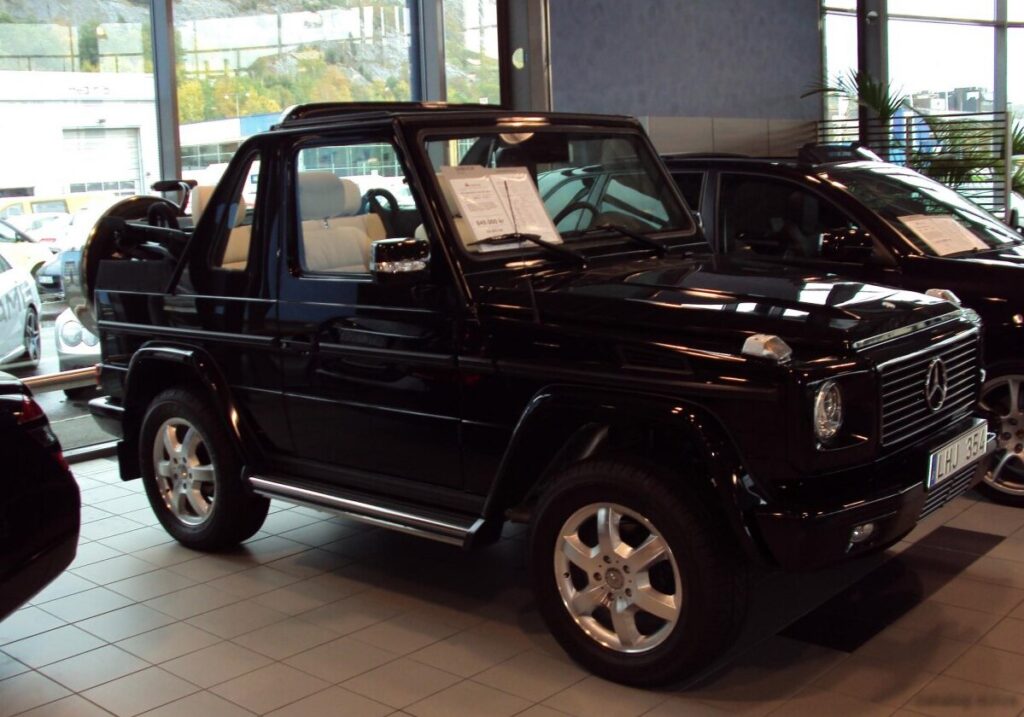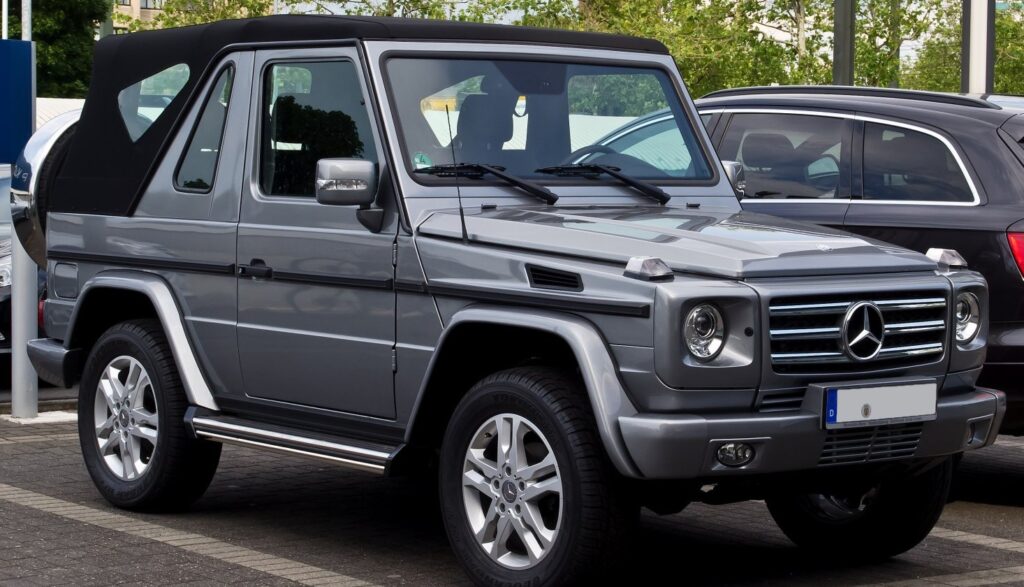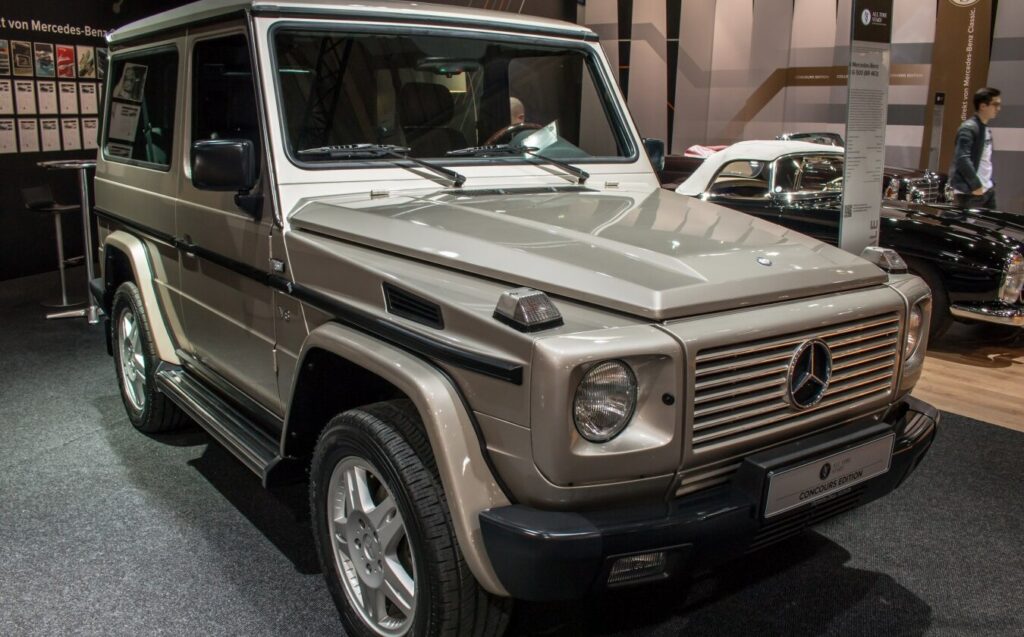
The Mercedes-Benz G 500 V8 (W463), produced from June 1998 to November 2000, represents a potent iteration of the iconic G-Class, blending luxury with formidable off-road capability. Positioned as a high-end offering within the W463 generation (1990-2002), the G 500 served as a flagship model, appealing to buyers seeking substantial performance and a prestigious image. It was a key part of Mercedes-Benz’s strategy to modernize the G-Wagen while retaining its core ruggedness. This variant distinguished itself from lower-trim G-Class models, such as the G 300, through its significantly more powerful V8 engine and enhanced standard equipment.
Technical Specifications
| Brand | Mercedes-Benz |
| Model | G-class |
| Generation | G-class (W463) |
| Type | G 500 V8 (296 Hp) 4MATIC Automatic |
| Start of production | June, 1998 |
| End of production | November, 2000 |
| Powertrain Architecture | Internal Combustion engine |
| Body type | Off-road vehicle |
| Seats | 5 |
| Doors | 3 |
| Fuel consumption (urban) | 21.8 l/100 km (10.8 US mpg, 13 UK mpg, 4.6 km/l) |
| Fuel consumption (extra urban) | 13.7 l/100 km (17.2 US mpg, 20.6 UK mpg, 7.3 km/l) |
| Fuel consumption (combined) | 16.7 l/100 km (14.1 US mpg, 16.9 UK mpg, 6 km/l) |
| CO2 emissions | 400 g/km |
| Fuel Type | Petrol (Gasoline) |
| Acceleration 0 – 100 km/h | 9.7 sec |
| Acceleration 0 – 62 mph | 9.7 sec |
| Acceleration 0 – 60 mph | 9.2 sec |
| Maximum speed | 190 km/h (118.06 mph) |
| Emission standard | Euro 2 |
| Weight-to-power ratio | 8 kg/Hp, 125.2 Hp/tonne |
| Weight-to-torque ratio | 5.2 kg/Nm, 192.8 Nm/tonne |
| Power | 296 Hp @ 5500 rpm |
| Power per litre | 59.6 Hp/l |
| Torque | 456 Nm @ 2800-4000 rpm (336.33 lb.-ft. @ 2800-4000 rpm) |
| Engine layout | Front, Longitudinal |
| Engine Model/Code | M 113.962 |
| Engine displacement | 4966 cm3 (303.04 cu. in.) |
| Number of cylinders | 8 |
| Engine configuration | V-engine |
| Cylinder Bore | 97 mm (3.82 in.) |
| Piston Stroke | 84 mm (3.31 in.) |
| Compression ratio | 10:1 |
| Number of valves per cylinder | 3 |
| Fuel injection system | Multi-port manifold injection |
| Engine aspiration | Naturally aspirated engine |
| Valvetrain | SOHC |
| Engine oil capacity | 8 l (8.45 US qt | 7.04 UK qt) |
| Coolant capacity | 12 l (12.68 US qt | 10.56 UK qt) |
| Kerb Weight | 2365 kg (5213.93 lbs.) |
| Max. weight | 2810 kg (6194.99 lbs.) |
| Max load | 445 kg (981.06 lbs.) |
| Trunk (boot) space (min) | 250 l (8.83 cu. ft.) |
| Trunk (boot) space (max) | 1580 l (55.8 cu. ft.) |
| Fuel tank capacity | 96 l (25.36 US gal | 21.12 UK gal) |
| Max. roof load | 150 kg (330.69 lbs.) |
| Permitted trailer load (braked) | 2925 kg (6448.52 lbs.) |
| Permitted trailer load (unbraked) | 750 kg (1653.47 lbs.) |
| Length | 4230 mm (166.54 in.) |
| Width | 1760 mm (69.29 in.) |
| Height | 1931 mm (76.02 in.) |
| Wheelbase | 2400 mm (94.49 in.) |
| Front track | 1475 mm (58.07 in.) |
| Rear track | 1475 mm (58.07 in.) |
| Ride height (ground clearance) | 210 mm (8.27 in.) |
| Minimum turning circle | 11.3 m (37.07 ft.) |
| Approach angle | 36° |
| Departure angle | 27° |
| Climb angle | 38.7° |
| Drivetrain Architecture | The Internal combustion engine (ICE) drives permanently the four wheels of the vehicle. |
| Drive wheel | All wheel drive (4×4) |
| Number of gears | 5 |
| Gearbox type | automatic transmission |
| Front suspension | Coil spring, Rigid axle suspension, Trailing arm |
| Rear suspension | Rigid axle suspension, Trailing arm, Coil spring |
| Front brakes | Ventilated discs |
| Rear brakes | Disc |
| Assisting systems | ABS (Anti-lock braking system) |
| Steering type | Cone worm with recirculation balls |
| Power steering | Hydraulic Steering |
| Tires size | 265/60 R 18 |
| Wheel rims size | 7.5 J x 18 |
Powertrain & Engine Architecture
The heart of the G 500 V8 is the M113.962 5.0-liter naturally aspirated V8 engine. This engine, a cornerstone of Mercedes-Benz’s performance lineup in the late 1990s, features a three-valve-per-cylinder SOHC design and multi-port fuel injection. The engine’s robust construction and relatively simple design (compared to later, more complex Mercedes engines) contribute to its inherent reliability. The engine produces 296 horsepower at 5500 rpm and 456 Nm (336 lb-ft) of torque between 2800 and 4000 rpm. This power is delivered to all four wheels through a five-speed automatic transmission, a crucial component for managing the engine’s output and providing a comfortable driving experience. The transmission was chosen for its durability and ability to handle the engine’s torque, although it lacks the responsiveness of more modern automatic gearboxes.
Driving Characteristics
The G 500 V8 offers a unique driving experience. While capable off-road, its weight (2365 kg / 5214 lbs) and aerodynamic profile limit its on-road agility. Acceleration to 60 mph takes approximately 9.2 seconds, and the top speed is electronically limited to 118 mph. The automatic transmission, while smooth, can feel somewhat sluggish in comparison to the manual transmissions offered in other G-Class variants. The V8 engine provides ample low-end torque, making it well-suited for navigating challenging terrain or towing. Compared to the G 300, the G 500 delivers significantly more power and a more refined driving experience, but at the cost of increased fuel consumption. The G 500 also differs from the later G 55 AMG, which featured a supercharged V8 offering even greater performance.
Equipment & Trim Levels
The G 500 V8 came standard with a relatively high level of equipment for its time. Interior features typically included leather upholstery, wood trim, power windows, power locks, and a basic audio system. Air conditioning was standard, as were heated front seats. Optional extras included a sunroof, upgraded audio systems, and various exterior enhancements. The interior, while luxurious for a rugged off-roader, retained a functional and utilitarian design aesthetic. The G 500’s trim level sat above the base G 300 but below the high-performance G 55 AMG.
Chassis & Braking
The G 500 V8 utilizes a robust ladder-frame chassis, a hallmark of the G-Class design. The suspension consists of coil springs and rigid axles with trailing arms, providing excellent articulation for off-road driving. Braking duties are handled by ventilated discs at the front and solid discs at the rear, assisted by an Anti-lock Braking System (ABS). The steering system is a recirculating ball system, providing a direct but somewhat heavy feel. The G 500’s chassis and braking system were designed to handle the vehicle’s weight and the demands of both on- and off-road driving.
Market Reception & Comparison
The G 500 V8 was generally well-received by automotive critics, who praised its powerful engine, luxurious interior, and exceptional off-road capabilities. However, its high price and relatively poor fuel economy (16.7 l/100 km combined) were noted as drawbacks. Compared to the G 300, the G 500 offered a significant performance upgrade, but at a substantial cost increase. The G 55 AMG, while even more powerful, was significantly more expensive and catered to a different segment of the market. Fuel economy was a consistent criticism, with the G 500 being notably less efficient than many contemporary SUVs.
Legacy
The G 500 V8 (W463) has become a sought-after classic among Mercedes-Benz enthusiasts. The M113 V8 engine is known for its durability and relatively straightforward maintenance. Well-maintained examples command high prices in the used car market. While fuel economy remains a concern, the G 500’s combination of luxury, performance, and off-road capability continues to appeal to collectors and enthusiasts. The W463 generation, and particularly the V8 models, are considered pivotal in establishing the G-Class as a status symbol and a highly desirable vehicle.