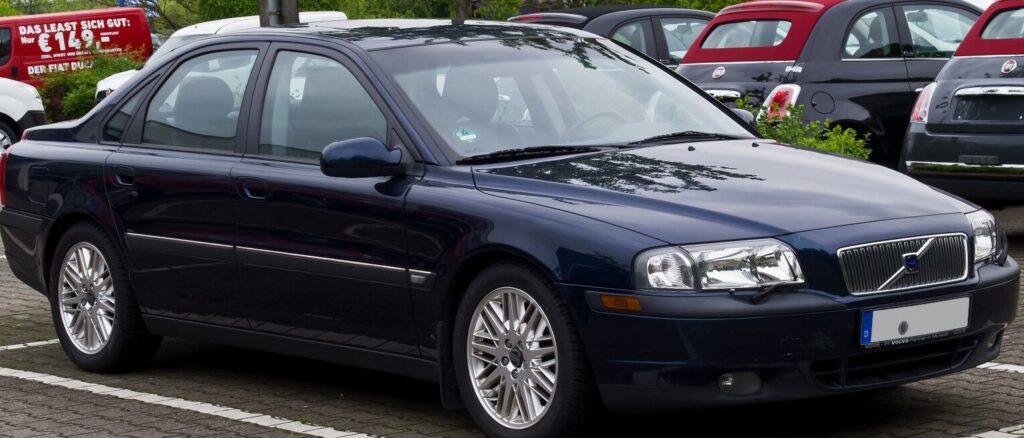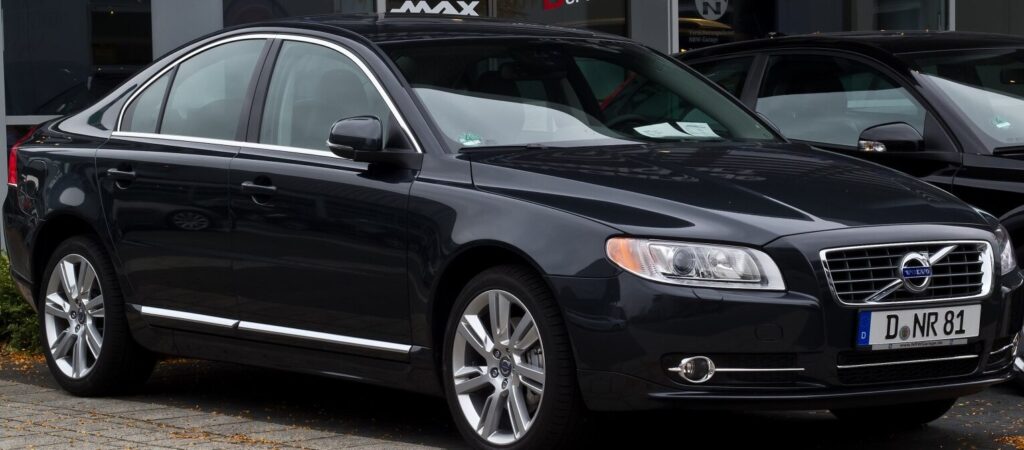
The Volvo S80 II (facelift, 2011) 2.0 D4, producing 163 horsepower, represented a key offering in Volvo’s mid-size luxury sedan lineup between 2011 and 2013. Positioned as an efficient and relatively affordable entry point into the S80 range, this variant aimed to balance fuel economy with acceptable performance for everyday driving. It was part of the second generation S80 (YS01 platform), which received a significant facelift in 2011, updating the exterior styling and interior technology. The D4 trim focused on providing a comfortable and refined driving experience, appealing to buyers prioritizing practicality and lower running costs over outright performance.
Technical Specifications
| Brand | Volvo |
| Model | S80 |
| Generation | S80 II (facelift 2011) |
| Type (Engine) | 2.0 D4 (163 Hp) |
| Start of production | 2011 |
| End of production | 2013 |
| Powertrain Architecture | Internal Combustion engine |
| Body type | Sedan |
| Seats | 5 |
| Doors | 4 |
| Fuel consumption (urban) | 5.1 l/100 km (46.1 US mpg, 55.4 UK mpg, 19.6 km/l) |
| Fuel consumption (extra urban) | 3.9 l/100 km (60.3 US mpg, 72.4 UK mpg, 25.6 km/l) |
| Fuel consumption (combined) | 4.3 l/100 km (54.7 US mpg, 65.7 UK mpg, 23.3 km/l) |
| CO2 emissions | 114 g/km |
| Fuel Type | Diesel |
| Acceleration 0 – 100 km/h | 9.7 sec |
| Acceleration 0 – 62 mph | 9.7 sec |
| Acceleration 0 – 60 mph | 9.2 sec |
| Emission standard | Euro 5 |
| Weight-to-power ratio | 9.9 kg/Hp, 101.1 Hp/tonne |
| Weight-to-torque ratio | 4 kg/Nm, 248.1 Nm/tonne |
| Power | 163 Hp @ 3500 rpm |
| Power per litre | 82.2 Hp/l |
| Torque | 400 Nm @ 1500-2750 rpm (295.02 lb.-ft. @ 1500-2750 rpm) |
| Engine layout | Front, Transverse |
| Engine Model/Code | D5204T3 |
| Engine displacement | 1984 cm3 (121.07 cu. in.) |
| Number of cylinders | 5 |
| Engine configuration | Inline |
| Piston Stroke | 81 mm (3.19 in.) |
| Fuel injection system | Diesel Commonrail |
| Engine aspiration | Turbocharger, Intercooler |
| Engine oil capacity | 5.9 l (6.23 US qt | 5.19 UK qt) |
| Coolant | 8.9 l (9.4 US qt | 7.83 UK qt) |
| Kerb Weight | 1612 kg (3553.85 lbs.) |
| Max. weight | 2190 kg (4828.12 lbs.) |
| Max load | 578 kg (1274.27 lbs.) |
| Trunk (boot) space – minimum | 480 l (16.95 cu. ft.) |
| Fuel tank capacity | 70 l (18.49 US gal | 15.4 UK gal) |
| Length | 4851 mm (190.98 in.) |
| Width | 1861 mm (73.27 in.) |
| Height | 1493 mm (58.78 in.) |
| Wheelbase | 2835 mm (111.61 in.) |
| Front track | 1588 mm (62.52 in.) |
| Rear (Back) track | 1585 mm (62.4 in.) |
| Minimum turning circle | 11.7 m (38.39 ft.) |
| Drivetrain Architecture | The Internal combustion engine (ICE) drives the front wheels of the vehicle. |
| Drive wheel | Front wheel drive |
| Number of gears and type of gearbox | 6 gears, manual transmission |
| Assisting systems | ABS (Anti-lock braking system) |
| Steering type | Steering rack and pinion |
INTRODUCTION
The 2011 facelift of the Volvo S80 brought a more contemporary aesthetic and refined interior to the model. The 2.0 D4 variant, powered by the D5204T3 engine, was a significant addition to the lineup, particularly in European markets where diesel engines were highly favored. This engine offered a compelling blend of fuel efficiency and adequate performance, making it a popular choice for drivers covering long distances or prioritizing lower running costs. The S80 II, in general, aimed to compete with established luxury sedans like the BMW 5 Series, Audi A6, and Mercedes-Benz E-Class, but with a distinct Scandinavian design philosophy emphasizing safety, comfort, and understated elegance.
Powertrain & Engine Architecture
The heart of the S80 2.0 D4 is the Volvo D5204T3, a 2.0-liter inline-five cylinder diesel engine. This engine utilizes a common rail direct injection system, delivering fuel directly into the combustion chamber at extremely high pressure for optimized combustion. A turbocharger with an intercooler is employed to boost power output and improve torque across a wider rev range. The D5204T3 is known for its relatively robust construction and ability to handle moderate tuning. The engine features a single overhead camshaft (SOHC) valvetrain, operating four valves per cylinder. The 6-speed manual transmission was standard, providing precise gear changes and contributing to the car’s fuel efficiency. The transmission’s gear ratios were tuned to maximize fuel economy while still providing adequate acceleration.
Driving Characteristics
The S80 2.0 D4, with its 163 horsepower and 400 Nm (295 lb-ft) of torque, offered a comfortable and relaxed driving experience. Acceleration from 0-60 mph took around 9.2 seconds, which was adequate for everyday driving but not particularly sporty. The engine’s peak torque was available from a low 1500 rpm, providing good responsiveness in city driving and effortless cruising on the highway. Compared to the higher-output D5 variants (typically around 205 hp), the D4 felt noticeably less powerful, especially during overtaking maneuvers. However, the D4’s lighter engine weight contributed to slightly improved handling and fuel economy. The 6-speed manual transmission allowed for good control over the engine’s power delivery, but some drivers might have preferred the convenience of an automatic transmission, which was available as an option.
Equipment & Trim Levels
The S80 2.0 D4 typically came equipped with a respectable level of standard features. These included climate control, power windows and mirrors, a basic audio system with CD player, and alloy wheels. Safety was a key focus for Volvo, so features like ABS, traction control, and multiple airbags were standard. Higher trim levels offered upgrades such as leather upholstery, a premium audio system, navigation, and parking sensors. Interior upholstery was typically cloth in the base D4 trim, with leather available as an upgrade. The dashboard layout was clean and functional, with a focus on ergonomics and ease of use. Optional extras included a sunroof, heated seats, and a rear parking camera.
Chassis & Braking
The S80 II utilized a MacPherson strut front suspension and a multi-link rear suspension, providing a comfortable and controlled ride. The suspension was tuned to prioritize comfort over sporty handling. The front brakes were typically ventilated discs, while the rear brakes were solid discs on most models, although some earlier versions may have featured rear drum brakes. Anti-lock braking system (ABS) was standard, along with electronic brakeforce distribution (EBD). The steering was a rack-and-pinion system, providing precise and responsive steering feel. Stabilizer bars were fitted to both the front and rear axles to reduce body roll during cornering.
Market Reception & Comparison
The Volvo S80 2.0 D4 was generally well-received by automotive critics, who praised its fuel efficiency, comfortable ride, and understated elegance. However, some critics noted that its performance was not as exciting as some of its rivals. Compared to the more powerful S80 D5 variants, the D4 offered significantly better fuel economy but at the expense of performance. The D4 also represented a more affordable entry point into the S80 range, making it an attractive option for budget-conscious buyers. In terms of reliability, the D5204T3 engine proved to be relatively dependable, although regular maintenance was essential to prevent issues with the diesel particulate filter (DPF) and fuel injectors.
Legacy
The Volvo S80 2.0 D4 remains a relatively common sight on used car markets today. The D5204T3 engine, when properly maintained, has proven to be a durable and reliable unit. However, potential buyers should be aware of the potential for issues with the DPF, particularly if the car has primarily been used for short journeys. The S80 2.0 D4 offers a compelling combination of comfort, fuel efficiency, and safety, making it a practical and affordable choice for those seeking a mid-size luxury sedan. Its understated styling and Scandinavian design continue to appeal to buyers who appreciate a more refined and less ostentatious aesthetic.