
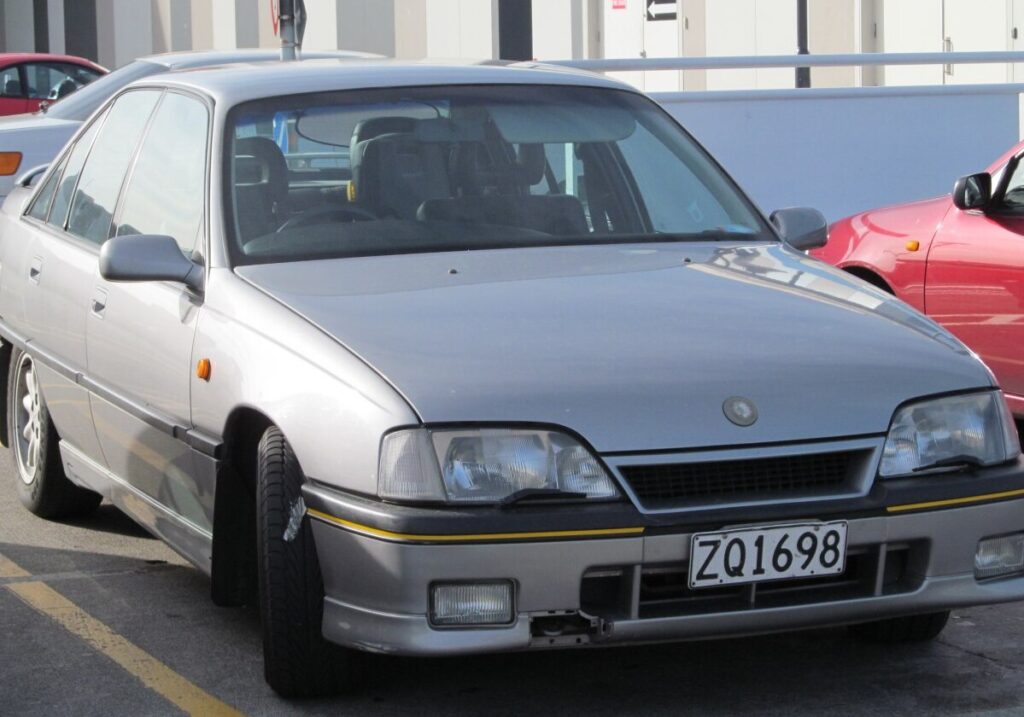
The Opel Omega A 2.6i CAT, produced between July 1990 and 1993, represented a significant step forward for Opel’s flagship sedan. Positioned as a comfortable and capable grand tourer, the 2.6i CAT occupied a mid-range slot within the Omega A lineup, offering a balance between performance and fuel economy. It sat above the base 2.0L models and below the more powerful 3.0L and V6 variants. The Omega A, built on Opel’s GM V platform (internally designated as the 1HX0), aimed to replace the aging Opel Rekord and Commodore, offering a more modern and sophisticated package for the discerning European driver. This variant was primarily sold in Europe, where large, rear-wheel-drive sedans still held considerable appeal.
Technical Specifications
| Brand | Opel |
| Model | Omega |
| Generation | Omega A |
| Type (Engine) | 2.6i CAT (150 Hp) |
| Start of production | July, 1990 |
| End of production | 1993 |
| Powertrain Architecture | Internal Combustion engine |
| Body type | Sedan |
| Seats | 5 |
| Doors | 4 |
| Fuel consumption (urban) | 14.1 l/100 km (16.7 US mpg, 20 UK mpg, 7.1 km/l) |
| Fuel consumption (extra urban) | 7.7 l/100 km (30.5 US mpg, 36.7 UK mpg, 13 km/l) |
| Fuel consumption (combined) | 9.8 l/100 km (24 US mpg, 28.8 UK mpg, 10.2 km/l) |
| Fuel Type | Petrol (Gasoline) |
| Acceleration 0 – 100 km/h | 9.8 sec |
| Acceleration 0 – 62 mph | 9.8 sec |
| Acceleration 0 – 60 mph | 9.3 sec |
| Maximum speed | 215 km/h (133.59 mph) |
| Weight-to-power ratio | 9.4 kg/Hp, 106 Hp/tonne |
| Weight-to-torque ratio | 6.4 kg/Nm, 155.5 Nm/tonne |
| Power | 150 Hp @ 5600 rpm |
| Power per litre | 57.8 Hp/l |
| Torque | 220 Nm @ 3600 rpm (162.26 lb.-ft. @ 3600 rpm) |
| Engine layout | Front, Longitudinal |
| Engine Model/Code | C26NE |
| Engine displacement | 2594 cm3 (158.3 cu. in.) |
| Number of cylinders | 6 |
| Engine configuration | Inline |
| Cylinder Bore | 88.8 mm (3.5 in.) |
| Piston Stroke | 69.8 mm (2.75 in.) |
| Compression ratio | 9.2:1 |
| Number of valves per cylinder | 2 |
| Fuel injection system | Multi-port manifold injection |
| Engine aspiration | Naturally aspirated engine |
| Valvetrain | SOHC |
| Engine oil capacity | 5.5 l (5.81 US qt | 4.84 UK qt) |
| Coolant capacity | 10.5 l (11.1 US qt | 9.24 UK qt) |
| Kerb Weight | 1415 kg (3119.54 lbs.) |
| Max. weight | 1955 kg (4310.04 lbs.) |
| Max load | 540 kg (1190.5 lbs.) |
| Trunk (boot) space – minimum | 520 l (18.36 cu. ft.) |
| Trunk (boot) space – maximum | 820 l (28.96 cu. ft.) |
| Fuel tank capacity | 75 l (19.81 US gal | 16.5 UK gal) |
| Length | 4740 mm (186.61 in.) |
| Width | 1760 mm (69.29 in.) |
| Height | 1445 mm (56.89 in.) |
| Wheelbase | 2730 mm (107.48 in.) |
| Front track | 1445 mm (56.89 in.) |
| Rear (Back) track | 1460 mm (57.48 in.) |
| Drivetrain Architecture | Rear wheel drive |
| Drive wheel | Rear wheel drive |
| Number of gears | 5 gears, manual transmission |
| Front suspension | Spring Strut |
| Rear suspension | Wishbone |
| Front brakes | Ventilated discs |
| Rear brakes | Disc |
| Assisting systems | ABS (Anti-lock braking system) |
| Steering type | Steering rack and pinion |
| Power steering | Hydraulic Steering |
| Tires size | 195/65 R15 |
| Wheel rims size | 7J x 15 |
Powertrain & Engine Architecture
The heart of the Omega A 2.6i CAT was the C26NE engine, a 2.6-liter inline-six cylinder gasoline engine. This engine featured a single overhead camshaft (SOHC) valvetrain operating two valves per cylinder. The C26NE utilized Bosch Motronic fuel injection, a multi-port system that delivered fuel directly to each intake port, improving efficiency and responsiveness compared to earlier carbureted systems. The “CAT” designation indicates the presence of a catalytic converter, a crucial component for meeting increasingly stringent European emissions regulations. The engine produced 150 horsepower at 5600 rpm and 220 Nm (162 lb-ft) of torque at 3600 rpm. The engine’s longitudinal mounting and rear-wheel-drive configuration were traditional for European sedans of this era, providing a balanced driving experience. The standard transmission was a five-speed manual, offering precise control and engaging driving dynamics.
Driving Characteristics
The 2.6i CAT Omega A offered a comfortable and refined driving experience. While not overtly sporty, the inline-six engine provided ample power for relaxed cruising and confident overtaking. The five-speed manual transmission allowed drivers to make the most of the engine’s torque, delivering smooth acceleration. Compared to the 2.0L models, the 2.6i CAT offered noticeably improved performance, particularly at higher speeds. However, it lacked the outright punch of the 3.0L and V6 variants. The rear-wheel-drive layout contributed to balanced handling, although the Omega A was a relatively large and heavy car. The suspension, tuned for comfort, absorbed bumps and imperfections in the road effectively, making it a pleasant long-distance cruiser.
Equipment & Trim Levels
The 2.6i CAT typically came equipped with a reasonable level of standard features. Interior appointments included cloth upholstery, power windows, central locking, and a basic stereo system. Higher trim levels, often denoted by “GL” or “CD” designations, added features such as upgraded upholstery, alloy wheels, a sunroof, and more sophisticated audio systems. Optional extras included air conditioning, leather seats, and a trip computer. The dashboard layout was functional and straightforward, prioritizing ease of use over flashy design. The Omega A’s interior was spacious and well-built, reflecting Opel’s commitment to quality.
Chassis & Braking
The Omega A featured a robust chassis with independent suspension at the front using spring struts and a multi-link wishbone suspension at the rear. This setup provided a good balance between ride comfort and handling. Braking duties were handled by ventilated discs at the front and solid discs at the rear. An Anti-lock Braking System (ABS) was standard, enhancing safety by preventing wheel lockup during hard braking. The steering was a rack-and-pinion system with hydraulic power assistance, providing light and precise steering feel. The 195/65 R15 tires offered a good compromise between grip and ride comfort.
Market Reception & Comparison
The Opel Omega A 2.6i CAT was generally well-received by automotive critics. It was praised for its comfortable ride, spacious interior, and refined engine. However, some critics noted its relatively high fuel consumption and somewhat dated styling compared to newer rivals. Compared to the 2.0L models, the 2.6i CAT offered a significant performance upgrade, making it a more appealing option for drivers who frequently traveled long distances or carried passengers. Against the 3.0L and V6 variants, the 2.6i CAT represented a more affordable and fuel-efficient alternative, albeit with slightly less power. Reliability was generally good, although the C26NE engine could be prone to oil leaks as it aged.
Legacy
The Opel Omega A 2.6i CAT remains a popular choice among classic car enthusiasts. The C26NE engine, while not the most technologically advanced, is known for its durability and relatively simple maintenance requirements. Parts availability is generally good, although some specific components may be becoming increasingly difficult to find. Today, well-maintained examples of the Omega A 2.6i CAT are sought after by collectors and drivers who appreciate its classic styling, comfortable ride, and robust engineering. It represents a bygone era of large, rear-wheel-drive sedans that prioritized comfort and refinement over outright performance.
