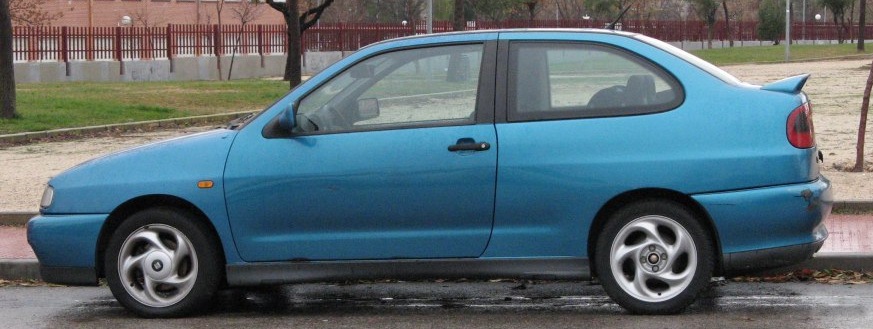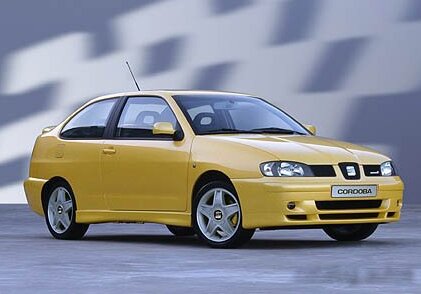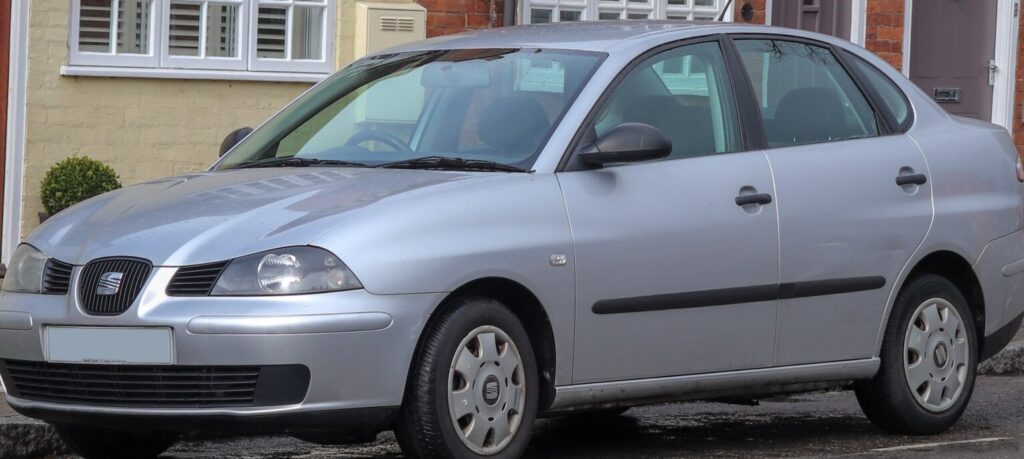
The SEAT Cordoba II 1.2 12V, produced between 2002 and 2006, represented the entry point into the second generation of SEAT’s compact sedan. Based on the Volkswagen Group’s PQ34 platform – also known as the 1HX0/A3 platform – the Cordoba II aimed to offer affordable and practical transportation, primarily targeted at the European market. This particular variant, equipped with the 1.2-liter 12-valve engine producing 64 horsepower, served as the base model, prioritizing fuel efficiency and lower running costs over outright performance. It occupied the lowest rung of the Cordoba II lineup, sitting below the 1.4, 1.6, 1.8, and 1.9 TDI diesel options.
Technical Specifications
| Brand | Seat |
| Model | Cordoba |
| Generation | Cordoba II |
| Type (Engine) | 1.2 12V (64 Hp) |
| Start of production | October, 2002 |
| End of production | 2006 |
| Powertrain Architecture | Internal Combustion engine |
| Body type | Sedan |
| Seats | 5 |
| Doors | 4 |
| Fuel consumption (urban) | 7.6 l/100 km (30.9 US mpg, 37.2 UK mpg, 13.2 km/l) |
| Fuel consumption (extra urban) | 5.1 l/100 km (46.1 US mpg, 55.4 UK mpg, 19.6 km/l) |
| Fuel consumption (combined) | 5.9 l/100 km (39.9 US mpg, 47.9 UK mpg, 16.9 km/l) |
| Fuel Type | Petrol (Gasoline) |
| Acceleration 0 – 100 km/h | 15.7 sec |
| Acceleration 0 – 62 mph | 15.7 sec |
| Acceleration 0 – 60 mph | 14.9 sec |
| Maximum speed | 168 km/h (104.39 mph) |
| Weight-to-power ratio | 16.9 kg/Hp, 59.3 Hp/tonne |
| Weight-to-torque ratio | 9.6 kg/Nm, 103.7 Nm/tonne |
| Power | 64 Hp @ 5400 rpm |
| Power per litre | 53.4 Hp/l |
| Torque | 112 Nm @ 3000 rpm (82.61 lb.-ft. @ 3000 rpm) |
| Engine layout | Front, Transverse |
| Engine Model/Code | AZQ, BME |
| Engine displacement | 1198 cm3 (73.11 cu. in.) |
| Number of cylinders | 3 |
| Engine configuration | Inline |
| Cylinder Bore | 76.5 mm (3.01 in.) |
| Piston Stroke | 86.9 mm (3.42 in.) |
| Compression ratio | 10.5:1 |
| Number of valves per cylinder | 4 |
| Fuel injection system | Multi-port manifold injection |
| Engine aspiration | Naturally aspirated engine |
| Valvetrain | DOHC |
| Engine oil capacity | 3 l (3.17 US qt | 2.64 UK qt) |
| Coolant | 5 l (5.28 US qt | 4.4 UK qt) |
| Kerb Weight | 1080 kg (2380.99 lbs.) |
| Max. weight | 1575 kg (3472.28 lbs.) |
| Max load | 495 kg (1091.29 lbs.) |
| Trunk (boot) space – minimum | 485 l (17.13 cu. ft.) |
| Fuel tank capacity | 45 l (11.89 US gal | 9.9 UK gal) |
| Length | 4280 mm (168.5 in.) |
| Width | 1698 mm (66.85 in.) |
| Height | 1441 mm (56.73 in.) |
| Wheelbase | 2460 mm (96.85 in.) |
| Front track | 1419 mm (55.87 in.) |
| Rear (Back) track | 1408 mm (55.43 in.) |
| Drivetrain Architecture | The Internal combustion engine (ICE) drives the front wheels of the vehicle. |
| Drive wheel | Front wheel drive |
| Number of gears and type of gearbox | 5 gears, manual transmission |
| Front suspension | Coil spring |
| Rear suspension | Coil spring |
| Front brakes | Ventilated discs |
| Rear brakes | Drum |
| Assisting systems | ABS (Anti-lock braking system) |
| Steering type | Steering rack and pinion |
| Power steering | Hydraulic Steering |
| Tires size | 185/60 R14 |
Powertrain & Engine Architecture
The heart of the Cordoba II 1.2 12V is the AZQ or BME engine code, a 1.2-liter inline-three cylinder gasoline engine. This engine, part of the Volkswagen EA111 family, featured a multi-point fuel injection system and a double overhead camshaft (DOHC) valvetrain. The 12-valve configuration (four valves per cylinder) helped improve breathing and efficiency compared to older two-valve designs. The engine’s relatively small displacement and three-cylinder layout inherently resulted in some vibration, which was mitigated by engine mounts and balancing shafts. The 5-speed manual transmission was the standard offering for this variant, chosen for its simplicity and contribution to fuel economy. The transmission’s gear ratios were geared towards maximizing fuel efficiency rather than providing sporty acceleration.
Driving Characteristics
The 1.2-liter engine, producing 64 horsepower, delivered modest performance. Acceleration was leisurely, taking approximately 15.7 seconds to reach 62 mph (100 km/h). In real-world driving, the Cordoba II 1.2 felt best suited for urban commutes and slower-speed roads. Overtaking maneuvers required careful planning, and the engine needed to be revved to extract its maximum potential. Compared to the more powerful 1.6 or 1.8-liter versions, the 1.2 lacked the punch for spirited driving. However, the manual transmission allowed drivers to keep the engine in its optimal power band, and the light weight of the vehicle helped to offset the engine’s modest output. The gear ratios were spaced to prioritize fuel economy, meaning that highway cruising at higher speeds could feel somewhat strained.
Equipment & Trim Levels
The Cordoba II 1.2 12V typically came with a basic level of equipment. Standard features generally included power steering, central locking, electric front windows, and an ABS anti-lock braking system. Interior upholstery was typically cloth, and the dashboard featured a functional, if somewhat spartan, design. Optional extras included air conditioning, alloy wheels, and a radio/CD player. The trim level was generally considered the base model, focusing on providing essential transportation at an affordable price point. Higher trim levels, available with the larger engines, offered more luxurious features such as automatic climate control, upgraded upholstery, and additional safety equipment.
Chassis & Braking
The Cordoba II utilized a relatively simple chassis design. Front suspension consisted of coil springs and independent suspension, while the rear employed a torsion beam setup. Front brakes were ventilated discs, providing adequate stopping power, while the rear brakes were drums, a cost-saving measure common in entry-level models. The suspension tuning prioritized comfort over handling, resulting in a ride that was generally compliant but not particularly sporty. Stabilizer bars were present, but their thickness was modest, reflecting the car’s focus on everyday usability rather than performance.
Market Reception & Comparison
The Cordoba II 1.2 12V was generally well-received as an affordable and economical option in the compact sedan segment. Critics praised its fuel efficiency and low running costs, but noted its lack of performance. Compared to the 1.4 and 1.6-liter versions, the 1.2 offered significantly lower fuel economy but also considerably less power. The 1.9 TDI diesel models provided even better fuel economy and more torque, but at a higher purchase price. The 1.2 appealed to buyers who prioritized budget-friendliness and practicality over driving excitement.
Legacy
The 1.2-liter engine in the Cordoba II, while not known for its power, proved to be relatively reliable. The EA111 engine family, in general, is considered durable, and with regular maintenance, these engines can accumulate high mileage. In the used car market, the Cordoba II 1.2 12V remains an affordable option for those seeking a basic and economical vehicle. However, potential buyers should be aware of the engine’s limited power and the possibility of age-related wear and tear. Parts availability is generally good, thanks to the widespread use of the EA111 engine in other Volkswagen Group vehicles. The Cordoba II 1.2 represents a practical and economical choice for those seeking a no-frills compact sedan.