
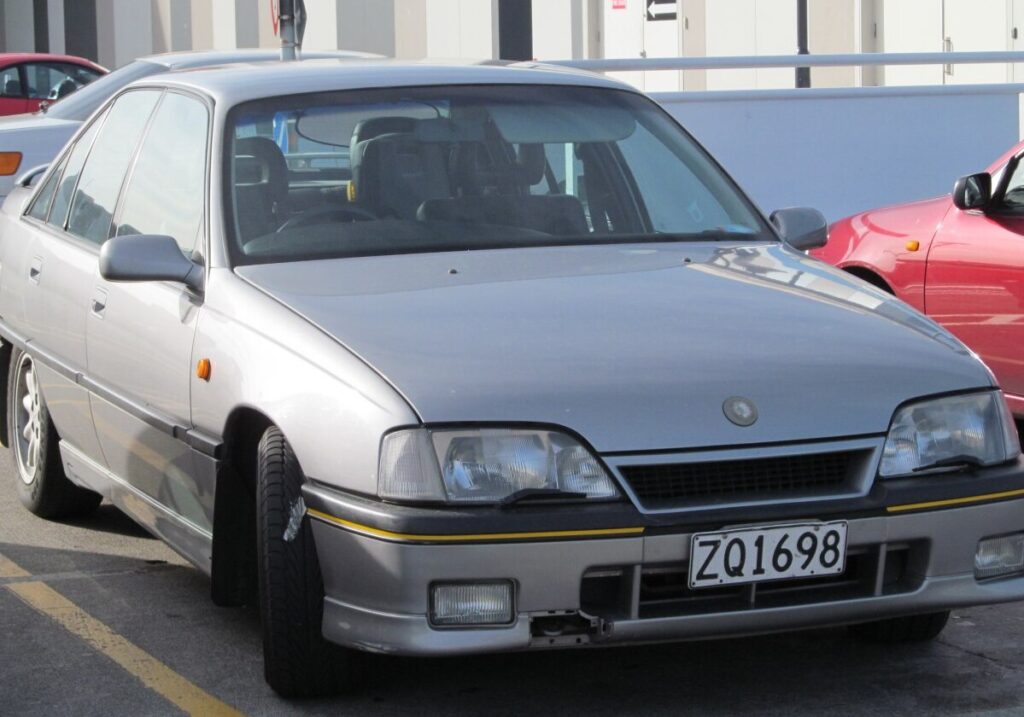
The Opel Omega A 3.0 24V, produced between 1989 and 1993, represented a significant step forward for Opel’s flagship sedan. Positioned as a premium offering within the Omega A range, the 3.0-liter 24-valve variant aimed to compete with executive cars from BMW and Mercedes-Benz. It was a key model in establishing Opel’s reputation for engineering and refinement, particularly in the European market. This model was a direct successor to the Opel Commodore and Rekord, aiming to provide a more modern and sophisticated experience. The Omega A platform (designated as X86) was a substantial departure from its predecessors, featuring a more aerodynamic design and improved interior space.
Technical Specifications
| Brand | Opel |
| Model | Omega |
| Generation | Omega A |
| Type (Engine) | 3.0 24V 3000 CAT (204 Hp) |
| Start of production | 1989 |
| End of production | 1993 |
| Powertrain Architecture | Internal Combustion engine |
| Body type | Sedan |
| Seats | 5 |
| Doors | 4 |
| Fuel consumption (urban) | 14.3 l/100 km (16.4 US mpg, 19.8 UK mpg) |
| Fuel consumption (extra urban) | 7.6 l/100 km (30.9 US mpg, 37.2 UK mpg) |
| Fuel consumption (combined) | 9.2 l/100 km (25.6 US mpg, 30.7 UK mpg) |
| Fuel Type | Petrol (Gasoline) |
| Acceleration 0 – 100 km/h | 7.6 sec |
| Acceleration 0 – 62 mph | 7.6 sec |
| Acceleration 0 – 60 mph | 7.2 sec |
| Maximum speed | 240 km/h (149.13 mph) |
| Weight-to-power ratio | 7.1 kg/Hp |
| Weight-to-torque ratio | 5.4 kg/Nm |
| Power | 204 Hp @ 6000 rpm |
| Torque | 270 Nm @ 3600 rpm (199.14 lb.-ft. @ 3600 rpm) |
| Engine layout | Front, Longitudinal |
| Engine Model/Code | C30SE |
| Engine displacement | 2969 cm3 (181.18 cu. in.) |
| Number of cylinders | 6 |
| Engine configuration | Inline |
| Cylinder Bore | 95 mm (3.74 in.) |
| Piston Stroke | 69.8 mm (2.75 in.) |
| Compression ratio | 10:1 |
| Number of valves per cylinder | 4 |
| Fuel injection system | Multi-port manifold injection |
| Engine aspiration | Naturally aspirated |
| Valvetrain | DOHC |
| Engine oil capacity | 5.5 l (5.81 US qt | 4.84 UK qt) |
| Coolant capacity | 9.8 l (10.36 US qt | 8.62 UK qt) |
| Kerb Weight | 1450 kg (3196.7 lbs.) |
| Max. weight | 1970 kg (4343.11 lbs.) |
| Max load | 520 kg (1146.4 lbs.) |
| Trunk (boot) space – minimum | 520 l (18.36 cu. ft.) |
| Trunk (boot) space – maximum | 870 l (30.72 cu. ft.) |
| Fuel tank capacity | 75 l (19.81 US gal | 16.5 UK gal) |
| Length | 4740 mm (186.61 in.) |
| Width | 1760 mm (69.29 in.) |
| Height | 1445 mm (56.89 in.) |
| Wheelbase | 2730 mm (107.48 in.) |
| Front track | 1445 mm (56.89 in.) |
| Rear track | 1460 mm (57.48 in.) |
| Drivetrain Architecture | Rear wheel drive |
| Drive wheel | Rear wheel drive |
| Number of gears | 5 |
| Gearbox type | Manual transmission |
| Front suspension | Spring Strut |
| Rear suspension | Wishbone |
| Front brakes | Ventilated discs |
| Rear brakes | Disc |
| Assisting systems | ABS (Anti-lock braking system), Hydraulic Power Steering |
| Tires size | 205/65 R15 |
| Wheel rims size | 7J x 15 |
Powertrain & Engine Architecture
The heart of the Omega A 3.0 24V was the C30SE engine, a 2.969-liter inline-six cylinder powerplant. This engine featured a cast-iron block and an aluminum cylinder head, incorporating dual overhead camshafts (DOHC) and four valves per cylinder. The 24-valve configuration allowed for improved breathing and higher engine speeds, contributing to the engine’s 204 horsepower output. Fuel delivery was managed by Bosch Motronic multi-port fuel injection, optimizing fuel efficiency and performance. The engine’s design prioritized smooth power delivery and refinement, characteristics valued in the executive car segment. The engine was mounted longitudinally in the chassis, driving the rear wheels. The five-speed manual transmission offered precise gear changes and enhanced driver engagement.
Driving Characteristics
The Omega A 3.0 24V offered a compelling blend of performance and comfort. Acceleration to 60 mph was achieved in approximately 7.2 seconds, and it boasted a top speed of 149 mph. While not a sports car, the 3.0-liter engine provided ample power for effortless cruising and confident overtaking. The manual transmission allowed for greater control over the engine’s power band, while the rear-wheel-drive configuration contributed to balanced handling. Compared to the lower-powered 1.8 and 2.0-liter versions, the 3.0 24V offered a significantly more engaging driving experience. It also felt more stable at higher speeds. The gear ratios were well-chosen to maximize acceleration and maintain comfortable cruising speeds. However, the larger engine did result in increased fuel consumption compared to the smaller displacement models.
Equipment & Trim Levels
The 3.0 24V Omega A typically came well-equipped, reflecting its position as the range-topping model. Standard features included central locking, electric windows, power steering, and an anti-lock braking system (ABS). Interior appointments featured comfortable cloth upholstery, although leather options were available. The dashboard layout was functional and ergonomically designed, with clear instrumentation. Optional extras included a sunroof, upgraded audio system, and climate control. The trim level often included wood veneer accents on the dashboard and door panels, enhancing the sense of luxury.
Chassis & Braking
The Omega A featured a robust chassis with independent suspension at all four wheels. The front suspension utilized MacPherson struts, while the rear employed a multi-link setup. This configuration provided a comfortable ride and good handling characteristics. The 3.0 24V models were typically equipped with ventilated disc brakes at the front and solid disc brakes at the rear, providing ample stopping power. The hydraulic power steering offered precise and responsive steering feel. Stabilizer bars were fitted to both the front and rear axles to reduce body roll during cornering.
Market Reception & Comparison
The Opel Omega A 3.0 24V was generally well-received by automotive critics. It was praised for its smooth engine, comfortable ride, and spacious interior. However, some critics noted that it lacked the outright sporting character of its BMW and Mercedes-Benz rivals. Fuel economy was also a point of concern, given the engine’s displacement. Compared to the 1.8 and 2.0-liter Omega A models, the 3.0 24V offered significantly more performance but at the cost of increased fuel consumption and a higher purchase price. The 3.0 24V was also more expensive to maintain due to the complexity of the engine and its associated components.
Legacy
The Opel Omega A 3.0 24V remains a sought-after classic car among enthusiasts. The C30SE engine is known for its durability and reliability, provided it is properly maintained. While parts availability can be a challenge, the engine’s robust design means that it can withstand high mileage. Today, well-maintained examples of the Omega A 3.0 24V are becoming increasingly collectible, representing a piece of Opel’s engineering heritage. The model’s blend of performance, comfort, and refinement continues to appeal to drivers who appreciate a classic European sedan.
