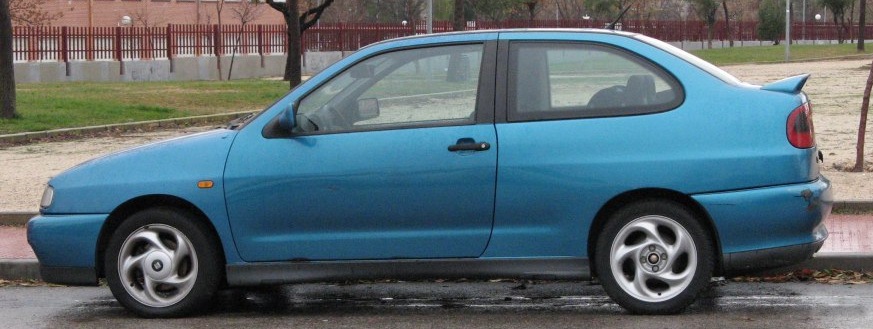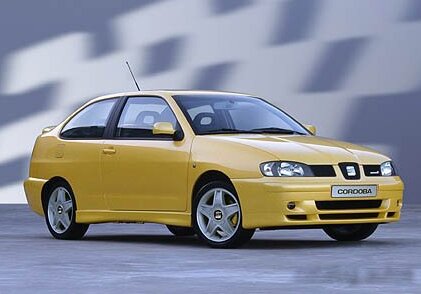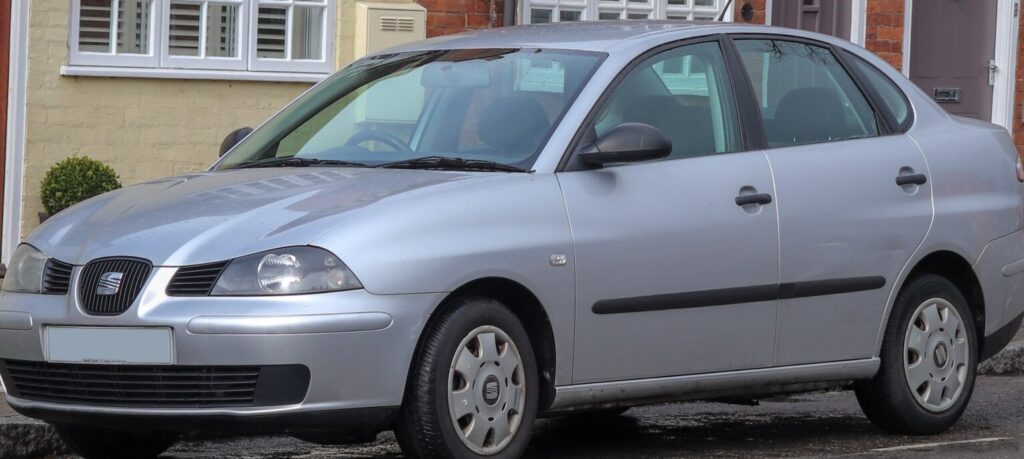
The SEAT Córdoba II 1.4 16V, produced from September 2002 to November 2008, represented an entry-level offering within the second generation of the Córdoba compact sedan. Positioned as a more affordable alternative to the higher-performance variants like the 1.8 20V and later the TDI models, this version targeted buyers prioritizing fuel efficiency and practicality over outright speed. It was a key model for SEAT in the European market, offering a budget-friendly option in the competitive small family car segment. The Córdoba II itself was based on the Volkswagen Group’s A4 platform (1HX0/A3), shared with models like the Volkswagen Bora, Audi A3, and Škoda Octavia.
Technical Specifications
| Brand | Seat |
| Model | Cordoba |
| Generation | Cordoba II |
| Type (Engine) | 1.4 16V (75 Hp) |
| Start of production | September, 2002 |
| End of production | November, 2008 |
| Powertrain Architecture | Internal Combustion engine |
| Body type | Sedan |
| Seats | 5 |
| Doors | 4 |
| Fuel consumption (urban) | 8.8 l/100 km (26.7 US mpg, 32.1 UK mpg, 11.4 km/l) |
| Fuel consumption (extra urban) | 5.2 l/100 km (45.2 US mpg, 54.3 UK mpg, 19.2 km/l) |
| Fuel consumption (combined) | 6.4 l/100 km (36.8 US mpg, 44.1 UK mpg, 15.6 km/l) |
| Fuel Type | Petrol (Gasoline) |
| Acceleration 0 – 100 km/h | 13.6 sec |
| Acceleration 0 – 62 mph | 13.6 sec |
| Acceleration 0 – 60 mph | 12.9 sec |
| Maximum speed | 176 km/h (109.36 mph) |
| Weight-to-power ratio | 14.5 kg/Hp, 68.8 Hp/tonne |
| Weight-to-torque ratio | 8.5 kg/Nm, 117.4 Nm/tonne |
| Power | 75 Hp @ 5000 rpm |
| Power per litre | 54 Hp/l |
| Torque | 128 Nm @ 3300 rpm (94.41 lb.-ft. @ 3300 rpm) |
| Engine layout | Front, Transverse |
| Engine Model/Code | BBY, BKY |
| Engine displacement | 1390 cm3 (84.82 cu. in.) |
| Number of cylinders | 4 |
| Engine configuration | Inline |
| Cylinder Bore | 76.5 mm (3.01 in.) |
| Piston Stroke | 75.6 mm (2.98 in.) |
| Compression ratio | 10.5:1 |
| Number of valves per cylinder | 4 |
| Fuel injection system | Multi-port manifold injection |
| Engine aspiration | Naturally aspirated engine |
| Valvetrain | OHC |
| Engine oil capacity | 3.2 l (3.38 US qt | 2.82 UK qt) |
| Coolant | 6 l (6.34 US qt | 5.28 UK qt) |
| Kerb Weight | 1090 kg (2403.04 lbs.) |
| Max. weight | 1585 kg (3494.33 lbs.) |
| Max load | 495 kg (1091.29 lbs.) |
| Trunk (boot) space – minimum | 485 l (17.13 cu. ft.) |
| Fuel tank capacity | 45 l (11.89 US gal | 9.9 UK gal) |
| Length | 4280 mm (168.5 in.) |
| Width | 1698 mm (66.85 in.) |
| Height | 1441 mm (56.73 in.) |
| Wheelbase | 2460 mm (96.85 in.) |
| Front track | 1419 mm (55.87 in.) |
| Rear (Back) track | 1408 mm (55.43 in.) |
| Drivetrain Architecture | The Internal combustion engine (ICE) drives the front wheels of the vehicle. |
| Drive wheel | Front wheel drive |
| Number of gears and type of gearbox | 5 gears, manual transmission |
| Front suspension | Coil spring |
| Rear suspension | Coil spring |
| Front brakes | Ventilated discs |
| Rear brakes | Drum |
| Assisting systems | ABS (Anti-lock braking system) |
| Steering type | Steering rack and pinion |
| Power steering | Hydraulic Steering |
| Tires size | 185/60 R14 |
Powertrain & Engine Architecture
The Córdoba II 1.4 16V utilized either the BBY or BKY engine code, both representing variations of the EA113 family of inline-four cylinder gasoline engines. These engines were common across the Volkswagen Group during this period. The 1.4-liter engine featured a naturally aspirated configuration with multi-point fuel injection. The 16-valve cylinder head, driven by an overhead camshaft (OHC), contributed to reasonable breathing for its displacement. The engine’s relatively simple design prioritized reliability and affordability. The five-speed manual transmission was the standard offering, providing a fairly conventional gear ratio spread. The transmission was known for its durability, but wasn’t particularly sporty in its feel.
Driving Characteristics
With 75 horsepower and 94 lb-ft of torque, the 1.4 16V Córdoba II wasn’t designed for exhilarating performance. Acceleration from 0-60 mph took around 12.9 seconds, and top speed was approximately 109 mph. In real-world driving, the engine felt adequate for city commuting and highway cruising, but struggled with quick overtaking maneuvers or when fully loaded. The manual transmission’s gear ratios were geared towards fuel economy rather than performance. Compared to the more powerful 1.8 20V, the 1.4 felt noticeably slower, lacking the higher-end punch of the larger engine. However, it offered a smoother and more forgiving driving experience, particularly for less experienced drivers.
Equipment & Trim Levels
The 1.4 16V Córdoba II typically came with a basic level of equipment. Standard features generally included power steering, ABS brakes, front airbags, and central locking. Interior upholstery was typically cloth, and the dashboard featured a functional, if somewhat basic, design. Optional extras included air conditioning, alloy wheels, and an upgraded audio system. Trim levels varied slightly depending on the market, but the 1.4 generally represented the entry point to the Córdoba II range.
Chassis & Braking
The Córdoba II 1.4 16V utilized a relatively simple chassis setup. Front suspension consisted of coil springs and struts, while the rear employed a coil spring torsion beam axle. This configuration provided a comfortable ride, but didn’t offer particularly engaging handling. The braking system featured ventilated discs on the front wheels and drum brakes on the rear. While adequate for everyday driving, the rear drum brakes limited overall braking performance compared to all-disc setups found on higher-spec models. A stabilizer bar was included at the front to reduce body roll during cornering.
Market Reception & Comparison
The Córdoba II 1.4 16V was generally well-received as a practical and affordable family car. Critics praised its fuel efficiency and reliability, but noted its lack of performance. Compared to the 1.8 20V, the 1.4 offered significantly better fuel economy (around 37 mpg combined) but considerably less power. The 1.4 also proved to be more reliable than some of the early TDI models, which were prone to issues with their diesel particulate filters. It was a popular choice for drivers who prioritized value for money over driving excitement.
Legacy
The 1.4 16V engine, in both BBY and BKY forms, proved to be a relatively durable and reliable unit. While not known for its longevity like some of Volkswagen’s older engines, it generally held up well with regular maintenance. Today, used Córdoba II 1.4 models are readily available and relatively inexpensive to purchase. They represent a good option for budget-conscious buyers looking for a simple and reliable used car. However, potential buyers should be aware of the age-related issues common to all cars of this era, such as corrosion and wear and tear on suspension components. The engine’s simplicity also makes it relatively easy and affordable to repair.