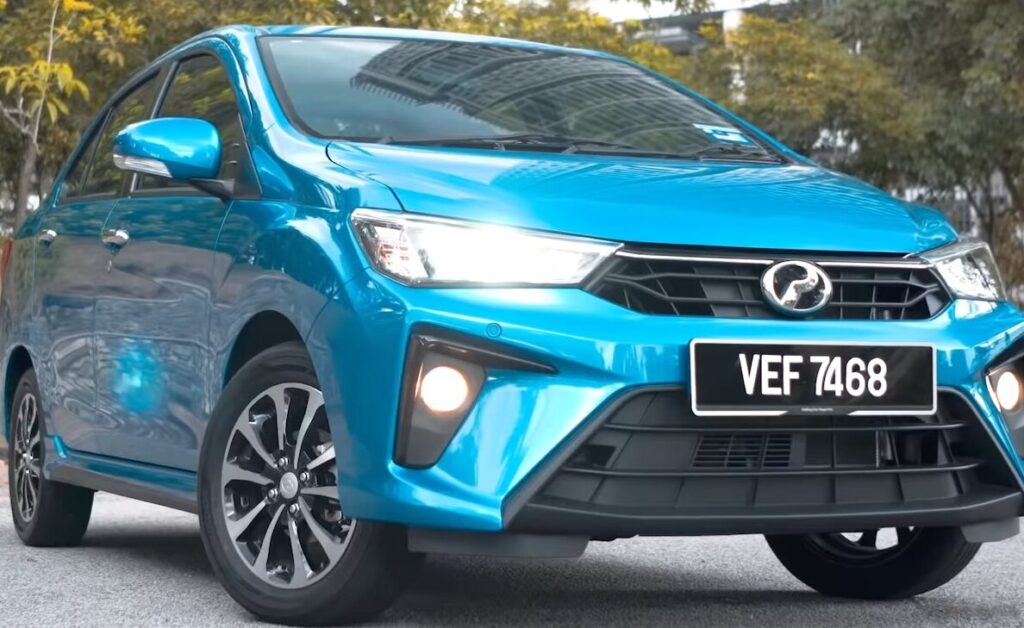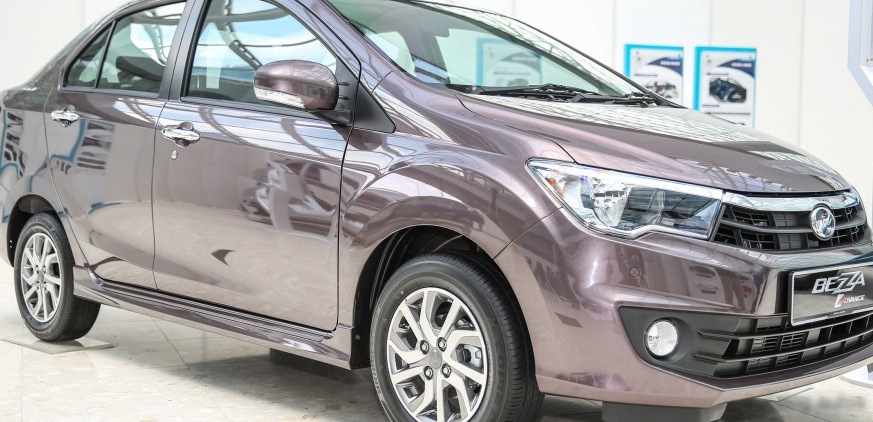
The Perodua Bezza 1.0, produced between 2016 and 2019, represents a significant entry in the Malaysian automotive market as an affordable and fuel-efficient sedan. Positioned as the entry-level trim of the Bezza range, it aimed to provide basic transportation with a focus on economy. The Bezza itself was Perodua’s first attempt at a dedicated sedan model, building upon their established expertise in compact hatchbacks. It was designed to appeal to first-time car buyers, families seeking a second vehicle, and those prioritizing practicality and low running costs. The 1.0-liter variant played a crucial role in achieving this, offering the lowest price point within the Bezza lineup.
Technical Specifications
| Brand | Perodua |
| Model | Bezza |
| Generation | Bezza |
| Type (Engine) | 1.0 (68 Hp) |
| Start of production | 2016 |
| End of production | 2019 |
| Powertrain Architecture | Internal Combustion engine |
| Body type | Sedan |
| Seats | 5 |
| Doors | 4 |
| Fuel consumption (combined) | 4.4 l/100 km (53.5 US mpg, 64.2 UK mpg, 22.7 km/l) |
| Fuel Type | Petrol (Gasoline) |
| Weight-to-power ratio | 12.7 kg/Hp, 78.6 Hp/tonne |
| Weight-to-torque ratio | 9.5 kg/Nm, 105.2 Nm/tonne |
| Power | 68 Hp @ 6000 rpm |
| Power per litre | 68.1 Hp/l |
| Torque | 91 Nm @ 4400 rpm (67.12 lb.-ft. @ 4400 rpm) |
| Engine layout | Front, Transverse |
| Engine Model/Code | 1KR-VE |
| Engine displacement | 998 cm3 (60.9 cu. in.) |
| Number of cylinders | 3 |
| Engine configuration | Inline |
| Cylinder Bore | 71 mm (2.8 in.) |
| Piston Stroke | 84 mm (3.31 in.) |
| Compression ratio | 11.5:1 |
| Number of valves per cylinder | 4 |
| Fuel injection system | Multi-port manifold injection |
| Engine aspiration | Naturally aspirated engine |
| Engine oil capacity | 2.7 l (2.85 US qt | 2.38 UK qt) |
| Coolant | 2.6 l (2.75 US qt | 2.29 UK qt) |
| Kerb Weight | 865 kg (1907 lbs.) |
| Trunk (boot) space – minimum | 508 l (17.94 cu. ft.) |
| Fuel tank capacity | 36 l (9.51 US gal | 7.92 UK gal) |
| Length | 4150 mm (163.39 in.) |
| Width | 1620 mm (63.78 in.) |
| Height | 1510 mm (59.45 in.) |
| Wheelbase | 2455 mm (96.65 in.) |
| Front track | 1410 mm (55.51 in.) |
| Rear (Back) track | 1405 mm (55.31 in.) |
| Minimum turning circle | 9.0 m (29.53 ft.) |
| Drivetrain Architecture | Front wheel drive, Internal Combustion engine |
| Number of gears and type of gearbox | 5 gears, manual transmission |
| Assisting systems | ABS (Anti-lock braking system) |
| Steering type | Steering rack and pinion |
| Power steering | Electric Steering |
| Tires size | 175/65 R14 |
| Wheel rims size | 14 |
Powertrain & Engine Architecture
The heart of the Bezza 1.0 is the 1KR-VE engine, a 998cc inline-3 cylinder petrol engine. This engine is a staple in Perodua’s lineup, known for its simplicity and fuel efficiency. It utilizes a multi-point fuel injection system and a relatively low 11.5:1 compression ratio. The engine’s design prioritizes low-end torque over outright power, making it suitable for urban driving conditions. The 1KR-VE is a naturally aspirated engine, meaning it doesn’t employ turbocharging or supercharging. The 5-speed manual transmission paired with this engine is a standard unit, chosen for its affordability and reliability. The gear ratios are tuned to maximize fuel economy, with a taller final drive.
Driving Characteristics
The Bezza 1.0’s driving experience is best described as functional and undemanding. With only 68 horsepower, acceleration is modest, particularly when fully loaded. The 5-speed manual transmission allows drivers to keep the engine in its optimal power band, but requires frequent shifting for overtaking maneuvers. Compared to the 1.3-liter variants, the 1.0 feels noticeably slower, especially on inclines. However, the lighter weight of the 1.0-liter model does contribute to slightly better handling and responsiveness in city traffic. The steering is light and easy to use, making parking and maneuvering in tight spaces straightforward.
Equipment & Trim Levels
The Bezza 1.0 was typically offered with a basic level of equipment. Standard features included manual windows, manual air conditioning, and a basic audio system. Safety features were limited to ABS (Anti-lock Braking System) and dual airbags. Interior upholstery was typically cloth, with a simple dashboard layout. Optional extras, such as power windows and a more advanced audio system, were available on higher trim levels, but were not commonly fitted to the base 1.0 model. The focus was on providing a no-frills, affordable package.
Chassis & Braking
The Bezza 1.0 utilizes a relatively simple chassis design. The suspension consists of MacPherson struts at the front and a torsion beam axle at the rear. The braking system features disc brakes at the front and drum brakes at the rear, a common configuration for vehicles in this price segment. The suspension is tuned for comfort rather than sporty handling, providing a reasonably smooth ride on typical road surfaces. The electric power steering contributes to ease of use, but lacks the feedback of a hydraulic system.
Market Reception & Comparison
The Perodua Bezza 1.0 was well-received in the Malaysian market due to its affordability and fuel efficiency. Critics praised its practicality and low running costs, making it an attractive option for budget-conscious buyers. Compared to the 1.3-liter Bezza variants, the 1.0 offered a lower price point but sacrificed performance. The 1.3L offered a more refined driving experience and better acceleration, but at a higher cost. The 1.0’s fuel economy was a key selling point, consistently achieving around 4.4 liters per 100 kilometers in real-world driving conditions.
Legacy
The Perodua Bezza 1.0 has established a reputation for reliability and affordability in the used car market. The 1KR-VE engine is known for its durability, and maintenance costs are relatively low. While not a performance car, the Bezza 1.0 provides a dependable and economical means of transportation. Today, these vehicles are popular choices for first-time car owners and those seeking a budget-friendly sedan. The Bezza’s success paved the way for Perodua to further expand its sedan offerings and solidify its position as a leading automotive manufacturer in Malaysia.