
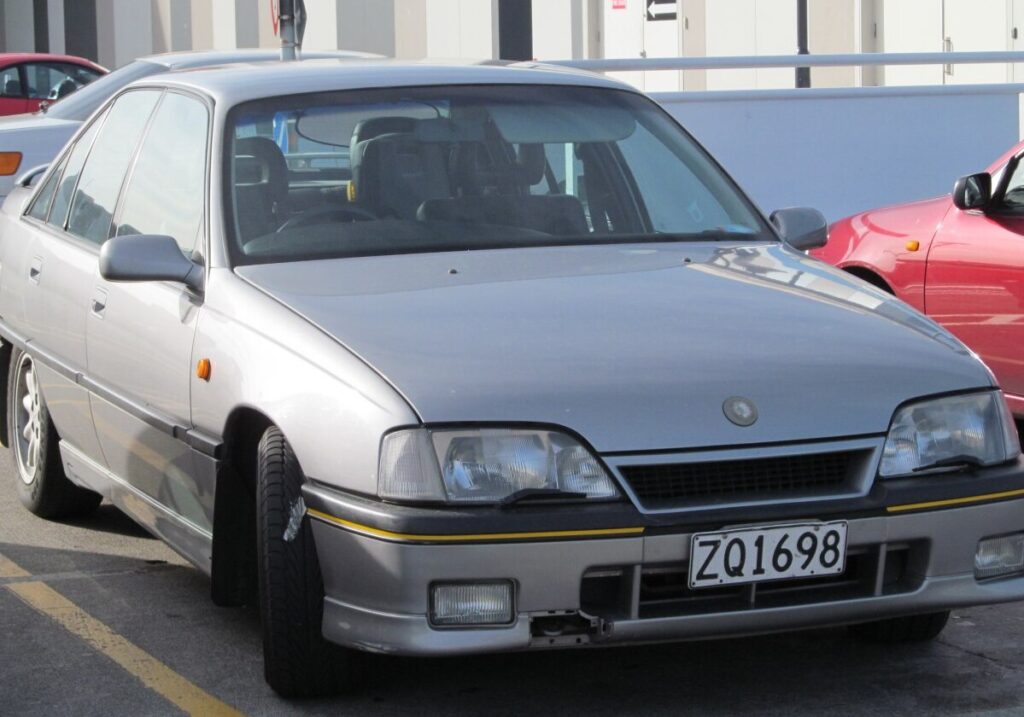
The Opel Omega A 3.0 24V Evolution 500 CAT, produced between 1991 and 1992, represented a high-performance variant within the Omega A range. Positioned as a flagship sedan, it aimed to deliver a blend of luxury, space, and spirited driving. This model was primarily marketed in Europe, where Opel (and its sister brand Vauxhall in the UK) competed in the executive car segment against rivals like the Ford Granada, BMW 5 Series, and Mercedes-Benz E-Class. The “Evolution 500” designation referred to a limited production run focused on enhanced performance and refinement, with the “CAT” suffix indicating the inclusion of a catalytic converter to meet increasingly stringent emissions regulations.
Technical Specifications
| Brand | Opel |
| Model | Omega |
| Generation | Omega A |
| Type (Engine) | 3.0 24V Evolution 500 CAT (230 Hp) |
| Start of production | 1991 |
| End of production | 1992 |
| Powertrain Architecture | Internal Combustion engine |
| Body type | Sedan |
| Seats | 5 |
| Doors | 4 |
| Fuel Type | Petrol (Gasoline) |
| Acceleration 0 – 100 km/h | 7.5 sec |
| Acceleration 0 – 62 mph | 7.5 sec |
| Acceleration 0 – 60 mph | 7.1 sec |
| Maximum speed | 249 km/h (154.72 mph) |
| Weight-to-power ratio | 6.4 kg/Hp, 157 Hp/tonne |
| Weight-to-torque ratio | 5.2 kg/Nm, 191.1 Nm/tonne |
| Power | 230 Hp @ 6700 rpm |
| Power per litre | 77.5 Hp/l |
| Torque | 280 Nm @ 3500 rpm (206.52 lb.-ft. @ 3500 rpm) |
| Engine layout | Front, Longitudinal |
| Engine Model/Code | C30XEI |
| Engine displacement | 2969 cm3 (181.18 cu. in.) |
| Number of cylinders | 6 |
| Engine configuration | Inline |
| Cylinder Bore | 95 mm (3.74 in.) |
| Piston Stroke | 69.8 mm (2.75 in.) |
| Compression ratio | 10.5:1 |
| Number of valves per cylinder | 4 |
| Fuel injection system | Multi-port manifold injection |
| Engine aspiration | Naturally aspirated engine |
| Valvetrain | DOHC |
| Engine oil capacity | 5.5 l (5.81 US qt | 4.84 UK qt) |
| Coolant | 9.8 l (10.36 US qt | 8.62 UK qt) |
| Kerb Weight | 1465 kg (3229.77 lbs) |
| Max. weight | 1985 kg (4376.18 lbs) |
| Max load | 520 kg (1146.4 lbs) |
| Trunk (boot) space – minimum | 520 l (18.36 cu. ft.) |
| Trunk (boot) space – maximum | 870 l (30.72 cu. ft.) |
| Fuel tank capacity | 75 l (19.81 US gal | 16.5 UK gal) |
| Permitted trailer load with brakes (12%) | 1700 kg (3747.86 lbs) |
| Permitted trailer load without brakes | 720 kg (1587.33 lbs) |
| Length | 4740 mm (186.61 in.) |
| Width | 1760 mm (69.29 in.) |
| Height | 1445 mm (56.89 in.) |
| Wheelbase | 2730 mm (107.48 in.) |
| Front track | 1445 mm (56.89 in.) |
| Rear (Back) track | 1460 mm (57.48 in.) |
| Minimum turning circle | 10.8 m (35.43 ft.) |
| Drivetrain Architecture | Rear wheel drive |
| Drive wheel | Rear wheel drive |
| Number of gears and type of gearbox | 5 gears, manual transmission |
| Front brakes | Ventilated discs |
| Rear brakes | Disc |
| Tires size | 225/50 R16 |
| Wheel rims size | 16 |
Introduction
The Opel Omega A 3.0 24V Evolution 500 CAT was a performance-oriented version of the Omega A, a large family car produced by Opel from 1986 to 1994. The Omega A was Opel’s replacement for the Rekord series, aiming to offer a more modern and sophisticated package. The Evolution 500 CAT, introduced in 1991 and continuing through 1992, was designed to showcase Opel’s engineering capabilities and provide a more engaging driving experience. It sat at the top of the Omega A range, offering a significant performance upgrade over the more common four-cylinder and smaller six-cylinder models. The car was built on Opel’s GM V platform (1HX0/A3), shared with other models like the Saab 9000 and Fiat Croma.
Powertrain & Engine Architecture
The heart of the Omega A 3.0 24V Evolution 500 CAT is the C30XEI engine, a 2,969 cc inline-six cylinder powerplant. This engine featured a dual overhead camshaft (DOHC) valvetrain with four valves per cylinder, contributing to its high specific output. The engine utilized Bosch Motronic fuel injection, a multi-port system that precisely meters fuel delivery for optimal performance and efficiency. The 10.5:1 compression ratio further enhanced power output. The engine’s longitudinal mounting allowed for a rear-wheel-drive configuration, a characteristic that distinguished it from many contemporary front-wheel-drive sedans. The five-speed manual transmission was the only gearbox option, chosen to maximize driver control and performance. This transmission was known for its robust construction and precise shift feel.
Driving Characteristics
The 230 horsepower and 280 Nm (206.52 lb-ft) of torque delivered by the C30XEI engine provided the Omega A Evolution 500 CAT with brisk acceleration. The 0-60 mph sprint was achieved in approximately 7.1 seconds, and it could reach a top speed of 249 km/h (154.72 mph). The rear-wheel-drive layout contributed to a balanced handling characteristic, although the car’s considerable weight (1465 kg / 3229.77 lbs) meant it wasn’t as agile as some smaller sports sedans. The five-speed manual transmission allowed drivers to fully exploit the engine’s powerband, with well-spaced gear ratios providing strong acceleration in each gear. Compared to the lower-powered Omega A variants, the Evolution 500 CAT offered a significantly more engaging and rewarding driving experience, particularly for enthusiasts who appreciated the feel of a rear-wheel-drive chassis and a responsive engine.
Equipment & Trim Levels
The Evolution 500 CAT was generously equipped, reflecting its position as the range-topping model. Standard features typically included power windows, central locking, power steering, and an upgraded audio system. The interior featured comfortable, supportive seats upholstered in premium cloth or leather (leather was often an optional extra). Dashboard trim was typically wood veneer, adding to the luxurious ambiance. Optional extras could include a sunroof, air conditioning, and upgraded sound systems. The car’s instrumentation was comprehensive, providing the driver with detailed information about engine performance and vehicle status.
Chassis & Braking
The Omega A’s chassis featured independent suspension at all four wheels, providing a comfortable ride and good handling. The front suspension utilized MacPherson struts, while the rear employed a semi-trailing arm design. Stabilizer bars were fitted to both the front and rear axles to reduce body roll during cornering. Braking duties were handled by ventilated discs at the front and solid discs at the rear, providing adequate stopping power for the car’s weight and performance. The braking system was not particularly advanced by modern standards, but it was generally considered effective for the car’s intended use.
Market Reception & Comparison
The Opel Omega A 3.0 24V Evolution 500 CAT was generally well-received by automotive critics, who praised its powerful engine, comfortable ride, and spacious interior. However, some reviewers noted the car’s relatively high weight and its somewhat dated design compared to newer rivals. Compared to the other engines in the Omega A lineup, the 3.0 24V offered a substantial performance advantage. The smaller four-cylinder engines were more fuel-efficient but lacked the power and refinement of the inline-six. The 2.0-liter and 2.6-liter six-cylinder engines offered a compromise between performance and economy, but they couldn’t match the Evolution 500 CAT’s outright speed. Fuel economy was reasonable for a car of this size and performance, but it was not a primary selling point.
Legacy
The Opel Omega A 3.0 24V Evolution 500 CAT remains a sought-after classic car among enthusiasts. The C30XEI engine is known for its durability and relatively straightforward maintenance, although parts availability can be a challenge. Well-maintained examples are becoming increasingly rare, and prices have been steadily rising in recent years. The car represents a high point in Opel’s engineering history, showcasing the company’s ability to produce a sophisticated and capable executive sedan. Today, it’s appreciated for its blend of performance, comfort, and classic styling, offering a unique alternative to more common European and Japanese performance cars of the era.
