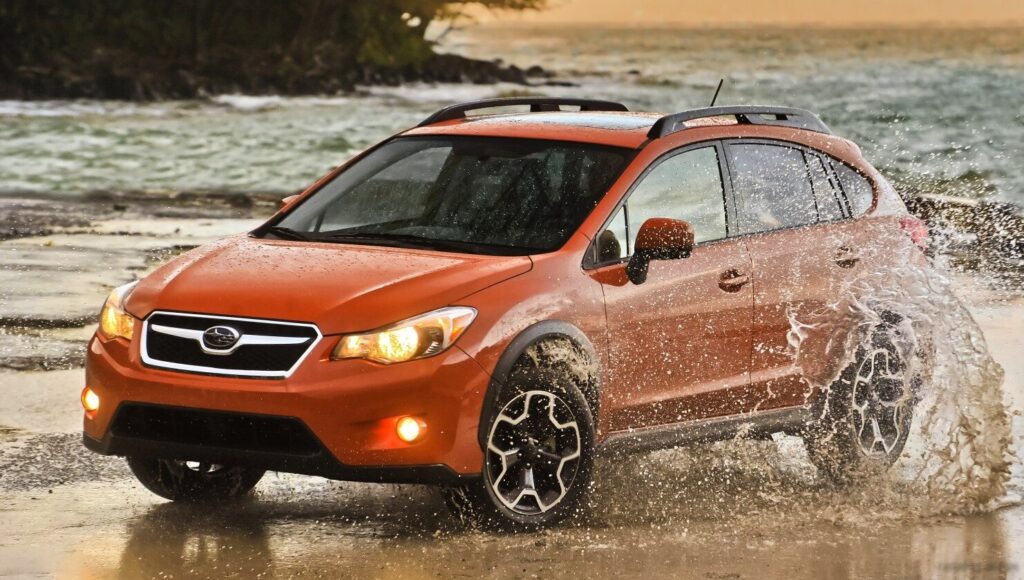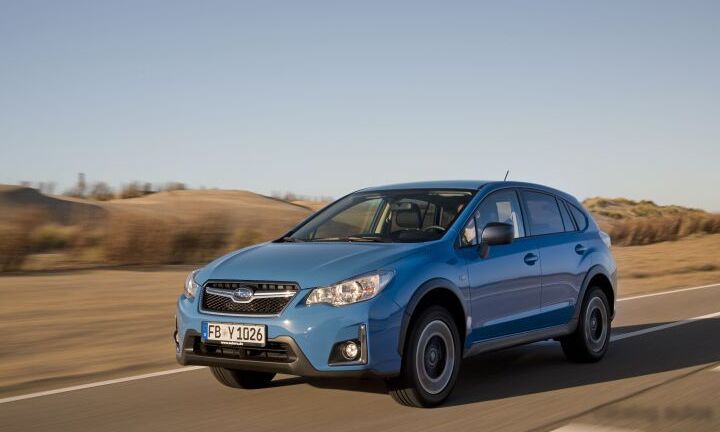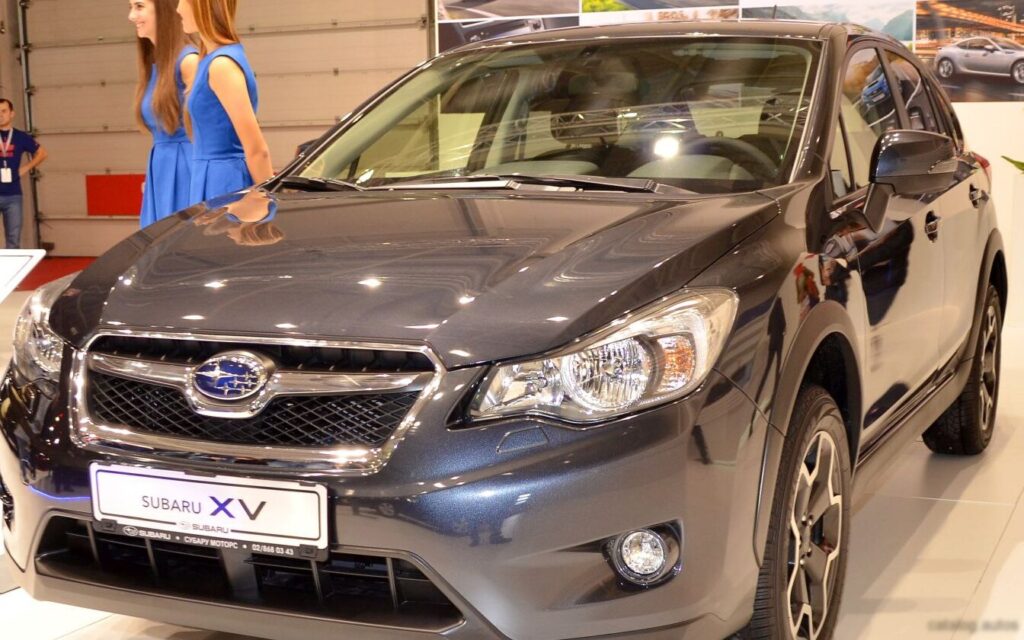
The Subaru XV, known as the Subaru Crosstrek in the North American market, represents Subaru’s entry into the burgeoning subcompact crossover SUV segment. Introduced in 2011 for the 2012 model year, the first generation XV (designated XV I) aimed to blend the practicality of a hatchback with the increased ride height and all-weather capability traditionally associated with Subaru vehicles. The 2.0i variant, producing 150 horsepower, served as the mainstay of the lineup for much of its production run, spanning from 2011 to 2016. This model played a crucial role in expanding Subaru’s customer base, attracting buyers seeking a versatile and fuel-efficient vehicle with standard all-wheel drive.
Technical Specifications
| Brand | Subaru |
| Model | XV |
| Generation | XV I |
| Type (Engine) | 2.0i (150 Hp) |
| Start of production | 2011 year |
| End of production | 2016 year |
| Powertrain Architecture | Internal Combustion engine |
| Body type | SUV |
| Seats | 5 |
| Doors | 5 |
| Fuel consumption (economy) – urban | 8.8 l/100 km (26.7 US mpg) |
| Fuel consumption (economy) – extra urban | 5.9 l/100 km (39.9 US mpg) |
| Fuel consumption (economy) – combined | 6.9 l/100 km (34.1 US mpg) |
| Fuel Type | Petrol (Gasoline) |
| Acceleration 0 – 100 km/h | 10.5 sec |
| Acceleration 0 – 62 mph | 10.5 sec |
| Acceleration 0 – 60 mph | 10 sec |
| Maximum speed | 187 km/h (116.2 mph) |
| Weight-to-power ratio | 9.1 kg/Hp |
| Weight-to-torque ratio | 7 kg/Nm |
| Power | 150 Hp @ 6200 rpm |
| Torque | 196 Nm @ 4200 rpm (144.56 lb.-ft. @ 4200 rpm) |
| Engine layout | Front, Longitudinal |
| Engine Model/Code | FB20 |
| Engine displacement | 1995 cm3 (121.74 cu. in.) |
| Number of cylinders | 4 |
| Engine configuration | Boxer |
| Cylinder Bore | 84 mm (3.31 in.) |
| Piston Stroke | 90 mm (3.54 in.) |
| Compression ratio | 10.5:1 |
| Number of valves per cylinder | 4 |
| Fuel injection system | Multi-port manifold injection |
| Engine aspiration | Naturally aspirated engine |
| Valvetrain | DOHC |
| Engine oil capacity | 4.8 l (5.07 US qt | 4.22 UK qt) |
| Coolant | 7.7 l (8.14 US qt | 6.78 UK qt) |
| Kerb Weight | 1370 kg (3020.33 lbs.) |
| Trunk (boot) space – minimum | 1270 l (44.85 cu. ft.) |
| Fuel tank capacity | 60 l (15.85 US gal | 13.2 UK gal) |
| Length | 4450 mm (175.2 in.) |
| Width | 1780 mm (70.08 in.) |
| Height | 1615 mm (63.58 in.) |
| Wheelbase | 2635 mm (103.74 in.) |
| Front track | 1525 mm (60.04 in.) |
| Rear (Back) track | 1525 mm (60.04 in.) |
| Minimum turning circle | 10.6 m (34.78 ft.) |
| Drive wheel | All wheel drive (4×4) |
| Number of gears and type of gearbox | 6 gears, manual transmission |
| Front suspension | Independent type McPherson |
| Rear suspension | Double wishbone |
| Front brakes | Ventilated discs |
| Rear brakes | Disc |
| Assisting systems | ABS (Anti-lock braking system) |
| Steering type | Steering rack and pinion |
| Tires size | 225/55 R17 |
| Wheel rims size | 7J x 17 |
Powertrain & Engine Architecture
The heart of the 2.0i XV is the FB20 2.0-liter horizontally-opposed (boxer) four-cylinder engine. This engine was a significant departure from Subaru’s earlier designs, incorporating a square bore and stroke (84mm x 90mm) and a relatively high 10.5:1 compression ratio. The FB20 utilizes multi-point fuel injection and a double overhead camshaft (DOHC) valvetrain with four valves per cylinder. The boxer configuration, where cylinders are laid flat on either side of the crankshaft, contributes to a lower center of gravity, enhancing handling stability. Paired with this engine was a six-speed manual transmission, providing direct control over the power delivery. While a continuously variable transmission (CVT) was offered in some markets and later years, the six-speed manual was a popular choice for drivers prioritizing engagement and control.
Driving Characteristics
The 150 hp and 144.56 lb-ft of torque produced by the FB20 engine in the 2.0i XV provided adequate, though not exhilarating, performance. Acceleration from 0-60 mph took around 10 seconds, making it competitive within the subcompact crossover class. The manual transmission allowed for precise gear selection, but the engine’s peak torque arriving at 4200 rpm meant frequent downshifts were necessary for brisk acceleration. Compared to higher-output variants, such as those found in the WRX, the 2.0i felt noticeably less powerful. However, the standard symmetrical all-wheel drive system provided excellent traction in various conditions, making it a confident performer on slippery surfaces. The gear ratios were tuned for fuel efficiency and everyday usability rather than outright speed.
Equipment & Trim Levels
The 2.0i trim level typically served as the entry point to the XV lineup. Standard features generally included air conditioning, power windows and locks, a basic audio system with auxiliary input, and steel wheels with wheel covers. Higher trim levels, such as the Premium, added features like alloy wheels, a more sophisticated audio system, a rearview camera, and optional features like a sunroof and leather upholstery. Interior upholstery was typically cloth, with a functional and durable design. The dashboard layout was straightforward and user-friendly, prioritizing practicality over luxury.
Chassis & Braking
The XV I utilized a McPherson strut front suspension and a double-wishbone rear suspension, providing a comfortable ride and predictable handling. The suspension was tuned to balance ride comfort with body control, making it suitable for both city driving and longer journeys. Braking duties were handled by ventilated discs at the front and solid discs at the rear. Anti-lock braking system (ABS) was standard, enhancing safety and control during emergency braking situations. The relatively lightweight construction of the XV (around 3020 lbs) contributed to its nimble handling characteristics.
Market Reception & Comparison
The Subaru XV 2.0i was generally well-received by automotive critics, who praised its standard all-wheel drive, fuel efficiency, and practical interior. However, some reviewers noted the engine’s lack of outright power and the somewhat basic interior appointments of the base trim level. Compared to other subcompact crossovers of the time, such as the Honda HR-V and Nissan Juke, the XV offered a unique combination of capability and affordability. Its fuel economy, averaging around 34.1 US mpg in combined driving, was competitive within its class. Reliability was generally good, with the FB20 engine proving to be a durable and dependable unit.
Legacy
The first-generation Subaru XV established a strong foundation for the Crosstrek/XV line. The FB20 engine, while not known for its performance, proved to be a reliable and long-lasting powertrain. Today, used XV I models with the 2.0i engine represent a relatively affordable entry point into Subaru ownership. Common maintenance items include regular oil changes, timing belt replacement (typically around 105,000 miles), and inspection of the cooling system. The XV’s enduring popularity in the used car market is a testament to its practicality, reliability, and the enduring appeal of Subaru’s all-wheel drive system.