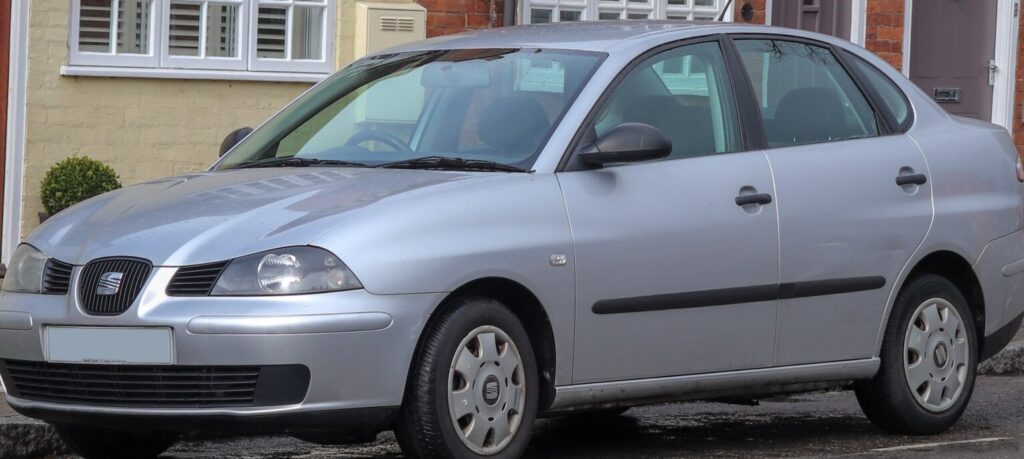
The SEAT Cordoba II 1.4 TDI, produced from 2002 to 2008, represented an entry point into the second generation of SEAT’s popular compact sedan. Positioned within the 6L series Cordoba range, this variant offered a fuel-efficient diesel option aimed at buyers prioritizing economy over outright performance. It shared its platform – the Volkswagen Group’s A4 – with models like the Volkswagen Polo, Skoda Fabia, and the SEAT Ibiza, benefiting from the economies of scale and established engineering of the group. The 1.4 TDI served as a practical and affordable choice in European markets, particularly for urban commuters and those seeking a reliable, low-running-cost vehicle.
Technical Specifications
| Brand | Seat |
| Model | Cordoba |
| Generation | Cordoba II |
| Type (Engine) | 1.4 TDI (75 Hp) |
| Start of production | October, 2002 |
| End of production | November, 2008 |
| Powertrain Architecture | Internal Combustion engine |
| Body type | Sedan |
| Seats | 5 |
| Doors | 4 |
| Fuel consumption (urban) | 5.7 l/100 km (41.3 US mpg, 49.6 UK mpg, 17.5 km/l) |
| Fuel consumption (extra urban) | 4.1 l/100 km (57.4 US mpg, 68.9 UK mpg, 24.4 km/l) |
| Fuel Type | Diesel |
| Acceleration 0 – 100 km/h | 14.2 sec |
| Acceleration 0 – 62 mph | 14.2 sec |
| Acceleration 0 – 60 mph | 13.5 sec |
| Maximum speed | 174 km/h (108.12 mph) |
| Weight-to-power ratio | 15.3 kg/Hp, 65.5 Hp/tonne |
| Weight-to-torque ratio | 5.9 kg/Nm, 170.3 Nm/tonne |
| Power | 75 Hp @ 4000 rpm |
| Power per litre | 52.7 Hp/l |
| Torque | 195 Nm @ 2200 rpm (143.82 lb.-ft. @ 2200 rpm) |
| Engine layout | Front, Transverse |
| Engine Model/Code | AMF |
| Engine displacement | 1422 cm3 (86.78 cu. in.) |
| Number of cylinders | 3 |
| Engine configuration | Inline |
| Cylinder Bore | 79.5 mm (3.13 in.) |
| Piston Stroke | 95.5 mm (3.76 in.) |
| Compression ratio | 19.5:1 |
| Number of valves per cylinder | 2 |
| Fuel injection system | Pump-nozzle (Unit Injector) |
| Engine aspiration | Turbocharger, Intercooler |
| Valvetrain | OHC |
| Engine oil capacity | 3.8 l (4.02 US qt | 3.34 UK qt) |
| Coolant | 5 l (5.28 US qt | 4.4 UK qt) |
| Kerb Weight | 1145 kg (2524.29 lbs.) |
| Max. weight | 1662 kg (3664.08 lbs.) |
| Max load | 517 kg (1139.79 lbs.) |
| Trunk (boot) space – minimum | 485 l (17.13 cu. ft.) |
| Fuel tank capacity | 45 l (11.89 US gal | 9.9 UK gal) |
| Length | 4280 mm (168.5 in.) |
| Width | 1698 mm (66.85 in.) |
| Height | 1441 mm (56.73 in.) |
| Wheelbase | 2460 mm (96.85 in.) |
| Front track | 1419 mm (55.87 in.) |
| Rear (Back) track | 1408 mm (55.43 in.) |
| Drivetrain Architecture | The Internal combustion engine (ICE) drives the front wheels of the vehicle. |
| Drive wheel | Front wheel drive |
| Number of gears and type of gearbox | 5 gears, manual transmission |
| Front suspension | Coil spring |
| Rear suspension | Coil spring |
| Front brakes | Ventilated discs |
| Rear brakes | Drum |
| Assisting systems | ABS (Anti-lock braking system) |
| Steering type | Steering rack and pinion |
| Power steering | Hydraulic Steering |
| Tires size | 185/60 R14 |
Powertrain & Engine Architecture
The heart of the Cordoba II 1.4 TDI was the AMF engine code, a 1.4-liter inline-three cylinder diesel. This engine utilized a pump-nozzle (unit injector) fuel injection system, a technology favored by Volkswagen Group for its precise fuel delivery and efficiency. The AMF engine featured a single overhead camshaft (OHC) operating two valves per cylinder. A turbocharger with an intercooler was employed to boost power output and improve torque delivery. The engine’s 19.5:1 compression ratio was typical for direct-injection diesels of the era, contributing to its thermal efficiency. The 5-speed manual transmission was the only gearbox option available with this engine, prioritizing fuel economy and simplicity over sporty driving dynamics.
Driving Characteristics
The 1.4 TDI Cordoba was not designed for spirited acceleration. With 75 horsepower and 195 Nm (144 lb-ft) of torque, it offered modest performance. Acceleration from 0-100 km/h (0-62 mph) took around 14.2 seconds, and top speed was limited to 174 km/h (108 mph). The engine’s torque peak at 2200 rpm provided adequate pulling power for everyday driving, but overtaking maneuvers required careful planning. Compared to the more powerful 1.8-liter gasoline engines or the later 2.0-liter TDI variants, the 1.4 TDI felt noticeably slower. However, its strength lay in its fuel efficiency and relaxed cruising ability. The gear ratios were optimized for economy, resulting in a relatively high fifth gear for comfortable highway driving.
Equipment & Trim Levels
The 1.4 TDI Cordoba typically came with a basic level of equipment. Standard features generally included power steering, ABS brakes, front airbags, and central locking. Interior upholstery was typically cloth, and the dashboard featured a functional, if somewhat spartan, design. Optional extras included air conditioning, alloy wheels, and an upgraded audio system. Trim levels were relatively limited, with the 1.4 TDI often serving as the entry-level diesel offering. Higher trim levels, available with other engines, added features like electric windows, heated mirrors, and more sophisticated interior trim.
Chassis & Braking
The Cordoba II utilized a relatively simple chassis design. Front suspension consisted of coil springs and independent suspension, while the rear employed a torsion beam setup with coil springs. Front brakes were ventilated discs, providing adequate stopping power, while rear brakes were drums, a cost-saving measure common in this segment. The steering was a hydraulic rack and pinion system, offering reasonable precision. Stabilizer bars were fitted to both the front and rear axles to reduce body roll during cornering. The suspension tuning prioritized comfort over handling, resulting in a compliant ride quality suitable for everyday use.
Market Reception & Comparison
The SEAT Cordoba II 1.4 TDI was generally well-received as a practical and economical choice. Critics praised its fuel efficiency and reliability, but noted its lack of performance. Compared to the more powerful gasoline variants, the 1.4 TDI offered significantly better fuel economy, making it a popular choice for high-mileage drivers. Against competitors like the Ford Focus, Opel Astra, and Renault Megane, the Cordoba offered a competitive package in terms of price and running costs. However, some reviewers found the interior to be somewhat basic compared to rivals.
Legacy
The AMF engine, while not known for its refinement or power, proved to be a relatively durable and reliable unit. Properly maintained examples can still be found on the road today. In the used car market, the 1.4 TDI Cordoba II represents an affordable and economical option for those seeking a simple, reliable sedan. Its fuel efficiency and low running costs continue to appeal to budget-conscious buyers. However, potential buyers should be aware of the age-related issues common to older diesel engines, such as turbocharger wear and potential issues with the fuel injection system. The 1.4 TDI Cordoba II remains a testament to SEAT’s commitment to providing practical and affordable transportation.