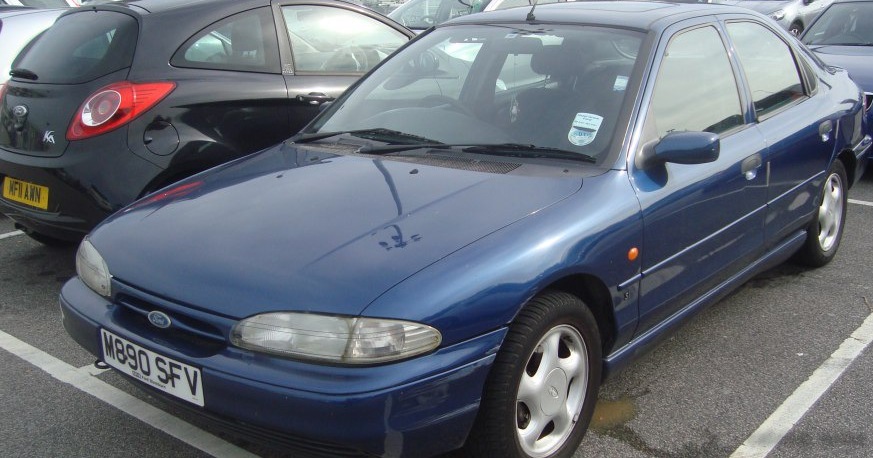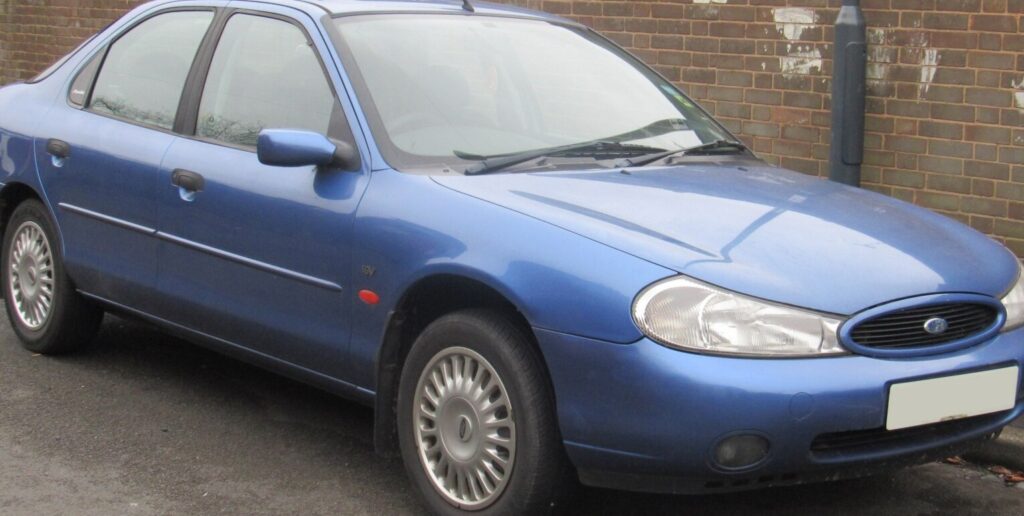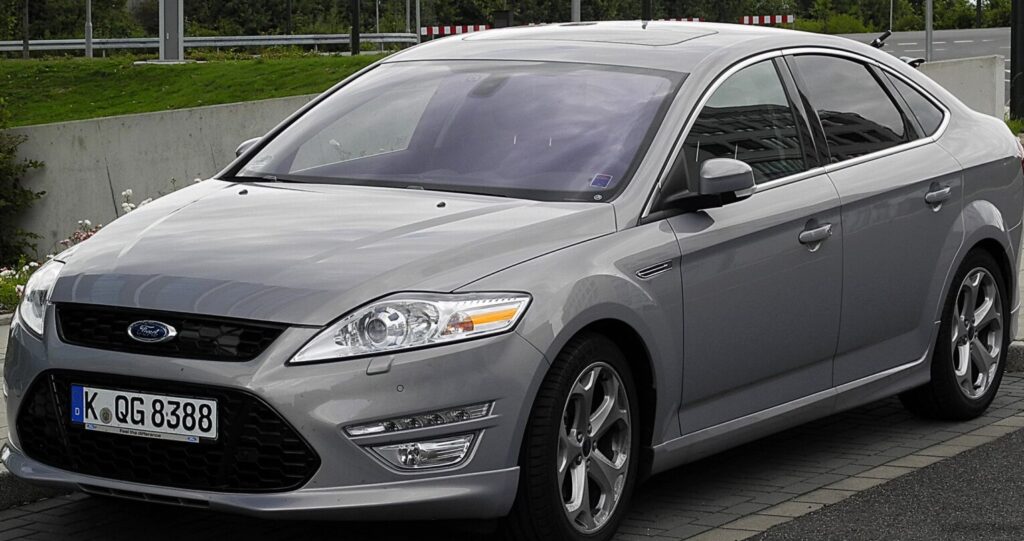
The Ford Mondeo III Hatchback, specifically the 1.6 Duratorq TDCi (115 hp) ECOnetic variant, was a key model in Ford of Europe’s lineup from February 2011 to August 2014. Introduced as part of the facelifted third-generation Mondeo (internally designated as the facelift of the 2007-2014 model), this version focused on fuel efficiency and lower emissions, appealing to a growing market segment concerned with running costs. It occupied a mid-range position within the Mondeo hatchback lineup, slotting below the more powerful 2.0-liter diesel and petrol options, and above the base 1.6-liter petrol. The ECOnetic designation signified Ford’s commitment to maximizing fuel economy through aerodynamic enhancements and optimized powertrain settings.
Technical Specifications
| Brand | Ford |
| Model | Mondeo |
| Generation | Mondeo III Hatchback (facelift 2010) |
| Type (Engine) | 1.6 Duratorq TDCi (115 Hp) ECOnetic |
| Start of production | February, 2011 |
| End of production | August, 2014 |
| Powertrain Architecture | Internal Combustion engine |
| Body type | Hatchback |
| Seats | 5 |
| Doors | 5 |
| Fuel consumption (urban) | 4.8 l/100 km (49 US mpg, 58.9 UK mpg, 20.8 km/l) |
| Fuel consumption (extra urban) | 3.8 l/100 km (61.9 US mpg, 74.3 UK mpg, 26.3 km/l) |
| Fuel consumption (combined) | 4.2 l/100 km (56 US mpg, 67.3 UK mpg, 23.8 km/l) |
| CO2 emissions | 109 g/km |
| Fuel Type | Diesel |
| Acceleration 0 – 100 km/h | 11.9 sec |
| Acceleration 0 – 62 mph | 11.9 sec |
| Acceleration 0 – 60 mph | 11.3 sec |
| Maximum speed | 190 km/h (118.06 mph) |
| Emission standard | Euro 5 |
| Weight-to-power ratio | 12.4 kg/Hp, 80.9 Hp/tonne |
| Weight-to-torque ratio | 5.3 kg/Nm, 190 Nm/tonne |
| Power | 115 Hp @ 3600 rpm |
| Power per litre | 73.7 Hp/l |
| Torque | 270 Nm @ 1750-2500 rpm (199.14 lb.-ft. @ 1750-2500 rpm) |
| Engine layout | Front, Transverse |
| Engine Model/Code | DV6 |
| Engine displacement | 1560 cm3 (95.2 cu. in.) |
| Number of cylinders | 4 |
| Engine configuration | Inline |
| Cylinder Bore | 75 mm (2.95 in.) |
| Piston Stroke | 88.3 mm (3.48 in.) |
| Compression ratio | 16:1 |
| Number of valves per cylinder | 2 |
| Fuel injection system | Diesel Commonrail |
| Engine aspiration | Turbocharger, Intercooler |
| Valvetrain | SOHC |
| Engine oil capacity | 3.8 l (4.02 US qt | 3.34 UK qt) |
| Coolant capacity | 7.3 l (7.71 US qt | 6.42 UK qt) |
| Kerb Weight | 1421 kg (3132.77 lbs.) |
| Max. weight | 2155 kg (4750.96 lbs.) |
| Max load | 734 kg (1618.19 lbs.) |
| Trunk (boot) space – minimum | 540 l (19.07 cu. ft.) |
| Trunk (boot) space – maximum | 1460 l (51.56 cu. ft.) |
| Fuel tank capacity | 70 l (18.49 US gal | 15.4 UK gal) |
| Permitted trailer load with brakes (8%) | 1800 kg (3968.32 lbs.) |
| Permitted trailer load with brakes (12%) | 1600 kg (3527.4 lbs.) |
| Permitted trailer load without brakes | 745 kg (1642.44 lbs.) |
| Length | 4784 mm (188.35 in.) |
| Width | 1886 mm (74.25 in.) |
| Width with mirrors folded | 1940 mm (76.38 in.) |
| Width including mirrors | 2092 mm (82.36 in.) |
| Height | 1500 mm (59.06 in.) |
| Minimum turning circle | 11.6 m (38.06 ft.) |
| Drivetrain Architecture | Front wheel drive |
| Drive wheel | Front wheel drive |
| Number of gears | 6 gears, manual transmission |
| Front suspension | Independent type McPherson, Transverse stabilizer |
| Rear suspension | Independent multi-link suspension, Transverse stabilizer |
| Front brakes | Ventilated discs |
| Rear brakes | Disc |
| Assisting systems | ABS (Anti-lock braking system) |
| Steering type | Steering rack and pinion |
| Power steering | Electric Steering |
| Tires size | 205/55 R16; 215/50 R17 |
| Wheel rims size | 6.5J x 16; 7J x 17 |
INTRODUCTION
The Ford Mondeo III facelift, launched in 2010, represented a significant refresh of the popular Mondeo range. The 1.6 Duratorq TDCi ECOnetic variant, introduced in February 2011, was specifically engineered to deliver exceptional fuel economy. It utilized the DV6 engine, a common diesel powerplant within the PSA Peugeot Citroën and Ford group, tuned for efficiency. This model aimed to attract buyers seeking a practical, spacious, and economical family car. The Mondeo, in general, was a crucial model for Ford in Europe, competing directly with vehicles like the Volkswagen Passat, Opel/Vauxhall Insignia, and Peugeot 508.
Powertrain & Engine Architecture
At the heart of the Mondeo 1.6 TDCi ECOnetic lies the DV6 engine, a 1.6-liter inline-four cylinder diesel. This engine utilizes a common rail direct injection system, delivering fuel directly into the combustion chamber at extremely high pressure for optimized combustion. The engine features a single overhead camshaft (SOHC) valvetrain operating two valves per cylinder. A turbocharger with an intercooler is employed to increase power output and improve torque across a wider rev range. The 1.6 Duratorq produces 115 horsepower at 3600 rpm and 270 Nm (199 lb-ft) of torque between 1750 and 2500 rpm. The ECOnetic variant was typically paired with a six-speed manual transmission, optimized for fuel efficiency with slightly longer gear ratios compared to other Mondeo trims. While an automatic transmission was available on other Mondeo models, it wasn’t offered with the 1.6 TDCi ECOnetic due to its impact on fuel consumption.
Driving Characteristics
The 1.6-liter engine, while not offering blistering performance, provided adequate power for everyday driving. Acceleration from 0 to 62 mph (0-100 km/h) took around 11.9 seconds, and the top speed was 190 km/h (118 mph). The longer gear ratios in the six-speed manual transmission prioritized fuel economy over rapid acceleration. Compared to the 2.0-liter TDCi versions, the 1.6 felt noticeably less powerful, particularly when fully loaded or tackling steep inclines. However, the engine’s strong low-end torque made it reasonably responsive in urban environments. The ECOnetic trim also featured subtle aerodynamic enhancements, such as a revised front grille and underbody panels, to reduce drag and further improve fuel efficiency. The steering was light and precise, typical of Ford’s steering feel at the time, and the suspension provided a comfortable ride, although it wasn’t as sporty as some of its rivals.
Equipment & Trim Levels
The 1.6 TDCi ECOnetic trim generally came with a respectable level of standard equipment. This typically included air conditioning, electric front windows, a basic audio system with USB connectivity, alloy wheels, and ABS brakes. Higher trim levels, such as Zetec and Titanium, offered additional features like dual-zone climate control, rear parking sensors, cruise control, and upgraded interior upholstery. Interior materials were generally durable and functional, reflecting the car’s focus on practicality. The dashboard layout was straightforward and easy to use, with logically placed controls. Optional extras included a panoramic sunroof, leather seats, and a more advanced navigation system.
Chassis & Braking
The Mondeo III Hatchback utilized an independent front suspension with McPherson struts and a transverse stabilizer bar. The rear suspension employed an independent multi-link setup, also with a transverse stabilizer bar. This configuration provided a good balance between ride comfort and handling. The ECOnetic variant typically featured ventilated front disc brakes and solid rear discs. ABS (Anti-lock Braking System) was standard. The suspension tuning was geared towards comfort rather than outright sportiness, prioritizing a smooth ride over aggressive cornering. The weight distribution was reasonably balanced, contributing to predictable handling characteristics.
Market Reception & Comparison
The Ford Mondeo 1.6 TDCi ECOnetic was generally well-received by critics for its impressive fuel economy and low emissions. It was praised as a practical and affordable family car, particularly for those prioritizing running costs. However, some reviewers noted that the engine lacked the punch of the larger 2.0-liter diesel options. Compared to the 2.0 TDCi, the 1.6 offered significantly better fuel economy (around 56 mpg combined versus 47-50 mpg for the 2.0), but at the expense of performance. The 1.6 petrol engine offered similar power but significantly worse fuel economy. The ECOnetic trim represented a compelling value proposition for buyers seeking a fuel-efficient and well-equipped family hatchback.
Legacy
The 1.6 Duratorq TDCi engine, while generally reliable, is known to have some potential issues, including occasional problems with the diesel particulate filter (DPF) and the turbocharger. Regular servicing and the use of high-quality oil are crucial for maintaining its longevity. On the used car market, the Mondeo 1.6 TDCi ECOnetic remains a popular choice for budget-conscious buyers. Its fuel efficiency and spacious interior continue to appeal to families and commuters. However, potential buyers should be aware of the potential DPF and turbocharger issues and ensure that the vehicle has been properly maintained. The Mondeo III, in general, established Ford as a strong contender in the European mid-size car segment, and the ECOnetic variant demonstrated Ford’s commitment to developing fuel-efficient vehicles.