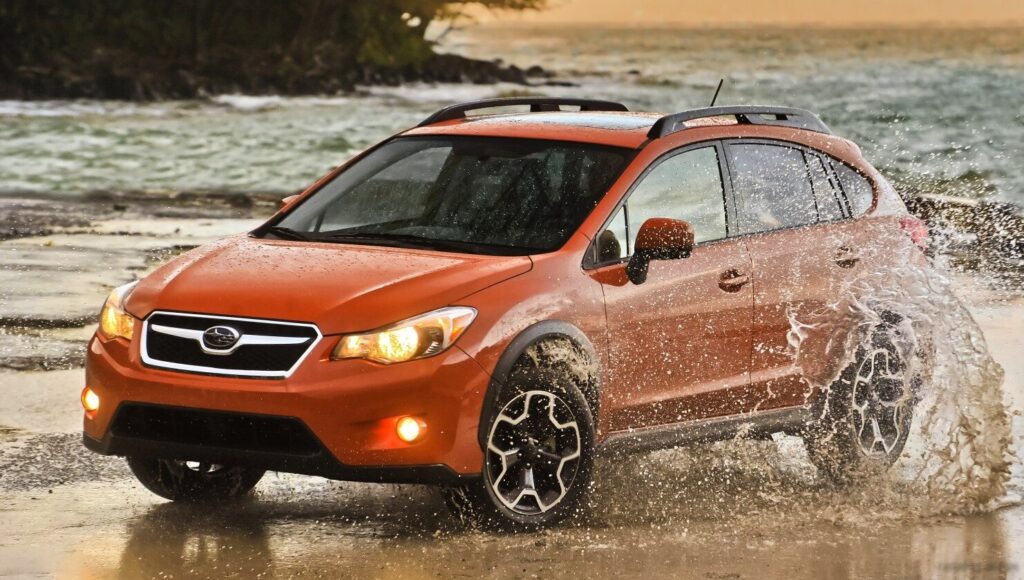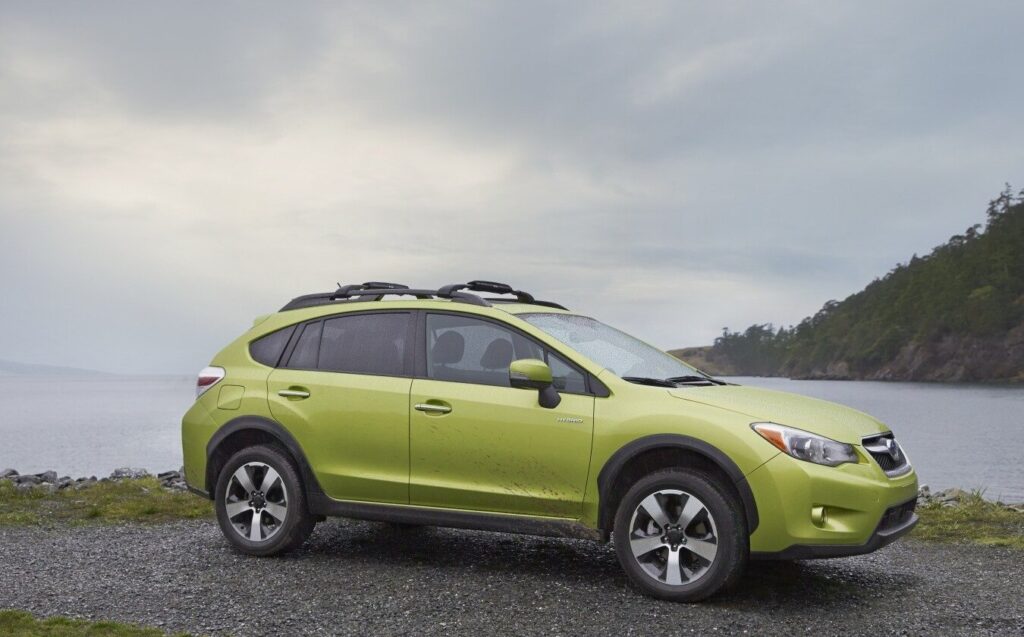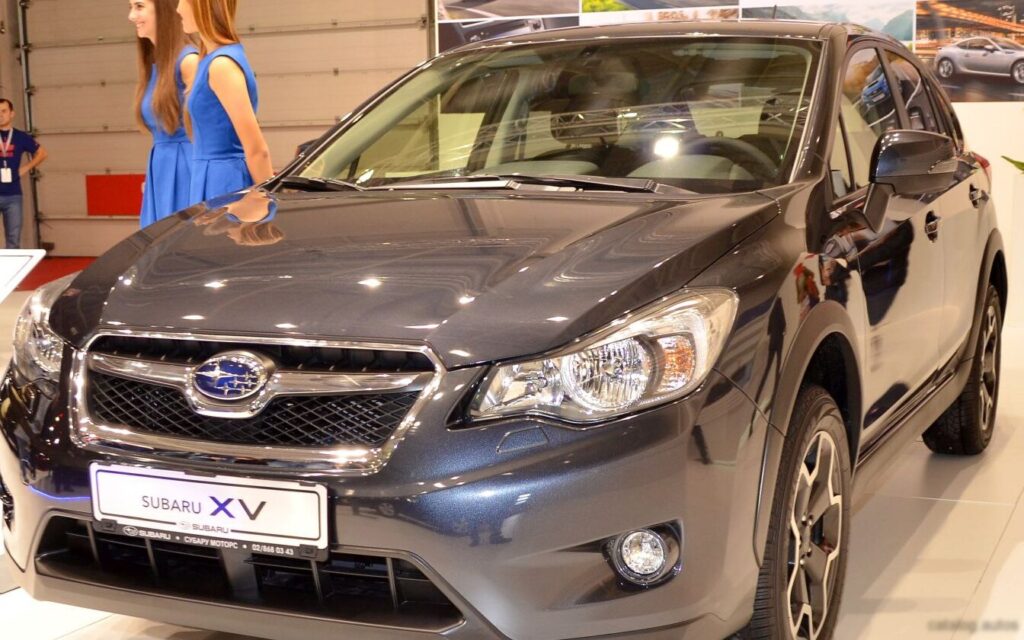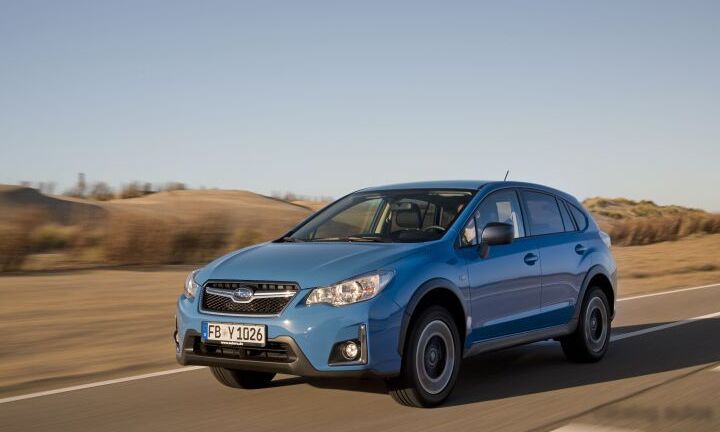
The Subaru XV (known as the Subaru Crosstrek in North America) 1.6i, produced from January 2016 to January 2018, represents a key entry point into the first generation of Subaru’s compact crossover SUV. This facelifted version of the XV, internally designated as the GP7, aimed to broaden the model’s appeal by offering a more affordable and fuel-efficient option alongside the more powerful 2.0-liter variants. Positioned as the base trim in many markets, the 1.6i catered to buyers prioritizing economy and practicality over outright performance. It was a significant model for Subaru, particularly in Europe and Asia, where smaller displacement engines were favored due to tax regulations and fuel costs.
Technical Specifications
| Brand | Subaru |
| Model | XV |
| Generation | XV I (facelift 2016) |
| Type (Engine) | 1.6i (114 Hp) |
| Start of production | January, 2016 |
| End of production | January, 2018 |
| Powertrain Architecture | Internal Combustion engine |
| Body type | SUV |
| Seats | 5 |
| Doors | 5 |
| Fuel consumption (economy) – urban | 8 l/100 km (29.4 US mpg, 35.3 UK mpg, 12.5 km/l) |
| Fuel consumption (economy) – extra urban | 5.8 l/100 km (40.6 US mpg, 48.7 UK mpg, 17.2 km/l) |
| Fuel consumption (economy) – combined | 6.5 l/100 km (36.2 US mpg, 43.5 UK mpg, 15.4 km/l) |
| CO2 emissions | 151 g/km |
| Fuel Type | Petrol (Gasoline) |
| Acceleration 0 – 100 km/h | 13.1 sec |
| Acceleration 0 – 62 mph | 13.1 sec |
| Acceleration 0 – 60 mph | 12.4 sec |
| Maximum speed | 179 km/h (111.23 mph) |
| Emission standard | Euro 6 |
| Weight-to-power ratio | 12 kg/Hp, 83.2 Hp/tonne |
| Weight-to-torque ratio | 9.1 kg/Nm, 109.5 Nm/tonne |
| Power | 114 Hp @ 5600 rpm |
| Power per litre | 71.3 Hp/l |
| Torque | 150 Nm @ 4000 rpm (110.63 lb.-ft. @ 4000 rpm) |
| Engine layout | Front, Longitudinal |
| Engine Model/Code | FB16 |
| Engine displacement | 1600 cm3 (97.64 cu. in.) |
| Number of cylinders | 4 |
| Engine configuration | Boxer |
| Cylinder Bore | 78.8 mm (3.1 in.) |
| Piston Stroke | 82 mm (3.23 in.) |
| Compression ratio | 10.5:1 |
| Number of valves per cylinder | 4 |
| Fuel injection system | Multi-port manifold injection |
| Engine aspiration | Naturally aspirated engine |
| Engine oil capacity | 4.8 l (5.07 US qt | 4.22 UK qt) |
| Coolant | 8.1 l (8.56 US qt | 7.13 UK qt) |
| Kerb Weight | 1370 kg (3020.33 lbs.) |
| Max. weight | 1940 kg (4276.97 lbs.) |
| Max load | 570 kg (1256.63 lbs.) |
| Trunk (boot) space – minimum | 380 l (13.42 cu. ft.) |
| Trunk (boot) space – maximum | 1270 l (44.85 cu. ft.) |
| Fuel tank capacity | 60 l (15.85 US gal | 13.2 UK gal) |
| Max. roof load | 80 kg (176.37 lbs.) |
| Permitted trailer load with brakes (12%) | 1500 kg (3306.93 lbs.) |
| Permitted trailer load without brakes | 650 kg (1433 lbs.) |
| Length | 4450 mm (175.2 in.) |
| Width | 1780 mm (70.08 in.) |
| Height | 1570 mm (61.81 in.) |
| Wheelbase | 2635 mm (103.74 in.) |
| Front track | 1525 mm (60.04 in.) |
| Rear (Back) track | 1525 mm (60.04 in.) |
| Ride height (ground clearance) | 220 mm (8.66 in.) |
| Minimum turning circle (turning diameter) | 11.4 m (37.4 ft.) |
| Approach angle | 19.6° |
| Departure angle | 29.3° |
| Drive wheel | All wheel drive (4×4) |
| Number of gears and type of gearbox | 5 gears, manual transmission |
| Front brakes | Ventilated discs |
| Rear brakes | Ventilated discs |
| Assisting systems | ABS (Anti-lock braking system) |
| Steering type | Steering rack and pinion |
| Power steering | Electric Steering |
| Tires size | 225/55 R17 |
| Wheel rims size | 7J x 17 |
Powertrain & Engine Architecture
The heart of the XV 1.6i is the FB16 1.6-liter horizontally-opposed (Boxer) four-cylinder engine. This engine is a key component of Subaru’s engineering philosophy, known for its low center of gravity and inherent balance. The FB16 utilizes multi-point fuel injection and a single overhead camshaft (SOHC) design with four valves per cylinder. The engine produces 114 horsepower at 5600 rpm and 150 Nm (110 lb-ft) of torque at 4000 rpm. This engine was chosen for its fuel efficiency and relatively low emissions, aligning with European market demands. The engine is paired with a five-speed manual transmission as standard, although a continuously variable transmission (CVT) was offered as an option in some markets. The CVT aimed to further improve fuel economy and provide smoother acceleration, but at the expense of some driver engagement.
Driving Characteristics
The 1.6i variant of the XV offers a comfortable, but not particularly sporty, driving experience. Acceleration is modest, taking around 13.1 seconds to reach 62 mph (100 km/h). The engine feels strained when pushed hard, particularly when fully loaded or tackling steep inclines. The five-speed manual transmission provides a reasonable level of control, but the gear ratios are spaced to prioritize fuel economy over performance. Compared to the 2.0-liter models, the 1.6i feels noticeably slower and less responsive. However, the symmetrical all-wheel-drive system provides excellent traction and stability in various road conditions, a hallmark of Subaru vehicles. The suspension is tuned for comfort, absorbing bumps and imperfections well, making it a pleasant vehicle for everyday driving.
Equipment & Trim Levels
The 1.6i trim typically included standard features such as air conditioning, power windows, power mirrors, a basic audio system with USB connectivity, and alloy wheels. Safety features included ABS, electronic brakeforce distribution, and multiple airbags. Higher trim levels, often denoted with suffixes like ‘Active’ or ‘Comfort’, added features such as automatic climate control, a more advanced infotainment system with touchscreen display, rear parking sensors, and cruise control. Interior upholstery was typically cloth, with options for upgraded materials in higher trims. The dashboard layout was functional and straightforward, prioritizing usability over aesthetic flair.
Chassis & Braking
The XV 1.6i utilizes a MacPherson strut front suspension and a double-wishbone rear suspension, providing a good balance of ride comfort and handling. The braking system consists of ventilated discs on all four wheels, offering adequate stopping power for the vehicle’s weight and performance. The electric power steering provides light and precise steering feel. The vehicle’s relatively high ground clearance of 220mm (8.66 inches) contributes to its off-road capability, allowing it to navigate rough terrain and snow-covered roads with ease.
Market Reception & Comparison
The Subaru XV 1.6i was generally well-received as an affordable and practical crossover SUV. Critics praised its fuel efficiency, spacious interior, and standard all-wheel-drive system. However, the engine’s lack of power was a common criticism, particularly when compared to competitors offering more potent engines. Compared to the 2.0-liter XV variants, the 1.6i offered significantly better fuel economy but at the cost of performance. The 2.0-liter models were favored by drivers seeking a more engaging driving experience. In terms of reliability, the FB16 engine proved to be generally dependable, with few major issues reported.
Legacy
The Subaru XV 1.6i remains a relatively common sight on used car markets, particularly in Europe and Asia. Its reputation for reliability and fuel efficiency makes it an attractive option for budget-conscious buyers. While the engine may not be particularly powerful, it is known for its durability and low running costs. The XV’s symmetrical all-wheel-drive system continues to be a major selling point, providing confidence and stability in all weather conditions. The first-generation XV, including the 1.6i variant, laid the foundation for Subaru’s successful expansion into the compact crossover SUV segment, paving the way for subsequent generations of the Crosstrek/XV.