
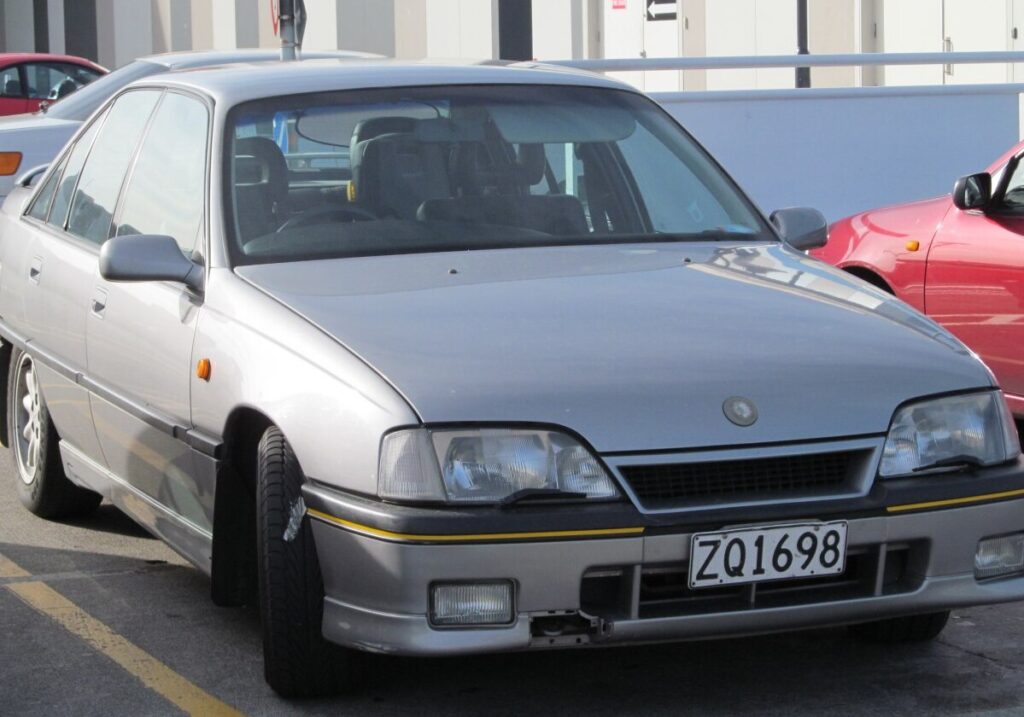
The Opel Omega A 3.0 3000 CAT, produced between 1987 and 1989, represented a significant step forward for Opel’s flagship sedan. Positioned as a premium offering within the Omega A range, this variant featured a 3.0-liter inline-six engine with catalytic conversion, delivering 156 horsepower. It was designed to compete with established executive cars in the European market, offering a blend of comfort, performance, and relatively advanced technology for its time. The Omega A, internally designated as the 1HX0, aimed to replace the aging Opel Commodore and Rekord models, providing a more modern and sophisticated alternative.
Technical Specifications
| Brand | Opel |
| Model | Omega |
| Generation | Omega A |
| Type (Engine) | 3.0 3000 CAT (156 Hp) |
| Start of production | 1987 |
| End of production | 1989 |
| Powertrain Architecture | Internal Combustion engine |
| Body type | Sedan |
| Seats | 5 |
| Doors | 4 |
| Fuel Type | Petrol (Gasoline) |
| Acceleration 0 – 100 km/h | 9.8 sec |
| Acceleration 0 – 62 mph | 9.8 sec |
| Acceleration 0 – 60 mph | 9.3 sec |
| Maximum speed | 217 km/h (134.84 mph) |
| Weight-to-power ratio | 8.9 kg/Hp, 112.2 Hp/tonne |
| Weight-to-torque ratio | 6 kg/Nm, 165.5 Nm/tonne |
| Power | 156 Hp @ 5400 rpm |
| Power per litre | 52.5 Hp/l |
| Torque | 230 Nm @ 3800-4400 rpm (169.64 lb.-ft. @ 3800-4400 rpm) |
| Maximum engine speed | 6400 rpm |
| Engine Model/Code | C30LE |
| Engine displacement | 2969 cm3 (181.18 cu. in.) |
| Number of cylinders | 6 |
| Engine configuration | Inline |
| Cylinder Bore | 95 mm (3.74 in.) |
| Piston Stroke | 69.8 mm (2.75 in.) |
| Compression ratio | 8.6:1 |
| Number of valves per cylinder | 2 |
| Fuel injection system | Multi-port manifold injection |
| Engine aspiration | Naturally aspirated engine |
| Valvetrain | SOHC |
| Engine oil capacity | 5.5 l (5.81 US qt | 4.84 UK qt) |
| Coolant | 10.2 l (10.78 US qt | 8.97 UK qt) |
| Kerb Weight | 1390 kg (3064.43 lbs.) |
| Max. weight | 1880 kg (4144.69 lbs.) |
| Max load | 490 kg (1080.27 lbs.) |
| Trunk (boot) space – minimum | 520 l (18.36 cu. ft.) |
| Trunk (boot) space – maximum | 870 l (30.72 cu. ft.) |
| Fuel tank capacity | 75 l (19.81 US gal | 16.5 UK gal) |
| Permitted trailer load with brakes (12%) | 1100 kg (2425.08 lbs.) |
| Permitted trailer load without brakes | 720 kg (1587.33 lbs.) |
| Length | 4740 mm (186.61 in.) |
| Width | 1760 mm (69.29 in.) |
| Height | 1445 mm (56.89 in.) |
| Wheelbase | 2730 mm (107.48 in.) |
| Front track | 1445 mm (56.89 in.) |
| Rear (Back) track | 1460 mm (57.48 in.) |
| Minimum turning circle | 10.8 m (35.43 ft.) |
| Drivetrain Architecture | Rear wheel drive |
| Number of gears and type of gearbox | 5 gears, manual transmission |
| Front brakes | Ventilated discs |
| Rear brakes | Disc |
| Tires size | 195/65 R15 |
| Wheel rims size | 15 |
Powertrain & Engine Architecture
The heart of the Omega A 3.0 CAT was the C30LE engine, a 2.969-liter inline-six cylinder powerplant. This engine utilized a single overhead camshaft (SOHC) valvetrain operating two valves per cylinder. Fuel delivery was managed by a multi-port fuel injection system, a relatively sophisticated setup for the late 1980s, contributing to improved fuel efficiency and smoother power delivery. The catalytic converter, denoted by the “CAT” in the model name, was a crucial addition for meeting increasingly stringent emissions regulations in Europe. The engine produced 156 horsepower at 5400 rpm and 230 Nm (169.64 lb-ft) of torque between 3800 and 4400 rpm. The engine’s design prioritized smooth operation and refinement over outright performance, aligning with the Omega A’s positioning as a comfortable and capable grand tourer. The standard transmission was a five-speed manual, although a four-speed automatic transmission was also available, albeit less common.
Driving Characteristics
The 3.0-liter Omega A offered a composed and refined driving experience. With the five-speed manual transmission, acceleration to 60 mph took approximately 9.3 seconds, and it could reach a top speed of 134.84 mph. The inline-six engine provided a broad torque curve, making it flexible in various driving situations. While not a sports car, the Omega A 3.0 offered sufficient power for confident overtaking and highway cruising. The automatic transmission, while providing convenience, did slightly diminish acceleration times and responsiveness compared to the manual version. The rear-wheel-drive configuration contributed to balanced handling, although it lacked the all-weather capability of more modern traction control systems. The suspension was tuned for comfort, absorbing bumps and providing a stable ride, even at higher speeds.
Equipment & Trim Levels
The Omega A 3.0 CAT typically came well-equipped for its era. Standard features included central locking, electric windows, power steering, and a basic stereo system. Interior upholstery was typically cloth, although leather options were available. Higher trim levels offered features such as air conditioning, a sunroof, and upgraded sound systems. The dashboard layout was functional and straightforward, with clear instrumentation. Optional extras included alloy wheels, a trip computer, and a more advanced audio system. The overall interior ambiance was one of understated elegance, reflecting the Omega A’s positioning as a premium vehicle.
Chassis & Braking
The Omega A featured a conventional rear-wheel-drive chassis with independent suspension at the front and a rigid axle suspension at the rear. The front suspension utilized MacPherson struts, while the rear employed a multi-link setup. Braking was accomplished via ventilated discs at the front and solid discs at the rear. The braking system provided adequate stopping power for the vehicle’s weight and performance. Stabilizer bars were fitted to both the front and rear axles to reduce body roll during cornering. The chassis was designed to prioritize ride comfort and stability over sporty handling, reflecting the Omega A’s intended role as a comfortable and refined cruiser.
Market Reception & Comparison
The Opel Omega A 3.0 CAT was generally well-received by automotive critics. It was praised for its comfortable ride, spacious interior, and refined engine. However, some critics noted that its styling was somewhat conservative compared to its rivals. Compared to other trims in the Omega A lineup, the 3.0 CAT offered a significant performance upgrade over the smaller-engined models, such as the 1.8 and 2.0-liter versions. It also provided a more luxurious and refined experience than the base models. Fuel economy was reasonable for a vehicle of its size and engine displacement, although it was not a class leader. Reliability was generally good, although maintenance costs could be higher due to the complexity of the inline-six engine.
Legacy
The Opel Omega A 3.0 CAT remains a sought-after classic car among enthusiasts. The C30LE engine is known for its durability and smooth operation, although regular maintenance is essential to keep it in good condition. Parts availability can be a challenge, but a dedicated network of Opel enthusiasts and specialists exists to support owners. Today, well-maintained examples of the Omega A 3.0 CAT are appreciating in value, as collectors recognize their significance as a representative of 1980s German engineering and design. The Omega A, and particularly the 3.0 CAT variant, represents a high point in Opel’s history, offering a compelling blend of comfort, performance, and refinement.
