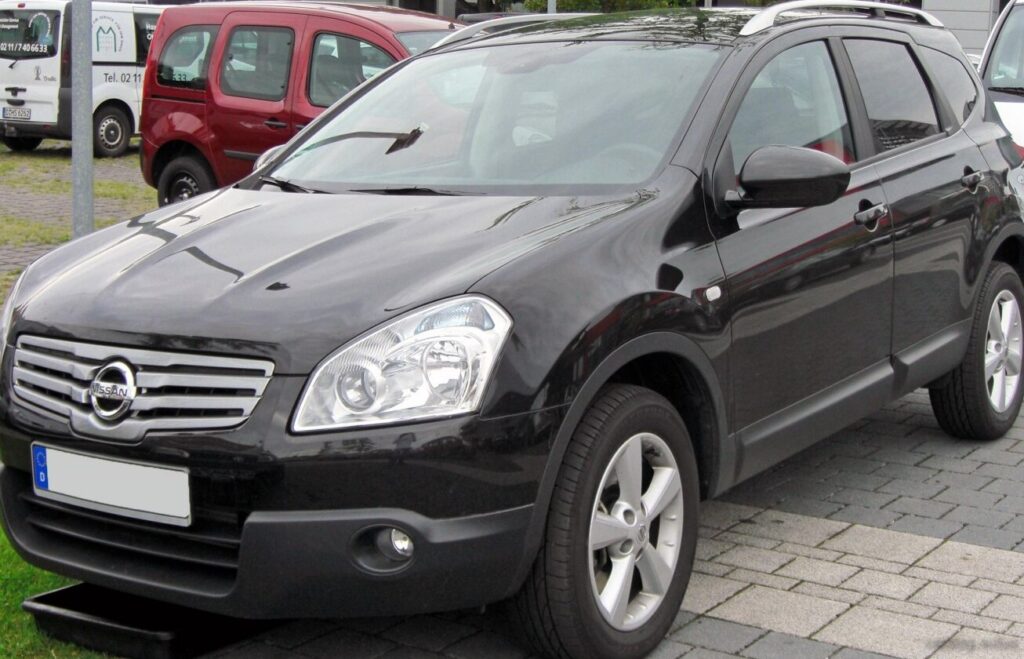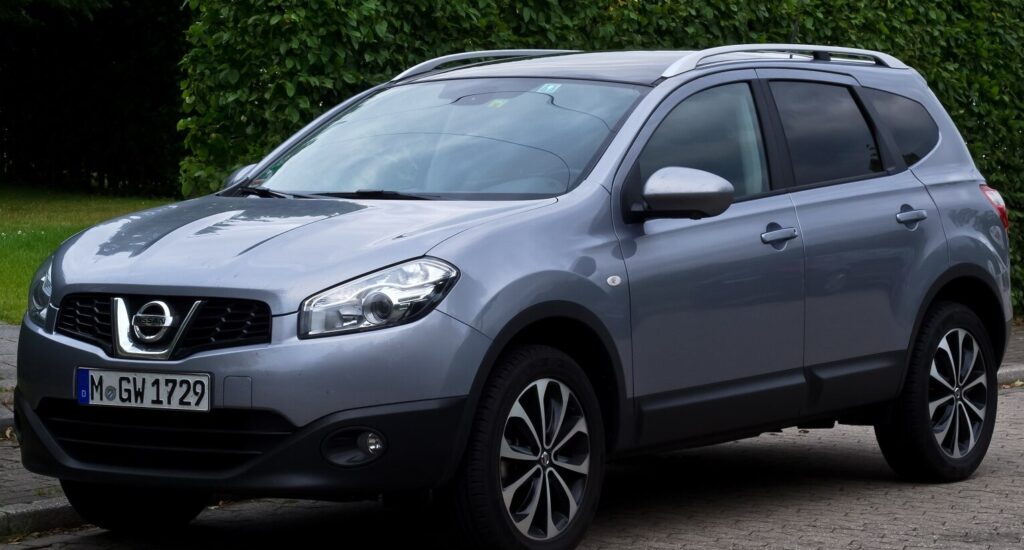
The Nissan Qashqai+2, specifically the first generation (NJ10) facelift model produced from 2010 to 2013, represented Nissan’s entry into the compact crossover segment with optional seven-passenger seating. The 2.0-liter (141 hp) 4×4 variant occupied a mid-range position within the Qashqai+2 lineup, offering all-wheel drive capability and a larger engine option for buyers seeking enhanced performance and practicality. This model was primarily marketed in Europe, where the demand for compact, versatile family vehicles was high. It aimed to bridge the gap between traditional hatchbacks and larger SUVs, providing a more spacious and capable alternative.
Technical Specifications
| Brand | Nissan |
| Model | Qashqai |
| Generation | Qashqai+2 I (NJ10, facelift 2010) |
| Type (Engine) | 2.0 (141 Hp) 4×4 |
| Start of production | 2010 |
| End of production | 2013 |
| Powertrain Architecture | Internal Combustion engine |
| Body type | SUV, Crossover |
| Seats | 7 |
| Doors | 5 |
| Fuel consumption (urban) | 11.1 l/100 km (21.2 US mpg) |
| Fuel consumption (extra urban) | 6.9 l/100 km (34.1 US mpg) |
| Fuel consumption (combined) | 8.4 l/100 km (28 US mpg) |
| CO2 emissions | 199 g/km |
| Fuel Type | Petrol (Gasoline) |
| Acceleration 0 – 100 km/h | 10.9 sec |
| Acceleration 0 – 62 mph | 10.9 sec |
| Acceleration 0 – 60 mph | 10.4 sec |
| Maximum speed | 191 km/h (118.68 mph) |
| Emission standard | Euro 5 |
| Weight-to-power ratio | 10.8 kg/Hp |
| Weight-to-torque ratio | 7.8 kg/Nm |
| Power | 141 Hp @ 6000 rpm |
| Torque | 196 Nm @ 4800 rpm (144.56 lb.-ft. @ 4800 rpm) |
| Engine layout | Front, Transverse |
| Engine Model/Code | MR20DE |
| Engine displacement | 1997 cm3 (121.86 cu. in.) |
| Number of cylinders | 4 |
| Engine configuration | Inline |
| Cylinder Bore | 84 mm (3.31 in.) |
| Piston Stroke | 90.1 mm (3.55 in.) |
| Compression ratio | 10.2:1 |
| Number of valves per cylinder | 4 |
| Fuel injection system | Multi-port manifold injection |
| Engine aspiration | Naturally aspirated engine |
| Engine oil capacity | 4.4 l (4.65 US qt | 3.87 UK qt) |
| Coolant capacity | 7 l (7.4 US qt | 6.16 UK qt) |
| Kerb Weight | 1529 kg (3370.87 lbs.) |
| Max. weight | 2189 kg (4825.92 lbs.) |
| Max load | 660 kg (1455.05 lbs.) |
| Trunk (boot) space – minimum | 130 l (4.59 cu. ft.) |
| Trunk (boot) space – maximum | 1520 l (53.68 cu. ft.) |
| Fuel tank capacity | 65 l (17.17 US gal | 14.3 UK gal) |
| Permitted trailer load with brakes (12%) | 1400 kg (3086.47 lbs.) |
| Permitted trailer load without brakes | 740 kg (1631.42 lbs.) |
| Permitted towbar download | 75 kg (165.35 lbs.) |
| Length | 4541 mm (178.78 in.) |
| Width | 1780 mm (70.08 in.) |
| Height | 1645 mm (64.76 in.) |
| Wheelbase | 2765 mm (108.86 in.) |
| Front track | 1540 mm (60.63 in.) |
| Rear track | 1550 mm (61.02 in.) |
| Minimum turning circle | 11 m (36.09 ft.) |
| Drive wheel | All wheel drive (4×4) |
| Number of gears | 6 |
| Gearbox type | Manual transmission |
| Front suspension | Independent, type McPherson with coil spring and anti-roll bar |
| Rear suspension | Independent multi-link spring suspension with stabilizer |
| Front brakes | Ventilated discs |
| Rear brakes | Ventilated discs |
| Assisting systems | ABS (Anti-lock braking system) |
| Steering type | Steering rack and pinion |
| Power steering | Electric Steering |
| Tires size | 215/55 R18 |
| Wheel rims size | 6.5J x 18 |
Powertrain & Engine Architecture
The heart of the Qashqai+2 2.0 4×4 is the MR20DE engine, a 1.997-liter inline-four cylinder gasoline engine. This engine utilizes multi-point fuel injection and a dual overhead camshaft (DOHC) valvetrain with four valves per cylinder. The MR20DE is known for its relatively simple design and robust construction. It’s a naturally aspirated engine, meaning it doesn’t employ turbocharging or supercharging. The 4×4 system is an electronically controlled all-wheel drive system, typically operating in front-wheel drive mode under normal conditions and engaging the rear wheels when slip is detected. The transmission is a six-speed manual gearbox, providing a balance between fuel efficiency and driver control. The engine’s output of 141 horsepower at 6000 rpm and 196 Nm (144.56 lb-ft) of torque at 4800 rpm provided adequate performance for everyday driving and light off-road conditions.
Driving Characteristics
The 2.0-liter engine and manual transmission combination in the Qashqai+2 4×4 offered a noticeable step up in performance compared to the lower-displacement engine options. While not a particularly sporty vehicle, it provided sufficient power for overtaking and maintaining comfortable cruising speeds on highways. The six-speed gearbox allowed for efficient engine operation at higher speeds, contributing to improved fuel economy during long journeys. The all-wheel drive system enhanced traction in slippery conditions, making it a more confident choice for drivers in regions with inclement weather. Compared to the 1.6L engine, the 2.0L offered a more relaxed driving experience, requiring less frequent gear changes. However, it wasn’t as nimble or fuel-efficient as the front-wheel drive variants.
Equipment & Trim Levels
The Qashqai+2 2.0 4×4 typically came equipped with a reasonable level of standard features. These included air conditioning, electric windows and mirrors, a CD player with auxiliary input, and ABS brakes. Higher trim levels added features such as alloy wheels, a panoramic sunroof, automatic climate control, and a more sophisticated audio system. The interior upholstery was generally cloth, with leather options available on higher-spec models. The seven-seat configuration offered flexibility for families, although the third-row seats were best suited for children or shorter adults. Optional extras included navigation systems, parking sensors, and a rear-view camera.
Chassis & Braking
The Qashqai+2 utilized an independent suspension system on both the front and rear axles. The front suspension employed McPherson struts with a coil spring and anti-roll bar, while the rear featured a multi-link setup with a stabilizer bar. This suspension configuration provided a comfortable ride quality and decent handling characteristics. The braking system consisted of ventilated discs on all four wheels, providing adequate stopping power. The ABS (Anti-lock Braking System) was standard, enhancing safety during emergency braking situations. The steering was a rack and pinion system with electric power assistance, offering a light and responsive feel.
Market Reception & Comparison
The Nissan Qashqai+2 2.0 4×4 was generally well-received by critics as a practical and versatile family vehicle. It was praised for its spacious interior, comfortable ride, and all-wheel drive capability. However, some reviewers noted that the 2.0-liter engine could feel somewhat underpowered when fully loaded with passengers and luggage. Compared to other compact crossovers, such as the Volkswagen Tiguan or the Ford Kuga, the Qashqai+2 offered a competitive price point and a unique seven-seat option. Fuel economy was average for its class, and reliability was generally considered to be good, although some owners reported minor issues with the electronic systems.
Legacy
The Nissan Qashqai+2 2.0 4×4 has proven to be a relatively reliable vehicle in the used car market. The MR20DE engine is known for its durability, and the all-wheel drive system has generally held up well over time. However, as with any used vehicle, potential buyers should be aware of potential maintenance issues, such as worn suspension components and aging electronic systems. The Qashqai+2 remains a popular choice for families seeking a practical and affordable crossover with seven-seat capability. Its blend of versatility, comfort, and reliability has ensured its continued presence on roads throughout Europe.