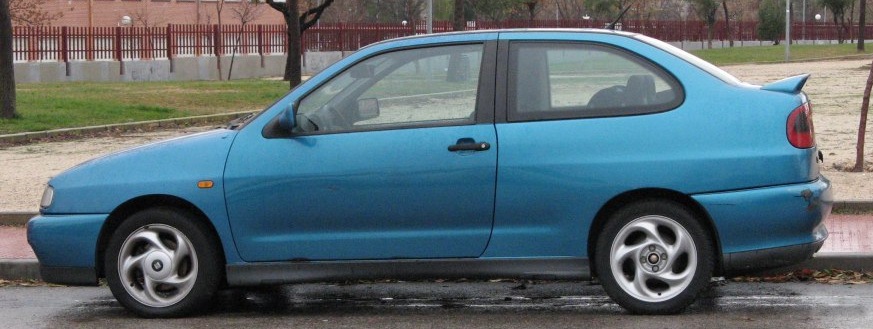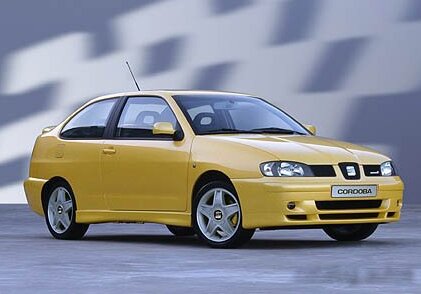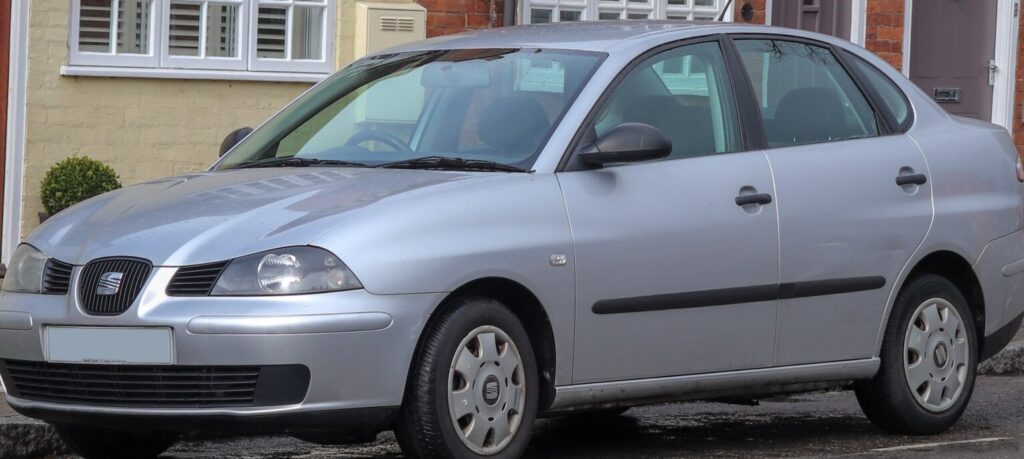
The SEAT Córdoba II 1.9 TDI (130 hp) was a performance-oriented variant of the second-generation SEAT Córdoba, produced between September 2002 and November 2008. Positioned as a sporty alternative within the Córdoba lineup, it offered a significant power upgrade over the base models, appealing to drivers seeking a blend of efficiency and spirited driving. The Córdoba II itself was based on the Volkswagen Group’s A4 platform (1HX0/A3), shared with models like the Volkswagen Golf Mk4, Audi A3, and Škoda Octavia, making it a common sight on European roads.
Technical Specifications
| Brand | Seat |
| Model | Cordoba |
| Generation | Cordoba II |
| Type (Engine) | 1.9 TDI (130 Hp) |
| Start of production | September, 2002 |
| End of production | November, 2008 |
| Powertrain Architecture | Internal Combustion engine |
| Body type | Sedan |
| Seats | 5 |
| Doors | 4 |
| Fuel consumption (urban) | 6.7 l/100 km (35.1 US mpg, 42.2 UK mpg, 14.9 km/l) |
| Fuel consumption (extra urban) | 4.2 l/100 km (56 US mpg, 67.3 UK mpg, 23.8 km/l) |
| Fuel consumption (combined) | 5.1 l/100 km (46.1 US mpg, 55.4 UK mpg, 19.6 km/l) |
| Fuel Type | Diesel |
| Acceleration 0 – 100 km/h | 9.7 sec |
| Acceleration 0 – 62 mph | 9.7 sec |
| Acceleration 0 – 60 mph | 9.2 sec |
| Maximum speed | 209 km/h (129.87 mph) |
| Weight-to-power ratio | 9.5 kg/Hp, 105 Hp/tonne |
| Weight-to-torque ratio | 4 kg/Nm, 250.4 Nm/tonne |
| Power | 130 Hp @ 4000 rpm |
| Power per litre | 68.6 Hp/l |
| Torque | 310 Nm @ 1900 rpm (228.64 lb.-ft. @ 1900 rpm) |
| Engine layout | Front, Transverse |
| Engine Model/Code | ASZ, BLT |
| Engine displacement | 1896 cm3 (115.7 cu. in.) |
| Number of cylinders | 4 |
| Engine configuration | Inline |
| Cylinder Bore | 79.5 mm (3.13 in.) |
| Piston Stroke | 95.5 mm (3.76 in.) |
| Compression ratio | 19:1 |
| Number of valves per cylinder | 2 |
| Fuel injection system | Pump-nozzle (Unit Injector) |
| Engine aspiration | Turbocharger, Intercooler |
| Valvetrain | OHC |
| Engine oil capacity | 4.3 l (4.54 US qt | 3.78 UK qt) |
| Coolant | 5 l (5.28 US qt | 4.4 UK qt) |
| Kerb Weight | 1238 kg (2729.32 lbs.) |
| Max. weight | 1733 kg (3820.61 lbs.) |
| Max load | 495 kg (1091.29 lbs.) |
| Trunk (boot) space – minimum | 485 l (17.13 cu. ft.) |
| Fuel tank capacity | 45 l (11.89 US gal | 9.9 UK gal) |
| Length | 4280 mm (168.5 in.) |
| Width | 1698 mm (66.85 in.) |
| Height | 1441 mm (56.73 in.) |
| Wheelbase | 2460 mm (96.85 in.) |
| Front track | 1419 mm (55.87 in.) |
| Rear (Back) track | 1408 mm (55.43 in.) |
| Drivetrain Architecture | The Internal combustion engine (ICE) drives the front wheels of the vehicle. |
| Drive wheel | Front wheel drive |
| Number of gears and type of gearbox | 6 gears, manual transmission |
| Front suspension | Coil spring |
| Rear suspension | Coil spring |
| Front brakes | Ventilated discs |
| Rear brakes | Disc |
| Assisting systems | ABS (Anti-lock braking system) |
| Steering type | Steering rack and pinion |
| Power steering | Hydraulic Steering |
| Tires size | 195/55 R15 |
Powertrain & Engine Architecture
The heart of the Córdoba II 1.9 TDI (130 hp) was the 1.9-liter, four-cylinder diesel engine, specifically the ASZ or BLT engine code depending on the production year and market. This engine was a member of the Volkswagen Group’s well-regarded TDI family, known for its durability and fuel efficiency. It featured a cast iron block and aluminum cylinder head, employing a single overhead camshaft (OHC) design with two valves per cylinder. The engine utilized a pump-nozzle (unit injector) fuel injection system, a technology that allowed for precise fuel delivery and contributed to the engine’s strong torque output. A turbocharger with an intercooler was standard, boosting power and improving throttle response. The 130 hp version represented a significant upgrade over the lower-powered TDI options available in the Córdoba range.
Driving Characteristics
The 1.9 TDI (130 hp) offered a noticeably more engaging driving experience than the lower-powered Córdoba variants. The 310 Nm (228.64 lb-ft) of torque, available from just 1900 rpm, provided strong acceleration in everyday driving situations. While not a sports car, the 0-60 mph time of around 9.2 seconds was respectable for a diesel-powered sedan of its era. The six-speed manual transmission allowed drivers to keep the engine in its optimal power band, maximizing performance and fuel economy. Compared to the 1.4-liter or 1.6-liter gasoline engines, the TDI offered superior torque and fuel efficiency, albeit with slightly more engine noise and vibration. The handling was typical for a front-wheel-drive sedan, with predictable behavior and adequate grip.
Equipment & Trim Levels
The 1.9 TDI (130 hp) typically came with a reasonably well-equipped specification, often positioned as a mid-range or upper-mid-range trim level. Standard features generally included power windows, central locking, air conditioning, and an upgraded audio system. Interior upholstery was usually cloth, with options for partial leather trim. Alloy wheels were often standard or available as an option. Depending on the market, additional features like automatic climate control, a sunroof, and parking sensors could be specified. The dashboard layout was functional and straightforward, typical of Volkswagen Group designs of the period.
Chassis & Braking
The Córdoba II’s chassis featured a MacPherson strut front suspension and a twist-beam rear suspension. The 1.9 TDI models often benefited from slightly stiffer suspension components compared to the base models, improving handling and stability. Braking systems consisted of ventilated discs on the front wheels and discs on the rear, providing adequate stopping power. Anti-lock Braking System (ABS) was standard, enhancing safety. The weight distribution was reasonably balanced, contributing to neutral handling characteristics.
Market Reception & Comparison
The SEAT Córdoba II 1.9 TDI (130 hp) was generally well-received by automotive critics. It was praised for its strong performance, fuel efficiency, and overall value. Compared to its siblings, such as the Volkswagen Golf TDI, the Córdoba offered a similar powertrain but at a more affordable price point. The Škoda Octavia TDI provided a larger interior and more practical cargo space, while the base Córdoba models offered lower running costs but lacked the performance of the 1.9 TDI. Fuel economy was a major selling point, with combined figures around 5.1 l/100 km (46.1 US mpg) making it an attractive option for drivers covering long distances.
Legacy
The 1.9 TDI engine, in its various iterations, has proven to be remarkably durable and reliable. The ASZ and BLT codes are known for their longevity, provided they are properly maintained. Today, the Córdoba II 1.9 TDI (130 hp) can be found on the used car market at relatively affordable prices. While age and mileage are factors to consider, these cars can still offer a practical and economical mode of transportation. Common issues include wear and tear on suspension components, turbocharger failure (if not properly maintained), and potential problems with the fuel injection pump. However, the engine itself is generally considered robust and capable of high mileage.