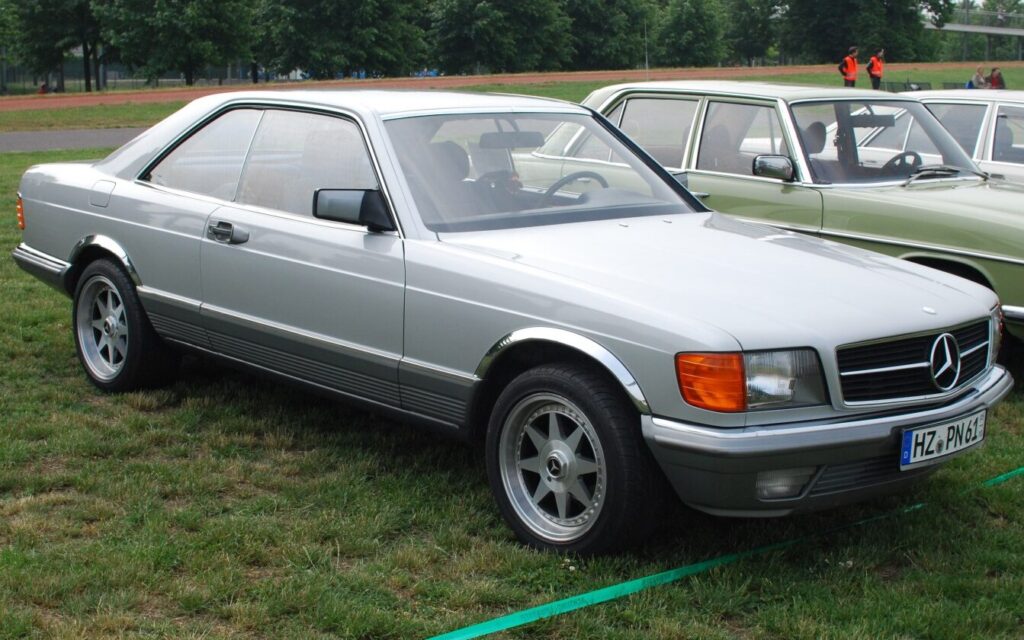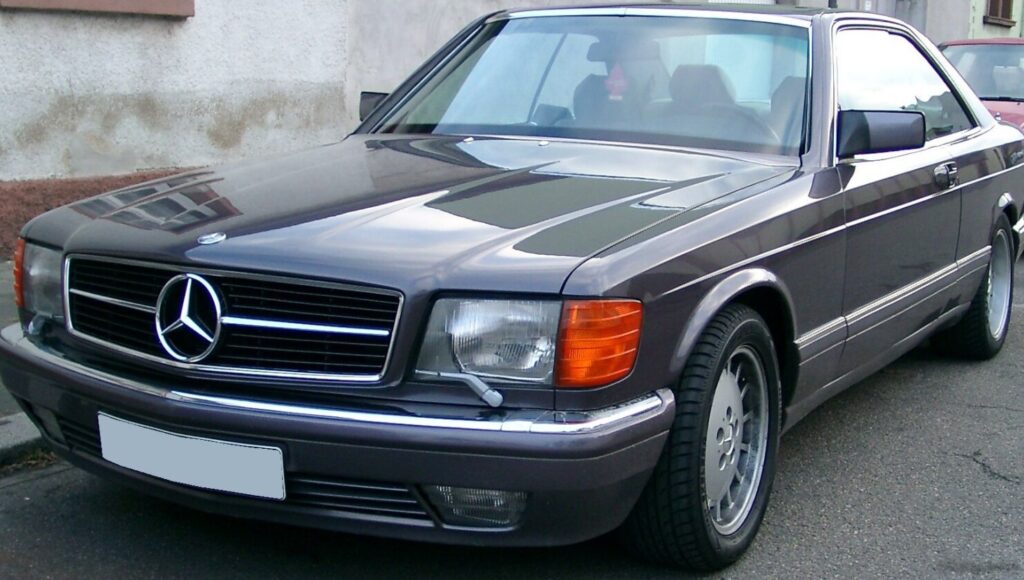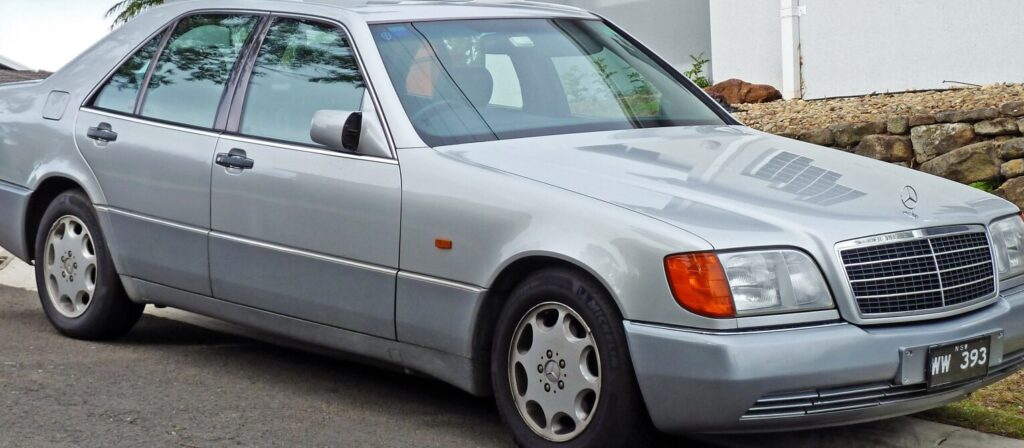
The Mercedes-Benz S-Class (W140) 400 SE, produced between 1991 and 1993, represented a significant leap forward in luxury and technology for the German automaker. Positioned as a mid-range offering within the expansive W140 lineup – which included models like the 300 SE, 500 SE, and later the S420 and S600 – the 400 SE struck a balance between performance and refinement. It served as a popular choice for buyers seeking the prestige of the S-Class without the higher price tag of the flagship V12 models. The W140 generation, known for its robust build quality and advanced features, quickly became a benchmark for full-size luxury sedans.
Technical Specifications
| Brand | Mercedes-Benz |
| Model | S-class |
| Generation | S-class (W140) |
| Type (Engine) | 400 SE (286 Hp) Automatic |
| Start of production | 1991 year |
| End of production | 1993 year |
| Powertrain Architecture | Internal Combustion engine |
| Body type | Sedan |
| Seats | 5 |
| Doors | 4 |
| Fuel consumption (economy) – combined | 12.5 l/100 km |
| Fuel consumption (economy) – combined | 18.8 US mpg |
| Fuel consumption (economy) – combined | 22.6 UK mpg |
| Fuel consumption (economy) – combined | 8 km/l |
| Fuel Type | Petrol (Gasoline) |
| Acceleration 0 – 100 km/h | 7.6 sec |
| Acceleration 0 – 62 mph | 7.6 sec |
| Acceleration 0 – 60 mph | 7.2 sec |
| Maximum speed | 245 km/h |
| Maximum speed | 152.24 mph |
| Weight-to-power ratio | 7 kg/Hp |
| Weight-to-power ratio | 143.7 Hp/tonne |
| Weight-to-torque ratio | 4.9 kg/Nm |
| Weight-to-torque ratio | 206 Nm/tonne |
| Power | 286 Hp @ 5700 rpm |
| Power per litre | 68.2 Hp/l |
| Torque | 410 Nm @ 3900 rpm |
| Torque | 302.4 lb.-ft. @ 3900 rpm |
| Engine layout | Front, Longitudinal |
| Engine Model/Code | M 119 E 42/119.971 |
| Engine displacement | 4196 cm3 |
| Engine displacement | 256.06 cu. in. |
| Number of cylinders | 8 |
| Engine configuration | V-engine |
| Cylinder Bore | 92 mm |
| Cylinder Bore | 3.62 in. |
| Piston Stroke | 78.9 mm |
| Piston Stroke | 3.11 in. |
| Compression ratio | 10:1 |
| Number of valves per cylinder | 4 |
| Fuel injection system | Multi-port manifold injection |
| Engine aspiration | Naturally aspirated engine |
| Valvetrain | DOHC |
| Engine oil capacity | 8 l |
| Engine oil capacity | 8.45 US qt | 7.04 UK qt |
| Coolant | 16.5 l |
| Coolant | 17.44 US qt | 14.52 UK qt |
| Kerb Weight | 1990 kg |
| Kerb Weight | 4387.2 lbs. |
| Max. weight | 2510 kg |
| Max. weight | 5533.6 lbs. |
| Max load | 520 kg |
| Max load | 1146.4 lbs. |
| Trunk (boot) space – minimum | 525 l |
| Trunk (boot) space – minimum | 18.54 cu. ft. |
| Fuel tank capacity | 100 l |
| Fuel tank capacity | 26.42 US gal | 22 UK gal |
| Permitted trailer load with brakes (12%) | 1900 kg |
| Permitted trailer load with brakes (12%) | 4188.78 lbs. |
| Permitted trailer load without brakes | 750 kg |
| Permitted trailer load without brakes | 1653.47 lbs. |
| Length | 5113 mm |
| Length | 201.3 in. |
| Width | 1886 mm |
| Width | 74.25 in. |
| Height | 1495 mm |
| Height | 58.86 in. |
| Wheelbase | 3040 mm |
| Wheelbase | 119.69 in. |
| Front track | 1602 mm |
| Front track | 63.07 in. |
| Rear (Back) track | 1574 mm |
| Rear (Back) track | 61.97 in. |
| Minimum turning circle (turning diameter) | 12.18 m |
| Minimum turning circle (turning diameter) | 39.96 ft. |
| Drivetrain Architecture | The Internal combustion engine (ICE) drives the rear wheels of the vehicle. |
| Drive wheel | Rear wheel drive |
| Number of gears and type of gearbox | 5 gears, automatic transmission |
| Front suspension | Double wishbone |
| Rear suspension | Independent multi-link spring suspension with stabilizer |
| Front brakes | Ventilated discs |
| Rear brakes | Ventilated discs |
| Assisting systems | ABS (Anti-lock braking system) |
| Steering type | Worm-reduction unit |
| Power steering | Hydraulic Steering |
| Tires size | 235/60 R16 |
| Wheel rims size | 7.5J x 16 |
Powertrain & Engine Architecture
The heart of the 400 SE was the M119 E 42 engine, a 4.2-liter naturally aspirated V8. This engine, a cornerstone of Mercedes-Benz’s engineering prowess, featured a cast-iron block and aluminum cylinder heads. It employed multi-port fuel injection and a double overhead camshaft (DOHC) valvetrain, contributing to its smooth power delivery and relatively high specific output. The engine produced 286 horsepower at 5700 rpm and 410 Nm (302.4 lb-ft) of torque at 3900 rpm. The engine’s design prioritized refinement and durability over outright performance, a characteristic typical of Mercedes-Benz at the time. Paired with the M119 was a five-speed automatic transmission, designed for smooth and effortless shifting. This transmission was electronically controlled, offering adaptive shift patterns based on driving conditions.
Driving Characteristics
The 400 SE offered a driving experience focused on comfort and effortless cruising. The automatic transmission, while not particularly sporty, provided smooth gear changes and contributed to the car’s relaxed demeanor. Acceleration to 60 mph took approximately 7.2-7.6 seconds, respectable for a large luxury sedan of the era. The V8 engine delivered ample torque throughout the rev range, making overtaking maneuvers easy and confident. Compared to the 300 SE (with its inline-six engine), the 400 SE offered significantly more power and a smoother, more refined driving experience. However, it lacked the outright performance of the 500 SE and later V12 models. The steering was light and precise, though lacking the feedback preferred by some driving enthusiasts.
Equipment & Trim Levels
The 400 SE came standard with a comprehensive list of luxury features, befitting its status as a flagship sedan. These included leather upholstery, power-adjustable front seats with memory function, automatic climate control, a premium sound system, and power windows and locks. Wood trim adorned the interior, adding to the sense of opulence. Optional extras included a sunroof, heated seats, a rear seat entertainment system, and upgraded leather options. The exterior featured alloy wheels, body-colored bumpers, and chrome accents. The overall interior design was characterized by its understated elegance and high-quality materials.
Chassis & Braking
The W140 S-Class featured a robust chassis with double wishbone suspension at the front and an independent multi-link suspension with a stabilizer bar at the rear. This suspension setup provided a comfortable ride while maintaining good handling characteristics. The 400 SE was equipped with ventilated disc brakes on all four wheels, providing ample stopping power. An Anti-lock Braking System (ABS) was standard, enhancing safety and stability during hard braking. The steering utilized a worm-reduction unit with hydraulic power assistance, offering light and precise steering feel.
Market Reception & Comparison
The 400 SE was generally well-received by automotive critics, who praised its luxurious interior, smooth ride, and powerful engine. It was seen as a compelling alternative to rivals such as the BMW 740i and the Jaguar XJ12. Fuel economy, however, was a common criticism, with the 4.2-liter V8 consuming a significant amount of fuel. Compared to the 300 SE, the 400 SE offered a noticeable performance upgrade, but at a higher price point. The 500 SE, with its larger V8, provided even more power but came with a substantial price premium. Reliability was generally good, though the W140’s complex electronics could occasionally present challenges.
Legacy
The W140 S-Class, including the 400 SE variant, is now considered a classic car and a testament to Mercedes-Benz’s engineering excellence. The M119 engine is known for its durability and is highly regarded by enthusiasts. While maintenance costs can be significant due to the car’s age and complexity, well-maintained examples are highly sought after by collectors and enthusiasts. The 400 SE represents a sweet spot in the W140 lineup, offering a blend of luxury, performance, and relative affordability. Its robust construction and timeless design ensure that it will continue to be appreciated for years to come.