
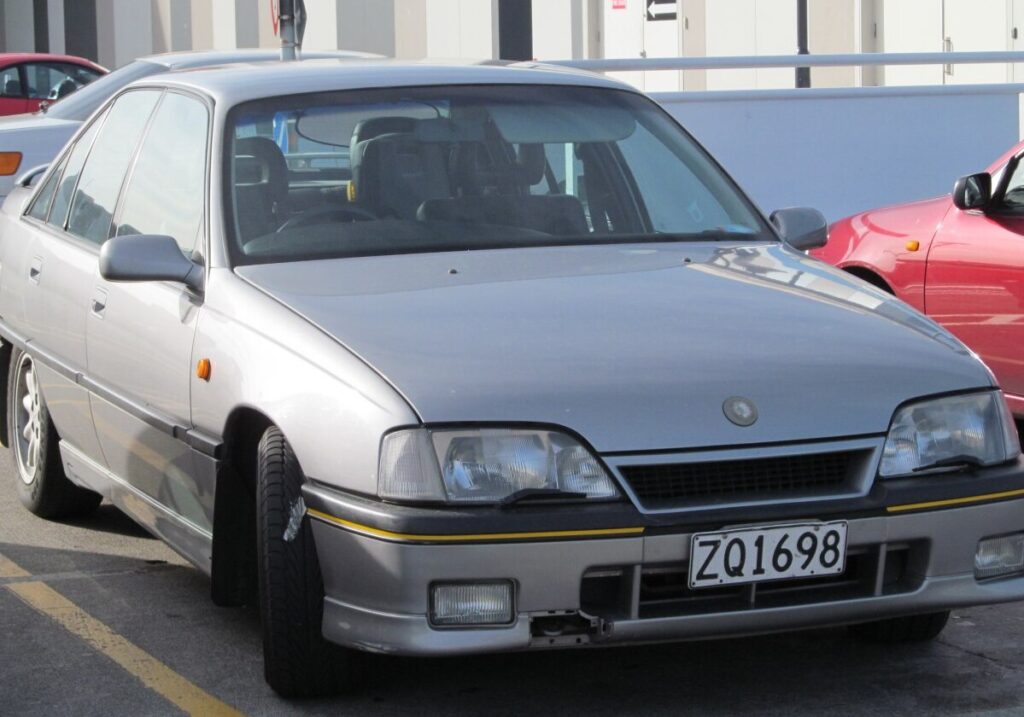
The Opel Omega A 3.0 3000 CAT, produced between 1987 and 1989, represented a significant step upmarket for Opel, aiming to compete with executive saloons from BMW and Mercedes-Benz. This variant, equipped with a 3.0-liter inline-six engine and a four-speed automatic transmission, was positioned as a comfortable and refined offering within the Omega A range. It served as a flagship model, showcasing Opel’s engineering capabilities and providing a more luxurious alternative to the base models. The Omega A itself was a replacement for the Opel Rekord, representing a move towards more aerodynamic styling and improved technology.
Technical Specifications
| Brand | Opel |
| Model | Omega |
| Generation | Omega A |
| Type (Engine) | 3.0 3000 CAT (156 Hp) Automatic |
| Start of production | 1987 |
| End of production | 1989 |
| Powertrain Architecture | Internal Combustion engine |
| Body type | Sedan |
| Seats | 5 |
| Doors | 4 |
| Fuel Type | Petrol (Gasoline) |
| Acceleration 0 – 100 km/h | 10.8 sec |
| Acceleration 0 – 62 mph | 10.8 sec |
| Acceleration 0 – 60 mph | 10.3 sec |
| Maximum speed | 210 km/h (130.49 mph) |
| Weight-to-power ratio | 9.1 kg/Hp, 110.2 Hp/tonne |
| Weight-to-torque ratio | 6.2 kg/Nm, 162.5 Nm/tonne |
| Power | 156 Hp @ 5400 rpm |
| Power per litre | 52.5 Hp/l |
| Torque | 230 Nm @ 3800-4400 rpm (169.64 lb.-ft. @ 3800-4400 rpm) |
| Maximum engine speed | 6400 rpm |
| Engine layout | Front, Longitudinal |
| Engine Model/Code | C30LE |
| Engine displacement | 2969 cm3 (181.18 cu. in.) |
| Number of cylinders | 6 |
| Engine configuration | Inline |
| Cylinder Bore | 95 mm (3.74 in.) |
| Piston Stroke | 69.8 mm (2.75 in.) |
| Compression ratio | 8.6:1 |
| Number of valves per cylinder | 2 |
| Fuel injection system | Multi-port manifold injection |
| Engine aspiration | Naturally aspirated engine |
| Valvetrain | SOHC |
| Engine oil capacity | 5.5 l (5.81 US qt | 4.84 UK qt) |
| Coolant | 10.2 l (10.78 US qt | 8.97 UK qt) |
| Kerb Weight | 1415 kg (3119.54 lbs.) |
| Max. weight | 1880 kg (4144.69 lbs.) |
| Max load | 465 kg (1025.15 lbs.) |
| Trunk (boot) space – minimum | 520 l (18.36 cu. ft.) |
| Trunk (boot) space – maximum | 870 l (30.72 cu. ft.) |
| Fuel tank capacity | 75 l (19.81 US gal | 16.5 UK gal) |
| Length | 4740 mm (186.61 in.) |
| Width | 1760 mm (69.29 in.) |
| Height | 1445 mm (56.89 in.) |
| Wheelbase | 2730 mm (107.48 in.) |
| Front track | 1445 mm (56.89 in.) |
| Rear (Back) track | 1460 mm (57.48 in.) |
| Minimum turning circle | 10.8 m (35.43 ft.) |
| Drivetrain Architecture | Rear wheel drive |
| Number of gears | 4 gears, automatic transmission |
| Front brakes | Ventilated discs |
| Rear brakes | Disc |
| Tires size | 195/65 R15 |
| Wheel rims size | 15 |
Powertrain & Engine Architecture
The heart of the Omega A 3.0 was the C30LE engine, a 2.969-liter inline-six cylinder powerplant. This engine featured a single overhead camshaft (SOHC) valvetrain operating two valves per cylinder. The C30LE utilized Bosch multi-port fuel injection, a significant advancement over earlier carbureted Opel engines, contributing to improved fuel efficiency and smoother power delivery. The engine’s design prioritized refinement and torque, making it well-suited for long-distance cruising. The four-speed automatic transmission, while not particularly advanced by modern standards, was chosen for its comfort and ease of use, aligning with the Omega A 3.0’s positioning as a luxury saloon. The transmission was electronically controlled, offering smoother shifts compared to older hydraulic systems.
Driving Characteristics
The combination of the 156 horsepower engine and the four-speed automatic transmission resulted in a driving experience focused on comfort and relaxed performance. Acceleration to 60 mph took around 10.3 seconds, and top speed was approximately 130 mph. While not a sports car, the Omega A 3.0 offered sufficient power for confident overtaking and highway cruising. The automatic transmission’s gear ratios were optimized for fuel economy and smooth transitions, but it lacked the responsiveness of a manual gearbox. Compared to the more economical four-cylinder Omega models, the 3.0 offered a noticeably more refined and powerful driving experience. It also felt less strained during highway driving and when fully loaded with passengers and luggage.
Equipment & Trim Levels
The Omega A 3.0 typically came well-equipped, reflecting its status as a premium model. Standard features included central locking, electric windows, power steering, and a high-quality stereo system. Interior upholstery was typically cloth, but leather options were available. Dashboard design was functional and straightforward, with a focus on ergonomics. Optional extras included a sunroof, air conditioning, and upgraded sound systems. The trim level often dictated the availability of these options, with higher trims offering more standard features and a wider range of customization possibilities.
Chassis & Braking
The Omega A featured a robust chassis with independent suspension at the front and a semi-independent suspension at the rear. The front suspension utilized MacPherson struts, while the rear employed a twist-beam axle. Braking was handled by ventilated discs at the front and solid discs at the rear, providing adequate stopping power for the vehicle’s weight and performance. Stabilizer bars were fitted to both the front and rear axles to reduce body roll during cornering. The suspension tuning prioritized ride comfort over sporty handling, resulting in a smooth and compliant ride quality.
Market Reception & Comparison
The Opel Omega A 3.0 was generally well-received by automotive critics, who praised its comfortable ride, spacious interior, and refined engine. However, some critics noted that the automatic transmission could feel sluggish at times, and the handling wasn’t as sharp as some of its competitors. Compared to the base Omega models, the 3.0 offered significantly improved performance and a more luxurious experience. Fuel economy was reasonable for a vehicle of its size and engine displacement, but it was still higher than the four-cylinder variants. Reliability was generally good, although the complex fuel injection system required regular maintenance.
Legacy
The Opel Omega A 3.0, while not a high-volume seller, established the Omega as a credible competitor in the executive saloon segment. The C30LE engine proved to be a durable and reliable powerplant, and many examples are still on the road today. In the used car market, the Omega A 3.0 is appreciated by enthusiasts for its classic styling, comfortable ride, and relatively affordable price. However, finding well-maintained examples can be challenging, as age and mileage have taken their toll on many vehicles. Parts availability can also be an issue, although many components are still available through specialist suppliers.
