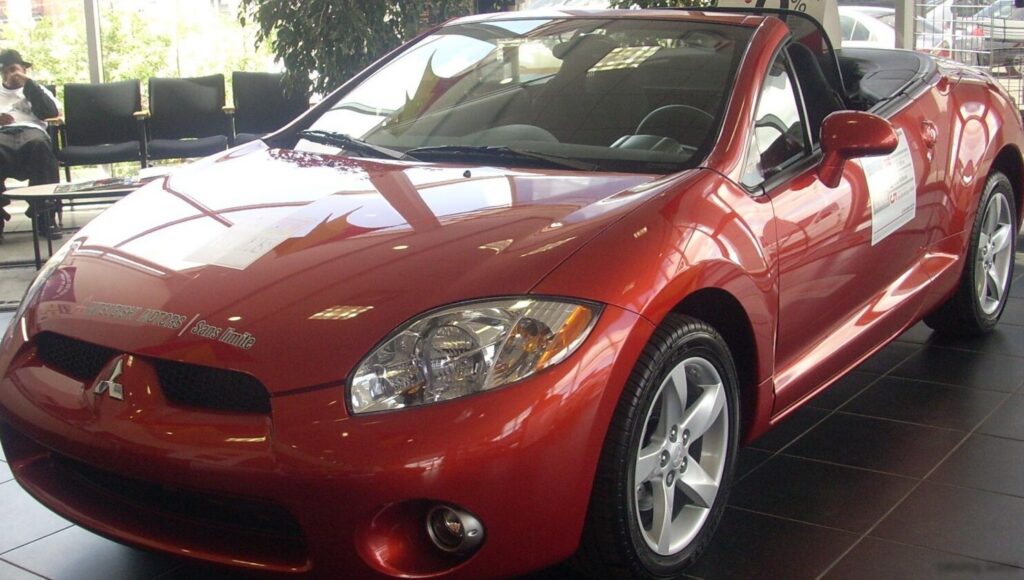
The Mitsubishi Eclipse Spyder IV (4G) GT 3.8L V6 MIVEC, produced from 2006 to 2009, represented the final iteration of the Eclipse Spyder convertible. Positioned as the performance-oriented trim within the fourth-generation Eclipse lineup, it aimed to deliver a sporty driving experience in a stylish, open-top package. This generation, built on the GS platform, marked a significant departure from earlier Eclipse models, focusing on a more refined and mature aesthetic. The GT 3.8L V6 was the top-tier engine option for the Spyder, offering a substantial power increase over the base 2.4L four-cylinder engine. It competed with other sporty convertibles like the Mazda MX-5 Miata and the Honda S2000, though it occupied a slightly different niche with its front-wheel-drive configuration and focus on grand touring comfort.
Technical Specifications
| Brand | Mitsubishi |
| Model | Eclipse |
| Generation | Eclipse Spyder IV (4G) |
| Type | GT 3.8L V6 MIVEC (265 Hp) |
| Start of production | 2006 |
| End of production | 2009 |
| Powertrain Architecture | Internal Combustion engine |
| Body type | Cabriolet |
| Seats | 4 |
| Doors | 3 |
| Fuel Type | Petrol (Gasoline) |
| Power | 265 Hp @ 5750 rpm |
| Power per litre | 69.2 Hp/l |
| Torque | 329 Nm @ 2750 rpm / 242.66 lb.-ft. @ 2750 rpm |
| Engine layout | Front, Longitudinal |
| Engine Model/Code | 6G75 |
| Engine displacement | 3828 cm3 / 233.6 cu. in. |
| Number of cylinders | 6 |
| Engine configuration | V-engine |
| Cylinder Bore | 95 mm / 3.74 in. |
| Piston Stroke | 90 mm / 3.54 in. |
| Compression ratio | 9.8:1 |
| Number of valves per cylinder | 4 |
| Fuel injection system | Multi-port manifold injection |
| Engine aspiration | Naturally aspirated engine |
| Valvetrain | SOHC |
| Engine oil capacity | 4.3 l / 4.54 US qt | 3.78 UK qt |
| Coolant | 8.1 l / 8.56 US qt | 7.13 UK qt |
Powertrain & Engine Architecture
The heart of the Eclipse Spyder GT was the 6G75 3.8-liter V6 engine. This engine, a member of Mitsubishi’s 6G7 series, featured a single overhead camshaft (SOHC) design and Mitsubishi’s MIVEC (Mitsubishi Innovative Valve timing and lift Electronic Control) technology. MIVEC allowed for variable valve timing on both the intake and exhaust camshafts, optimizing engine performance across the rev range. The multi-port fuel injection system delivered fuel directly to each cylinder, contributing to efficient combustion. The engine’s longitudinal mounting within the front-wheel-drive chassis required a relatively complex drivetrain layout. The 6G75 was known for its smooth power delivery and relatively robust construction. The engine was paired with a 6-speed manual transmission, offering drivers precise control over the power output. An optional 5-speed automatic transmission was also available, though it was generally considered less engaging than the manual.
Driving Characteristics
The 265 horsepower and 242 lb-ft of torque produced by the 3.8L V6 provided the Eclipse Spyder GT with brisk acceleration. Independent testing showed 0-60 mph times in the low-to-mid 6-second range, making it a genuinely quick convertible for its time. The manual transmission allowed for full exploitation of the engine’s powerband, while the automatic, though smooth, resulted in some power loss. The front-wheel-drive configuration, while contributing to lower production costs, did introduce a degree of torque steer under hard acceleration. The suspension, tuned for a balance between comfort and handling, provided a reasonably controlled ride, though it wasn’t as sharp or responsive as some rear-wheel-drive competitors. The Spyder’s convertible top, a power-operated soft top, added weight to the vehicle, slightly impacting handling dynamics.
Equipment & Trim Levels
The GT trim level represented the highest specification for the Eclipse Spyder. Standard features included leather upholstery, air conditioning, a premium sound system, power windows and locks, and alloy wheels. Optional extras included a navigation system, upgraded audio components, and a sunroof. The interior design was modern for its time, with a driver-focused cockpit and a relatively spacious cabin for a convertible. The dashboard featured analog gauges, complemented by a multi-information display. The GT trim also included unique exterior styling cues, such as a rear spoiler and chrome accents.
Chassis & Braking
The Eclipse Spyder IV utilized an independent McPherson strut suspension in the front and an independent multi-link suspension in the rear. This setup aimed to provide a comfortable ride while maintaining reasonable handling characteristics. The front brakes were ventilated discs, providing ample stopping power, while the rear brakes were solid discs. Anti-lock braking system (ABS) was standard, enhancing safety. The steering system was a hydraulic rack and pinion setup, offering responsive steering feel. The Spyder GT came equipped with 235/45 R18 tires mounted on 18-inch alloy wheels, providing good grip and a sporty appearance.
Market Reception & Comparison
The Eclipse Spyder GT 3.8L V6 was generally well-received by automotive critics. Reviewers praised its powerful engine, comfortable ride, and stylish design. However, the front-wheel-drive configuration was often cited as a drawback, particularly when compared to rear-wheel-drive competitors. Fuel economy was also a concern, with the V6 engine consuming a significant amount of gasoline. Compared to the base 2.4L Eclipse Spyder, the GT offered a substantial performance upgrade, but at a higher price point. The automatic transmission version was often criticized for diminishing the driving experience compared to the manual.
Legacy
The Mitsubishi Eclipse Spyder IV (4G) GT 3.8L V6 MIVEC represents the culmination of the Eclipse Spyder lineage. While the Eclipse nameplate continued with a different model in later years, the convertible version was discontinued. The 6G75 engine, while not without its quirks, proved to be a relatively reliable powerplant when properly maintained. Today, the Eclipse Spyder GT is a sought-after vehicle among enthusiasts, particularly those looking for an affordable and stylish convertible with a potent V6 engine. Common issues include wear and tear on the convertible top mechanism and potential oil leaks from the valve cover gaskets. However, with regular maintenance and careful ownership, these vehicles can provide years of enjoyable open-air motoring.