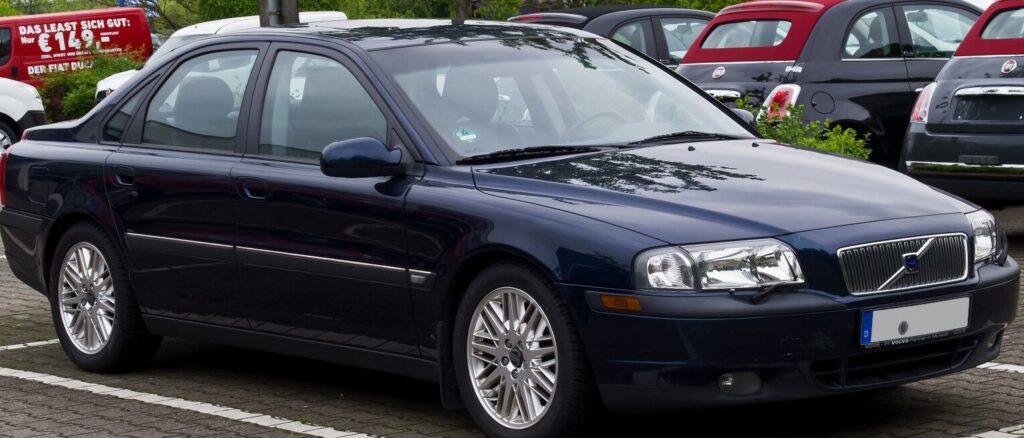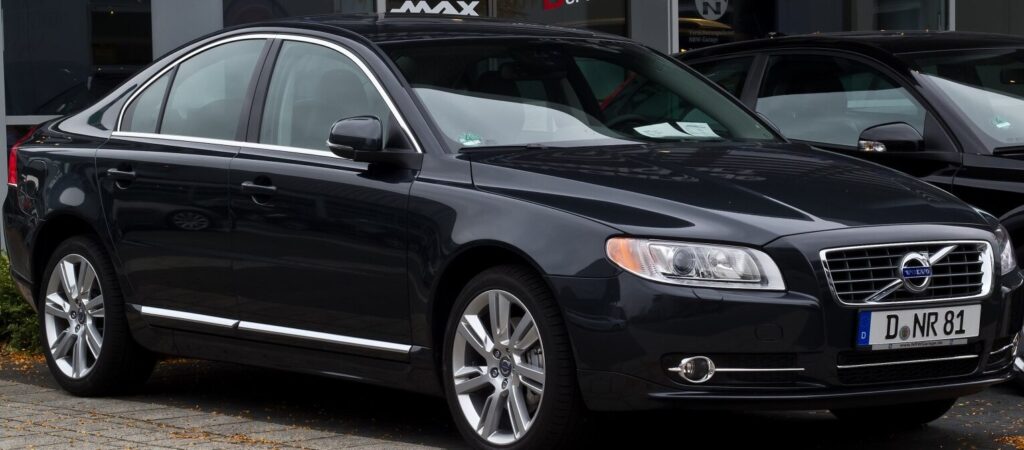
The Volvo S80 II (facelift, produced from 2011 to 2013) 3.2 AWD represents a refinement of Volvo’s flagship sedan, positioned as a premium offering within the S80 range. This variant, powered by a 3.2-liter inline-six engine producing 243 horsepower, combined sophisticated Scandinavian design with a focus on safety and comfortable grand touring. It served as a key model in Volvo’s lineup during a period of transition under Ford ownership, and later, Geely, aiming to balance luxury with practicality. The facelift brought updated styling cues and technological enhancements to the second-generation S80, which originally debuted in 2006.
Technical Specifications
| Brand | Volvo |
| Model | S80 |
| Generation | S80 II (facelift 2011) |
| Type (Engine) | 3.2 (243 Hp) AWD |
| Start of production | 2011 |
| End of production | 2013 |
| Powertrain Architecture | Internal Combustion engine |
| Body type | Sedan |
| Seats | 5 |
| Doors | 4 |
| Fuel consumption (urban) | 13.7 l/100 km (17.2 US mpg, 20.6 UK mpg, 7.3 km/l) |
| Fuel consumption (extra urban) | 7 l/100 km (33.6 US mpg, 40.4 UK mpg, 14.3 km/l) |
| Fuel consumption (combined) | 9.4 l/100 km (25 US mpg, 30.1 UK mpg, 10.6 km/l) |
| CO2 emissions | 219 g/km |
| Fuel Type | Petrol (Gasoline) |
| Acceleration 0 – 100 km/h | 8.2 sec |
| Acceleration 0 – 62 mph | 8.2 sec |
| Acceleration 0 – 60 mph | 7.8 sec |
| Emission standard | Euro 5 |
| Weight-to-power ratio | 7 kg/Hp, 142.1 Hp/tonne |
| Weight-to-torque ratio | 5.3 kg/Nm, 187.1 Nm/tonne |
| Power | 243 Hp @ 6400 rpm |
| Power per litre | 76.1 Hp/l |
| Torque | 320 Nm @ 3200 rpm (236.02 lb.-ft. @ 3200 rpm) |
| Engine layout | Front, Transverse |
| Engine Model/Code | B6324S5 |
| Engine displacement | 3192 cm3 (194.79 cu. in.) |
| Number of cylinders | 6 |
| Engine configuration | Inline |
| Piston Stroke | 84 mm (3.31 in.) |
| Fuel injection system | Multi-port manifold injection |
| Engine aspiration | Naturally aspirated engine |
| Engine oil capacity | 6.8 l (7.19 US qt | 5.98 UK qt) |
| Coolant | 8.9 l (9.4 US qt | 7.83 UK qt) |
| Kerb Weight | 1710 kg (3769.9 lbs.) |
| Max. weight | 2270 kg (5004.49 lbs.) |
| Max load | 560 kg (1234.59 lbs.) |
| Trunk (boot) space – minimum | 480 l (16.95 cu. ft.) |
| Fuel tank capacity | 70 l (18.49 US gal | 15.4 UK gal) |
| Length | 4851 mm (190.98 in.) |
| Width | 1861 mm (73.27 in.) |
| Height | 1493 mm (58.78 in.) |
| Wheelbase | 2835 mm (111.61 in.) |
| Front track | 1588 mm (62.52 in.) |
| Rear (Back) track | 1585 mm (62.4 in.) |
| Minimum turning circle | 11.7 m (38.39 ft.) |
| Drive wheel | All wheel drive (4×4) |
| Number of gears | 6 |
| Gearbox type | automatic transmission |
| Assisting systems | ABS (Anti-lock braking system) |
| Steering type | Steering rack and pinion |
INTRODUCTION
The 2011-2013 Volvo S80 3.2 AWD represents the culmination of the second-generation S80’s design and engineering. Following a significant refresh, this model year focused on refining the existing platform rather than introducing radical changes. It occupied the upper-midsize luxury sedan segment, competing with vehicles like the Audi A6, BMW 5 Series, and Lexus GS. The “3.2” designation refers to the engine displacement, and the “AWD” indicates the standard all-wheel-drive system, a key selling point for Volvo in regions with inclement weather. This variant was positioned as a step up from the more affordable 2.5L five-cylinder models, offering a more powerful and refined driving experience.
Powertrain & Engine Architecture
At the heart of the S80 3.2 AWD lies the B6324S5, a 3.2-liter inline-six cylinder engine. This engine, a hallmark of Volvo’s engineering during the Ford era, is naturally aspirated and features aluminum alloy construction for reduced weight. It utilizes a multi-port fuel injection system, delivering fuel directly into the intake ports. The engine’s valvetrain employs double overhead camshafts (DOHC) with four valves per cylinder, optimizing airflow for improved performance. The engine produces 243 horsepower at 6400 rpm and 320 Nm (236 lb-ft) of torque at 3200 rpm.
The engine is paired with a six-speed automatic transmission, specifically the Aisin TF-80SC. This transmission is known for its smooth shifting characteristics and reliability. The all-wheel-drive system is a viscous coupling type, providing on-demand torque distribution to the rear wheels when traction is lost. This system enhances stability and control, particularly in slippery conditions.
Driving Characteristics
The S80 3.2 AWD delivers a comfortable and composed driving experience. While not overtly sporty, the 3.2-liter engine provides ample power for confident acceleration and highway cruising. The 0-60 mph sprint takes approximately 7.8 seconds. The automatic transmission is well-tuned, offering smooth gear changes and responsive downshifts. Compared to the 2.5L models, the 3.2 offers a noticeable improvement in acceleration and overall responsiveness. However, it doesn’t possess the sharp handling characteristics of some of its German rivals. The all-wheel-drive system provides excellent traction, inspiring confidence in all weather conditions. The steering is light and precise, but lacks significant feedback. The focus is clearly on comfort and refinement rather than outright performance.
Equipment & Trim Levels
The S80 3.2 AWD typically came well-equipped as standard. Features included leather upholstery, power-adjustable front seats with memory function, a premium audio system, automatic climate control, and a sunroof. Safety features were, as expected from Volvo, comprehensive, including ABS, traction control, stability control, and a suite of airbags. Optional extras included navigation system, rear park assist sensors, and upgraded interior trim options. The interior design emphasized Scandinavian minimalism, with clean lines and high-quality materials. The dashboard layout was intuitive and user-friendly.
Chassis & Braking
The S80 II utilizes a MacPherson strut front suspension and a multi-link rear suspension. This setup provides a good balance between ride comfort and handling. The suspension is tuned for a softer ride, absorbing bumps and imperfections in the road effectively. The 3.2 AWD model typically featured slightly stiffer springs and dampers compared to the lower-trim models to manage the increased weight and power. Braking duties are handled by ventilated disc brakes on all four wheels, providing ample stopping power. ABS (Anti-lock Braking System) is standard, enhancing braking performance and stability.
Market Reception & Comparison
The S80 3.2 AWD was generally well-received by automotive critics. It was praised for its comfortable ride, spacious interior, and comprehensive safety features. However, some critics noted that its styling was somewhat conservative compared to its rivals, and its handling wasn’t as engaging as some of the German competitors. Fuel economy, at 25 mpg combined, was considered average for its class. Compared to the 2.5L models, the 3.2 offered a significant performance upgrade, but at a higher price point. The 3.2 was also more expensive to maintain due to the more complex engine and drivetrain.
Legacy
The Volvo S80 3.2 AWD, while no longer in production, remains a viable option in the used car market. The B6324S5 engine is generally considered reliable, although regular maintenance is crucial. Common issues include oil leaks and occasional sensor failures. The Aisin TF-80SC automatic transmission is also known for its durability. The S80’s emphasis on safety and comfort continues to appeal to buyers seeking a refined and practical luxury sedan. While it may not offer the same level of performance or prestige as some of its rivals, the S80 3.2 AWD provides a compelling combination of Scandinavian design, comfort, and all-weather capability.