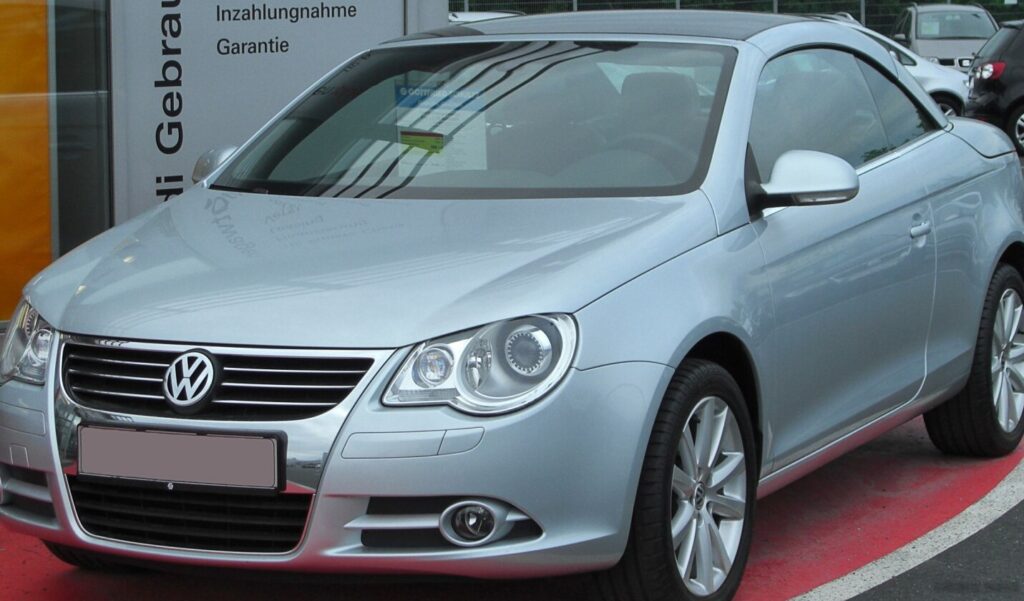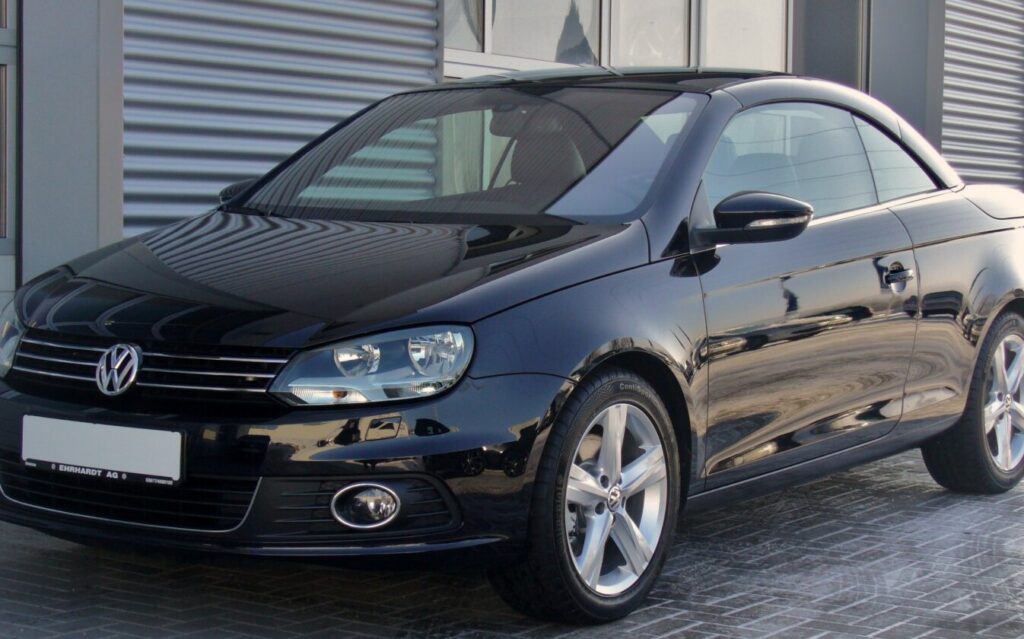
The Volkswagen Eos 2.0 TDI BMT (140 hp) DSG, produced from 2010 to 2015, represents a mid-cycle facelift of the original Eos model, which debuted in 2006. Positioned as a stylish and practical coupe-convertible, the Eos aimed to blend the open-air experience of a cabriolet with the security and usability of a coupe. This particular variant, powered by the 2.0-liter common rail TDI engine paired with a six-speed Direct-Shift Gearbox (DSG), was a popular choice in European markets, offering a balance of fuel efficiency, reasonable performance, and comfortable daily driving. It sat in the middle of the Eos range, offering a step up in performance and refinement over the base petrol engines, while remaining more accessible than the higher-output TDI models.
Technical Specifications
| Brand | Volkswagen |
| Model | Eos |
| Generation | Eos (facelift 2010) |
| Type (Engine) | 2.0 TDI BMT (140 Hp) DSG |
| Start of production | 2010 |
| End of production | 2015 |
| Powertrain Architecture | Internal Combustion engine |
| Body type | Coupe – Cabriolet |
| Seats | 4 |
| Doors | 2 |
| Fuel consumption (economy) – urban (NEDC) | 6.5 l/100 km (36.2 US mpg, 43.5 UK mpg, 15.4 km/l) |
| Fuel consumption (economy) – extra urban (NEDC) | 4.6 l/100 km (51.1 US mpg, 61.4 UK mpg, 21.7 km/l) |
| Fuel consumption (economy) – combined (NEDC) | 5.3 l/100 km (44.4 US mpg, 53.3 UK mpg, 18.9 km/l) |
| CO2 emissions (NEDC) | 139 g/km |
| Fuel Type | Diesel |
| Acceleration 0 – 100 km/h | 10.3 sec |
| Acceleration 0 – 62 mph | 10.3 sec |
| Acceleration 0 – 60 mph | 9.8 sec |
| Maximum speed | 204 km/h (126.76 mph) |
| Emission standard | Euro 5 |
| Weight-to-power ratio | 11 kg/Hp, 91 Hp/tonne |
| Weight-to-torque ratio | 4.8 kg/Nm, 207.9 Nm/tonne |
| Power | 140 Hp @ 4200 rpm |
| Power per litre | 71.1 Hp/l |
| Torque | 320 Nm @ 1750-2500 rpm (236.02 lb.-ft. @ 1750-2500 rpm) |
| Engine layout | Front, Transverse |
| Engine Model/Code | CBAB |
| Engine displacement | 1968 cm3 (120.09 cu. in.) |
| Number of cylinders | 4 |
| Engine configuration | Inline |
| Cylinder Bore | 81 mm (3.19 in.) |
| Piston Stroke | 95.5 mm (3.76 in.) |
| Compression ratio | 18:1 |
| Number of valves per cylinder | 4 |
| Fuel injection system | Diesel Commonrail |
| Engine aspiration | Turbocharger, Intercooler |
| Valvetrain | DOHC |
| Engine oil capacity | 4.3 l (4.54 US qt | 3.78 UK qt) |
| Kerb Weight | 1539 kg (3392.91 lbs.) |
| Max. weight | 2030 kg (4475.38 lbs.) |
| Max load | 491 kg (1082.47 lbs.) |
| Trunk (boot) space – minimum | 205 l (7.24 cu. ft.) |
| Trunk (boot) space – maximum | 380 l (13.42 cu. ft.) |
| Fuel tank capacity | 55 l (14.53 US gal | 12.1 UK gal) |
| Permitted trailer load with brakes (8%) | 1700 kg (3747.86 lbs.) |
| Permitted trailer load with brakes (12%) | 1500 kg (3306.93 lbs.) |
| Permitted trailer load without brakes | 750 kg (1653.47 lbs.) |
| Permitted towbar download | 75 kg (165.35 lbs.) |
| Length | 4423 mm (174.13 in.) |
| Width | 1791 mm (70.51 in.) |
| Width including mirrors | 2009 mm (79.09 in.) |
| Height | 1444 mm (56.85 in.) |
| Wheelbase | 2578 mm (101.5 in.) |
| Front track | 1545 mm (60.83 in.) |
| Rear (Back) track | 1547 mm (60.91 in.) |
| Ride height (ground clearance) | 142 mm (5.59 in.) |
| Minimum turning circle (turning diameter) | 10.9 m (35.76 ft.) |
| Drivetrain Architecture | The Internal combustion engine (ICE) drives the front wheels of the vehicle. |
| Drive wheel | Front wheel drive |
| Number of gears and type of gearbox | 6 gears, automatic transmission DSG |
| Front suspension | Coil spring, Wishbone, Transverse stabilizer |
| Rear suspension | Independent multi-link suspension, Transverse stabilizer |
| Front brakes | Ventilated discs |
| Rear brakes | Disc |
| Assisting systems | ABS (Anti-lock braking system) |
| Steering type | Steering rack and pinion |
| Power steering | Electric Steering |
| Tires size | 215/55 R16 |
| Wheel rims size | 7J x 16 |
INTRODUCTION
The 2010 facelift of the Volkswagen Eos brought subtle styling revisions and, crucially, updated engine options to enhance its appeal. The 2.0 TDI BMT (BlueMotion Technology) with 140 horsepower and a DSG transmission was a key component of this refresh. Built on the Volkswagen Group’s A5 (or 1HX0) platform – shared with the Golf Mk5 and Mk6, Audi A3, and SEAT Leon – the Eos aimed to provide a more premium and refined experience than many of its competitors. The BMT designation indicated the inclusion of fuel-saving technologies like start-stop functionality and regenerative braking, aligning with growing environmental concerns.
Powertrain & Engine Architecture
The heart of this Eos variant is the CBAB engine code 2.0-liter four-cylinder diesel engine. This engine utilizes common rail direct injection, delivering fuel at extremely high pressure for improved combustion efficiency and reduced emissions. The engine features a turbocharger with an intercooler to boost power output, and a double overhead camshaft (DOHC) valvetrain for optimized gas exchange. The ‘BMT’ designation signifies the inclusion of Volkswagen’s BlueMotion Technology, which incorporates a start-stop system to automatically shut off the engine when idling, and a revised engine map for improved fuel economy. The six-speed DSG (Direct-Shift Gearbox) is a dual-clutch transmission that offers both the efficiency of a manual gearbox and the convenience of an automatic. It provides quick and seamless gear changes, contributing to a more engaging driving experience.
Driving Characteristics
The 140 hp 2.0 TDI BMT with DSG delivers a respectable, if not exhilarating, driving experience. Acceleration from 0-60 mph takes around 9.8 seconds, and top speed is rated at 126.76 mph. The DSG transmission is well-matched to the engine’s torque characteristics, providing smooth and responsive shifts. While not as quick as the higher-output TDI variants or the petrol-powered Eos models, the 140 hp version offers ample power for everyday driving and comfortable cruising. The gear ratios are tuned for fuel efficiency, meaning the engine doesn’t feel strained at highway speeds. Compared to a manual transmission version, the DSG offers quicker acceleration and a more relaxed driving experience, particularly in urban traffic. However, some drivers may prefer the more direct control of a manual gearbox.
Equipment & Trim Levels
The Eos 2.0 TDI BMT DSG typically came equipped with a generous level of standard features. These included climate control, alloy wheels, a multi-function steering wheel, and an infotainment system with a CD player and auxiliary input. Higher trim levels offered options such as leather upholstery, heated front seats, a sunroof (in addition to the convertible top), and a more advanced infotainment system with navigation. Interior upholstery was typically cloth on base models, with leather available as an upgrade. The dashboard layout was clean and functional, with a focus on ergonomics. Optional extras included parking sensors, bi-xenon headlights, and a premium sound system.
Chassis & Braking
The Eos utilizes a front-wheel-drive layout with a coil spring and wishbone suspension at the front and an independent multi-link suspension at the rear. A transverse stabilizer bar is fitted to both axles to reduce body roll during cornering. Braking duties are handled by ventilated discs at the front and solid discs at the rear, with ABS (Anti-lock Braking System) as standard. The suspension setup is tuned for comfort, providing a smooth and compliant ride. The steering is electrically assisted, offering light and precise control.
Market Reception & Comparison
The Volkswagen Eos 2.0 TDI BMT DSG was generally well-received by automotive critics. It was praised for its stylish design, comfortable ride, and fuel efficiency. The DSG transmission was also a highlight, offering smooth and responsive gear changes. Compared to other trims in the Eos lineup, the 140 hp TDI offered a good balance of performance and economy. It was more affordable than the higher-output TDI models, while still providing significantly better fuel economy than the petrol-powered versions. However, some critics noted that the interior space was somewhat limited, particularly in the rear seats. Reliability was generally good, although, like all modern diesel engines, it was susceptible to issues with the diesel particulate filter (DPF) if not driven on longer journeys regularly.
Legacy
The Volkswagen Eos, while not a massive sales success, remains a popular choice among enthusiasts looking for a stylish and practical coupe-convertible. The 2.0 TDI BMT engine, when properly maintained, is known for its durability and fuel efficiency. On the used car market, these models represent good value for money, offering a comfortable and refined driving experience at an affordable price. However, potential buyers should be aware of the potential for DPF issues and ensure that the vehicle has been regularly serviced. The Eos, and particularly this 2.0 TDI variant, represents a well-engineered and thoughtfully designed car that continues to appeal to drivers seeking a blend of style, comfort, and economy.