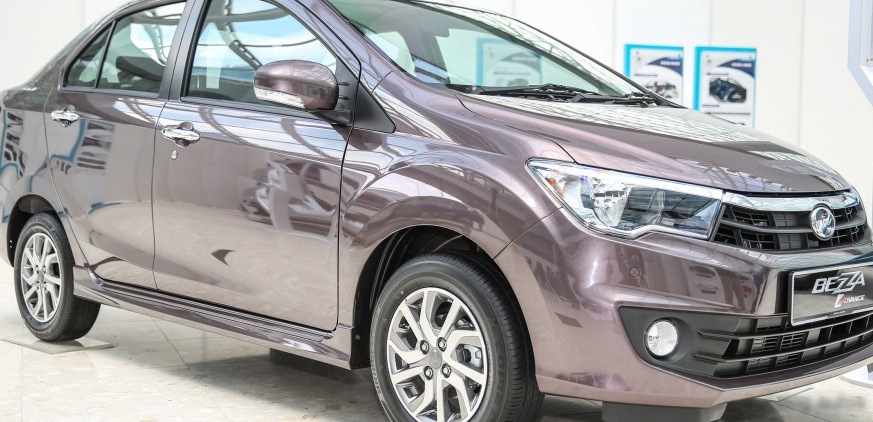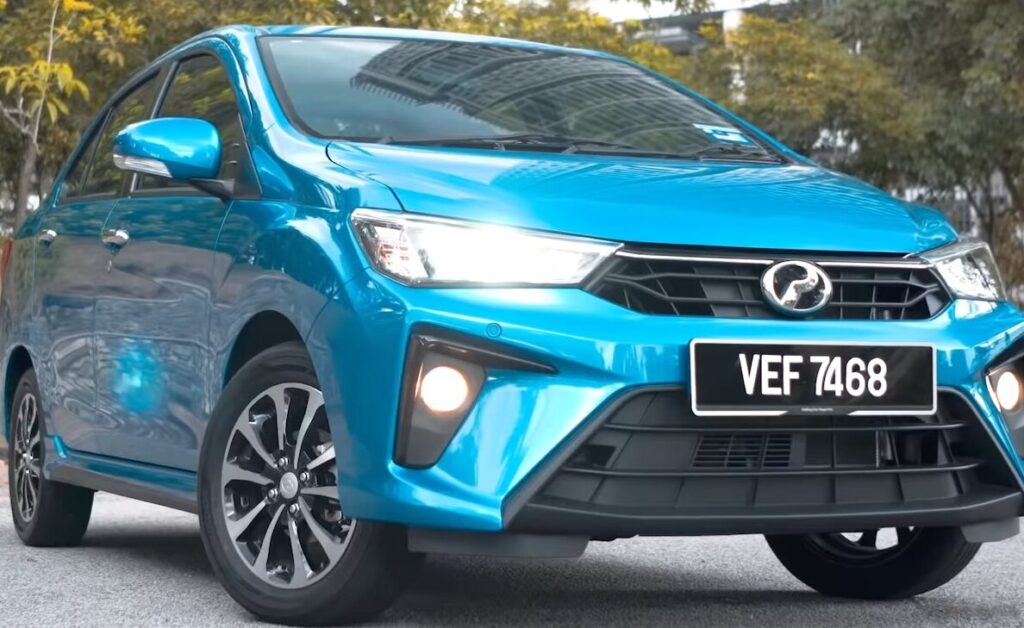
The Perodua Bezza 1.3 (95 hp) Automatic, introduced with the 2020 facelift, represents a significant offering in the Southeast Asian subcompact sedan market. Positioned as an entry-level to mid-range trim within the Bezza lineup, it aimed to provide affordable and fuel-efficient transportation for families and commuters. The Bezza itself, launched in 2016, was Perodua’s first attempt at creating a dedicated sedan model, building upon their established expertise in compact hatchbacks. The 2020 facelift brought cosmetic updates and minor mechanical refinements to enhance its appeal. It’s built on Perodua’s New Generation Platform, shared with other models like the Axia, and is primarily sold in Malaysia, with limited exports to select regional markets.
Technical Specifications
| Brand | Perodua |
| Model | Bezza |
| Generation | Bezza (facelift 2020) |
| Type | 1.3 (95 Hp) Automatic |
| Start of production | 2020 |
| Powertrain Architecture | Internal Combustion engine |
| Body type | Sedan |
| Seats | 5 |
| Doors | 4 |
| Fuel consumption (combined) | 4.5-4.7 l/100 km (52.3 – 50 US mpg, 62.8 – 60.1 UK mpg, 22.2 – 21.3 km/l) |
| Fuel Type | Petrol (Gasoline) |
| Emission standard | Euro 4 |
| Weight-to-power ratio | 9.7 kg/Hp, 102.7 Hp/tonne |
| Weight-to-torque ratio | 7.6 kg/Nm, 130.8 Nm/tonne |
| Power | 95 Hp @ 6000 rpm |
| Power per litre | 71.5 Hp/l |
| Torque | 121 Nm @ 4000 rpm (89.25 lb.-ft. @ 4000 rpm) |
| Engine layout | Front, Transverse |
| Engine Model/Code | 1NR-VE |
| Engine displacement | 1329 cm3 (81.1 cu. in.) |
| Number of cylinders | 4 |
| Engine configuration | Inline |
| Cylinder Bore | 72.5 mm (2.85 in.) |
| Piston Stroke | 80.5 mm (3.17 in.) |
| Compression ratio | 11.5:1 |
| Fuel injection system | Multi-port manifold injection |
| Engine aspiration | Naturally aspirated engine |
| Valvetrain | DOHC, D-VVT-i |
| Engine oil capacity | 3.5 l (3.7 US qt | 3.08 UK qt) |
| Coolant capacity | 3.1 l (3.28 US qt | 2.73 UK qt) |
| Kerb Weight | 925-940 kg (2039.28 – 2072.35 lbs.) |
| Trunk (boot) space | 508 l (17.94 cu. ft.) |
| Fuel tank capacity | 36 l (9.51 US gal | 7.92 UK gal) |
| Length | 4170 mm (164.17 in.) |
| Width | 1620 mm (63.78 in.) |
| Height | 1525 mm (60.04 in.) |
| Wheelbase | 2455 mm (96.65 in.) |
| Front track | 1405 mm (55.31 in.) |
| Rear track | 1400 mm (55.12 in.) |
| Minimum turning circle | 10.0 m (32.81 ft.) |
| Drivetrain Architecture | Front wheel drive, Internal Combustion engine |
| Number of gears | 4 |
| Gearbox type | Automatic transmission |
| Assisting systems | ABS (Anti-lock braking system) |
| Tires size | 175/60 R15 |
| Wheel rims size | 15 |
Powertrain & Engine Architecture
The heart of the Bezza 1.3 Automatic is the 1NR-VE 1.3-liter inline-four cylinder engine. This engine is a staple in Perodua’s lineup, known for its reliability and fuel efficiency rather than outright performance. It utilizes a multi-point fuel injection system and a dual overhead camshaft (DOHC) valvetrain with Dual Variable Valve Timing-intelligence (D-VVT-i). The D-VVT-i system optimizes valve timing based on engine speed and load, improving both power delivery and fuel economy. The engine produces 95 horsepower at 6000 rpm and 121 Nm (89.25 lb-ft) of torque at 4000 rpm. Paired with this engine is a four-speed automatic transmission. While not the most modern transmission available, it’s a proven unit that contributes to the Bezza’s smooth and predictable driving experience. The transmission is geared towards maximizing fuel efficiency, with relatively tall gear ratios.
Driving Characteristics
The 1.3L Automatic Bezza delivers a comfortable, if not particularly exciting, driving experience. Acceleration is adequate for city driving and highway merging, but it’s not a vehicle designed for spirited performance. The four-speed automatic transmission contributes to a smooth shift quality, but it lacks the responsiveness of more modern transmissions with more gears. The gear ratios are optimized for fuel economy, meaning the engine can feel strained when climbing hills or accelerating quickly. Compared to the manual transmission version, the automatic offers convenience but sacrifices some fuel efficiency and a more engaging driving feel. Higher trims with larger engines (though not commonly available) offer significantly more power and a more dynamic driving experience.
Equipment & Trim Levels
The 1.3 Automatic trim of the 2020 Bezza facelift typically included standard features such as air conditioning, power windows, power door locks, and a basic audio system with radio and USB connectivity. Safety features included dual airbags, ABS (Anti-lock Braking System), and ISOFIX child seat anchors. Higher sub-trims offered additional features like alloy wheels, a touchscreen infotainment system, reverse parking sensors, and a multi-function steering wheel. Interior upholstery was typically fabric, with a simple and functional dashboard layout. Optional extras were limited, focusing primarily on cosmetic enhancements like body kits and paint colors.
Chassis & Braking
The Bezza utilizes a relatively simple chassis design, featuring a MacPherson strut suspension in the front and a torsion beam suspension in the rear. This setup prioritizes cost-effectiveness and ride comfort over handling precision. The braking system consists of ventilated discs in the front and drum brakes in the rear. ABS is standard, providing enhanced braking control in emergency situations. The suspension is tuned for a comfortable ride, absorbing bumps and imperfections in the road reasonably well. Stabilizer bars are present, but are relatively thin, contributing to a slight degree of body roll during cornering.
Market Reception & Comparison
The Perodua Bezza 1.3 Automatic was generally well-received in the Malaysian market as an affordable and practical sedan. Critics praised its fuel efficiency, comfortable ride, and spacious interior for its size. However, it was also criticized for its lack of performance and its relatively basic features compared to some competitors. Compared to other subcompact sedans available in the region, such as the Proton Saga, the Bezza offered a more refined driving experience and a reputation for reliability. Its fuel economy was competitive, consistently achieving figures in the range of 4.5-4.7 l/100km. The Bezza’s main selling point was its value proposition – offering a reliable and efficient sedan at a competitive price point.
Legacy
The Perodua Bezza, and specifically the 1.3 Automatic variant, has established itself as a popular choice in the used car market. The 1NR-VE engine is known for its durability and relatively low maintenance costs. Common issues are generally minor, often related to wear and tear on components like the air conditioning compressor or suspension bushings. The four-speed automatic transmission, while not the most advanced, has proven to be reliable with proper maintenance. The Bezza’s affordability and fuel efficiency continue to make it an attractive option for budget-conscious buyers, and its reputation for reliability ensures a steady demand in the used car market. It remains a testament to Perodua’s ability to deliver practical and dependable transportation to a wide range of customers.