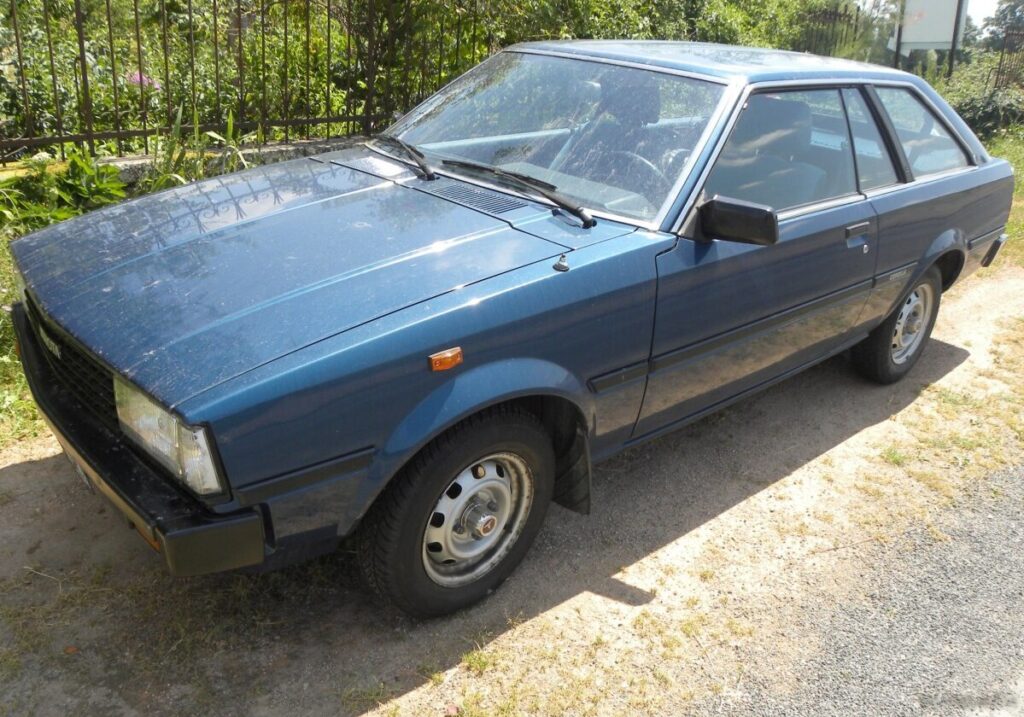
The Toyota Corolla E70, produced from 1979 to 1983, represented a significant step forward for Toyota’s popular compact car. Within the E70 range, the 1.8 D variant, powered by the 1C diesel engine and producing 65 horsepower, was a relatively uncommon offering, primarily aimed at European markets where diesel fuel was more prevalent and economically advantageous. Production of this specific configuration was concentrated in 1983, marking it as a late-cycle addition to the E70 lineup. This model occupied the entry-level position within the E70 range, focusing on fuel efficiency and practicality rather than outright performance.
Technical Specifications
| Brand | Toyota |
| Model | Corolla |
| Generation | Corolla Hatch IV (E70) |
| Type (Engine) | 1.8 D (65 Hp) |
| Start of production | 1983 |
| End of production | 1983 |
| Powertrain Architecture | Internal Combustion engine |
| Body type | Hatchback |
| Seats | 5 |
| Doors | 3 |
| Fuel Type | Diesel |
| Power | 65 Hp |
| Engine Model/Code | 1C |
| Engine aspiration | Naturally aspirated engine |
| Engine oil capacity | 4.3 l (4.54 US qt | 3.78 UK qt) |
| Coolant capacity | 7.3 l (7.71 US qt | 6.42 UK qt) |
Powertrain & Engine Architecture
The heart of the Corolla 1.8 D was the 1C diesel engine, a 1.8-liter inline-four cylinder unit. This engine was a relatively simple design, reflecting the technology of the early 1980s. It featured indirect injection, utilizing a pre-combustion chamber system to improve combustion efficiency and reduce noise – a common characteristic of diesel engines of that era. The 1C engine employed a robust cast iron block and a single overhead camshaft (SOHC) valvetrain. While not known for high output, the 1C was designed for durability and fuel economy. The engine’s modest 65 horsepower and approximately 88 lb-ft of torque were delivered at relatively low engine speeds, prioritizing usability over spirited acceleration. The transmission paired with the 1.8 D was typically a four-speed manual, although a three-speed automatic transmission was also available, albeit less common. The automatic transmission was geared towards maximizing fuel efficiency and providing smooth, if unhurried, shifts.
Driving Characteristics
The driving experience in the Corolla 1.8 D was defined by its practicality and economy. The 65 horsepower engine provided adequate, but not abundant, power for everyday driving. Acceleration was slow by modern standards, and overtaking required careful planning. The four-speed manual transmission allowed drivers to make the most of the available power, while the optional three-speed automatic prioritized ease of use. The gear ratios were relatively tall, further emphasizing fuel efficiency. Compared to the gasoline-powered Corolla variants, the 1.8 D offered significantly better fuel economy, but at the expense of performance. The diesel engine’s torque characteristics meant that it felt stronger at lower RPMs than the gasoline engines, making it suitable for navigating hilly terrain or carrying a full load. However, the diesel engine was noticeably louder and produced more vibration than its gasoline counterparts.
Equipment & Trim Levels
The Corolla 1.8 D, being the entry-level variant, typically featured a fairly basic level of equipment. Standard features generally included cloth upholstery, vinyl floor covering, and a simple dashboard layout. Power steering and air conditioning were typically optional extras, and often not fitted to the base model. The interior was functional and durable, prioritizing practicality over luxury. Trim levels were relatively limited. The 1.8 D often received steel wheels with hubcaps, and exterior trim was kept to a minimum. Optional extras could include a radio, upgraded seat fabric, and a sunroof, but these were not commonly specified on the base model.
Chassis & Braking
The Corolla E70 utilized a relatively conventional chassis design for the time. It featured a MacPherson strut front suspension and a leaf spring rear suspension. The leaf spring rear suspension was a cost-effective solution, but it did contribute to a somewhat less refined ride quality compared to independent rear suspension systems. The 1.8 D variant typically featured drum brakes on all four wheels, although some markets may have offered front disc brakes as an option. The braking system was adequate for the car’s weight and performance, but lacked the stopping power of more modern braking systems. Stabilizer bars were not always standard equipment, and their presence varied depending on the market and trim level.
Market Reception & Comparison
The Corolla 1.8 D was primarily targeted at European markets where diesel fuel was cheaper and more readily available than gasoline. It was viewed as a practical and economical choice for drivers who prioritized fuel efficiency and low running costs. Critics generally acknowledged the car’s fuel economy but noted its lack of performance. Compared to the gasoline-powered Corolla variants, the 1.8 D offered significantly better fuel economy, but it was slower and noisier. Compared to other diesel-powered cars in its class, the Corolla 1.8 D was considered to be reasonably reliable and well-built, but it lacked the refinement of some of its competitors. The 1.8 D was often seen as a workhorse vehicle, suitable for everyday commuting and light commercial use.
Legacy
The Toyota Corolla E70 1.8 D, while not a high-performance model, played a role in establishing Toyota’s reputation for reliability and fuel efficiency in the European market. The 1C diesel engine proved to be a durable and long-lasting unit, and many examples are still on the road today. In the used car market, the E70 1.8 D is often sought after by enthusiasts looking for a classic Toyota with low running costs. However, finding well-maintained examples can be challenging, as many were used as work vehicles and subjected to heavy use. The E70 generation, and the 1.8 D variant specifically, represents a significant chapter in Toyota’s history, demonstrating the company’s commitment to building practical, reliable, and fuel-efficient vehicles.