
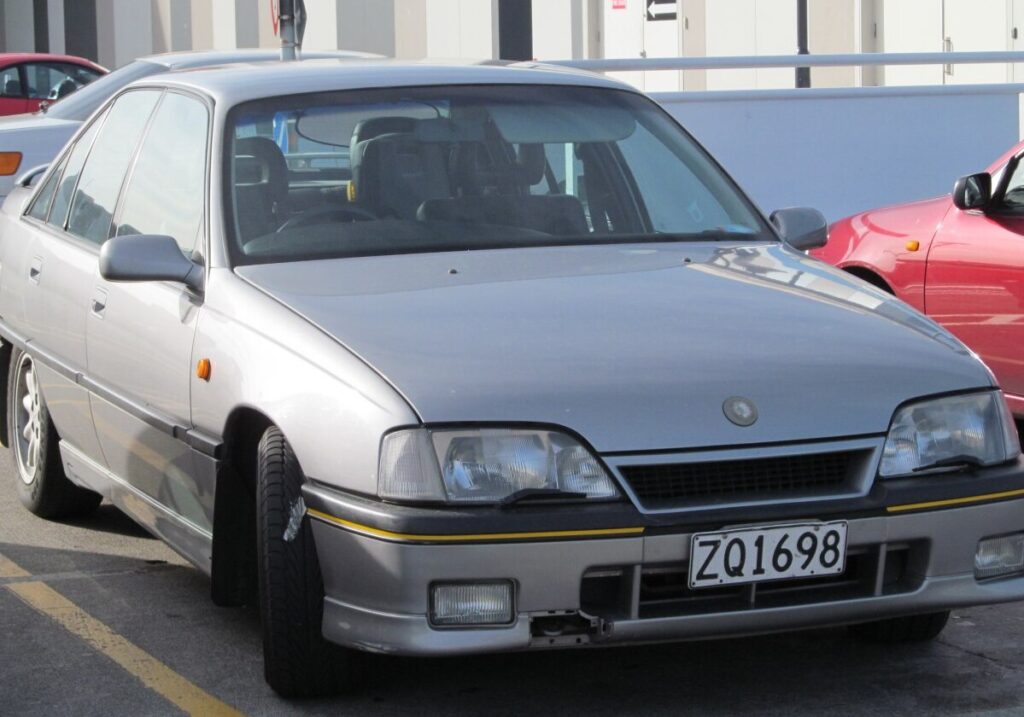
The Opel Omega A 3.0 3000 CAT, produced between 1988 and 1992, represented a significant step forward for Opel’s flagship sedan. Positioned as a premium offering within the Omega A range (the first generation of the Omega, replacing the Opel Rekord), the 3.0-liter variant aimed to compete with executive cars from BMW and Mercedes-Benz. This model, designated with the engine code C30NE, was a key part of Opel’s strategy to establish itself as a serious contender in the upper-midsize segment, particularly in Europe where it found its primary market. The “CAT” designation refers to the catalytic converter, indicating compliance with emerging emissions regulations of the time.
Technical Specifications
| Brand | Opel |
| Model | Omega |
| Generation | Omega A |
| Type (Engine) | 3.0 3000 CAT (177 Hp) |
| Start of production | 1988 |
| End of production | 1992 |
| Powertrain Architecture | Internal Combustion engine |
| Body type | Sedan |
| Seats | 5 |
| Doors | 4 |
| Fuel Type | Petrol (Gasoline) |
| Acceleration 0 – 100 km/h | 8.8 sec |
| Acceleration 0 – 62 mph | 8.8 sec |
| Acceleration 0 – 60 mph | 8.4 sec |
| Maximum speed | 227 km/h (141.05 mph) |
| Weight-to-power ratio | 8 kg/Hp, 125.5 Hp/tonne |
| Weight-to-torque ratio | 5.9 kg/Nm, 170.2 Nm/tonne |
| Power | 177 Hp @ 5800 rpm |
| Power per litre | 59.6 Hp/l |
| Torque | 240 Nm @ 4200 rpm (177.01 lb.-ft. @ 4200 rpm) |
| Maximum engine speed | 6300 rpm |
| Engine layout | Front, Longitudinal |
| Engine Model/Code | C30NE |
| Engine displacement | 2969 cm3 (181.18 cu. in.) |
| Number of cylinders | 6 |
| Engine configuration | Inline |
| Cylinder Bore | 95 mm (3.74 in.) |
| Piston Stroke | 69.8 mm (2.75 in.) |
| Compression ratio | 9.2:1 |
| Number of valves per cylinder | 2 |
| Fuel injection system | Multi-port manifold injection |
| Engine aspiration | Naturally aspirated engine |
| Valvetrain | SOHC |
| Engine oil capacity | 5.5 l (5.81 US qt | 4.84 UK qt) |
| Coolant | 10.2 l (10.78 US qt | 8.97 UK qt) |
| Kerb Weight | 1410 kg (3108.52 lbs.) |
| Max. weight | 1930 kg (4254.92 lbs.) |
| Max load | 520 kg (1146.4 lbs.) |
| Trunk (boot) space – minimum | 520 l (18.36 cu. ft.) |
| Trunk (boot) space – maximum | 870 l (30.72 cu. ft.) |
| Fuel tank capacity | 75 l (19.81 US gal | 16.5 UK gal) |
| Permitted trailer load with brakes (12%) | 1700 kg (3747.86 lbs.) |
| Permitted trailer load without brakes | 720 kg (1587.33 lbs.) |
| Length | 4740 mm (186.61 in.) |
| Width | 1760 mm (69.29 in.) |
| Height | 1445 mm (56.89 in.) |
| Wheelbase | 2730 mm (107.48 in.) |
| Front track | 1445 mm (56.89 in.) |
| Rear (Back) track | 1460 mm (57.48 in.) |
| Minimum turning circle | 10.8 m (35.43 ft.) |
| Drivetrain Architecture | Rear wheel drive |
| Number of gears | 5 gears, manual transmission |
| Front brakes | Ventilated discs |
| Rear brakes | Disc |
| Tires size | 205/65 R15 |
| Wheel rims size | 15 |
Powertrain & Engine Architecture
The heart of the Omega A 3.0 was the C30NE engine, a 2.969-liter inline-six cylinder powerplant. This engine featured a single overhead camshaft (SOHC) valvetrain operating two valves per cylinder. It utilized Bosch Motronic fuel injection, a multi-port system that delivered fuel directly to each intake port, improving efficiency and responsiveness compared to earlier carbureted systems. The engine’s design prioritized smooth power delivery and refinement, characteristics valued in the executive car segment. The 9.2:1 compression ratio was a compromise between performance and the fuel quality available in European markets. The five-speed manual transmission was the standard offering, providing drivers with full control over the engine’s power. The engine was mounted longitudinally, driving the rear wheels – a configuration common for larger European sedans of the era.
Driving Characteristics
The 177 horsepower and 240 Nm (177 lb-ft) of torque provided by the C30NE engine delivered respectable performance for its time. Acceleration from 0 to 100 km/h (0-62 mph) took approximately 8.8 seconds, and it could achieve a top speed of 227 km/h (141 mph). While not a sports car, the Omega A 3.0 offered a comfortable and confident driving experience. The manual transmission allowed for precise gear selection, and the rear-wheel-drive layout provided balanced handling. Compared to the lower-powered 1.8 and 2.0-liter versions, the 3.0 offered significantly more effortless cruising ability, particularly when fully loaded or traveling on motorways. It also felt more composed than the later 2.5 and 2.6-liter V6 models, which, while offering similar power, had a different weight distribution.
Equipment & Trim Levels
The Omega A 3.0 typically came well-equipped, reflecting its position as the range-topping model. Standard features included central locking, electric windows, power steering, and an upgraded audio system. Interior upholstery was typically cloth, but leather options were available. Higher trim levels offered features like climate control, heated seats, and a sunroof. The dashboard layout was functional and straightforward, prioritizing ease of use over flashy design. Optional extras included alloy wheels, a trip computer, and upgraded sound systems.
Chassis & Braking
The Omega A featured independent suspension all around, with MacPherson struts at the front and semi-trailing arms at the rear. This setup provided a good balance between ride comfort and handling. The 3.0-liter models generally received slightly stiffer suspension components compared to the lower-powered versions to manage the increased weight and power. Braking was handled by ventilated discs at the front and solid discs at the rear. Anti-lock braking system (ABS) was available as an option, enhancing safety. The car’s relatively heavy curb weight of 1410 kg (3108.52 lbs) meant that the braking system needed to be robust to provide adequate stopping power.
Market Reception & Comparison
The Opel Omega A 3.0 was generally well-received by automotive critics. It was praised for its comfortable ride, spacious interior, and refined engine. However, some critics noted that its styling was somewhat conservative compared to its rivals. Compared to the 1.8 and 2.0-liter models, the 3.0 offered a significant improvement in performance and refinement, but at a higher price point. Fuel economy was reasonable for a car of its size and engine displacement, but it was not a primary selling point. Reliability was generally good, although the complexity of the fuel injection system could occasionally lead to issues.
Legacy
The Opel Omega A 3.0, while not a massive sales success, established the Omega as a credible alternative to the established German executive cars. The C30NE engine proved to be a durable and reliable unit, and many examples are still on the road today. In the used car market, the 3.0-liter models are sought after by enthusiasts who appreciate their classic styling, comfortable ride, and smooth inline-six engine. Parts availability can be a challenge, but a dedicated community of Omega owners helps to keep these cars running. The Omega A 3.0 represents a significant chapter in Opel’s history, showcasing the company’s ambition to compete in the premium car segment.
